

Translator, lapsed linguist, Englishman; living and learning German most of my adult life.
Berlin
Joined April 2014
- Tweets10.6K
- Following416
- Followers1.7K
- Likes13K





Did she? When did Mother Earth like it?
I am of course being facetious. Clearly the past tense ending is meant to indicate the third person singular present tense in German. And fair enough. After all, the pronunciation makes sense. And “liket” would probably look even weirder.

ALT Advert for an environmentally friendly energy company depicting the planet Earth hugging a heart symbol next to the slogan “Mutter Erde liked das.”


If only they’d used the default/idiomatic collocation “by bike”, their name would have been a perfect alliteration 🫤
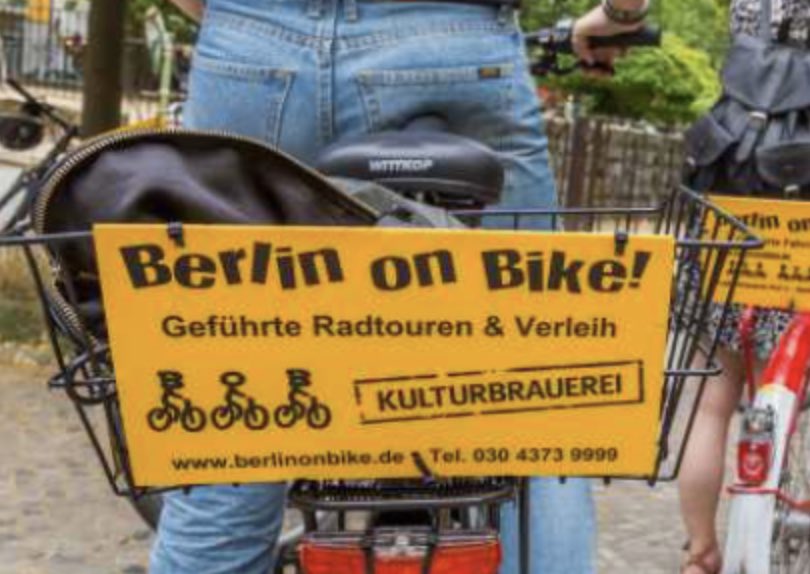
ALT A bike basket bearing the name of the bike tour company “Berlin on Bike”
German: Die sind nicht gerade Top of the Pops
English: They’re not exactly the best of the bunch (or crème de la crème… basically anything but “top of the pops”)
Expressing disapproval/surprise at what some person said:
English:
“And then along comes [the person] and says…”
German:
“Und dann kommt [die Person] um die Ecke und sagt…”
German with an adverbial flourish:
“Und dann kommt [die Person] um die Ecke gebogen und sagt…”
Yet another example of German using a compound noun where English gets by without one is provided by the BBC’s answer to the German TV series “Der Tatortreiniger”:
“The Cleaner”.
This “whither” would clearly be a “quo vadis” 🙄 in an equivalent German title.
(From The Economist)

ALT Photo of the “Middle East and Africa” section of the contents page of a news magazine. One of the titles reads “Wither the Shia crescent?” The word “whither” is underlined in green pen.
1
198
“You messed around with it till you broke it!”
(Actual quote from Planes, Trains and Automobiles)
“Du hast es kaputt gespielt!”
(Probable German translation, though I haven’t checked)
Seitdem ich auf Twitter bin scheint die deutsche Abkürzung „Druko“ sich gegen den Anglizismus „Reply“ durchgesetzt zu haben.