

Heart Failure Fellow @TuftsMedCenter/@BIDMC | @HSPH MPH EPI| CV Outcomes Research @SmithCenterBIDMC | Causal inference; cardiovascular prevention epi
Joined May 2022
- Tweets175
- Following276
- Followers91
- Likes909







Mohammed Essa retweeted

It can be difficult to discern high quality observational studies from the rest. But it is critical that we try.
Sharing some of the things I've learned here:
Bringing the Credibility Revolution to Observational Research in Cardiology | Circulation
ahajournals.org/doi/10.1161/…

Mohammed Essa retweeted

After a decade of growth, we’re now the Richard A. and Susan F. Smith Institute for Evidence, Innovation, and Policy.
The Institute's centers will bring together bold ideas, rigorous science, and clinical expertise to improve people’s health and lives.
bidmc.org/news-stories/all-n…

Mohammed Essa retweeted
Are you:
> A US medical student or resident?
> Interested in health policy research?
The Zimetbaum Fellowship provides dedicated mentorship in foundational biostats, outcomes research, and more! Learn more & apply by Oct 16th: bit.ly/4m3qYnY

Mohammed Essa retweeted

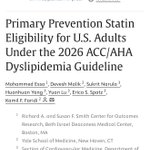
❤️ New research highlights how the 2026 ACC/AHA cholesterol guidelines could significantly expand the number of U.S. adults who may benefit from statin therapy for preventing heart disease.
The study estimates that more than 3 in 5 adults without cardiovascular disease may now qualify for statins, with many newly eligible individuals being younger adults identified through updated long-term risk assessments. Researchers also found that many people who already meet treatment recommendations are not currently taking lipid-lowering therapy.
The findings underscore the importance of discussing your individual cardiovascular risk and treatment options with your healthcare provider.
Read the full study: sciencedirect.com/science/ar…
New in @AJPCardio:
Under the 2026 ACC/AHA dyslipidemia guideline, over 60% of U.S. adults aged 30-79 without ASCVD now have a statin indication, up from 43% under the 2018 guideline.
That’s 31.3 million newly eligible Americans.
But only 1 in 4 eligible adults are currently on therapy.
🔗 sciencedirect.com/science/ar…

At older ages, eligibility is nearly universal, 97.5% of men ≥50 and 99% of all adults 70-79 now meet criteria. Among younger adults aged 30-59, 98% of newly eligible qualified through Class 2a recommendations only, with most having low 10-year risk but elevated 30-year risk ≥10%.
Nearly half of adults previously considered high-risk by the pooled cohort equations (≥7.5%) were reclassified below the PREVENT 5% threshold , yet virtually no one eligible under the old guideline lost eligibility under the new one.
The expansion is massive. The treatment gap is even bigger. Shared decision-making, risk enhancers, and coronary artery calcium will be central to implementation.
First nationally representative estimates using NHANES 2011-2023.
1
529
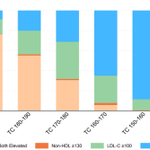
Is total cholesterol <200 mg/dL really "normal"?
In 82.6 million U.S. adults without ASCVD and TC <200 mg/dL:
→ 47.5% had LDL-C ≥100 mg/dL
→ 30.8% had non–HDL-C ≥130 mg/dL
→ 43% aged 40–75 were statin-eligible
But among adults with TC <150 mg/dL, virtually none had elevated LDL-C or non–HDL-C.
The historical TC <200 mg/dL threshold falsely reassures patients and clinicians. Public health messaging and lab reporting should prioritize atherogenic cholesterol and reflect that optimal TC is closer to <150 mg/dL.
Paper in @JClinLipidology (open access): sciencedirect.com/science/ar…
Grateful to @kfaridiMD for mentorship, and to coauthors @SethShayMartin @ErinMichos @rblument1 @estyale
@YaleCardiology @CiccaroneCenter @SmithBIDMC

Mohammed Essa retweeted
We are thrilled to partner with the @CAUSALab for our upcoming symposium on external controls for causal inference!
Be sure to register soon - spots are limited: eventbrite.com/e/external-co…

Don't miss the 21st Kolokotrones Symposium!
External Controls for Causal Inference: Study Design and Analysis is a collaboration with @SmithBIDMC
📆 Apr 3, 2026
⏰ 1:30-3:30 PM
📍 Online/In-Person @HarvardChanSPH
Limited spots available. Register now:
eventbrite.com/e/external-co…

ALT 21st Kolokotrones Symposium
Mohammed Essa retweeted

Cardiogenic shock is associated with high early mortality. Prompt revascularization in infarct-related cardiogenic shock improves outcomes, and mechanical circulatory support may reduce mortality in specific groups.
Read the Review Article “Cardiogenic Shock” by Holger Thiele, MD (@thiele_holger), and Christian Hassager, MD, from Heart Center Leipzig at Leipzig University, Leipzig Heart Science, Rigshospitalet, and the University of Copenhagen (@koebenhavns_uni): nej.md/49ohKyV

ALT An illustration of organ involvement and staging of cardiogenic shock.
Mohammed Essa retweeted

solid foundation in statistics is even more important in the age of AI.
This interactive app explaining statistic concepts is great
seeing-theory.brown.edu/inde…

The problems with this analysis:
The CTA findings are the covariates affected by prior treatment and influencing subsequent treatment. Patients who were already taking statins before imaging likely had slower plaque progression, which means their calcium score, plaque extent, or degree of obstruction on CTA partly reflected earlier exposure. Those same CTA results then shaped later treatment decisions, since clinicians are more likely to start or continue statins in patients with visible disease and to stop them in those with normal scans. In this way, the CTA phenotype becomes a time-varying confounder affected by prior statin use that also guides future prescribing (time-varying treatment), creating the classic treatment-confounder feedback loop and introducing selection bias.
Furthermore, the immortal time bias created by the "cumuluative statin use" will further bias the results.
Should we really answer such question, we need to align eligibility, treatment assignement, and start of follow-up.
Clinicans should continue prescribing statins based on the clinical indication and/or predicted risks.

Statin efficacy to decrease #MACE depends on #CAD phenotypes and increases with the extent and severity of disease and in the presence of high-risk plaques. Patients without CAD have no benefit from statin therapy regarding MACE. jacc.org/doi/10.1016/j.jcmg.…
#JACCIMG #cvCAD

1
586
Such a joy to be taking the casual inference course with the Josh Angrist himself AKA master Joshua! @metrics52

8
958
Mohammed Essa retweeted

Clinical decision making in mental health 🧠
Alejandro Szmulewicz @HarvardChanSPH continues the Methods Series @karolinskainst in 2 weeks.
📆 Nov 4, 2025
⏰ 15.00 CET/9.00 ET
📍 Online
Attend online:
stats.sender.net/forms/e7JD1…

ALT Nov 4 Methods Series talk, "Informing clinical decision making in mental health when randomized trials are not available "
Mohammed Essa retweeted

Wonderful to host @DrCaliff_FDA - our visiting "chief provocateur" - for @SmithBIDMC Grand Rounds @BidmcCvi
A rich and thought-provoking discussion on health care, social inequality, public health, and the role of communication & trust.

Mohammed Essa retweeted
Let's talk causal mediation and separable treatments.
Vanessa Didelez (Leibniz Institute for Prevention Research and Epidemiology) resumes the 2025 Methods Series @karolinskainst in 1 week.
📆 Sep 23, 2025
⏰ 15.00 CEST/9.00 ET
📍 Virtual
Register👇
stats.sender.net/forms/e7JD1…

ALT Vanessa Didelez September 23 Methods Series talk, "Causal mediation and separable treatments in time-to-event analyses."
Mohammed Essa retweeted

Here is an updated link to my shared Dropbox. It's mostly for DiD but also has other recent projects. I'm currently cleaning up some of the Stata do files and I'll be posting.
I posted the first public version of my nonlinear DiD paper.
dropbox.com/sh/zj91darudf2fi…

Mohammed Essa retweeted

Join us online on Wednesday, September 10th at 1:00pm EST for the Department's seminar series with Josef Coresh speaking on "Dementia Risk and Prevention – Lessons from the Atherosclerosis Risk in Communities Cohort" ➡️ Go to the event page to register: hsph.harvard.edu/epidemiolog…

ALT Josef Coresh headshot
Mohammed Essa retweeted

This 277-page PDF unlocks the secrets of Large Language Models.
Here's what's inside: 🧵

Mohammed Essa retweeted

Excited to share that our abstract for the Impact of Iron Supplementation on Functional Capacity in Adults with Pulmonary Hypertension: A Systematic Review and Meta-Analysis was accepted for #AHA2025 #CardioTwitter
@EssaMJ90 @AHAScience @HarvardChanSPH
