
Machine learning researcher, postdoc. Investigating differentiable algorithms etc. @Stanford @StanfordAILab.
Bay Area
Joined November 2016
- Tweets171
- Following306
- Followers2.3K
- Likes714





Excited to share our NeurIPS 2024 Oral, Convolutional Differentiable Logic Gate Networks, leading to a range of inference efficiency records, including inference in only 4 nanoseconds 🏎️. We reduce model sizes by factors of 29x-61x over the SOTA.
Paper: arxiv.org/abs/2411.04732
Join us today for Ubiquitous Ultra-Efficient Mobile Video Super-resolution + Denoising with Logic Gates at #ICCV2025 booth 247. 🌺

I'm excited to share that our work on convolutional differentiable logic gate networks was covered by MIT Technology Review. 🎉
technologyreview.com/2024/12…
@StefanoErmon @HildeKuehne

Felix Petersen retweeted

The next generation of neural networks could live in hardware trib.al/65TrkHz


Join us today for our Oral presentation at 10:20am in East Ballroom A, B and our poster at 11am-2pm in East Exhibit Hall A-C #2411.

Excited to share our NeurIPS 2024 Oral, Convolutional Differentiable Logic Gate Networks, leading to a range of inference efficiency records, including inference in only 4 nanoseconds 🏎️. We reduce model sizes by factors of 29x-61x over the SOTA.
Paper: arxiv.org/abs/2411.04732
Join us now at our poster #1502 in East Exhibit Hall A-C 1502.

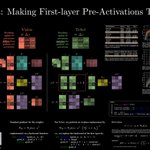
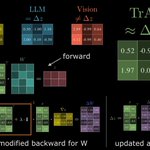
Ever wondered how training dynamics differ between LLMs 🖋️ and Vision 👁️ models? We explore this and close the gap between VMs and LLMs in our #NeurIPS2024 paper "TrAct: Making First-layer Pre-Activations Trainable".
Paper📜 arxiv.org/abs/2410.23970
Video🎥 youtu.be/ZjTAjjxbkRY
Join us on Wednesday, 11am-2pm for our poster on Newton Losses in West Ballroom A-D #6207. neurips.cc/virtual/2024/post…
I'm excited to share our NeurIPS 2024 paper "Newton Losses: Using Curvature Information for Learning with Differentiable Algorithms" 🤖.
Paper link 📜: arxiv.org/abs/2410.19055
Video link 🎥: youtube.com/watch?v=7aFPIMqS…
@StanfordAILab
1/6 🧵

11
1,158
Learn more in our paper 📑 (arxiv.org/abs/2410.23970) and check out our paper video directly here on 𝕏!
---
Thanks to my co-authors Christian Borgelt and @StefanoErmon.
@StanfordAILab
5
617
...and it speeds up overall training by factors ranging from 1.25x (for large ViT pre-training) to 4x (for ConvNets).
We benchmark TrAct on a suite of 50 experimental settings.

1
7
693
Our implementation is efficient, only modifies the gradient in the backward, and is compatible with various optimizers. To use *TrAct*, just wrap your first layer in a "TrAct" module...

1
4
171
We close this gap by proposing TrAct, a method that conceptually *Tr*ains *Act*ivations. While we cannot train activations directly because only the weights are trainable parameters, we propose an optimization problem to find the weights that best match a gradient descent update on the activations, and derive a closed-form solution that modifies the gradient wrt. the weights.
Thus, we can effectively train the first-layer activations of a Vision model, with updates similar to those in the LLM Embedding layer.

1
5
205
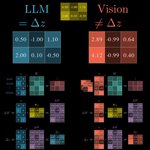
This means that learning of the vision model, at the first layer, is much slower than in LLMs. And learning is actually faster on higher contrast regions of the image than in low contrast regions due to the proportionality between gradients of weights and input pixel values.

1
5
223
The big difference between LLMs and Vision models lies in the first layer:
- in LLMs we update Embeddings (/activations) directly,
- but in Vision models we update the *weights* of the first layer, which causes indirect updates to the Activations (/embeddings).

1
6
299
Ever wondered how training dynamics differ between LLMs 🖋️ and Vision 👁️ models? We explore this and close the gap between VMs and LLMs in our #NeurIPS2024 paper "TrAct: Making First-layer Pre-Activations Trainable".
Paper📜 arxiv.org/abs/2410.23970
Video🎥 youtu.be/ZjTAjjxbkRY
Also a shout-out to the methods we build on:
Perturbed Optimizers @qberthet @mblondel_ml @BachFrancis
NeuralSort @adityagrover_ @ecjwg
SoftSort @eisenjulian
5/6 🧵
1
3
791
A big thanks to my co-authors Christian Borgelt, @sutter_tobias @UniKonstanz, @HildeKuehne @MITIBMLab @uni_tue, @OliverDeussen, @StefanoErmon.
4/6 🧵
1
2
351
Newton losses is easy to implement, and it's empirical Fisher extension can be added to existing pipelines with a single call of InjectFisher between the model and the loss.
3/6 🧵

1
6
390
In Newton Losses, we merge SGD based training of NNs with a Newton step on the loss. This is crucial for many algorithmic losses like ranking and graph losses, which have vanishing and exploding gradients. The intuition is that, if the loss is harder to optimize than the neural network, then we should use a stronger optimization strategy for the loss. It is computationally efficient because the second-order components need to be evaluated only on the loss function, and the expensive NN only requires SGD.
2/6 🧵

2
4
481
I'm excited to share our NeurIPS 2024 paper "Newton Losses: Using Curvature Information for Learning with Differentiable Algorithms" 🤖.
Paper link 📜: arxiv.org/abs/2410.19055
Video link 🎥: youtube.com/watch?v=7aFPIMqS…
@StanfordAILab
1/6 🧵