




🔍 But what exactly are precompiles?
They’re specialized smart contract functions built into the Ethereum client, designed for efficient, complex computations.
The introduction of a precompile in EIP-2537 improves scalability, cost-effectiveness, and security for consensus on Fleek Network.
1
13
2,414

Fleek Network 2024 Mid-Year Update: First Half Achievements & Second Half Roadmap
As we reach the midpoint of 2024, Fleek Network continues to make significant strides in our mission towards building a high-performance, edge-optimized onchain cloud platform.
The first half of the year has been very productive, and substantial advancements have been made on the protocol. While some of our accomplishments you might have heard about like the testnet performance results and the release of Fleek Functions, much of the progress was less visible. We’re excited to share key development highlights from the first half of 2024 and unveil our roadmap for the second half of the year, including an updated timeline for mainnet.
Fleek Network 1H24 Highlights
Two of the biggest highlights from the first half of the year were the:
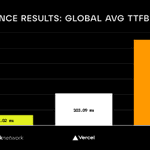
- Testnet results showcasing Fleek Network deployed edge functions average global TTFB of 37.02ms (including the TLS handshake), 7x faster than AWS Lambdas, and 2.7x faster than Vercel Serverless in global testing.
- Fleek Function release showcasing edge-optimized serverless functions, the first product built on Fleek Network, and actively running on the testnet.
In addition to those more public facing highlights, there were many internal development highlights in the first half of 2024, including:
JavaScript Runtime Improvements
Our focus on developer experience has led to several key improvements in the Fleek Network JavaScript runtime environment. For example, we added native Node module polyfils, which significantly reduces function bundle sizes and improves compatibility with existing codebases. This change allows developers to bring more of their projects over to Fleek Network with minimal friction.
We've also overhauled how our network handles HTTP requests and responses. Now, the entire HTTP request is forwarded to function calls, giving developers more control over routing and data parsing. Additionally, we've made HTTP responses fully customizable from within JavaScript functions, opening up new possibilities for creating dynamic, responsive applications.
Key improvements include:
- Native Node module support
- Full HTTP request forwarding
- Customizable HTTP responses
- Upcoming Fleek Network plugin for popular bundlers
- Custom module importer
Performance Improvements
Performance optimizations are constantly being researched and developed at Fleek Network, and our 1H24 optimizations yielded very positive results. By addressing memory management issues, we've managed to increase the number of requests a node can handle by a factor of ten. We've also improved how nodes synchronize after going offline, making network disruptions nearly imperceptible.
Notable 1H24 performance optimizations:
- 10x increase in node request handling capacity
- Improved node synchronization
- Numerous bug fixes and optimizations (full commit history available on our GitHub)
Node Operator Improvements
We continue to make quality of life improvements for node operators and the experience running nodes. These improvements give more control over node operations and contribute to a more diverse and resilient network:
- Kernel-level packet filtering system using EBPF
- New admin panel for intuitive node management
- Configurable RPC settings for resource allocation
Internal Tooling & Testing Improvements
While much of our work is visible to developers and node runners, we've also made significant improvements to the internal tools and libraries. A few highlights are:
- Reworked the dependency injection library
- Redesigned the node shutdown handling system
- Enhanced the testing infrastructure.
Fleek Network 2H24 Preview
As we move into the second half of 2024, our focus is set on fully completing the mainnet V1 version of the protocol, and preparing for a mainnet launch in Q125. We're aiming to run a mainnet-ready official testnet sometime in Q424, which would include every aspect of the protocol that would be present for mainnet, including pricing and economics (testnet versions), all external node operators, and all mainnet-ready core protocol components and services.
While mainnet V1 work is being finished in 2H24 we will continue running the current Fleek Network testnet infrastructure and add new functionality that developers can already use; this usage will just be migrated to the official Fleek Network testnet once it's live.
Key focus areas for 2H24
1. Refining the JavaScript service
2. Integrating delivery acknowledgements into the protocol
3. Releasing first open source implementation of a Fleek Network gateway
4. Integrating the economic system (FLK staking, USDC payments, etc.)
5. Developing the Service Task Broker for inter-service communication
6. Introducing additional services (different compute options besides JavaScript functions)
7. Opening the network to third-party node operators
8. Implementing SGX for private onchain compute capabilities (env variables, secrets, private keys, etc.)
9. Developing state merklization and Ethereum testnet integration
10. Code freeze and audits
Node Operator Update
We know there have been a lot of questions regarding when external node operator involvement will resume, so below is an updated game plan and roadmap.
- August 2024: Official Node Operator Info & Signup Begins
- Sept-Nov 2024: Initial onboarding and testing with Node Operators
- Nov-Dec 2024: Official Testnet launch, including external node operators
- Q424-Q125: Official Testnet is live, more traffic being onboarded to the network
- Q1 2025: Mainnet launch
Plenty of communication will be sent out ahead of time and throughout the several month onboarding process leading up to official testnet launch, so don’t worry. Anybody who would like to become a Fleek Network node operator will have plenty of time to express interest, understand the requirements, and participate in the process.
That’s all for now.
Thanks for the continued support, we’re super excited for the second half of 2024.
The Fleek Network Team ⚡


The first longstanding Fleek Network testnet release is right around the corner and the main focus is ⚡FLEEK FUNCTIONS ⚡
Fleek Functions are lightning-fast JavaScript edge functions built using Fleek Network’s onchain cloud infrastructure. They provide performant, edge-optimized, low-cost, and self-sovereign JavaScript functions for developers to use for a wide variety of use cases.
Stay tuned for more details and demos in the coming week, along with the initial release of Fleek Functions next Thursday, May 30th.
Fleek Network’s goal is to add value to all developers.
@harrisonhines joined the @DePINState podcast to discuss.
youtube.com/watch?v=MB42KbJX…
14
1,444
JS Runtime Service Use Cases: Next.js
Leverage the Fleek Network JS Runtime Service with Next.js for edge-optimized, low-cost, auto-scaled, and self-sovereign execution in your apps.
This extends to every aspect of Next.js:
- Data Fetching
- Edge Functions
- Image Optimization
- SSR (server side rendering)
- ISR (incremental static regeneration)
All running performantly and permissionlessly onchain thanks to a blend of Fleek Network's JS Runtime Service and CDN service.
And it's not just Next.Js that Fleek Network gives an upgrade– these same principles can be applied to many other frameworks. Soon any developer will be able to build these Fleek Network-powered use cases and framework support themselves.
14
1,303
Developers can use Fleek Network serverless/edge functions to do things like:
- Automate blockchain operations
- Optimize cross-chain functionalities
- Manage both on-chain & off-chain processes
The upcoming addition of SGX will further enhance these capabilities and expand the usefulness of Fleek Network, allowing for secure key signing, environment variables, and other privacy-critical use cases.
JS Runtime Use Cases: Verified Compute
Being able to build on top of Fleek Network services is a key feature of the network.
For example: anyone can add their own consensus on top of Fleek Network edge functions. You can require any number of matched responses before accepting the result, tailoring verification levels to your specific needs.
Given the low latency of Fleek Network and the fact that responses would come in parallel, adding this consensus element won’t materially impact performance, and would be several orders of magnitude cheaper than other forms of verified compute while offering similar guarantees.
Side Note: You could still use ZK, TEE, MPC, FHE, and other forms of verified compute on Fleek Network if those fit your use case better.
14
1,413
How will I use Fleek Network Services?
Much like AWS or other cloud platforms, each Fleek Network service comes with its own interface and SDK, allowing easy integration into your apps either with standalone or bundles of services.
Secure access is managed via HTTPS, WebTransport, and more, ensuring efficient communication with the network's nodes. The handshake component plays a crucial role here, facilitating the exchange of public keys and negotiating client access for the session.
The Fleek Network SDK automatically connects and scales client-facing apps with Fleek’s network of edge-optimized nodes. All nodes can run all Services, like the ones listed below, which means work can always be routed to the best/closest node.
No need for annoying DevOps or Infra Management ⚡

Fleek Network Services are composable, auto-scalable, and permissionless, offering lightning-fast, edge-optimized versions of familiar web services.
What are examples of possible services?
• Edge Functions for optimized JavaScript execution.
• CDN with Verified Bandwidth for reliable content delivery.
• Next.js app hosting for enhanced web application performance.
• Virtual Machines with custom logic inside your VM for your use case.
• Support Nodes, AVS, & Rollups with rentable, geo-aware, edge-optimized node infrastructure.
1
17
1,911
Fleek Network Services are composable, auto-scalable, and permissionless, offering lightning-fast, edge-optimized versions of familiar web services.
What are examples of possible services?
• Edge Functions for optimized JavaScript execution.
• CDN with Verified Bandwidth for reliable content delivery.
• Next.js app hosting for enhanced web application performance.
• Virtual Machines with custom logic inside your VM for your use case.
• Support Nodes, AVS, & Rollups with rentable, geo-aware, edge-optimized node infrastructure.
Have you signed up for Fleek's @EthCC Hacker House yet?
⚡ $10k+ in bounties & prizes
⚡ Food & accommodations
⚡ Hacking, hacking, hacking
For details & the link to sign up:
HACKERS, ASSEMBLE ⚡
The first Fleek Hacker House is in Brussels during @ETHCC– We have 20 spots and $10k in bounties up for grabs, plus additional prizes from partners and sponsors!
When: July 3rd-8th, 2024
- Technical talks from leaders & projects in the space
- Learn about Fleek’s edge-optimized onchain cloud
- Build apps & use cases leveraging Fleek’s edge compute capabilities
- Stay, food, and good vibes included
Early registrations are now live, come hack with us in Brussels 👇

The initial implementation of Blake3 was just the beginning. Check out the dramatic improvements in the final Blake3 implementation below after a series of targeted optimizations outlined in the deep-dive blog.
But the core development team is not stopping here. The team has more benchmarks coming up, focusing on performance across different browsers and engines. Plus, although `asm.js` didn't bring the expected boost in V8, it showed promise in Firefox—more on this in future updates.
Stay tuned for a user-friendly module release. Meanwhile, Deno users can already access and try out the current version directly from Fleek Network's open source Github repo:
github.com/fleek-network/bla…

First JS Blake3 Implementation: How was Speed Benchmarked?
In the process of creating Fleek Network's Blake3 implementation for JavaScript, the core development team first needed to start by establishing a solid baseline against other implementations.
Focused on V8, they utilized `Deno.bench` on an Apple M1 Max, comparing the performance of standard hash functions like SHA256 against a WASM version of Blake3. This setup allowed them to generate 1MB of random data and measure performance across various data sizes, setting the stage for optimization efforts.
The first attempt at implementing Blake3 in JavaScript stayed close to the reference implementation found in the official Blake3 Rust repository. This approach, while first ensuring correctness over creativity and speed, resulted in Fleek Network's JavaScript version being significantly slower—approximately 2000x slower than the WASM equivalent.
Despite the slow start, this initial implementation was crucial. It provided a foundation from which the core development team could explore optimizations without straying too far from its academic reference implementation. The initial code was bad– really bad. But, this was not surprising and outlined the many improvements the team could make.
Through iterative development and a series of targeted optimizations, the core development team eventually achieved a JavaScript implementation that was 2.21x faster than the original WASM version.


HACKERS, ASSEMBLE ⚡
The first Fleek Hacker House is in Brussels during @ETHCC– We have 20 spots and $10k in bounties up for grabs, plus additional prizes from partners and sponsors!
When: July 3rd-8th, 2024
- Technical talks from leaders & projects in the space
- Learn about Fleek’s edge-optimized onchain cloud
- Build apps & use cases leveraging Fleek’s edge compute capabilities
- Stay, food, and good vibes included
Early registrations are now live, come hack with us in Brussels 👇

First JS Blake3 Implementation: How was Speed Benchmarked?
In the process of creating Fleek Network's Blake3 implementation for JavaScript, the core development team first needed to start by establishing a solid baseline against other implementations.
Focused on V8, they utilized `Deno.bench` on an Apple M1 Max, comparing the performance of standard hash functions like SHA256 against a WASM version of Blake3. This setup allowed them to generate 1MB of random data and measure performance across various data sizes, setting the stage for optimization efforts.
The first attempt at implementing Blake3 in JavaScript stayed close to the reference implementation found in the official Blake3 Rust repository. This approach, while first ensuring correctness over creativity and speed, resulted in Fleek Network's JavaScript version being significantly slower—approximately 2000x slower than the WASM equivalent.
Despite the slow start, this initial implementation was crucial. It provided a foundation from which the core development team could explore optimizations without straying too far from its academic reference implementation. The initial code was bad– really bad. But, this was not surprising and outlined the many improvements the team could make.
Through iterative development and a series of targeted optimizations, the core development team eventually achieved a JavaScript implementation that was 2.21x faster than the original WASM version.
You can learn more about each step that lead to the 2.21x improvement in this engineering deep dive:
blog.fleek.network/post/flee…
3
412
"There’s no doubt that the cloud services created by legacy tech companies form a critical pillar of the digital economy. However, they leave much to be desired in terms of pricing, performance, security, and UX."
-@harrisonhines
Full feature:
msn.com/en-us/news/other/fle…
1
12
837
The Problem with WASM
While WebAssembly (WASM) promises enhanced performance, its integration isn't without hurdles: High Shipping Costs
Those costs come in two forms.
1. File Size: A primary concern is the size of WASM files. For instance, a basic Blake3 implementation results in a 17KB binary that lacks further compression options. Unlike JavaScript files, gzipping a WASM file doesn’t reduce its size.
2. Tooling and Maintenance: From a developer's perspective, maintaining a JavaScript library that utilizes WASM introduces additional complexities. Each runtime environment may require different handling of the WASM file, complicating the development process. The simplicity of JavaScript, where a single file can be shipped and it will just work, is a much more appealing option for developers
As we explore concepts like Blake3 hashing further, keep in mind that every choice in the stack is unique and the goal is to prioritize practicality and developer experience.
To learn more about Fleek Network’s Blake3 hashing implementation, and how the core development team built it using JavaScript over WASM, check out this deep dive:
blog.fleek.network/post/flee…
381