
Research Engineer at @DeepMind
London, UK
Joined December 2016
- Tweets31
- Following111
- Followers42
- Likes317


Florian Stimberg retweeted

SynthID timeline over the last few weeks has been momentous – from opening SynthID Detector to the public, to launching SynthID Bio to watermark functional, AI-designed proteins.
Each moment brought us a step closer to our broader vision on provenance, or helping verify what is AI-generated and what isn’t.
Recently, Dartmouth Professor Hany Farid and I discussed why solving provenance is vital to @GoogleDeepMind’s broader mission to develop AI to benefit humanity.
In short: solving provenance is a highly complex, multi-disciplinary effort with watermarking technology at its core. It requires a collective mix of frontier research, interoperable open standards, and direct collaboration across platforms and developers.
Read our full conversation on Google's Public Policy blog: publicpolicy.google/article/…

A lot of hard work went into making this possible. I'm really happy we could finally launch it and give people one surface to verify content from all SynthID partners.

SynthID Detector is now available to everyone. 🌐
Check whether online content was generated using @GoogleAI, or with tools from our industry partners – including @OpenAI, @NVIDIA, Kakao and coming soon, @Apple.
Try it out → synthid.com
Florian Stimberg retweeted

Today, we're expanding SynthID Detector in partnership with @OpenAI, @NVIDIA, Kakao & soon @Apple as part of an industry-wide effort to make AI-generated content more transparent.
Available globally in English, our verification portal lets you check if media was made with AI 🧵

ALT A screenshot of the SynthID Detector landing page, titled "SynthID Detector: Identify AI generated media." In the center is a file upload box with a "Select file" button and drag-and-drop support. Below it, partner company logos are displayed under "DETECTS MEDIA GENERATED BY:" — NVIDIA, OpenAI, Google, and kakao. Three information cards at the bottom explain how SynthID digital watermarking works and outline its detection capabilities.
Florian Stimberg retweeted
I’m pleased to announce SynthID Detector is now available as a universal verification platform.
It’s an important step forward in helping people easily identify AI-generated content across the internet.
Starting today, anyone can check whether images, audio, or video were created using models from @Google or our partners across the industry, including @OpenAI, @Nvidia, and @Kakao.
Ever since our research teams at @GoogleDeepMind developed our first models, we understood that tracing the origin of digital content would become a central pillar of trust in the AI era.
Today’s announcement combines the scientific achievements of SynthID with a shared commitment to making verification work seamlessly across platforms. I’m proud of our teams and partners for working together to make this possible.
Try SynthID Universal Detector and read more about today’s update here: blog.google/innovation-and-a…

Great thread from David on our newly released report on SynthID-image and all the lessons we learned working on SynthID for the last few years.

We released our report on SynthID-image, outlining what it takes to watermark over ten billion images generated with @GoogleDeepMind AI models and making this technology available to external partners. I really enjoyed writing this report – a thread:
arxiv.org/abs/2510.09263

SynthID, the project I've been working on for more than a year will now also work on text and video.
SynthID will now expand to 2️⃣ new modalities: text and video.
While this tool isn’t a silver bullet for identifying AI-generated content, it’s an important building block for helping millions of people understand the provenance of synthetic content. → dpmd.ai/watermarking-synthid
Florian Stimberg retweeted

SynthID will now expand to 2️⃣ new modalities: text and video.
While this tool isn’t a silver bullet for identifying AI-generated content, it’s an important building block for helping millions of people understand the provenance of synthetic content. → dpmd.ai/watermarking-synthid
Florian Stimberg retweeted

Gemini and I also got a chance to watch the @OpenAI live announcement of gpt4o, using Project Astra! Congrats to the OpenAI team, super impressive work!

It's such an honor to work on Project Astra with such an amazing team from across Gemini and Google DeepMind! While the #GoogleIO keynote was happening we had a last minute idea of watching the keynote with Project Astra. Check it out!
Florian Stimberg retweeted
It's such an honor to work on Project Astra with such an amazing team from across Gemini and Google DeepMind! While the #GoogleIO keynote was happening we had a last minute idea of watching the keynote with Project Astra. Check it out!
Florian Stimberg retweeted

Student researcher position applications are open at Google Deepmind!
I'm hosting a SR in the intersection of bias and generative models. If you're an interested PhD student please reach out!
google.com/about/careers/…
Happy to see the project I worked on for most of the year finally launched!
We’re excited to launch 𝗦𝘆𝗻𝘁𝗵𝗜𝗗 today with @GoogleCloud: a digital tool to watermark and identify AI-generated images. 🖼️
It will be available on Imagen, one of @Google’s latest text-to-image models.
Here’s how it works. 🧵 dpmd.ai/launching-synthid #GoogleCloudNext
Florian Stimberg retweeted
As society becomes more digital, it’s critical to improve the code powering the world's computing.
Today in @Nature, we present AlphaDev, an AI system using reinforcement learning to discover enhanced computer science algorithms.
How does it work? 🧵 dpmd.ai/alphadev-tw
Florian Stimberg retweeted

DeepMind is dedicated to bringing Safe, Reliable & Trustworthy AI to the real world. Consider applying and joining our amazing team.
boards.greenhouse.io/deepmin…
boards.greenhouse.io/deepmin…
Florian Stimberg retweeted

So happy to share #MedPaLM2 - our team's evolution of Med-PaLM. A new state of art for medical question-answering!
Med-PaLM 2 scores 86.5% on MedQA-USMLE, exceeding Med-PaLM's score by >19% 🤯, & 81.8% on PubMedQA...
More here: arxiv.org/pdf/2305.09617.pdf

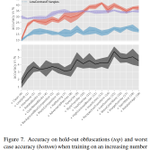
How easy is it for adversaries to hide image content from classifiers through obfuscations? Our new benchmark allows you to evaluate this!
Dataset and evaluation code: github.com/deepmind/image_ob…
Paper: arxiv.org/abs/2301.12993.
Joint work between @DeepMind, @Google & @GoogleAI 🧵
We hope this benchmark will add a new dimension to evaluating robustness and will help research on how to make models generalize better to obfuscations.