



Fletcher Fallowfield retweeted

Translation: workers are doing what they’re paid to do.

ALT BBC: 'Quiet quitting is the status quo': Workers are still proud to do the bare minimum
Fletcher Fallowfield retweeted

MTV Cribs profiled over 110 celebrity homes.
What was the most popular episode? It wasn’t a big mansion or exotic getaway.
It was Redman touring his modest Staten Island townhome.
Before filming, the MTV producers offered to rent the rapper a mansion but he had zero interest.
When asked by VladTV why he didn’t take the mansion, Redman said he had no interest in lying about his lifestyle.
“My mother would have told me ‘you know god damn well that ain’t your house’”, he said.
Turns out a number of the previous celebrities “cribs” didn’t mind renting and faking it.
Redman’s “De La Casa” episode has some of the most iconic MTV Cribs moments:
• His collection of X-rated DVDs
• The shoebox full of dollars on top of the fridge (the “Dollar Box”)
• His cousins sleeping on the living room floor (because they were up late recording the night before)
The jump cuts and zooms put me in stitches every time.
“It all worked for the best,” says Redman. “Because it was believable.”

Fletcher Fallowfield retweeted

I just don't understand this narrative. The difference in homeownership between the generations is VERY small, and can probably be completely explained by Millennials staying in school a little longer.

This quoted post is unavailable.
Fletcher Fallowfield retweeted

In 1922, when faced with a threat of reduced wages, coal miners in Nova Scotia fought against the powerful coal companies to protect their rights.
This is the story of the Coal Miner Strikes of 1922 to 1925.
The work to unionize was successful for Cape Breton miners in 1919 when they won the recognition of District 26, United Mine Workers of America.
Their employer, the British Empire Steel Corporation (BESCO), had formed in 1920-21 and it controlled all of the steel mills and most of the coal mines in Nova Scotia.
At this same time, BESCO was dealing with a sagging coal market and its own issues with financial mismanagement. The company had also promised investors unrealistic profits.
To increase its profits, the company reduced miner wages by one-third in 1922.
At the time, miners and their families lived in terrible living conditions due to low wages and the control of the company on nearly all aspects of their lives.
In response to this, the coal miners reduced the output of the pits by one-third themselves.
In 1923, steelworkers in Sydney, Nova Scotia went on strike hoping to achieve union recognition, the provincial government sent its police force to charge through the strikers.
The coal miners came out in a sympathetic strike for the steelworkers. That strike ended when leaders J.B. McLachlan and Dan Livingstone were arrested on charges of sedition.
For years, the coal miners fought to have their wages restored but the company refused to budge.
In 1925, the company cut off credit at the company stores.
When that happened, the local communities gave their resources to help the coal miners.
The coal miners then began to strike.
The strike lasted five months and ended with the Battle of Waterford Lake on June 11, 1925. On that day, 2,000 miners marched on the local power plant to seize control of it. Company police met them and opened fire on the workers. Three were injured and William Davis was killed.
The miners rushed the police, forcing the police to retreat. The miners then took over the power plant and with the help of 30 power plant workers who were sympathetic to their cause, they liberated company stores of their goods and distributed them to the strikers.
A total of 2,000 Canadian Army soldiers came out and dispersed the miners and restored the control of BESCO.
Due to the violent response, a royal commission was organized and BESCO was forced to recognize the coal miners' union and negotiate with them through collective bargaining.
In 1937, Premier Angus MacDonald, citing the labour strikes by the coal miners, introduced the first Nova Scotia Trade Union Act to protect the right to collective bargaining.
Today, every June 11 in Nova Scotia is marked as Miners' Memorial Day. In 2017, the Nova Scotia Coal Strikes of 1922 to 1925 were declared an event of National Historic Significance.
If you enjoy my Canadian history posts, please consider donating to Canadian History Ehx at buymeacoffee.com/craigU
Sources:
thecanadianencyclopedia.ca/e…
canada.ca/en/parks-canada/ne…
saltwire.com/cape-breton/new…


Fletcher Fallowfield retweeted
Without the CBC, there may have never been a Mister Rogers' Neighborhood, and without Fred Rogers, there may have never been a Mr. Dressup.
This is the story of the friendship between Fred Rogers and Ernie Coombs.
After Ernie Coombs began to pursue a career in children's entertainment, he became an assistant puppeteer to Fred Rogers at WQED in Pittsburgh on The Children's Corner.
He created several puppets including Lady Elaine Fairchild.
The two became close friends while working together. Fred Rogers was the best man at Ernie Coombs' wedding, and was also the godfather to Ernie's children.
In 1962, CBC offered Fred Rogers his own show. Together, they drove up to Canada to create this new show.
This show was an early version of Mister Rogers' Neighborhood called Misterogers. It was on this show that Fred Rogers first appeared on camera.
When Fred Rogers moved back to the United States to launch his famous show he recommended to CBC that they build a show around Ernie Coombs.
As a result, Ernie Coombs stayed in Canada and joined Butternut Square.
Rogers told Coombs:
"If you are restrained, the kids will come to you."
That show lasted from 1964 to 1967 and it was there he started to develop the character of Mr. Dressup.
When Butternut Square ended, it was immediately replaced with Mr. Dressup.
That show ran for 3,000 episodes before it ended in 1996. By then, Ernie Coombs had become a Canadian icon.
If you enjoy my Canadian history content, please consider donating to Canadian History Ehx at buymeacoffee.com/craigU
Sources:
canadaswalkoffame.com/induct…
cbc.ca/news/canada/new-bruns…"Fred%20Rogers%20was%20the%20best,Dressup%20to%20play%20music.
cbc.ca/player/play/125058208…
en.wikipedia.org/wiki/Ernie_…

Fletcher Fallowfield retweeted

It’s funny that two universal constants of civilization appear to be “people doing hard agricultural labor will try insanely hard to do literally anything else” & “after a generation removed from doing it, a significant portion of people start to fantasize about & romanticize it”
Fletcher Fallowfield retweeted

The Bloc are not going to be an instinctive anti-Tory party like they were in 2008, as I wrote about earlier this year: scrimshawunscripted.substack…


Fletcher Fallowfield retweeted

So to recap:
The chief of staff, who received “packages” from developers and then sped up Greenbelt removals on their behalf — keeps his job.
His boss, the Minister of housing — keeps his job.
The Premier who approved the land swaps — keeps his job.
#onpoli
Fletcher Fallowfield retweeted
As Doug Ford helps his developer buddies get rich, we need an Ontario Liberal leader who won’t be okay with variations on Ford’s corruption, but will stand up for a housing policy that doesn’t make us trade Greenbelt for new units

Fletcher Fallowfield retweeted
"The NDP have to decide whether they believe the warmed over piss they pass off as talking points or whether they’re willing to actually begin to live in reality. To paraphrase Sorkin, if everything’s a crisis, nothing is"
On the NDP and Crisis Comms
scrimshawunscripted.substack…




Fletcher Fallowfield retweeted
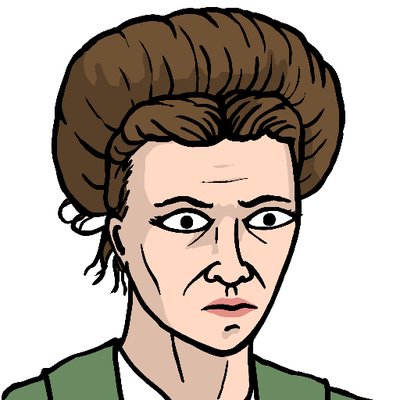
Søren Kierkegaard claimed that if a person behaved perfectly rationally they would be so discordant with civil society that people would deem them mad.

Fletcher Fallowfield retweeted
Let's look at the 10 confirmed deadliest disasters (not incl. pandemics or epidemics) in pre & post-Confederation history.
1. Newfoundland Hurricane (1775)
This hurricane hit Newfoundland on Sept. 9, 1775 & devastated the fishing fleet, killing 4,000 sailors.
🧵1/11




Fletcher Fallowfield retweeted

Who is the biggest perpetrator in decreasing affordability for housing?
From 2001 to 2023 Developement taxes & fees increased by 1,159% or $278 per square foot according to Altus.
For comparison CPI increased by 59.27%
Since 2001, this accounts for an increase of $166,400 per unit.

Fletcher Fallowfield retweeted
After a super-normal day chatting Canadian politics here, I'll echo what I directly told someone: as much as guys like me want to give long, thoughtful explanations and theories, there's not much happening today that isn't what you'd expect with an eight-year-old government.
Fletcher Fallowfield retweeted

So how much do you know about Dracula? Bram Stoker's tale has grown so much beyond what the author ever intended he'd probably have no idea what half of the modern stories and movies are talking about. People took some big liberties with his work. Like the Vlad connection...
