

Interested in most things and people especially, centre right, philosophically Christian, widowed but happy now. DMs deleted and senders blocked.
Gloucestershire
Joined July 2019
- Tweets111K
- Following3.5K
- Followers6.5K
- Likes129K


Pinned Tweet
Slashing Whitehall waste is a pledge that brings to mind Augustine’s prayer for the Lord to make him virtuous – but not yet.
It is repeatedly promised by governments, but rarely delivered.
Here we are again, days out from the final Budget before voters go to the polls in a general election, and Jeremy Hunt is announcing a crackdown on bureaucracy in the public sector. He intends to reduce the civil service headcount by 66,000, returning it to pre-pandemic levels.
Do we need a Department for Culture, Media and Sport?
Voters are likely cynical. Britain’s public sector is riddled with entitlement and waste at levels described by the Chancellor as ‘immoral’.
In January the chief of the National Audit Office warned the government is squandering £10 billion every year.
Nearly six million people are now employed in the public sector. The total public sector pay bill was around £233 billion in the 2021/22 financial year, accounting for roughly a fifth of all government spending. Yet productivity is still down on 2019. The more resources that are poured in, the less the small gains seem to be.
Rarely does the civil service sack those who aren’t up to the job or force responsibility for any mistakes.
Too many of its staff are devoting too much time to issues not related to serving the public, and seem to think it acceptable to do so.
An HR culture has taken hold, placing Whitehall at the forefront of some of the nation’s most progressive causes.
To give a few examples: the most senior mandarin at the Ministry of Justice, who also holds the role of civil service ‘Gender Champion’, has written about ending the menopause ‘taboo’ in Whitehall and set up a ‘gender equality leadership group’.
Pride month for the NHS, police, fire departments and councils cost £500,000 last year, according to the TaxPayers’ Alliance. Last year, it was revealed that the Competition and Markets Authority was encouraging staff to spend 10 per cent of their working week on activities that fostered ‘an inclusive culture and working environment’.
Civil servants have been invited to take a ‘pronoun pledge’ and include a phonetic guide to pronouncing their own name in every missive.
While Cabinet Office minister John Glen wants the number of civil servants working from home factored into annual reviews, office occupancy remains well below pre-pandemic levels.
None the less, the PCS union, which represents public sector workers, has said it wants a four-day week across the civil service, with no reduction in pay.
When people can’t see a doctor, schools are crumbling and taxpayers are being squeezed to a degree not seen since the late-1940s, this is madness. When people say, as polls have indicated, they would rather the Chancellor’s ‘fiscal headroom’ was spent on public services than tax cuts, it’s doubtful they’re worried about a shortage of diversity and inclusion nitwits at the Cabinet Office.
A risk – if Mr Hunt does follow words with action – is that he will salami slice across the board rather than cut out whole areas. Discussions ought to be underway in the Treasury and No. 10 about whether there is any need for government involvement in early years childcare. Do we need an Arts Council, if it spends £150,000 on a London theatre to stage a show for an ‘all black audience’? Do we need a Department for Culture, Media and Sport? Is the billions we give to the Department for Energy Security & Net Zero proportionate? We spend a billion pounds a year on the Office for Students and spent nearly £8 billion on the UK Health and Security Agency: has it been put to effective use?
Perhaps Hunt should look to another country, and its new leader, for inspiration. Javier Milei has, since December, reduced the number of government departments from 18 to nine and fired 30,000 public sector workers. It seems the Chancellor accepts productivity gains can be made in our public services. Now he should copy the chainsaw-wielding Argentinian president. – at South West, England
Ferdinand64 retweeted
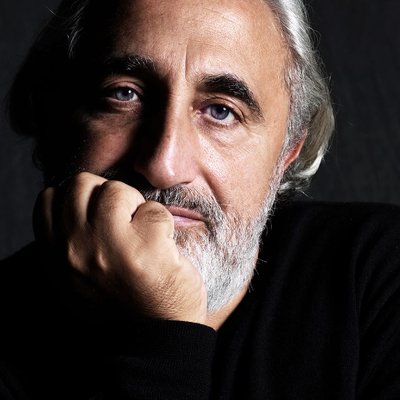
Every day, I wake up with a renewed vigor to fight for the West. I'm optimistic by nature so I always believe that there is hope at the end of the proverbial tunnel. But as the author of The Parasitic Mind and Suicidal Empathy, I'm increasingly feeling that the West's desire to commit Civilizational Seppuku, as the highest form of enlightened virtue, is too deeply ingrained. Those who might resist the self-inflicted death spiral are too apathetic. The solutions are very clear but I do not believe that we possess the testicular fortitude to implement them. I think that it is going to be a slow and painful demise. The greatest tragedy that the world has ever seen.
Ferdinand64 retweeted

The media is constantly using distraction tactics to hide how broken our country is.
It's not just a few bad apples.

The media is obsessed with slimeball celebrity predators- latest allegations are against David Walliams - while Maggie Oliver has to sue the government to get action for tens of thousands of victims of Pakistani rape gangs.
I know which story I think is more important.
@MaggieOliverUK
Ferdinand64 retweeted
The BBC needs to be put out of its misery. Tonight on The Liz Truss Show.

🚨 “I WARNED THE BBC!”
Former BBC broadcaster Liz Kershaw joins Liz Truss to reveal what she knew about Russell Brand, the warnings she raised and why BBC bosses failed to act.
Should the BBC be DEFUNDED?
📺 PREMIERES TONIGHT at 7PM UK on @ukliveonline
See you in the chat!
HERE --> youtu.be/S8K0LYxEL5M
#LizTruss #LizKershaw #RussellBrand #BBC

Ferdinand64 retweeted

So all the dimwitted Lefties cheered when the Chancellor increased the tax on banks. The effect? Banks, especially Lloyds and Barclays, have at F1 speeds added the .25% to your mortgage but your interest on savings hasn’t moved at all.
The reason is the banks are deliberately slowing the rate rise on YOUR savings to claw back the £2billion tax from YOU.
The real culprit is Burnham and Co who are in effect increasing the tax on your hard-earned savings so that it can be spent on benefits for the nation’s SKIDS- Skint Idle Dim Socialists.
Ferdinand64 retweeted
We have to break out of this post-war Blairite morass that we're in, and the BBC being defunded is part of that

🗣️@trussliz on the BBC
☑️ It's worse than useless.
☑️ Britain would be better off if it didn't exist.
"We have to break out of this post-war Blairite morass that we're in, and the BBC being defunded is part of that."
#DefundtheBBC
Ferdinand64 retweeted

Anyone who likes the idea of rejoining the EU, has not bothered to think out the damage as well the extra cost to the UK, which it simply cannot afford.

Ferdinand64 retweeted

Andy Burnham's EU reset will trash 90% of UK goods exports by making them even more expensive while benefitting almost zero. Anyone who cares about British industry must stop this deal, says Catherine McBride. dailysceptic.org/2026/11/10/…


Ferdinand64 retweeted

Was supposed to be joining @RupertLowe10 for a @RestoreBritain event tonight. If I had travelled to the UK, I would have been arrested on the spot and could have faced up to 4 years in prison.
I can’t visit for one day to give a speech, yet thousands of people without papers cross the Channel and are given free housing and citizenship.
All courtesy of @ShabanaMahmood and the @ukhomeoffice.
Ferdinand64 retweeted

Some rapists are treated more leniently than others.
Why would that be?

Hamoud Al-Soaimi was found guilty of 3 counts of sexual assault, including sex with a 12-year-old girl.
He received 180 hours of community service. No jail.
In Newcastle, two vulnerable girls were groomed, passed around, and repeatedly raped.
Hamoud Al-Soaimi was convicted of three counts of sexual assault and one count of assault by penetration. But when he stood up to be sentenced on 1 March 2024, he did not go to prison.
He was given two years, suspended for two years, and 180 hours of unpaid work. He walked out of court a free man.
The media barely reported his sentence. The BBC, who had once made a sympathetic documentary about the Badreddin family as Syrian refugees, went quiet.
The politicians who scream about protecting children said nothing. No outrage from Labour. No outrage from the Home Office. No emergency debate in Parliament.
When people tried to get the sentence increased as unduly lenient, the bid failed. The system closed ranks and decided that 180 hours of sweeping streets was justice for a child rape gang victim.
A white British veteran, Adam Smith-Connor, prayed silently outside an abortion clinic and got a conviction, a criminal record, and thousands in costs.
A white British man posted an angry Facebook post after Southport and got 2 to 3 years in immediate custody.
Hamoud Al-Soaimi sexually assaulted children in a grooming gang and got a suspended sentence and 180 hours.
That is not justice. That is a two-tier system. That is politicians and judges protecting the narrative of multiculturalism instead of protecting British girls.

Ferdinand64 retweeted

Patents are government-granted monopolies. If you strip away the euphemism, the state forbids competitors from using an idea, backed by courts and injunctions.
The Wright brothers prove what happens when that monopoly metastasizes. Orville and Wilbur secured U.S. Patent 821,393 in 1906, covering their lateral control system. Rather than compete on engineering, they spent the next decade suing Glenn Curtiss and every other American aviation pioneer who dared improve on their design. Curtiss, who built superior aircraft, had to spend his time fighting injunctions instead of building planes. The U.S. aviation industry largely froze while litigation dragged through courts.
Europe had no such paralysis. French, German, and British manufacturers iterated freely, competed aggressively, and by the time World War One broke out in 1914, European aviation had lapped America. The U.S. military scrambled to field combat aircraft and found its domestic industry strangled. The government ultimately forced a cross-licensing agreement in 1917 through the Manufacturers Aircraft Association, dismantling the very monopoly Washington had granted eight years earlier. The state created the problem, then congratulated itself for solving it.
This is the standard story patents tell. The incentive argument runs like this: without patent protection, inventors will not invest in research because competitors will copy their work. The claim sounds intuitive, but the math rarely supports it. Pharmaceutical companies spend more on patent litigation and regulatory lobbying than many spend on actual drug discovery. Curtiss needed customers and competitive pressure to motivate him, which the Wright litigation denied him.
Progress compounds through imitation, recombination, and rivalry. Prices fall, quality rises, and you benefit directly when inventors race each other rather than race to the courthouse. Every year a patent holds a superior technology off the market is a year you pay more for worse outcomes.

Ferdinand64 retweeted
The government taxes you when you earn money, taxes you when you spend it, taxes you when you invest it, and then taxes your children when you die. The federal estate tax currently kicks in at 40% on estates above $13.61 million, a threshold the Biden administration repeatedly tried to lower. Washington frames this as targeting dynastic wealth. It actually targets a lifetime of accumulated savings, already taxed multiple times over.
Property rights mean nothing if the state can confiscate your accumulated capital the moment your heart stops. Murray Rothbard put private property at the foundation of liberty for exactly this reason: ownership that evaporates at death is not ownership. It is a revocable license the state issues and reclaims at will.
Consider a family farm in Iowa worth $15 million on paper, generating $200,000 a year in real income. The heirs owe $540,000 in federal estate taxes within nine months of death. They did not get $540,000. They got a farm. So they sell it, usually to a corporate agricultural buyer, which is a funny outcome for a tax rhetorically aimed at breaking up concentrated wealth.
The capital your grandfather spent forty years building represents deferred consumption, resources he chose not to spend. Taxing that capital destroys it. This process doesn't redistribute purchasing power; it rather converts productive assets into government expenditure, removing them from capital markets where they would have funded jobs, equipment, and future production.
Calling this anything other than state-sanctioned inheritance confiscation requires genuine ideological commitment to the fiction that the state has a prior claim on what you built.

Ferdinand64 retweeted
Well since you asked @Phatymarh44:
1) We left Lebanon under imminent threats of execution as Lebanese Jews from Muslim militia;
2) My brother was forced to leave Lebanon because he was winning too many national Judo championships;
3) My eldest brother was forced to leave Lebanon when he was being increasingly harassed by Muslim militia (along with his non-Muslim wife);
4) My parents were kidnapped and abused by Fatah;
5) Some of grandparents escaped Syria because of Islamic Jew-hatred;
6) My brother-in-law's family escaped Alexandria (Egypt) because of Jew-hatred in Egypt;
7) My wife's Armenian family escaped Lebanon because of Islam;
8) My wife's ancestors were massacred or forced to flee the area around Turkey during the Armenian genocide;
9) I received endless death threats from Muslims when I lived in Montreal;
10) I receive endless threats and insults from Muslims on social media.
Is this enough or should I add more to the list?

Ferdinand64 retweeted
Will the players of the Postcode Lottery really be thrilled to learn that they are funding a panoply of open borders, pro-trans and other far Left organisations and 'charities', asks Charlotte Gill. dailysceptic.org/2026/11/10/…

Ferdinand64 retweeted

When in the EU they took too many of our fish and limited UK quotas. They banned our beef for too long. They kept us short of milk quota to limit our exports of dairy. They gave grants to close our orchards. Why would they help our food exporters this time?
Ferdinand64 retweeted
The BEST description you will read of how our country committed a monumental act of self-harm and trashed a once reliable energy system and built a lot of windmills leading to almost certain - and richly deserved - blackouts.
👇

The grid is looking precarious this winter. Grid balancing costs keep spiking off the charts. I've seen all manner of creative excuses this morning but this is a crisis tewnty years in the making. It was around 2008, or thereabouts, when I joined a large energy firm to do a highly uninteresting job, only made interesting by way of my co-worker being one of the lead programmers on the energy trading desk who explained to me in great detail how the grid works.
I was already dimly aware of the overall energy strategy. The idea was that we were going to blow up our coal power stations and build windmills instead, on the presumption that "the wind is always blowing somewhere" and that the easter bunny would intervene in the event there was no wind.
But we knew about dunkelflaute even back then. They knew very will the wind is not always blowing somewhere. But this was a manageable problem because there wasn't all that much wind capacity to offset. You could disguise the problem with importing energy through interconnectors. It was a relatively small problem that could be disguised.
But then we did start blowing up our coal power stations, letting our nuclear power age out, and didn't bother to replace our baseload capacity. We instead built windmills. Rather a lot of them. We built them in far away places, requiring long transmission lines for intermittent power that the grid struggles to assimilate.
Making up the shortfall always depended on gas because most large energy plants can't be ramped up and down at a moment's notice. The problems started when shortfalls were measured in gigawatts. The more windmills you added, the greater the instability.
This was known in 2008 and the problem was never acknowledged. Even back then, realists were saying this only had one destination; rolling blackouts. It's been looking hairy since 2022, and the situation has only worsened, exacerbated by a deliberate decision to run down and close our gas storage facilities, making us more reliant on the day-to-day gas market - which is notoriously volatile, especially when wars break out in our vicinity.
Some renewable energy enthusiasts did acknowledge this might be a problem, but they said it would be a small problem, and that by now, there would be millions of electric cars plugged into the grid that grid operators could use to even out shortages of wind. On paper that was a good idea, if only to even out the odd hour of wind loss. The strategy, though did not address the prospect of days and weeks of cold conditions with no wind, or the fact that nobody wants an EV.
As more wind generation was added to the grid, this problem became bigger and bigger, with no real thought as to what was going to keep the lights on in a crisis. We also banned extraction of our own fossil fuel reserves meaning that we are now wholly dependent on gas imports from wherever we can get it.
Now at this point, if you're not politically attuned, you're probably thinking this is a seriously dumb policy that's so dumb that our politicians couldn't possibly have been this retarded, so there must be some other explanation. If only that were true.
The problem is that a number of subsidies and market incentives were put in place so that the energy sector would concentrate on building windmills. There was (and is) big money involved, so there is a very influential wind energy lobby that misdirects the national conversation and influences our MPs. They are easily bamboozled and incredibly gullible.
Consequently, realists lost the argument. The warnings we've seen in recent years from the indefatigable @KathrynPorter26 (et al) are just the latest generation of energy wonks to notice that making your power grid weather dependent is a shit idea.
Anyone raising the alarm is immediately accused of being a "climate denier" despite warnings from them that there are certain facets of the climate that we ought to pay more attention to. Namely that Europe is prone to protracted periods without wind and sunshine. While our Liberian energy minister can be forgiven for not knowing this, her many predecessors cannot.
So we're now in a position where we have gigawatts of windmills installed, doing absolutely bugger all, at times when people are known to need heating and lighting. So now we're scrambling for gas from whatever we can find it, regardless of the cost - and making "resilience" plans for the near future when the grid stops working completely (which they will blame on Russian hackers).
This is made all the more precarious because the European power stations we import from have more demand than usual, not least because of the dry conditions this summer, meaning hydro is less available, and we're feeding cruise missiles into a regional conflict that is currently demolishing European grid infrastructure.
This would be a good time to fire up our redundant coal burning stations, but the last Tory government demolished them. This is a situation that energy analysts are describing as "bad".
Of course, that is a matter of perspective. Should there be a cold spell where the grid trips out for weeks, or we're reduced to energy rationing, many of you will simply die, thereby reducing demands on the grid and other public services. This is a necessary sacrifice toward our green energy future which, after all, is the priority here. We no longer cling to the archaic idea that the grid should serve the needs of the economy. It is we who must change!

Ferdinand64 retweeted

Yet another welfare climb down by Labour as John Healey has abandoned plans to crack down on welfare fraud by looking into Universal Credit claimants’ bank accounts. It’s just a pity Healey’s new found passion for not spying on the public didn’t extend to stopping the new sweeping powers he’s just granted to HMRC to raid bank accounts and enforce a massive self-employed tax acceleration, from July 2029, or to allow property snoopers to enter private property for a mansion tax.
It is shocking we now have a government with two tier powers depending on whether you're working or claiming.
Ferdinand64 retweeted

For the many UK politicians @UKLabour and journalists @BBC who don't know anything about UK trade, here are the highlights:
1. The UK is now predominantly a service exporter. 57% of UK exports are services, which are not affected by EU 'red tape'.
2. UK goods exports have dropped from almost 70% of our total exports in 1997 to just 43% in 2025. This trend began long before Brexit and is tied to Net Zero mandates, high UK energy prices, and EV mandates.
3. Machinery and transport goods, such as cars and aircraft parts, are 42% of all UK goods exports. This is by far the UK's largest export sector, although it is also falling. It was 50% of UK exports in 2000. But if the UK joins the EU's CBAM, companies in this sector will see their imported material costs rise, making their exports even less competitive.
4. Chemicals are the UK's second-largest export sector. They account for 19% of UK goods exports, but this share is shrinking due to UK and EU energy costs and Net Zero regulations. These will increase if the UK joins the EU ETS.
5. Miscellaneous Manufactures account for 11% of UK goods exports. This is still the UK's third-largest export sector, even though it includes many goods the UK no longer makes because of our high Carbon taxes, which will increase if the UK signs up to the EU's even higher ETS on November 20th.
6. Fuels account for 9% of UK exports. This is still the UK's 4th largest goods export sector, even though the current and previous governments are/were trying to destroy it with bans on new exploration and ultra-high taxes.
7. Material Manufactures account for 8% of UK goods exports. This sector includes iron, steel, aluminium, ceramics, and glass manufacturing - industries that have gone, or are going, out of business in the UK because of high UK energy costs, which will rise if the UK joins the EU ETS.
8. These five sectors make up almost 90% of UK exports. The other 5 industry sectors are insignificant. But the government and our journalists think the UK is New Zealand and that the only goods we export are food and live animals to the EU. We don't! UK food and live animal exports to the EU were just 1.3% of the UK's total exports.
9. The government is about to sacrifice all of the export industries listed above to slightly reduce the IMPORT costs of a handful of Supermarkets, at least two of which are privately owned German companies.
These savings will not be passed on to UK shoppers because the government has also increased wages again, and supermarket energy costs will increase if we join the EU's ETS.
10. UK exports of food and live animals will not increase because we are paying farmers to not produce them, this has nothing to do with EU red tape. Instead we are paying farmers to plant trees and wildflowers or plaster their farmland with solar panels. (54% of UK electricity is coming from gas today, 12% from solar and 3% from wind.)
11. Write to your MP and tell him to #StoptheReset.
If you don't stop this, don't complain when all of our goods export industries have closed because of EU higher carbon taxes, EU higher carbon import tariffs, and the cost of complying with the EU's new packaging and process regulations.
