


Foreigners are now fighting against Tigraians on Abiy's side in Gerhu Sirnay, Tigrai. A government that brings in foreign forces against its own citizens has no business talking about SOVEREIGNTY. The world needs to ask Abiy who these men are and who sent them.
#Tigray #TigrayGenocide #Ethiopia #AbiyAhmed #StopTheWarOnTigray
@UN @antonioguterres @UNHumanRights @volker_turk @UNOCHA @ICRC @hrw @amnesty @IntlCrimCourt @AfricanUnion @eu_eeas @EU_Commission @vonderleyen @kajakallas @Europarl_EN @FCDOGovUK @YvetteCooperMP @GermanyDiplo @francediplo_EN @SecRubio @StateDept @StateDeptSpox @AsstSecStateAF @SenateForeign @SFRCdems @SenatorRisch @SenatorShaheen @ChrisCoons @HouseForeign @RepBrianMast @RepGregoryMeeks @AFP @AFPAfrica @Reuters @AP @BBCWorld @BBCAfrica @AJEnglish @CNN @nytimes @washingtonpost @guardian @FRANCE24 @France24_en @dwnews

Who are these foreign forces operating in Tigray, and whose interests are they serving?
As clearly seen in this video, foreign military forces are operating in Tigray, supporting the Ethiopian regime of Abiy Ahmed. The video was recorded in Gerhu Sernay, north-central Tigray.
Given the mass atrocities and genocide committed against Tigrayan civilians, any foreign military involvement demands an immediate, independent investigation. The people of Tigray deserve protection, accountability, and justice.
#TigrayGenocide
@hrw @amnesty @UNHumanRights @unhrcpr @cnni @BBCAfrica @EU_Commission @KenRoth @nytimes
The very people who hated TPLF so much that they cheered Abiy's army into our Tigrai now act stunned that his drones keep landing on civilians and ask how weapons this "precise" could possibly miss. Look at what that question carries. It assumes “Abiy was only ever aiming at TPLF and that every dead child is a technical error”. He has been bombing Tigraians since 2020. This is a guy who designed and executed the #TigrayGenocide.
Pretending to be confused is part of their service to Abiy! A Tigraian voice saying "he missed" sells better abroad than anything his own spokesmen could say. Their surprise is a PERFORMANCE and their questions are his talking points narrated in Tigrigna. "ብሓደ ዘይተጋገና" እዩ ሕማሞም!
#Tigray
Finan67 retweeted

These are the 14 confirmed civilian victims of the drone strike carried out by the fascist regime of Abiy Ahmed in Rama today, October 30, 2026. More civilians have been murdered, but only these 14 deaths have been verified so far.
According to eyewitness accounts, more than 60 innocent civilians have been seriously injured and taken to nearby hospitals and clinics for medical treatment.
#TigrayGenocide
@hrw @amnesty @UNHumanRights @KenRoth

In the night of 10/29/2026, one of Abiy's drones hit a truck carrying sorghum in the middle of Rama, Tigrai. Friday morning people came out to gather the spilled grain and the drone came back to the same spot and hit the civilians gathering it. At least 11 dead, 13 according to a resident who spoke to AFP. Picking food up off the ground is now enough to get you bombed and killed in Tigrai.
#Tigray #TigrayGenocide #DroneStrikes #StopTheDrones #Rama #Ethiopia
@UN @antonioguterres @UNHumanRights @volker_turk @UNOCHA @WFP @UNICEF @ICRC @MSF @hrw @amnesty @IntlCrimCourt @AfricanUnion @eu_eeas @EU_Commission @vonderleyen @kajakallas @Europarl_EN @FCDOGovUK @YvetteCooperMP @GermanyDiplo @francediplo_EN @SecRubio @StateDept @StateDeptSpox @AsstSecStateAF @SenateForeign @SFRCdems @SenatorRisch @SenatorShaheen @ChrisCoons @HouseForeign @RepBrianMast @RepGregoryMeeks @AFP @AFPAfrica @Reuters @AP @BBCWorld @BBCAfrica @AJEnglish @CNN @nytimes @washingtonpost @guardian @FRANCE24 @France24_en @dwnews


Finan67 retweeted

Today, at around 7:30 pm, a drone strike was reported in Rama town, central Tigray zone. reports confirmed that two civilians were killed and four others were injured.
The oath forgotten by some but one that some of us are still stuck with. If only… 🤷🏾♂️
ብዝኾነ ሕዚውን ትግራይ ትስዕር::
#Tigray #TDF #FreeTigray
The TPF spokesperson says every "cadre" in Tigrai must report to the police station in their woreda. Those who don't will be considered ENEMY COMBATANTS and dealt with accordingly.
Nobody has defined a “cadre” and nobody will, because the word is meant to fit anyone. Support the TDF and you are a cadre. Hold a certain political view and you are a cadre. What they are really announcing is that having an opinion in Tigrai is now enough to make you a target in a war.
This is how a people get marked. It is WRONG and GENOCIDAL!
@hrw @amnesty @UNHumanRights @antonioguterres @GenocideWatch @CrisisGroup @eu_eeas @kajakallas @_AfricanUnion @Reuters @AP @AFP @BBCAfrica @AJEnglish @nytimes @guardian @dwnews @declanwalsh @SecRubio @StateAfrica @SenatorRisch @SenatorShaheen @CoryBooker @RepChrisSmith @RepSaraJacobs @POTUS @WhiteHouse @VP @StateDept @USUN @vonderleyen @eucopresident @Europarl_EN @FCDOGovUK @YvetteCooperMP @Keir_Starmer @GermanyDiplo @francediplo_EN @dfatirl @NorwayMFA @CanadaFP @AnitaAnandMP @UN @UN_HRC @UNOCHA @ICRC
#Tigray #Ethiopia #Genocide


Finan67 retweeted

The Genocidal Abiy Ahmed regime continues to massacre Tigrayans with drone strikes. Around midnight yesterday, it hit an Isuzu carrying animals, killing four people and wounding others. Drone strikes have become an ordinary fact of life.
facebook.com/photo?fbid=1547…


"ቡሃላ መጣና አይን አወጣ" ድዮም ዝብሉ ቶም ዓዲ 3 🤷🏾♂️
In 2022 I argued, in public and against the "mood of the moment", that Tigrai should give Abiy's peace a chance. The thread is below. 4 years on, Tigrai's territory is still occupied, the displaced are still in camps and the drones are always over our towns.
Abiy answered that chance with a war on Tigrai's unity. Thanks for the lesson, I guess. 🤷🏾♂️
Tigrai has been fighting fascism from every direction since 2020. Addis, Asmara and everyone they armed. That fight never ended. Except only the so called “leaders” pretending it did.
We all stood with the TDF then, I STILL DO. My allegiance is to the Tigrai Nation and the TDF is Tigrai's defense.
Nothing about that has changed, only some people are now calling it a crime. Funny how “the crime” only started when Abiy needed it to. ሃላኽ 🤦🏾♂️
#Tigray #Ethiopia


Finan67 retweeted

@Amnesty continues to receive reports that civilian infrastructure, including several schools, has been damaged or targeted during aerial attacks in Tigray, Ethiopia.
ዘይምድናቕ ኣይከኣልን:: እንተዝርድአናስባ ይንገረናሎ:: 🤷🏾♂️

እሾክን በሾክ: The Counterinsurgency Triangle
Tigray Peace Force, Gadaa Commando and Amhara Peace Force
I have been watching an interesting pattern take shape across Tigray, Oromia and Amhara. Former rebel commanders and fighters who switched sides are not simply being disarmed and sent home. They are being reorganized, armed and deployed against the movements they once belonged to.
At first, these may look like three separate regional developments, but I do not think they are. The Tigray Peace Force, Gadaa Commando and Amhara Peace Force increasingly point to a common counterinsurgency logic in which former rebels are used to penetrate, weaken and fight the insurgencies from which they emerged. The calculation has obvious advantages, as these fighters know the people they are fighting, the terrain they operate in, the networks that sustain them and the internal weaknesses outsiders may struggle to understand. What concerns me is what this strategy could produce once the immediate wars are over.
All three are state-backed armed formations built largely around former rebels who switched sides and joined the government.
The Tigray Peace Force was formed from commanders and combatants who broke away from the TPLF and turned against it after aligning themselves with the federal government. Its main objective is to confront the TPLF inside Tigray in cooperation with federal forces.
Gadaa Commando follows a similar logic. It was built largely from former OLA commanders and combatants who surrendered or defected to the government. Rather than simply disarming and demobilizing them, the government reorganized and deployed them within the counterinsurgency effort. Their primary target has been the OLA, although they have also been deployed against Fano forces in parts of Wollega.
More recently, the Amhara region announced the formation of the Amhara Peace Force, bringing together former Fano combatants who joined the government side at different times. It is reportedly commanded by Captain Masresha Sete, one of the founders and important commanders of the Amhara Fano insurgency. Other regional armed formations, including the Tekeze Guard and Raya Guard, are also reportedly expected to come under its command structure.
Former rebels offer the state advantages that conventional security forces cannot easily reproduce. They know insurgent commanders, supply routes, hiding places, recruitment patterns, support networks, communication channels and battlefield tactics from firsthand experience. Some also defected after serious disagreements with their former comrades, adding personal rivalries and unresolved grievances to their willingness to fight them.
The experience in Oromia already shows both the value and the limits of this approach. Former OLA commanders who switched sides have reportedly worked with military intelligence, national intelligence and Oromia security institutions. Their insider knowledge can help expose supply and support networks, penetrate insurgent structures and persuade fighters still in the bush to surrender or defect. Their performance as frontline combat units, however, appears less decisive than their usefulness in intelligence, infiltration and political persuasion.
In Tigray, the advantages appear more pronounced, with former TPLF fighters operating under the Tigray flag giving federal forces a locally rooted partner and helping soften the perception that the campaign is being conducted entirely by an outside army. TPF commanders also appear capable of reaching former comrades in ways federal forces cannot. Some fighters can be persuaded to defect, others to cooperate, and still others may provide information while remaining inside TPLF structures. During the latest fighting, that combination of local knowledge, political symbolism and access to former networks appears to have given federal forces an important advantage.
It is still too early to judge the Amhara Peace Force in the same way. Former Fano commanders and fighters aligned with the government have nevertheless already reportedly provided information about Fano commanders, operational methods and support networks. They have also been used in information operations intended to deepen existing divisions and exploit rivalries within the insurgency. Their formal organization now raises the possibility that former Fano fighters will increasingly confront their former comrades directly on the battlefield.
For the government, the short-term appeal is obvious, as the model can weaken insurgencies from within while giving security institutions something conventional forces often struggle to acquire quickly, trusted local access and insider knowledge. Yet the same qualities that make these formations useful today could make them difficult to manage later, particularly if they retain their weapons, commanders and separate identities after the immediate counterinsurgency mission has passed.
These are former ethno-nationalist rebels who are once again being organized into armed formations with strong regional and ethnic identities. Today their mission is to fight their former comrades. Yet the same forces are operating in a country where territorial disputes, communal tensions and competing regional claims remain unresolved.
Complaints have already emerged against Gadaa Commando over alleged attacks involving Amhara civilians. There are also reports of tensions and clashes involving the Tigray Peace Force and Raya Guard around Alamata. If the Tekeze Guard is eventually incorporated into the Amhara Peace Force, the implications could become even more sensitive along the contested western border areas.
Those immediate tensions are only part of the risk, as former rebel formations that are armed, organized, given commanders and allowed to operate as identifiable forces can begin developing interests of their own. Commanders accumulate loyal followers, fighters develop institutional identities, weapons create political leverage, and local communities may begin looking to these formations for protection or representation. A temporary security instrument can therefore acquire a political life well beyond the mission for which it was created.
This is the trajectory I am most concerned about. The rebel of yesterday becomes the government ally and counterinsurgent of today. If that ally is allowed to build an independent command structure, retain substantial weapons, develop a loyal constituency and accumulate political bargaining power, today’s government partner could become tomorrow’s autonomous armed actor and, under different political conditions, could eventually return to rebellion.
The logic of እሾክን በሾክ may therefore work in the short term. One thorn can indeed help remove another. The harder question is what happens when the second thorn remains deeply embedded after the first one has been removed.
The government needs to think beyond immediate battlefield effectiveness and establish safeguards while these formations are still dependent on state support.
1. Rehabilitation and reintegration:
Former rebels should undergo serious rehabilitation and reintegration processes to ensure they understand that they are no longer outlaws but lawful state actors, with an obligation to uphold the law, respect state authority and serve all citizens.
2. Professional command:
They should be placed under experienced, moderate and professional commanders who understand the complexities and sensitivities of Ethiopia’s multi-ethnic political environment.
3. Strict supervision:
These formations should remain under tight supervision by federal and regional security institutions, which must intervene swiftly whenever tensions or clashes emerge with other armed groups or communities.
4. Weapons regulation:
Their weapons and capabilities must be strictly regulated. They should not be armed to a level that enables them to believe they can independently challenge regional or federal security institutions.
5. Clear exit strategy:
There should be clear benchmarks and mechanisms for disarming, demobilizing and integrating these forces into the regular regional or federal security apparatus once their counterinsurgency objectives are fulfilled or when the risks they pose begin to outweigh their usefulness.
I find the broader contradiction difficult to ignore, given that the federal government dismantled regional special police forces partly amid concerns that heavily armed regional formations were deepening polarization and conflict, yet it is now helping organize former ethno-nationalist rebels into new armed formations rooted in many of the same regional and identity-based fault lines.
I understand the immediate military calculation, and it may even prove highly effective in weakening several insurgencies, but my concern is what happens afterward, particularly if these forces are not carefully controlled, professionalized and eventually integrated or demobilized. Ethiopia may discover that it solved one security problem by creating the foundations of another.
The former rebel who becomes today’s counterinsurgent could eventually become tomorrow’s armed political challenger.
Finan67 retweeted
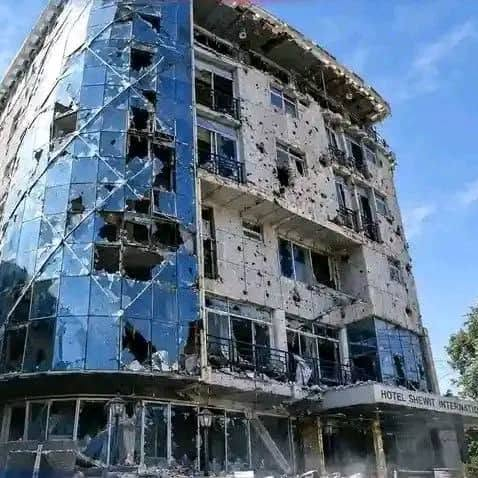
The genocidal Regime in Addis keeps destroying Tigrayan civilian infrastructures (schools, hotels, TV stations, IDP centers), killing many. The past night, it hit 3 hotels in Adwa (Shewit, Pan Africa, and Soloda hotels), others in Shire, & in Sheraro.
facebook.com/AssociazioneAmi…

At 2:30 this morning Abiy Ahmed's drones hit a displacement shelter in Sheraro. People who had already fled once. 8 killed in their sleep, one of them a child. 6 badly wounded. This is what Abiy's army calls restraint.
#Tigray #Ethiopia
@addisstandard @AFP @Reuters @AP @BBCAfrica @AJEnglish @hrw @amnesty @UNHumanRights @volker_turk @UNOCHA @MSF @USEmbassyAddis @AsstSecStateAF @StateDept @mofauae @EUinEthiopia @EU_Commission @EUintheUS


