

Ukrainian manufacturer of deep-strike UAVs, cruise and ballistic missiles.
Joined July 2026
- Tweets362
- Following2
- Followers22K
- Likes127


Pinned Tweet
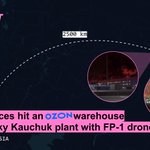
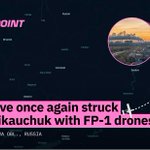
🔥 FP-1 drones traveled over 2,500 km from the border to hit two targets in Omsk.
Ukrainian defense forces struck the Omsky Kauchuk plant, one of Russia's largest petrochemical facilities, which historically produced ~25% of the country's butadiene-methylstyrene rubber.
An OZON logistics warehouse complex was also hit in the strike.


💥 Overnight, Ukrainian defense forces struck a chemical plant in Russia's Tolyatti using FP-1 drones.
Tolyattikauchuk is one of Russia's largest petrochemical facilities, supplying roughly 25% of the domestic synthetic rubber market.
Its products are directly used in Russian weapons manufacturing, including ballistic missiles.
Direct hits confirmed.

💥 Russia's Rosneft is deliberately delaying refinery repairs due to repeated Ukrainian drone strikes, according to Bloomberg.
Some facilities are struck again immediately after repairs wrap up, prompting companies to intentionally stretch work that should take days into weeks.
Defenses made of containers, netting, and steel cables have proven ineffective, making continuous repairs financially unsustainable.
Bloomberg estimates Ukrainian drones have launched at least 114 strikes on Russian oil refineries since the start of 2026—more than double the rate for the same period last year.


🦩 Flamingo is designed to work with several compatible engines, including restored ones from decommissioned civilian aircraft that pass performance checks and get put back to work.
That flexibility makes the system easier to source, adapt, and scale.
Smart engineering isn't always about starting from scratch—it's about leveraging what already works.

Fire Point retweeted
"How can I protect myself and my children?"
Fire Point CEO @iraterekh recounted asking herself while trapped between Bucha and Irpin under Russian occupation.
"How can I protect myself and my children?"
Fire Point CEO @iraterekh recounted asking herself while trapped between Bucha and Irpin under Russian occupation.

🔥 Fresh satellite imagery of the Yandex data center shows the aftermath of FP-1 drone strikes.
Extensive damage and burn marks are visible on the roofs of four buildings across the complex, with the impact clearly visible even from space.

🔥 Russian oil refineries: frequent flyers' club.
Ukrainian Defense Forces' rating of Russian oil refineries by number of strikes.
No sooner is one strike cleared than the next arrives, leaving equipment barely patched up before FP-1 drones show up for an unannounced quality check on the repairs.
Here are the top six regulars:
20 times — Saratov Refinery
19 times — Ilsky Refinery
18 times — Ryazan Refinery
15 times — Syzran & Afipsky Refineries
13 times — Tuapse Refinery


💥 Turbulent times for Russian oil.
Ukrainian strikes have turned Moscow’s main revenue asset into one of its biggest headaches.
In early 2026, strikes on oil depots and terminals near Ust-Luga, Primorsk, and Novorossiysk grabbed global headlines, but the impact was limited because destroying individual tanks didn't knock out entire facilities.
Refineries are different—they link extraction to the fuel market. Shutting them down leaves crude unprocessed, forcing Russia to store it, export it, or cut production. Excess crude can't compensate for lost refining capacity and triggers domestic shortages.
Fuel is a core policy tool for Russia. Refinery strikes won't stop supply entirely, but they are turning an industry crisis into an economic one. By June, fuel disruptions hit 83 Russian regions, with gasoline prices spiking highest in occupied Sevastopol (+30%).
On September 28, Putin banned publishing fuel export and refinery processing data. Wonder why?
