Constitutionalist, freedom, liberty, family
🇺🇲
Joined January 2023
- Tweets11K
- Following1.4K
- Followers1.4K
- Likes505K


John Ford retweeted

BREAKING: More than 4 in 10 names flagged as possible noncitizen voters in California cannot be found on voter rolls, according to a legal filing. apnews.com/article/californi…


John Ford retweeted

🇵🇱 Statement of the First President of the Supreme Court of Poland regarding the situation at the Constitutional Tribunal (English translation) 🧵 1/3
It is with the utmost indignation and firm opposition that I receive information about the actions taken today against the Constitutional Tribunal, in particular the dispatch of police officers to its seat, the prevention of the Vice-President of the Tribunal from entering the building, and the issuance of a document entitled an "order" providing for the suspension of the President and the Vice-President of the Tribunal from the performance of their official duties. These events are unprecedented in a democratic state ruled by law and raise fundamental doubts as to their conformity with the fundamental principles of the constitutional system of the Republic of Poland. It is unacceptable for disputes concerning the functioning of a constitutional organ of the State to become a pretext for taking actions leading to its de facto paralysis and to depriving it of any authority. This constitutes a particularly dangerous precedent, striking at the foundations of a democratic state ruled by law.
It should be recalled that Article 7 of the Constitution of the Republic of Poland requires the organs of public authority to function on the basis of, and within the limits of, the law; Article 10 establishes the principle of the separation of and balance between powers; and Article 173 guarantees the separateness and independence of the courts and tribunals from other branches of power. It follows unequivocally from these provisions that no organ of public authority may, bypassing statutory procedures, arbitrarily restrict the activity of a constitutional organ of the State or deprive the persons holding office therein of the ability to perform their duties. Nor may any organ of the State arrogate to itself competences not provided for by law, or use coercive measures to impose its own interpretation of the provisions in force on other organs.

John Ford retweeted
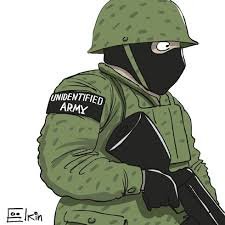
Details of what is happening in Warsaw Poland right now:
A long standing power struggle between the countries two main political parties over Judges in the countries judiciary has spilled out after Judge Anna Korwin-Piotrowska who is linked to the current Prime minister Tusk has suspended two other judges both sides linked to the opposing PIS Party.
This caused outrage amongst PIS supporters who flocked to the countries constitutional court, the Judge Anna Korwin then called police to protect her which have surrounded the building which is widely pictured, the police have now had clashes with protestors.
The President of Poland has turned his plane around on a diplomatic flight to Senegal calling the suspension of judges and the police presence near the courthouse a coup attempt by the Prime minister tusk and a massive overstep of Judicial power.

John Ford retweeted

🚨 Poland, 30–31 October 2026: Anatomy of a “Coup”
The Cast
Government and coalition
- Donald Tusk — prime minister, Civic Platform leader, author of the decision
- Waldemar Żurek — justice minister and prosecutor general; former judge, supplied the Article 130 hook and the immunity motions
- Maciej Berek — Tusk’s former minister and self-described “right-hand man,” now a Tribunal judge; inside the building, filmed the president at the door
- Radosław Sikorski — foreign minister, defended the operation from the G20 in Atlanta
- Anna Korwin-Piotrowska — Tribunal judge, signed the suspension orders, claimed the court’s leadership
- Krystian Markiewicz — Tribunal judge, in the door scuffle, ECHR applicant
- Marcin Dziurda — Tribunal judge, lead ECHR applicant
- Maciej Taborowski — Tribunal judge, ECHR applicant
- Magdalena Bentkowska — Tribunal judge, sworn in by Nawrocki, under disciplinary case
- Dariusz Szostek — Tribunal judge, sworn in by Nawrocki, under disciplinary case
- Sławomir Patyra — Tribunal judge, sworn in by Nawrocki in July, under disciplinary case
- Szymon Hołownia — Poland 2050 founder, attending the president’s talks, critical of the method
- Władysław Kosiniak-Kamysz — PSL leader and deputy prime minister, attending the talks
- Anna-Maria Żukowska — head of The Left’s caucus, boycotting the talks
- Katarzyna Pełczyńska-Nałęcz — quit the government and Poland 2050’s leadership on 22 October
- Lech Wałęsa — former president, endorsed Tusk “regardless of the circumstances”
President and opposition
- Karol Nawrocki — president
- Bogdan Święczkowski — Tribunal president, suspended; former deputy prosecutor general under Ziobro
- Bartłomiej Sochański — Tribunal vice-president, suspended; let into the building by Nawrocki
- Jarosław Kaczyński — PiS leader
- Zbigniew Ziobro — former justice minister, called for resistance
- Zbigniew Kapiński — first president of the Supreme Court, at Nawrocki’s side
- Paweł Szefernaker — presidential aide, read the 5 a.m. statement
- Zbigniew Bogucki — chief of the presidential chancellery
- Marcin Przydacz — presidential aide, alleged the judges breached presidential inviolability
- Bartosz Grodecki — head of the National Security Bureau
- Marcin Horała — deputy Sejm marshal, Development Plus
- Wojciech Sych — Tribunal judge; on the opposition's own seniority logic, he, not Korwin-Piotrowska, should lead
- Julia Przyłębska — former Tribunal president
- Mateusz Morawiecki — former prime minister
- Patryk Jaki — PiS MEP
- Sławomir Mentzen, Krzysztof Bosak — Confederation
- Grzegorz Braun — Confederation of the Polish Crown
- Jakub Kumoch — ambassador to China, resigned
- Paweł Soloch — ambassador to Romania, resigned
- Weronika Ścibor — Tribunal spokesperson, gave the inside account
Historical figures in the dispute
- Mariusz Muszyński, Henryk Cioch, Lech Morawski — the three “stand-in judges” of 2015
- Roman Hauser, Andrzej Jakubecki, Krzysztof Ślebzak, Bronisław Sitek, Andrzej Sokala — the five judges elected by the outgoing Sejm on 8 October 2015
- Andrzej Duda — former president, appointed Święczkowski in December 2024
Outside actors
- Tom Rose — US ambassador, warned the situation was “combustible”
- Nigel Farage, Liz Truss, Geert Wilders — condemned the move
- Marcin Matczak, Ewa Łętowska, Ryszard Piotrowski, Piotr Uziębło, Antoni Dudek, Mateusz Stępień — legal and political scholars, all sceptical of the legal basis
- Wojciech Przybylski (Visegrad Insight), Aleksandra Kustra-Rogatka (Nicolaus Copernicus University) — analysts
- Venice Commission — Opinion CDL-AD(2026)031
- CJEU — Case C-448/23; ECHR — Xero Flor (4907/18), Dziurda and Others (17392/26)
- IBRiS, polling for Rzeczpospolita
- Reporters: Daniel Tilles (Notes from Poland), Jan Bolanowski (Euronews), Adam Easton (BBC), Caolán Magee (Al Jazeera), Claudia Ciobanu (AP), Mariusz Jałoszewski and Agata Szczęśniak (OKO.press), Patrycja Rojek-Socha (prawo.pl)
I. The night
At roughly 18:00 on Friday 30 October, the Constitutional Tribunal’s website published a two-line notice. The official duties of the court’s president, Bogdan Święczkowski, and his deputy, Bartłomiej Sochański, were interrupted for one month. The notice did not say who had ordered it.
Twenty-five minutes later, the court’s own account on X answered the question by denying it. “An unlawful takeover of the Constitutional Tribunal’s website has occurred,” it posted. Święczkowski remained president. Anna Korwin-Piotrowska, named on the site as his replacement, “is not a Tribunal judge.” “All persons participating in these actions are committing the crime of a coup d'état.”
The order itself had been signed by Korwin-Piotrowska, citing Article 130 of the Law on the Organization of Ordinary Courts — the provision allowing an immediate interruption of a judge’s duties where their conduct makes it necessary. She told TVP that Święczkowski had blocked judges from taking up their posts and had mishandled case assignments. “There was no other choice,” she said.
The mechanics had been laid out earlier. Seven of the eight judges elected by the Sejm this year were escorted into the building by officers of the State Protection Service, which answers to the interior ministry, through a gate connecting the court to the Prime Minister’s Chancellery rather than the main entrance on Szucha Avenue, where the protesters were. According to the court’s spokesperson Weronika Ścibor, the court’s own security staff had been told to pack their belongings and go. The website passed to Korwin-Piotrowska’s side; the social media account stayed with the old guard. Within the hour, police in riot gear had sealed the perimeter.
Święczkowski arrived to find himself locked out. Supporters cut the gate chain with a power tool; officers held him back anyway. He stood in the dark holding his judicial ID card up to the cameras.
Just before 19:00, Justice Minister and Prosecutor General Waldemar Żurek announced he had filed five motions to strip Święczkowski and Sochański of immunity — four against the president, one against the deputy — backed by “fifty volumes” of case files. He said the papers had been delivered to “the longest-serving judge of the Tribunal,” a pointed reference to Korwin-Piotrowska, and not totally accurate.
Around 19:50, flight trackers showed a Polish government aircraft turning around over the Mediterranean. Karol Nawrocki, in the air en route to Dakar for the Youth Olympic Games and a state visit to Senegal, was coming back. “At a moment like this, the president must be in Poland,” he posted.
Kaczyński arrived at the fence. “As of today, Poland has become a police state,” he declared, “and from there it’s a straight path to authoritarianism, and then to totalitarianism.” He demanded presidential intervention. Zbigniew Ziobro called it a “blatant, criminal attack” on the constitutional order and called for resistance. Confederation’s Mentzen and Bosak came; so did Braun.
At the Presidential Palace, Nawrocki met Zbigniew Kapiński, first president of the Supreme Court, who told Kanał Zero he was “appalled” and that this was “undoubtedly a coup d'état.” Shortly after midnight, the motorcade left for Szucha Avenue. At about 01:00, Nawrocki tried to walk in. Korwin-Piotrowska stood in the doorway. He pushed past her. Krystian Markiewicz was in the crush. Berek posted the video within minutes, saying the president had “barged into judge Korwin-Piotrowska with great force”; the presidential aide Marcin Przydacz said the judges had violated the head of state’s inviolability. Inside, on the stairs, Nawrocki shouted at them: “You are not Constitutional Tribunal judges.”
He got Sochański into the building — the deputy whose suspension the court’s spokesperson called “non-existent.” A photograph emerged after 03:00 of Nawrocki, Kapiński, Bogucki, Grodecki and Sochański in an office.
At 05:00, the presidential aide Paweł Szefernaker read a statement outside. “Tonight there has been a violation of the constitutional order of the Republic of Poland and a forcible takeover of a constitutional organ of the state.” The president demanded the police leave the grounds and announced emergency consultations with parliamentary leaders, citing a threat to internal security. Later, his spokesman blamed Tusk personally: the prime minister’s appetite for “even more power for himself” was making Poland look “like an unstable country,” though “it will not be a banana republic.”
Three protesters were detained. The fence was breached. Rosaries were said. Somebody shouted “Tusk traitor.”
Tusk’s contribution, all night, was one post: “Restoring the rule of law is our duty. After years of PiS lawlessness, it is a difficult, sometimes painful process that requires decisive action. There is no other way.”
II. The legal question, which is not close
The government’s case rests on a chain of borrowed provisions, and each link is weak.
Article 130 of the ordinary-courts statute allows an urgent interruption of a judge’s duties. But the statute expressly excludes the Constitutional Tribunal from the justice minister’s supervisory authority — so the power it confers does not naturally reach the Tribunal’s president. The Tribunal has its own statute, which applies ordinary-court rules only “correspondingly” and only where its own law is silent.
Then there is competence. Under Article 130, the person who may interrupt the duties of a judge who heads a court is the Minister of Justice. Żurek did not issue the order. Korwin-Piotrowska did. So the government has to argue simultaneously that the provision applies to the Tribunal and that the power to invoke it passed sideways to a private judge with no statutory basis for holding it. Marcin Matczak, who thinks Święczkowski is the worst president the court has had, wrote that he never expected to defend him but that the legal basis is “non-existent for a million reasons.” He counted five constitutional provisions breached. “Today’s action,” he said, “buries this body and the issue of the rule of law for two decades.”
Her title is contested too. Article 11 of the Tribunal’s own statute fills a vacancy in the presidency by accumulated judicial service. Korwin-Piotrowska points to 1995, when she became a judge. But the statute’s test is service on the Tribunal, and on that measure the senior figure is Wojciech Sych — as deputy Sejm marshal Marcin Horała was quick to point out. Nor does administrative substitution equal appointment: Article 194(2) of the Constitution reserves the naming of a president to the president of the republic, on candidates submitted by the General Assembly.
Ewa Łętowska: the basis “is not provided for in the provisions of the Act on the Constitutional Tribunal,” and she fears the court will never recover its authority. Ryszard Piotrowski: “a clear violation of the constitution, a clear violation of the law and a clear attack on a constitutional body of the state.” Piotr Uziębło: illegal, because “even violations within the Tribunal do not allow for taking action in this way.”
The government’s answer is necessity. Korwin-Piotrowska, on television, from inside the building: “We are in a state of constitutional necessity.” And the government’s deeper point is that Święczkowski had already made the court non-functional by refusing to seat judges the Sejm had lawfully elected and by blocking the General Assembly that has to pass the court’s 2027 budget — so the ordinary remedies were exhausted by the man who now demanded they be used.
III. How it got here
The prehistory is eleven years long, and both camps wrote parts of it.
In June 2015 the outgoing Civic Platform–PSL government amended the Tribunal act to let the Sejm fill vacancies arising within thirty days of an appointment. On 8 October, days before the election, it used that power to elect five judges: Hauser, Jakubecki, Ślebzak, Sitek, Sokala. Duda refused their oaths. PiS won; the new Sejm declared the five void and elected five of its own on 2 December. On 3 December the Tribunal ruled that three of the October appointments had been valid and two premature — meaning PiS had unlawfully filled three seats. Muszyński, Cioch, and Morawski became the “stand-in judges.” The government refused to publish the ruling.
What followed was a decade of attrition: the 2016 recusal-and-quorum amendments, the refusal to publish the Tribunal’s judgments, Przyłębska’s appointment in December 2016, the three stand-ins seated anyway, the 2021 rulings contesting the primacy of EU law. The ECHR found in Xero Flor (2021) that a panel including a disputed judge was not a tribunal established by law. On 18 December 2025, the CJEU, in C-448/23, held that serious irregularities in the 2015 appointments and in Święczkowski’s own appointment meant the court did not meet the requirements of an independent tribunal — and that its judgments rejecting EU primacy breached Poland’s obligations.
Tusk’s coalition came to power in December 2023 and made the court central. It declined to publish its rulings. Duda’s vetoes blocked the statutory repair; in December 2024, Duda appointed Święczkowski president. Nawrocki, elected in June 2025, vetoed and stalled further. By early 2026 the court had a stack of vacancies and no working method.
Then the government changed tack. On 13 March the Sejm elected six judges — Markiewicz, Taborowski, Dziurda, Korwin-Piotrowska, Szostek, Bentkowska. Nawrocki swore in two on 1 April. The other four took the oath before a notary in the Sejm on 9 April and posted the documents to the palace. On 5 May the ECHR granted a Rule 39 interim measure in Dziurda and Others directing that they not be hindered from taking up their duties. On 12 May the Tribunal answered with judgment K 3/26, holding that the president is not obliged to receive every oath and must physically be present — a judgment issued by a bench whose own legitimacy the government rejects. Nawrocki opened a competence dispute, Kpt 1/26. On 11 June the Sejm elected Patyra; Nawrocki swore him in on 28 July. On 4 September it elected Berek; he took the oath in the Sejm on 14 October. On 13 October, the Venice Commission recommended the president swear the rest in “without claiming any power to review the election procedure,” and said assumption of office without him is “constitutionally justified” where he refuses unlawfully. On 16 October all eight new judges issued a statement: Article 194 gives the president no role in selection or oath, the palace ceremony is custom, and all eight should sit.
Święczkowski let five of the eight in and opened disciplinary cases against Bentkowska, Szostek and Patyra. On the eve of the operation, an IBRiS poll for Rzeczpospolita found 32.7 percent blamed both sides, 32 percent sided with the president and 27.8 percent with the prime minister.
IV. Is it a coup?
Criminally, probably not, and nobody has been charged with one. Article 127 of the Penal Code requires a violent attempt to change the constitutional system; Article 128, a violent removal of a constitutional organ. Święczkowski laid a sixty-page “systemic coup” complaint against Tusk and senior officials with the prosecutors in January 2025 — the same prosecutors Żurek now heads — and has never received a determination. Nawrocki’s office wants proceedings under Article 128 and Article 231 (abuse of office).
What happened is an administrative displacement with police standing outside. The government still holds the parliamentary majority it won in 2023; the president still holds his office; the army never moved. “Coup” here is a rhetorical claim about legitimacy, not a legal category — which is precisely why both sides want it, because the side that owns the word owns the story.
There is also a real point buried in the noise. Poland’s constitutional order has been operating without an accepted arbiter since 2015. When the body that decides whether laws are constitutional is itself of contested composition, there is no court to appeal to about the court. Dudek’s summary: the administration of the building on Szucha will change, “and nothing more” — and when the government changes, “the suspension of Święczkowski will serve as the basis for holding the current cabinet accountable.”
V. The political frame
Tusk chose the worst possible week for a bad week to get worse. His majority is narrow. Pełczyńska-Nałęcz walked out of the government and Poland 2050 on 22 October. PiS is in the middle of its biggest split in twenty years, and Kaczyński spent the week musing about negotiating an EU exit. Elections are due next year, and the polls give the right a path back.
Hence the split inside the coalition. Hołownia said his party watched the night “with concern” and that it “brings shame on Poland” — while accepting that Święczkowski and the PiS nominees had made the court “a caricature.” But fixing it “by force,” he said, “will only exacerbate its downfall.” He urged Tusk to sit down with Nawrocki and confirmed he would attend the president’s talks. Kosiniak-Kamysz, a deputy prime minister, said he would go personally. The Left refused: “one cannot accept an invitation from someone who is himself responsible for the current situation,” wrote Żukowska.
So the prime minister’s own deputies will be in the room with the president on Saturday afternoon while his third partner stands outside it, and Tusk — whose operation it was — had still said nothing beyond a post.
Matczak’s reading is that Tusk is playing to a base that thinks he has been too slow, at the risk of the middle. “That is a risky strategy: it may energize his political base while alienating more moderate voters.” His longer warning is the one that should worry Warsaw: a future government will now cite this precedent to argue that sending police into a constitutional court is a legitimate way to settle a legal argument.
VI. Outside
Brussels has cheered and done nothing. The Commission spent a decade sanctioning PiS over exactly this court and has backed Tusk’s line; Sikorski, from Atlanta, said the point was “to allow the majority of duly elected judges to make the tribunal function again.” The European right has seized on the double standard: Farage, Truss and Wilders all condemned it. The US ambassador, Tom Rose, offered the most careful verdict of the night — both sides give “sharply different accounts,” the crowds make it “more combustible,” and “the last thing Poland needs is a confrontation that spirals into something far worse.”
The EU’s instruments are real but blunt. Article 19(1) TEU and Article 258 TFEU can produce an infringement action; Article 7 TEU can produce a values procedure, though the Commission withdrew the Polish one in May 2024. None of them can appoint a Tribunal president or order police off a courtyard. Whatever happens next, Brussels will ratify a result it did not produce.
Two ambassadors resigned within hours: Kumoch in Beijing, Soloch in Bucharest, the latter saying he could not serve through “the attempted illegal takeover.”
VII. What happens now
3 November. Korwin-Piotrowska has convened the General Assembly of judges, ostensibly to pass the court’s 2027 budget before the parliamentary budget vote. It is really a constituent act. If a quorum of the new majority sits and votes, she converts a month-long suspension into an internal mandate; if the composition or the quorum is challenged, the assembly produces a second disputed presidency. Demócrata’s legal note is right that a temporary interruption is not a dismissal, that neither the government nor the president can simply install a replacement, and that a durable solution needs the suspension reviewed, the bench clarified, and Article 194(2) applied.
Immunity. Żurek’s five motions sit with a Tribunal that has two claimants to the power to receive them. Prosecutors can open files regardless; whether they can proceed against sitting judges depends on a body nobody agrees on.
The presidency. Nawrocki can convene the National Security Council, address the nation, veto harder and refuse more oaths. He has already used the most potent symbol available: a head of state physically forcing a door.
The courts below. Every ordinary judge applying a statute that may or may not have been validly reviewed now has to guess. Every ruling out of Szucha will be denounced by one of the two men who claim to run the place.
The election. All of it lands in a campaign in which the right can run against a government that sent riot police to a courthouse and the government can run against a right that locked a court.
VIII. Assessment
Tusk decided. Berek and Żurek built it, the State Protection Service delivered it, and Korwin-Piotrowska fronted it — useful precisely because she is a judge with a personal grievance rather than a minister with a portfolio. PiS wrote the blueprint eleven years ago and is now governed by its own precedent, which is why Kaczyński’s “police state” sounds like recognition rather than analysis.
But the legal work is bad enough to suggest a political decision followed by a rushed justification rather than the reverse: the wrong statute, the wrong official, the wrong seniority test, and a one-month clock that runs out before anything is settled. That shoddiness is the government’s real exposure. Tusk has taken the building and inherited a court whose every future ruling can be met with the same objection he has spent two years making about its predecessors.
Nawrocki, for his part, has won the images and lost the building, and is now convening talks about a situation he cannot reverse. Neither man has an exit. The Tribunal, which is supposed to be the arbiter, is the thing in dispute. And the country is being asked to pick a side in a fight whose only agreed premise is that the other side started it.

John Ford retweeted

Report: Son of "Decoy Dan" works for Democrat who co-chairs House caucus with Alaskan challenger accused of fraud
notthebee.com/article/report…

John Ford retweeted

Jordan Green at Raw Story published a piece about the GTFO ICE breach we uncovered last week.
Before publishing, he reached out to me for comment. These were the only questions he asked:
“Did you access data from the GTFO ICE app without authorization? Can you explain how you were able to obtain a screenshot with the names of five GTFO ICE users that you published with your post amplifying @DataRepublican’s post about the data on the app?”
Why didn't he ask me about the death threats in the undotrump data? He did not ask which agencies were notified. He did not ask who built the app, who secured the API, how long the data was exposed, or whether affected users were notified of the breach.
Why is it that we seem to care more about the affected user PII... then Miles?
Seeing the clearly leading, and frankly terrible line of questioning, I chose not to respond.
Like most people reading this, I had never heard of Raw Story until yesterday. So I started digging, because the framing felt off.
Here’s the context Raw Story did not disclose: Raw Story’s founder/co-owner John Byrne also runs Raw America, which recently promoted GTFO ICE to its audience, hosted Miles Taylor, and, in a video interview, referred to him as a friend.
So Raw Story’s founder promoted GTFO ICE, helped send people to the site, and has a relationship with Miles Taylor, then Raw Story published a piece framing the breach around the people who noticed the exposed data instead of the people responsible for exposing it.
I encourage you to read the article with that context in mind.
archive.is/20260512123039/ht…


NEW: An app designed to alert people to plans for ICE facilities in their communities launched by Trump critic Miles Taylor went down after an apparent breach and messages telling users their data had been forwarded to the FBI and ICE. (gift link) rawstory.com/raw-investigate…

John Ford retweeted

Imagine walking out of the store with a cup of coffee only to see cop searching your truck without your permission.
The incident occurred at a 7-Eleven parking lot in the Westwood neighborhood of southwest Denver, Colorado. The vehicle owner, known locally as "Junkyard Jerry," parked his Chevrolet Silverado in a marked stall and entered the business to grab a morning coffee before heading to work.
While Jerry was inside the store, a Denver Police Department District 4 patrol officer approached the parked vehicle. Rather than waiting for the driver to return or checking the vehicle identification number and license plate externally, the officer opened the vehicle door, reached into the interior cabin, and retrieved the truck's registration paperwork without consent or a search warrant.
When Jerry walked outside and confronted the officer for entering his truck, the officer characterized the interaction as a lawful "traffic stop." When asked to justify the detention and entry, the officer stated:
The truck's license plate was not properly affixed.
The vehicle's door lock appeared punched.
That specific model of Chevrolet Silverado is among the most commonly stolen vehicles in the Denver metropolitan area claimed the officer.
Jerry immediately challenged the legal basis of the interaction, noting that the truck was powered off and legally parked on private commercial property, meaning no moving traffic violation had occurred.
He also pointed out that entering the vehicle to search for paperwork violated the Fourth Amendment.
When the officer ordered him to sit on the curb while running the paperwork, Jerry refused, asserting that he was not under arrest and was simply a customer attempting to go to work.
Jerry identified himself to the officer, noting that District 4 personnel were already familiar with him from a prior incident where his classic vehicle was struck in the exact same parking lot, an accident officers previously declined to investigate due to it occurring on private property.
Multiple backup officers arrived on the scene after the primary officer reported that the truck appeared stolen and that the driver was uncooperative.
After running the vehicle identification number and registration paperwork, dispatch confirmed the truck was legally owned, properly registered, and not reported stolen.
Realizing there was no criminal conduct, officers placed their business cards on the hood of the truck at Jerry's request. Jerry was released from the scene with no citations issued and no charges filed.
The corruption and violation of this man's rights is next level with this officer. He has no business wearing that badge.

Banana trees are not actually trees at all—they are giant perennial herbs with fake trunks.
Despite growing up to 25 feet tall and looking like tropical palm trees, a banana plant contains zero structural wood or true timber. What looks like a thick wooden tree trunk is technically a "pseudostem"—a tight, pressurized cylinder composed entirely of overlapping, rolled leaf sheaths wrapped around one another. Because the plant lacks woody cambium tissue and dies back down to the underground rhizome root ball after fruiting, botanists officially classify the towering banana plant as the largest herbaceous perennial on Earth.

RT @Aviation_Intel: General Atomics Developing Strike-Recon Flying Wing Called NextGen That Uses Hybrid-Electric Propulsion
Development of…

John Ford retweeted

Pèp ayisyen,
Nou prèske fin deplwaye sòlda nou yo ak ekipman nou yo sou tè Ayiti. Sa a se pa yon operasyon kont pèp ayisyen an, ni yon envazyon peyi Ayiti. Nou pa yon gwo pisans. Nou pa gen okenn enterè ni pou nou vin domine pèp ayisyen an, ni pou nou mete men sou richès Ayiti.
Nou se yon peyi modès k ap devlope. Sèl sa nou vle, se pou kat teknisyen avyasyon nou yo tounen lakay yo. Epi n ap bay gang yo yon leson, gang sa yo k ap fè pèp ayisyen an soufri, ki touye moun pèp la renmen yo, k ap anpeche l viv yon lavi nòmal, lib, san laperèz.
Se prèske nou menm sèl k ap peye pou operasyon sa a. Menmsi nou resevwa yon ti èd lojistik nan men kèk lòt peyi, se ak pwòp ti kès nou n ap kouvri 90% nan depans yo.
Sa koute nou chè, men nou te aprann nan pwòp soufrans nou: jistis ak lapè pa gen pri. Nou te pase nan menm soufrans Ayiti ap travèse jodi a. Nou te viv yon beny san ki te pi terib toujou pase sa pèp ayisyen an ap sibi kounye a. Nou konnen sa sa vle di: viv nan laperèz, pa fè politisyen konfyans, pa kwè okenn moun ki pwomèt l ap ede w. Paske pèsonn pa t vin ede nou, e moun ki te vini yo pa t gen bon entansyon nan kè yo.
Men nou te rive chape anba sa. Apre 200 lane soufrans, finalman n ap viv nan lapè, e jodi a nou se peyi ki gen plis sekirite sou kontinan an.
Nou pa vin ann Ayiti pou nou touche lajan, paske pèsonn pa peye nou pou sa. Nou vin ann Ayiti pou nou goumen kont mechan yo.
Men sa m ap mande nou: fè nou konfyans, lapriyè sèl vrè Bondye a, epi mande L pou L geri Ayiti.
“Lè sa a si pèp ki pote non m lan lapriyè nan pye m, si yo soumèt devan mwen, si yo pran chache m ankò, si yo vire do bay vye peche yo t'ap fè yo, m'ap tande yo nan syèl kote m ye a, m'ap padonnen peche yo, m'ap fè peyi a kanpe ankò.”
2 Kwonik 7:14
Ede nou ede Ayiti.
Epi lè misyon nou an fini, n ap tounen lakay nou. Petèt jenerasyon Ayisyen k ap vini yo ap sonje nou kòm zanmi ki te vin ede yon lè.
John Ford retweeted

Spelling bee contestant is give the word "woman".
He then asks them to define "woman".
The rest is comedy gold 🤣
Sadly based on the area she is running for. She will most likely get elected.

Here we go again. The Islamic Takeover of America continues
Nabeela Syed is running as a Democrat in Illinois and is endorsed by CAIR, she supports noncitizens serving as police officers and she supported the Hamas attacks publicly the day after they took place
This is the Islamic Takeover of America. They are running for office, just like we were warned they would be
She has also sponsored and supported resolutions such as designating “Little Palestine Day” in Illinois
She also was apart of Legislation aimed at ensuring free public education regardless of immigration status and limiting school cooperation with immigration enforcement
Again, she also supports noncitizens serving as law enforcement officers
She also wants gun control
John Ford retweeted

Some books are meant to be read. Others deserve to be treasured for generations.
From Army Camps and Battle-Fields has become something of a curiosity in our home. Almost everyone who walks past it stops, picks it up, admires the beautiful cover, and begins turning the pages. Nobody seems able to resist it!
Originally published in 1919, this remarkable collection contains 76 letters written by Gustav Stearns, a U.S. Army chaplain serving during World War I. His correspondence offers a fascinating firsthand account of military life and the experiences of those who served.
My dear friend @joecourtemanche has given this historical treasure new life with a beautifully annotated and expanded edition. The additional historical context, documents, and extraordinary collection of restored and colorized photographs make this far more than a collection of letters. It is a richly illustrated history of the men, their experiences, and the world around them.
And here’s a wonderful feature: The Kindle and audiobook combination allows readers to listen to Gustav’s story while enjoying the many photographs and historical material included in the illustrated edition.
Joe has created something truly special. This is a beautiful addition to any library and a thoughtful gift for anyone who appreciates military history.
a.co/d/02sPL2fs
audible.com/pd/B0HNWXZWYG/?s…

Those docks and workers are a true wonder.

If you ask any U.S. Navy captain in the Seventh Fleet why America's most powerful warships never want to leave Yokosuka, Japan, they will not point to a treaty. They will point to two thousand Japanese master craftsmen in hard hats waiting inside a 150-year-old stone dry dock.
Keeping the U.S. Seventh Fleet ready to deter conflict across the Indo-Pacific requires constant, grueling hull and combat-system repairs.
Why does the United States Navy not simply sail its damaged or aging warships back to Pearl Harbor or San Diego for maintenance? Because steaming five thousand miles back across the Pacific pulls a frontline warship off patrol for months when every day counts.
Inside Fleet Activities Yokosuka sits Dry Dock Number 1, built out of hand-cut granite stone blocks by Japanese stonemasons in 1871. More than a century and a half later, those ancient stone walls still hold the weight of billion-dollar American Aegis destroyers without cracking an inch.
Working inside those six dry docks is the U.S. Naval Ship Repair Facility and Japan Regional Maintenance Center, powered by over two thousand Japanese master welders, pipefitters, shipwrights, and electrical engineers.
Many of these Japanese artisans are second- and third-generation craftsmen whose fathers and grandfathers repaired American warships in the exact same docks.
When the U.S. Seventh Fleet flagship USS Blue Ridge, the oldest operational warship in the U.S. Navy, or an Arleigh Burke-class destroyer comes in from rough seas, Japanese shipwrights and American sailors climb under the massive steel hull shoulder to shoulder.
Through freezing winter nights and sweltering summers, Japanese welders lay down flawless steel seams that U.S. Navy inspectors call the gold standard of the Pacific.
Warships are made of steel. Alliances are kept afloat by the men with welding torches in the bottom of the dock.

John Ford retweeted

Abdul El-Sayed's father is board member of charity accused of funneling cash to Saddam Hussein trib.al/EdcDCH8

John Ford retweeted

When my daughter was born she was immediately diagnosed with CAH, a rare hormonal disorder. This prompted us to test our son, who had it too. They both have the virilizing form, which meant their bodies were making too many male hormones.
My son was beginning to show signs of entering puberty at age six. Our only option was puberty blockers, Lupron, big nasty shots, everyday, for nearly 8 years.
Before we began they sat us down for half an hour and explained why, even though this was his best option at a normal life, there were lots of possible side effects and negative outcomes, including kidney failure, physical and neurological developmental problems and a host of others. No one once said it was easy or just a "pause" on puberty. Instead they stressed the seriousness of the treatment. I am happy to say they are both healthy adults today.
So when I started hearing people describe puberty blockers as simple, or just a pause, or easily reversible, with no serious side effects, I knew immediately that was false. How could they get away with saying that, even in the press? Well, when a drug is declared "safe" by the FDA it can be used for any off label purpose. Even though the seriousness of the treatment was known for people with prostate cancer and conditions like my kids had, there simply were no studies at the time for the express purpose of transition. This gave them the fig leaf to say that it was "safe" when every reputable person knew that was false.
So I have known for a long time that the entire trans craze was built on falsehoods.


John Ford retweeted

Right there, on Page 6 of his Order, Judge Carter reveals his bias. He thinks it is illegitimate for DOJ to be doing what it is doing. In his view, the federal government has no interest in the advancement of election integrity. It is for the states to address and grapple with, whatever the outcome might be. If Congress wants to involve itself, it can do so to the extent allowed by the Constitution.
Beyond that, the partisans in the states can have their way.

So just going to ignore her covering up sex crimes?

Sí, se puede! That mantra, which has galvanized the American labor movement for generations, encapsulates the life of Dolores Huerta. Dolores never shied away from fighting against injustice of any kind and gave voice to countless immigrant farmworkers. She will be remembered as a powerful force for equality in America and around the world.
John Ford retweeted

WATCH; Hasan Piker thinks requiring ID to vote is discriminatory...
But apparently you need one to attend his event with Ilhan Omar.
So proving who you are to vote is outrageous... but proving who you are to listen to Hasan complain is perfectly reasonable.
The jokes really do write themselves. 😂