

Read more on Assyrians and their Kurdish neighbors who are rewriting history to advance their own agenda.
Joined May 2024
- Tweets6.7K
- Following72
- Followers452
- Likes3.6K






The Timeline of the term Kurd:
A) Before the Sassanid Period (3rd – 7th centuries) there is no mention of Kurds or Akrad.
B) Sassanid Period (3rd to 7th centuries) Middle Persian kwrt- (plural kurtan) utilized and applied to all nomads of Iran. The term evolved to Kurd and functioned from around AD 651 primarily as social/economic descriptors for pastoralists, tent-dwellers, or nomadic/transhumant groups rather than a modern ethnic label.
C) In early Islamic-era Arabic and Persian writings (roughly 8th–11th centuries), Kurd (plural akrad) was heavily used as a broad social and political catch-all—often meaning pastoral nomads, mountain dwellers, or even highwaymen/raiders robbers. However, it wasn't strictly divorced from geography or settled/semi-settled groups, nor did "nomad" disappear once the 10th century arrived. Even in later centuries, observers sometimes used Kurd loosely for pastoral/nomadic groups in certain regions (such as parts of the Caspian/Alborz or Anatolian/Iranian borderlands).
D) Between 10th and 12th centuries, medieval writers still blended lifestyle, geography, and tribal identity. Geographers and historians could still associate Akrad with pastoralism or transhumance while also naming specific Kurdish tribes and territories.
E) Between 12th – 14th centuries, Arabic and Persian sources increasingly treat Akrad / Kurds as a recognizable collective group even while noting internal tribal divisions. In fact, even after the 12th century, identity in the medieval Middle East was layered—combining tribe/clan, locality/region, religious affiliation, dynastic loyalty, and linguistic/cultural ties—rather than a single, modern "strict" ethnic identity.
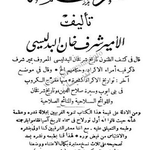
F) Many historians see the consolidation of a broader ethno-cultural consciousness taking further shape across the late medieval and early modern periods. For example, by the 16th century in works like Sharafkhan Bidlisi's Sharafnameh, which maps out distinct Kurdish groups and territories, with modern political nationalism emerging much later in the 19th and 20th centuries.
The readers MUST understand these historical facts about the Kurdish history, because we keep hearing misinformation continue to be spread by Kurdish activists and nationalists.
In Sasanian (Sassanid) and early post-Sasanian and Islamic times, the Middle Persian or Pahlevi term kwrt- , the root for Kurd, was frequently used as a common noun or social category rather than a strict ethnic label. It denoted nomads, pastoralists, or tent-dwellers, specifically those inhabiting the Zagros Mountains. When and if an Iranian group transitioned from sedentary farming to a nomadic pastoral lifestyle, Sassanid administrative records would casually refer to them as Kurds (nomads), regardless of their precise ancestral lineage.
When the Arab Islamic armies conquered Persia in the 7th century, they inherited this administrative and linguistic vocabulary from the late Sasanids. Early Islamic historians and geographers created the term al-Akrad as the plural form of the singular Kurd to describe the unruly or pastoral mountain-dwellers of the Zagros region. Therefore, when early Arabic texts spoke of regions associated with these groups, it often functioned much like saying "land of the nomads" or "the pastoral frontier".
By the 12th century (around 1150), under the Seljuk Empire, the term Kurdistan was created, thus, the term Kurd underwent a crucial transition distancing away from a generic label for "nomad" and solidifying into a specific ethno-linguistic designation for the distinct Iranian peoples who historically lived in and around the Zagros Mountains. The term Kurdistan became possible with the transformation of the term Kurd from nomad to distinct people different than Persians, Turks, Arabs, etc. which started to happen gradually via the Arab historians from around the 10th, but never completely until the 12th century.
While some regional linguistic pockets continued to use variations of the word loosely, even centuries later, some Ottoman or regional records occasionally used similar terms to describe various nomadic pastoralists regardless of ethnicity.


Here is what the late Kurdish leader Jalal Talabani (Head of PUK and later President of Iraq) wrote about Kurdish criminal Simko in his book, "Kurdistan and the Kurdish National Movement" on page 54 .
Talabani wrote: In Iran, Simko's movement was against the rule of the government with a history of being stumbling into terrible mistakes and specially his move of treachery and extermination that he committed against a group of our Assyrian brothers who were always the Kurds' brothers and fellow citizens in the country. This act deserves the explicit condemnation and reproach.


For those Kurds who lie and claim that the peshmerga gave martyrs in fight against ISIS and to protect the Yezidis and Assyrian Christians, here is something to consider.
Quote: "Both parties’ [KDP & PUK] peshmerga exaggerated their assistance to the United States, especially in the wake of the rise of the Islamic State. The cowardice of some Barzani peshmerga enabled the Islamic State to capture entire Yezidi communities. The Pentagon rushed supplies to Erbil, but Masoud warehoused most of them rather than use them at the front. Ultimately, the hashd al-Shaabi turned the tide of battle against the Islamic State, with the peshmerga mostly playing defense. While the Islamic State is a fading memory for many Kurds, Barzani’s qualitative and quantitative military edge persists". Unquote.
SOURCE:
Michael Rubin. "The Talabanis Should Start Thinking About Exile." To Kurds Today, the Peshmerga Are Businessmen Who Receive Party Patronage, Not a Vanguard of a National Movement. Middle East Forum Observer. 2026.
meforum.org/mef-observer/the…

Remembering on this day of November 1, 1895 (and lasting for weeks) the broader Hamidian (that were mainly Kurdish Calvary) massacres began.
The Mobs of Kurdish and Ottoman irregulars launched coordinated attacks against the Christian population (primarily Armenians and Assyrians, but also local Greek Orthodox residents or Rum) of ancient Amida (Diyar Bekir), resulting in widespread killings, looting, and the destruction of indigenous neighborhoods.

The Kurdish crimes have never ended. Remember the crimes and massacres by the Kurds (and others) against the Syriac Assyrian Christians of Damascus (and Mount Lebanon) and neighboring regions that began on July 9, 1860.
Over the course of several days, mobs that consisted of Bedouin tribesmen, local urban Muslims, and a large number of Kurdish irregular auxiliary forces left unchecked by Ottoman authorities, systematically targeted the historic Christian quarter of Damascus of Bab Tooma (Tooma's gate) and surrounding areas.
The massacre and tragedy were so horrifying that France dispatched a force of several thousand troops to Beirut and Syria later in 1860 to protect the Christians.
21
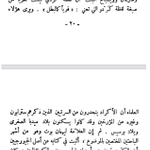
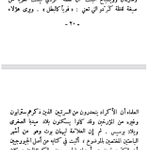
The massacres of Diyar Bekir [original Assyrian name Amid or Amida] happened on November 1, 1895 and continued for 4 days by Kurdish tribes. They attacked Diyar Bekir and all the surrounding Christian villages. The Kurdish tribal leaders (the aghas) led the simple, uneducated, naïve and illiterate Kurds at the time to perpetrate history’s worst massacres of Christians. During these massacres, the Christians lost all their lands in Diyar Bekir, Basheriyya, Gharzan, Moosh, Bitlis, Siirt, Batman and others and tens of thousands of the Assyrians and Armenians. (P. 24)
Source:
Abdul Masih Karabachi. The Shed Blood: The Assyrian [Syriacs] Massacres in Mesopotamia. Originally published in Syriac in 1997, Sweden. Translated to Arabic by Archbishop Theophilius G. Saliba. Mount Lebanon. 2005.
Tur Abdin, southeast Turkiye. Northern Mesopotamia.

Officially, the Yezidis security forces joined the Iraqi forces under the Prime Minister's authority. Peshmerga, get out from Sinjar.


I thought he was comedian. He turned to be much more. Where is Europe heading?
teapawt.net/Jean_Se67/status/21131…

Are we turning northern Iraq's Kurdish federal region from an officially Islamic region via the 2009 temporary constitution to an actual on the ground Islamic region?
teapawt.net/botanlezgn/status/2112…

Wenn das Tragen eines Kopftuchs unter den Bereich persönlicher Rechte und Freiheiten fällt – mit welchem Recht veranlassen dann die an dieser Kampagne beteiligten Lehrkräfte, dass die Töchter anderer Leute ein Kopftuch tragen? Es handelt sich hierbei um eine ganz offensichtlich ideologische Kampagne. Sie ist ein Versuch, das kurdische Volk durch religiös geprägte Ideologien und den Gedanken einer islamischen Glaubensgemeinschaft (Ummah) dazu zu bringen, sich in die Unterdrückung zu fügen. Es wirkt wie eine koloniale Kampagne, die darauf abzielt, die Menschen durch religiöse Indoktrination von ihrem Patriotismus zu entfremden!
@masrourbarzani
@Bafeltalabani
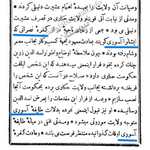
Al-Mas'udi spent much of his life expanding and editing the original text of his book titled "The Meadows of Gold and Mines of Gems" he published earlier, notably releasing a major revision in AD 947 (336 Islamic Hijriya). This AD 947 version serves as the basis for the surviving manuscripts we have today.
On page 31, the 10th century al-Mas'udi mentions the Assyrians of Mosul and Nineveh and says that they are the same al-Athuriyeen of his time.


Kurdish Hero Salim Masti
Who is Salim Masti, whose epics and heroism are celebrated in Kurdish songs?
He is Salim Mustafa al-Duski from the village of Bersefki in the Duhok Governorate, nicknamed "Slemeh Masti."
After the end of World War I (around 1922), a wealthy American named Roger Craig Cumberland (born 1894) arrived in Baghdad. He met with the Assyrians there, observed their circumstances, and stayed with them for about a year. During this time, he helped the poor and built a school for children. He then left Baghdad for Mosul, where he also lived for a short period among the Assyrians and others. He built a school for them and helped the city's poor.
In 1923, he headed north and stayed as a guest with an Assyrian family in Duhok, eventually settling in the city.Being wealthy, he engaged in charitable work and helped the poor in the city. His door was open to everyone, and he became acquainted with the people of Duhok, becoming one of them. He met with religious figures and Kurdish leaders and played a prominent role in Duhok society due to his humanitarianism and assistance to the poor. Cumberland agreed with Muhammad Abdul Rahman Akidi (whose grandfather massacred the Assyrian inhabitants of the village of Bablu in 1831 and occupied it during the massacres of Muhammad Mirkur the Kurd) to purchase the village of Bablu for 400 Turkish liras. He settled 40 Assyrian families there and also brought water to the neighborhoods of Dohuk, as well as to the Grand Mosque.
In response, Kurdish religious leaders felt that the Dohuk community was showing great interest in this "Christian" while they were being ignored. They decided to get rid of him and frame him.The imams of the mosques in Dohuk, whose names are listed below, convened:
1- Mullah Muhammad Akri
2- Mullah Muhammad Mahashi
3- Mullah Hussein Maranshi
4- Mullah Muhammad Bisfki.
They declared that Cumberland posed a danger to Muslims, that he was a missionary trying to convert Kurds to Christianity. They issued a fatwa calling for his death, even though he had not converted a single Kurd to Christianity. But this type of accusation was readily available in Kurdish society to level against any Christian who needed to be eliminated. So they searched for someone to carry out the task of getting rid of Cumberland.
At that time, Iraq was under British rule, and Dohuk was a district of Mosul.The Kurdish religious leaders found that the best person for the job was Salim Masti. They sent someone to him and asked him to come to the Grand Mosque in Dohuk. He came, and the matter was presented to him by the mosque's preacher, Muhammad Akri, and others. They told him that Cumberland was trying to eradicate Islam in Dohuk and convert the Kurds to Christianity.Salim Masti asked them, "Will I go to heaven if I kill him?" They replied, "Yes, whoever kills Cumberland will go to heaven because he is killing an infidel." Salim Masti agreed and returned to his village. He discussed the matter with his cousin, Saeed Masti, and asked him to accompany him on the mission. Saeed immediately agreed, since heaven was at stake.
The following day, June 12, 1938, Salim and his cousin Saeed went to Cumberland's house. Salim stood at the doorstep and said to his cousin, "I will go in and kill him, and you stay here. If he escaped from me, it will be your fate." Saeed replied to Salim, "I hope he escapes from you so I can kill him and go to heaven." Salim entered the house during the day. He shook hands with Cumberland, who welcomed him warmly, as was his custom with everyone, for he considered all the people of Dohuk as his family. The two sat and talked for a short while. Then Cumberland got up to bring refreshments himself, and as soon as he turned his back on the Kurd, he shot him in the back and killed him. Salim then left the house and found the guard dog, so he killed it too. He went down the stairs and found an Assyrian man running towards the house after hearing the gunshot, so he killed him as well and fled with his cousin.
This is the story of Salim Masti, for whom the Kurds composed poems of praise and songs of glorification. This is the hero who killed a peaceful, unarmed man after welcoming him into his home, believing him to be in need of help. And now, like other Kurdish murderers, this killer has become a symbol of heroism in Kurdish society.
(Adapted from Shirin Shingal page)
The crimes of the Kurds in Arab Sunni areas in 2016 as ISIS that never attacked the Kurdish region was ruling.


