
News about the Frink programming language and calculating tool. Frink *will* make you better at physics and science.
Joined November 2010
- Tweets2.1K
- Following291
- Followers455
- Likes14.5K





Frink retweeted

Astronomers have found two gravitationally lensed supernovae that are missing images. Those images' arrival will offer a measure of the universe's expansion.
Read more: buff.ly/TlcWfHM
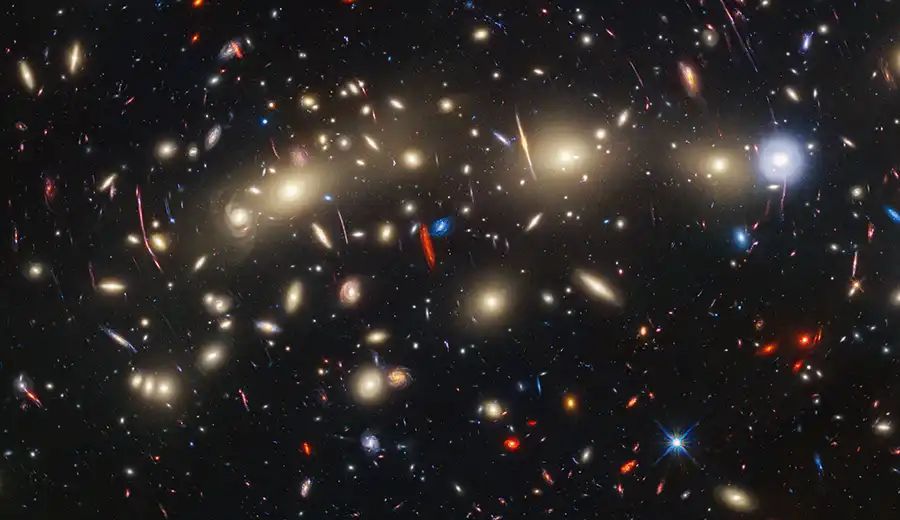
ALT Lensing galaxy cluster
Frink retweeted
Unfortunately, this picture is photoshopped (or an old picture) with Jupiter put closer to the Moon than it occurred in 2026. Minimum separation between the moon and Jupiter was 2.87 degrees which looks like the below (Jupiter is bottom right). They did get diameter ratios right.

Frink retweeted

Data centers in orbit? Of course that’s your contention. Of course it is.
You just finished watching a Scott Manley video on radiative heat transfer and now you think you’re gonna disrupt AWS with a few solar panels and a rideshare slot.
You’re gonna believe that right up until next month when you crack open DeWitt and Incropera and start throwing around σT⁴ like you just invented radiation physics, quoting emissivity tables for polished aluminum like they’re forbidden knowledge.
Then you’ll finally open SMAD and realize your radiator isn’t some static plate glowing into the void. It’s a dynamic structure with a wicked case of thermal flutter reminiscent of Hubble’s arrays. You’ll be quoting beta angles and Earth albedo coefficients and wondering why your deployable array grenaded in vibe when the first bending mode clocked in at 38 Hz instead of the 50 Hz you promised in CDR.
After that you’ll get real ambitious, quoting Johnson and Fabisinski on inflatable polyimide PV structures, pretending you actually understand what happens when your 25-micron Kapton sail is tensioned off a Toray T1100G Cycom 5250-4 boom that has been sun-baked at 120 °C for six months in LEO. You’ll cite “areal density optimization” like gospel while your resin creeps, your modulus drops, and your perfectly flat film turns into a potato chip.
"Well, as a matter of fact, I won’t, because launch costs are about to fall another order of magnitude once Starship hits cadence. The cost per kilo will—"
Drop by tenfold and the economics flip.
Yeah, I’ve heard that one. The Wired 2012 quote, “You wouldn’t build a Boeing 747 and throw it away after one flight.” I remember. I even asked him about that over lunch once, whether the market was actually elastic enough to handle the supply increase from reusability.
Turns out it wasn’t. Non-Starlink launch mass in the United States grew at 13.7 percent CAGR from 2015 to 2023. Payload demand didn’t scale with flight cadence, so prices didn’t collapse, margins just swelled. That’s why they had to invent Starlink. When the market can’t absorb your rockets, you start building your own payloads.
Is that your thing? You read some Marc Andreessen “American Dynamism” manifesto and suddenly start ignoring the engineering realities?
You start throwing around a few buzzwords to impress the Twitter anons and earn some street cred for having a contrarian opinion?
One, don’t do that.
Two, you dropped a 500-thousand-dollar seed check on a concept that could have been debunked by a dollar-fifty worth of tokens from Grok.
"Well, at least I’m a capital allocator. We’ll be skiing in Hokkaido while you’re doing bolt preload calculations for some bridge somewhere."
Yeah, maybe. But at least I won’t be unoriginal or anonymous. I’m out here asking why the hell we’d melt the brains of a thousand aerospace engineers just to save four cents per kilowatt-hour on solar electricity.
First principles isn’t about getting nerd-sniped by a shiny-object problem. It’s about asking whether we should be solving that problem at all.
But hey, if you’ve got an issue with that, we can always take it up with E.

Frink retweeted

Mathematics.
Please enjoy this marvelous 10,000-digit Prime Number for which all digits are even, except for the last digit. It was sent to me from @Frinklang.
(How many 10,000-digit prime numbers do you expect to exist?)

Frink retweeted
The renowned eclipse chaser and popularizer passed away in Arizona after a life of adventure.
buff.ly/albKXS9
.
.
#astronomy #eclipse #solareclipse #memorial #obituary

Frink retweeted

Decibels are ridiculous: lcamtuf.coredump.cx/blog/dec…

Frink retweeted

The end of my marble arc... I promise I'll go back to robots.
I redesigned the corner arcs to be less sticky and was able to get twice the path length in 1/2 the height. 90s total time down!
Frink retweeted

Introducing asteroid Tibees
Thanks to @catalina_sky for discovering it and to @renerpho and K. Ly for suggesting my name!
Frink retweeted
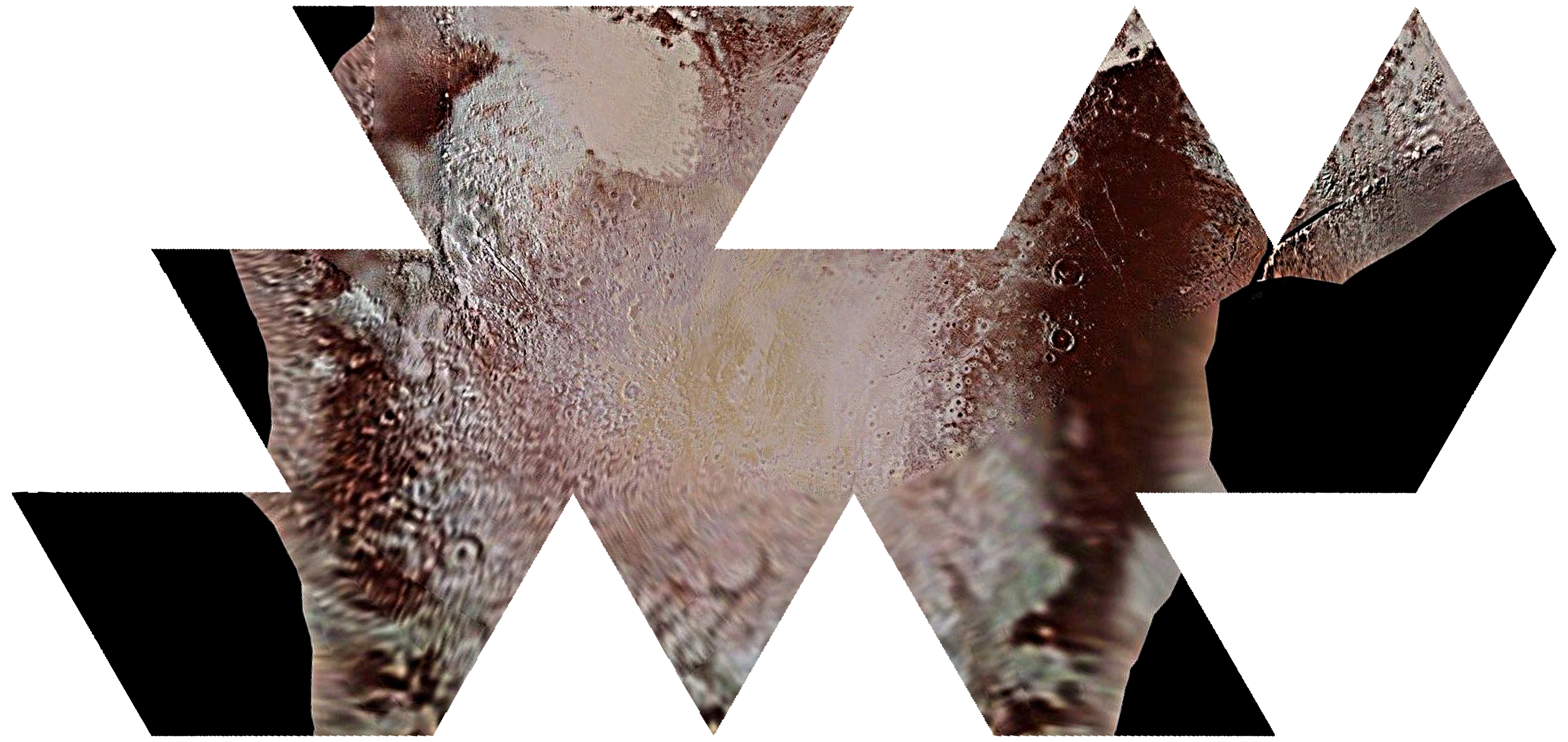
In honor of Frink implementing Pluto orbit calculations, here's a model of Pluto that you can print out on paper and fold and glue into an icosahedral globe! Remember to leave tabs for gluing!
Download the full-quality image here:
futureboy.us/images/pluto.pn…

ALT An icosahedral Buckminster Fuller "dymaxion" projection of Pluto.

Frink retweeted
Not a robot, but I've been writing code to procedurally generate 3D prints!
Hilbert Curve marble track
Frink retweeted

I love that Kepler noticed this and discovered his Third Law while trying to prove a musical model of the cosmos. It’s a perfect example of how playing with a weird, even dumb idea can crack open something profound. If music hadn’t been in Kepler’s life, would he have noticed the P² ∝ a³ relationship? Maybe, but maybe not! But it shows how important it is to stay open to weird connections. It reminds me of what we were taking about here, the idea that our minds are always looking for patterns, and sometimes even the wrong pattern, if approached rigorously, can open the door to something true.

Frink retweeted

An amazing animated video about visualizing the lambda calculus.
If you're into computation, trust me:
You want to watch this.
youtube.com/watch?v=RcVA8Nj6…
Frink retweeted

I have a pi-day challenge for all the physics students among you (or anyone willing to set up an experiment). If you share your results with me by March 10th, I may feature them in a video, depending on how good the results are and how many I get.
Many years ago I made this video about how two colliding blocks on a frictionless plane can compute pi. My challenge to you is simple: Implement this in practice.
The original puzzle assumes zero friction and zero energy loss in collisions, so obviously there are limits to how far you can get. I can tell you the real limiting factor is energy lost in collisions, more so than friction.
Also, it's a wildly inefficient way to compute pi, to even get "3.14" you'd need this to work with a 10,000-to-1 mass ratio and have a way to count all 314 collisions. Matt Parker and I actually gave this a go, and the results were...okay, but could definitely have been improved :)
Note, there's no reason to restrict yourself to powers of 100. For example, you could use powers of 4 to compute pi in binary. A mass ratio of 64-to-1 should give 25 collisions, which is 11001 in binary, and pi looks like 11.001...
More generally, with a mass ratio of N-to-1, the number of collisions is around π / arctan(1 / sqrt(N)). So any big mass ratio gives you an approximation of pi by multiplying the number of collisions by arctan(1/sqrt(N))
If you do this, you can reach out to the channel via this page: 3blue1brown.com/contact
Be sure to have a link to footage of the experiment. If anyone can get it to work with 100-to-1, I'd be happy, and if anyone can do it for 10,000-to-1, I'd be both delighted and amazed.
Frink retweeted
Highpoint Scientific acquired Orion Telescopes & Binoculars and Meade's remaining inventory after they closed their doors last year. They have announced that these items will be going on sale tomorrow at a 40%-60% discount.
buff.ly/3CMGNhF
.
.
#telescope #binoculars
Frink retweeted

We shall measure stellar brightness logarithmically, and it will be called the "magnitude."
- Sir, will that logarithm be base 10, or based on Napier's constant?
Neither. It shall be of the base of the fifth root of one hundred.

Frink retweeted

Here's my official-ish v0.1 quickie version of the Original Universe canon warp scale. This is just my mental ballpark of the numerous datapoints and not exhaustively reasoned out bit by bit, but I had to start somewhere.
More info: starfleetjedi.net/forum/view…

Frink retweeted

For those who wanted to take a look at the problems that were run during this year's Crash and Compile, here is the git repo for your enjoyment:
github.com/crash-and-compile…

Frink retweeted
The final standings for Crash and Compile. Congratulations to haxx og spaghetti for their win at Crash and Compile.
All the teams were great. Thank you all for playing our game this year. #defcon32 #defcon2024 #Defcon

Frink retweeted
Who's excited for Crash and Compile at this year's #defcon32 @defcon ?
The Crash and Compile qualification round will start Friday August 9th at 10am in the contest area and online at crashandcompile.org/
