







Pinned Tweet
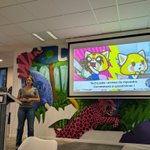
Finally, I wrapped up my unboxing video of @stanlarroque / @Lynx_xr #LYNXR1 ! Can't wait to take the next step with it ! youtu.be/zdHKHhi8UM0

3
961
Pierre-yves Baloche retweeted

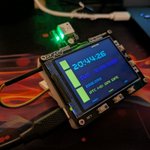
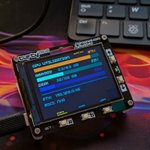
CardputerZero、外付けLCDで動作するCLIプログラム公開しました。
外付けLCDを使ってる方はそんなにいないかもですが…。楽しいのでぜひ作ってみてください!
下の画面には、時刻、バッテリー状態、CPU/メモリ使用量、ネットワークIPアドレスを表示するようにしました!
github.com/shikarunochi/card…


Pierre-yves Baloche retweeted

20年前はMacbookを振り回して遊んでいたけど、#cardputerzero は軽くていいな(当時落下時のHDDの損傷を防ぐためにMacbookに加速度センサーが入り、振り回しながらライトセイバーの音出して遊ぶ人が続出したという解説が必要かも)。 github.com/ianmaddox/MacSabe…

Pierre-yves Baloche retweeted

Can you vibe code with local models only? My answer today: yes, with conditions 🙂
Qwen3.8 27B + Mini Me on a Mac M5 Max wrote a full ray tracer in Go: zero dependencies, path tracing, tests, tutorial. ~4 hours, and a hot Mac 🔥
mini-me.org/p/20261122-vibe-…
#LocalModels #VibeCoding

Pierre-yves Baloche retweeted

Snakie now speaks #CircuitPython too, so you can use it to work on your CircuitPython projects.
app.snakie.org
Snakie is the free, robotics first MicroPython IDE that helps you code, wire and build projects faster.

Pierre-yves Baloche retweeted
CardputerADV用の2.8インチ外付け液晶、そのまま CardputerZero に付けられました!ネジ位置も同じ!(同じ周辺機器使えるのでそれはそう)
裏から見るとちょっとスカスカですねw


Pierre-yves Baloche retweeted

こちらの@Yeq6X さんの作品に非常に感銘を受け参考にさせていただき、左右にも自由度をつけたスタックチャン台車作ってみました!
スタックチャンの動力だけで自由自在に動けるの楽しい!!!

Pierre-yves Baloche retweeted

Your Atari ST has been asking for a printer since 1987. You sold it in 1994. It's still asking.
Meet the Printer Emulator for the SidecarTridge Multi-device. Your ST thinks an Epson FX-80 or an HP LaserJet II is plugged into the printer port. In reality, every print job lands on the microSD card as a PDF. No ink, no ribbon, no paper jams, no screeching.
- Alt-Help screen dumps, the desktop's Print, 1st Word Plus, Degas Elite, GFA BASIC, Easy Draw through GDOS
- Auto mode sends each job to the printer it was written for
- A4 or Letter
- Plug the Multi-device into your computer over USB and the PDFs show up on a drive called PDFPRINTER
Works on the ST, STE, Mega ST and Mega STE, even a Mega STE at 16 MHz with the cache on.
Install it from the Booster Apps page. Docs here:
docs.sidecartridge.com/sidec…


Pierre-yves Baloche retweeted

NVIDIA Gives Qwen3.8-27B a 4B Speculative Decoding Upgrade
Running a 27B model locally can be frustrating when generation speed becomes the bottleneck.
NVIDIA has introduced an official speculative decoding companion for Qwen3.8-27B, called Qwen3.5-4B-Qwen3.8-27B-Draft.
The idea is straightforward: use a smaller 4B model to help the larger 27B model generate tokens faster.
Instead of changing the main model’s weights, applying lossy quantisation or reducing its precision, this approach adds a separate draft model to accelerate inference.
The goal is to get more tokens out of the original 27B model without sacrificing its output distribution.
1. How does the 4B draft model work?
Normally, Qwen3.8-27B generates text sequentially, producing one token at a time.
Each generation step requires another forward pass through the main model. This can make decoding relatively slow, particularly when running larger models locally.
Speculative decoding changes that process.
The smaller 4B model acts as a draft generator. It predicts several tokens ahead, while the larger 27B model checks those predictions.
The process works like this:
The 4B draft model proposes multiple tokens.
Qwen3.8-27B verifies those proposals together.
Matching proposals are accepted.
Rejected proposals are corrected by the main model.
The process repeats.
When several proposed tokens are accepted, the 27B model can generate more output with fewer sequential verification steps.
The smaller model does the preliminary work, while the larger model remains responsible for the final output.
2. No lossy quantisation of the main model
This is one of the most interesting aspects of the release.
Many inference optimisations attempt to improve speed by reducing model precision, compressing weights or changing how computations are performed.
NVIDIA’s approach is different.
The 27B model doesn’t need to be compressed into a lower-precision checkpoint to benefit from speculative decoding. Instead, the 4B model assists the original model during generation.
Speculative decoding can preserve the target model’s original output distribution when implemented correctly.
That means the acceleration doesn’t inherently require sacrificing the main model’s quality or changing its learned weights.
However, there is an important distinction: identical output distributions do not guarantee identical sampled responses in every run. Actual sampled tokens can differ because of randomness, even when the underlying distribution is preserved.
The benefit is that the model can potentially generate faster without introducing the quality trade-offs associated with lossy weight quantisation.
3. Why use a separate 4B model?
Qwen3.8-27B already has a built-in speculative decoding head.
NVIDIA’s release introduces a separate 4B draft model as another option.
According to the release description, the two models share a vocabulary, allowing the draft model to propose tokens that the larger model can directly verify without needing to translate between different tokenisation systems.
NVIDIA also reports that the draft model was aligned using approximately 200,000 rounds of high-quality training data.
The training is intended to improve how closely its predictions match those of the larger model, particularly on coding and long-text workloads.
This matters because speculative decoding depends heavily on acceptance rates.
If the draft model frequently proposes tokens that the target model agrees with, fewer verification cycles are wasted.
A smaller model that generates poor predictions would introduce additional overhead without delivering much acceleration.
4. Higher acceptance means potentially faster generation
The effectiveness of speculative decoding depends on how many proposed tokens the main model accepts.
For example, imagine the 4B model proposes five tokens.
If the 27B model accepts four, the system can make substantial progress from a single verification step.

One RTX 3090 Is Reportedly Serving 64 Qwen3.8 Sessions at 1,035 Tokens/s
An NVIDIA RTX 3090 with 24GB of VRAM is reportedly delivering 1,035 tokens per second across 64 concurrent Qwen3.8-27B sessions.
Even more interesting, the GPU is operating with a power limit of just 250W.
The experiment uses HyperQwen, an open-source inference-serving stack built around vLLM, to turn a consumer graphics card into a multi-session AI server.
But the most important part isn’t simply the generation speed.
It’s the number of simultaneous sessions the system can reportedly handle.
Most local inference benchmarks focus on how quickly a model responds to one user. This experiment explores a different question:
How much combined generation capacity can a single consumer GPU deliver when dozens of users share the same model?
Let’s examine the setup.
1. The Hardware Behind the Experiment
The reported configuration is:
GPU: NVIDIA RTX 3090
VRAM: 24GB
Power limit: 250W
Model: Qwen3.8-27B
Inference stack: HyperQwen + vLLM
Concurrent sessions: 64
Reported single-session decode speed: Approximately 127 tokens/s
Aggregate output throughput: Approximately 1,035 tokens/s
Configured maximum context: Up to 150K tokens
Two figures immediately stand out: 127 tokens/s and 1,035 tokens/s.
However, they measure different things.
The approximately 127 tokens/s figure represents reported generation speed in a single-session test.
The 1,035 tokens/s figure represents the combined output throughput across multiple active sessions.
It does not mean every user receives 1,035 tokens per second. Nor does it mean all 64 users independently generate at 127 tokens/s.
The GPU’s compute resources and memory bandwidth are shared across requests. Individual performance depends on scheduling, prompt length, context size, output length and the number of competing sessions.
The achievement here is aggregate throughput, not individual user speed.
2. How Does One RTX 3090 Handle 64 Sessions?
Serving one AI conversation is relatively straightforward.
Serving 64 simultaneously is a much more complicated engineering problem.
The inference engine has to coordinate incoming requests, manage memory for active conversations, schedule generation and keep the GPU busy without exceeding its available resources
This is where vLLM becomes important
Two of its key technologies are particularly relevant: Continuous Batching and PagedAttention
Continuous Batching: Keeping the GPU Busy
Imagine 64 users sending requests to the same AI server
They won’t all receive responses of equal length
One user might ask a simple question that requires 30 tokens. Another might request a detailed coding solution requiring hundreds or thousands of tokens
With traditional static batching, requests are grouped together and processed as a fixed batch. When some requests finish earlier than others, processing capacity can go unused while the remaining requests continue
Continuous batching takes a more dynamic approach
Instead of waiting for every request in the batch to finish, the inference engine updates the active batch as requests complete
When one conversation finishes generating, another waiting request can take its place
This keeps more requests moving through the GPU and reduces the idle time associated with waiting for longer generations to finish
For a server handling dozens of users, this can make a substantial difference to overall throughput
PagedAttention: Making Better Use of 24GB VRAM
The second challenge is memory management
Every active transformer session requires a Key-Value cache, commonly called the KV cache
The cache stores attention information from previously processed tokens. This allows the model to reuse information from earlier parts of a conversation instead of repeatedly recomputing everything
As the context grows, the KV cache consumes more memory
Now consider managing 64 active conversations on a GPU with only 24GB of VRAM
Pierre-yves Baloche retweeted
Day 1 at EdgeTech+ 2026 is officially underway, and our booth is ready for you! 🇯🇵
Visit M5Stack and Espressif to discover what we’ve brought to Yokohama:
⌨ The latest CardputerZero and its matching CAP series
🏠 A Home Assistant demo built with M5Stack products
🏭 Industrial automation solutions and demos
📡 LoRa products and solutions for long-range IoT connectivity
Come explore our demos, share your ideas, and meet the team!
📍 Booth CV-15, PACIFICO Yokohama, Japan
📅 November 18–20, 2026
#M5Stack #Espressif #EdgeTech2026 #IndustrialIoT #LoRa #CardputerZero #HomeAssistant


Pierre-yves Baloche retweeted

MakerWorld
makerworld.com/en/models/363…
Github
github.com/Yeq6X/stackchan-s…
組み立て方(ネジ無し!)
yeq6x.github.io/stackchan-st…
Pierre-yves Baloche retweeted
Also (and not related to my secret trip) checkout bettercad.kevsrobots.com as well
Pierre-yves Baloche retweeted

Connecting a Raspberry Pi to LLM agents through MCP
blog.adafruit.com/2026/11/17…

Pierre-yves Baloche retweeted

New blog post: Create digital dashboards for your E-Paper displays with Tesserae. blog.pimoroni.com/tesserae-t…

ALT An array of digital displays created using Tesserae
Pierre-yves Baloche retweeted

Qwen announces smaller Qwen4 models will be released soon! 🔥
Qwen4-27B will run on 16GB RAM setups.

📢 Meet Qwen4-Max, your new AI teammate for work, creativity, and discovery!
Qwen4-Max is built on a new MoE architecture with native vision and a 1M-token context window.
Highlights:
- Outperforms Qwen3.8-Max with up to ~50% fewer tokens, while average cost per task drops over 60% in our internal evaluation.
- Advances real-world productivity through greater proficiency with professional tools, stronger long-horizon execution, and higher-quality deliverables.
- Handles real tasks, including 3D modeling, game development, manufacturing, finance, law, healthcare, and frontier scientific discovery.
- $1.5/M tokens for input, $4.5/M tokens for output, and $0.075/M tokens for implicit caching — all lower than Qwen3.8-Max, with implicit caching down by 70%.
The API is live on QwenCloud. You can also try Qwen4-Max on Qwen Studio, QwenWork and Qoder.
Start building today! 🚀
- Blog: qwen.ai/blog?id=qwen4-max
- API: qwencloud.com/models/qwen4-m…
- Token Plan: qwencloud.com/pricing/token-…
More to come! The open weights of smaller Qwen4 models will be released. Stay tuned. 👀

Pierre-yves Baloche retweeted

Yogurt : une IA locale Open Source pour prendre des notes de réunion en toute confidentialité
👉 github.com/FrigadeHQ/yogurt
Pierre-yves Baloche retweeted

Building software takes more than code generation. Here's what an effective agentic engineering workflow looks like with GitHub Copilot 👇

Pierre-yves Baloche retweeted

🟠 Vigilance orange Crues pour le cours d’eau Tavignano en Haute-Corse ce jeudi.
Le Sud-Est connaît un temps agité, avec des cumuls de pluie ponctuellement significatifs et un vent fort sur la Corse.
Tenez-vous informés 👉 vigilance.meteofrance.fr/fr

ALT Carte de la Vigilance météorologique du jeudi 12 novembre 2026.

Pierre-yves Baloche retweeted
Mini Me v1.0.6 is out: only two features, but both open quite a few doors.
- a native Kronk provider (the Go inference server from @ardanlabs )
- ACP clients can now "lend" their own functions to the agent as tools
mini-me.org/p/20261111-mm-v1…
#LocalModels #ACP #Kronk
