

A 100% subscriber-supported geopolitical forecasting publication, providing unbiased analysis of global events. Founded by @George_Friedman.
Austin, TX
Joined September 2015
- Tweets8.7K
- Following296
- Followers32.1K
- Likes317





What makes the current wave of European protests particularly striking is the timing, shared grievances and methodology. To be sure, every European country has its own political traditions, economic structures and institutional challenges. France's political crisis is not Italy's. Spain's housing crisis has different origins than Portugal's.
Still, there is an increasingly recognizable pattern: dissatisfaction with public services, rising living costs, insufficient economic opportunities and, perhaps most importantly, the growing difficulty young people experience in becoming economically independent adults. - GPF’s Antonia Colibasanu
geopoliticalfutures.com/what…

🌐 The European Parliament approved a resolution calling on the EU to launch a naval operation in the Black Sea amid Russian attacks on commercial vessels there. It condemns the recent strikes allegedly conducted by Russia off the coast of Bulgaria and Romania and calls on EU states, in cooperation with NATO, to support the two countries in the early detection and tracking of hostile drones in the region. The resolution also expresses concern about the Bulgarian government’s “ambiguous handling” of the Russian threat and calls on it to “stop delaying” participation in NATO’s anti-drone initiative.
Why it matters: Russia’s actions in the Black Sea are becoming bolder each month. Its goal is to disrupt Ukraine’s maritime trade to provoke an economic collapse. The situation is forcing the EU and NATO to formulate an effective deterrence strategy – which is still unlikely to deter Moscow.
Is the US-Ukraine relationship at a breaking point, or is this just the next page in Trump’s negotiation playbook? Tune in for our latest episode of Talking Geopolitics with George Friedman and Christian Smith.
And be sure to like and subscribe to the channel, we truly appreciate your support. youtube.com/watch?v=rVlZpBWh…

The latest battleground in the escalating battle against Yemen's Houthi rebels is the city of Taiz, a key government stronghold in Yemen’s southern highlands.
Taiz is Yemen’s third-largest city and a gateway to both the port city of Aden and the strategic Bab el-Mandeb strait. Holding the city supports government operations toward Bab el-Mandeb and the defense of approaches to Aden. Given that roughly 70 percent of Yemeni people in 2025 lived in Houthi-controlled areas, losing Taiz would also further reduce the government’s reach among the population.
In recent days, government forces and Houthi rebels have claimed new gains in and around Taiz. Houthi advances along the road between Taiz and Aden have severed the city’s main supply route, while government forces backed by Saudi-led coalition airstrikes lost some ground in mid-October as they tried to reopen it. If Taiz falls, recovering it would require reopening supply routes through the surrounding hills and an on-the-ground presence to counter Houthi fighters inside the city. - GPF's Andrew Davidson
GPF is 100% subscriber supported. Subscribe for the full analysis: geopoliticalfutures.com/saud…

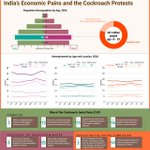
India’s massive youth population is a key element of the recent unrest sweeping the country. However, the more immediate problem is the growing gap between aspirations and access to secure employment.
When Supreme Court Chief Justice Surya Kant compared in open court young people without jobs or professions to “cockroaches,” a new protest movement was born.
Details in our new Weekly Graphic:
geopoliticalfutures.com/week…

🌐 The European Union must prevent Russia and China from dominating the Arctic, EU foreign policy chief Kaja Kallas said following the release on Tuesday of the bloc’s updated Arctic strategy. The plan includes investment in the construction of new icebreakers, the establishment of a military center to monitor Russian activity, and the easing of restrictions on oil and gas extraction on the Arctic shelf.
Brussels is particularly concerned about the Northern Sea Route, which is already in use by Russia and China. According to Kallas, the EU should engage with Canada and the United States to prevent Moscow and Beijing from gaining “full control” over this route. The Kremlin has accused Western countries in the past of pursuing militarization of the Arctic.
As hostilities continue, the war in Ukraine has expanded to include infrastructure as a target. Digital infrastructure, which underpins the modern economy, government and military operations, is a logical extension. In the military sector, data centers are fundamental to modern intelligence. To disable a data center, then, is to deprive Russia of the ability to quickly receive and analyze data from electronic warfare signals, video from drones, sensor readings and information from various surveillance systems.
No surprise, then, that the Russian military is also targeting Ukrainian data centers and port infrastructure. These incidents create an urgent need across the country to secure their infrastructure as ongoing drone attacks threaten to expand the list of targeted facilities. - GPF's Ekaterina Zolotova
geopoliticalfutures.com/data…
Photo credit REUTERS / Anastasia Barashkova

China’s gig economy has become a structural feature of the country’s labor market, prompting the government to propose its first nationwide regulations specifically designed to establish minimum labor protections for platform workers. The draft rules mean to address persistent problems involving payment, working hours, workplace safety and occupational injury protection.
The nation’s gig economy has expanded rapidly amid persistent weaknesses in conventional employment. According to the China New Employment Forms Research Center, the “flexible” workforce grew from approximately 200 million people in 2021 to 240 million in 2024 and 280 million in 2025, with a projection of 320 million in 2026, equivalent to roughly 44 percent of the workforce.
Read the full analysis from GPF's Victoria Herczegh: geopoliticalfutures.com/chin…
Photo credit © chartphoto/stock.adobe.com

India’s massive youth population is a key element of the recent unrest sweeping the country. However, the more immediate problem is the growing gap between aspirations and access to secure employment.
When Supreme Court Chief Justice Surya Kant compared in open court young people without jobs or professions to “cockroaches,” a new protest movement was born.
Details in our new Weekly Graphic:
geopoliticalfutures.com/week…

Is the U.S. being diplomatically outmaneuvered, or is it part of Trump’s strategic foreign policy shift? Taking subscriber questions in our latest episode of Talking Geopolitics, with @George_Friedman:
youtube.com/watch?v=4xhaOtr1…
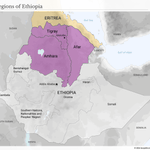
The ongoing war in Ethiopia could fundamentally reshape the Horn of Africa. Prime Minister Abiy Ahmed Ali faces a wider array of adversaries than he did during the previous Tigray war, yet his government also has superior drone capabilities, benefits from divisions within Tigray and retains access to important external suppliers.
Eritrean President Isaias Afwerki appears to have committed military support to the TPLF even as it lost ground. Isaias has an interest in preventing Ethiopia from becoming powerful enough to impose its will on its neighbors, but he has potentially widened the war.
GPF's Ronan Wordsworth has an in-depth analysis of the evolving situation: shorturl.at/7c3jl

Geopolitical Futures retweeted

Ukraine did not receive advance warning from its international partners about Tuesday's Russian ballistic missile attack targeting civilian infrastructure in Kyiv, President Volodymyr Zelenskyy said.
Intelligence sharing is a key part of Ukraine’s relationship with its international partners, including the United States. Eliminating this type of cooperation would give Russia a big advantage both in terms of deep strike capabilities and on the battlefield. If this happens, will European governments try to fill the gap?
The Houthi campaign against Saudi Arabia is the most serious, sustained attack on the kingdom’s civilian targets in decades. As Kamran Bokhari explains, the conflict could reshape regional security more broadly, especially because it will complicate Washington’s plans to end the war in Iran.
geopoliticalfutures.com/why-…

A paradox has emerged in Iran’s economic crisis: Conditions that might be expected to bring down the regime have instead become a chronic feature of its rule. Rising costs of food, housing, transportation and other essentials have steadily eroded household purchasing power, deepening public frustration and weakening faith in the state’s ability to provide economic security.
Details in our new Weekly Graphic: geopoliticalfutures.com/week…

The U.S. shift toward greater burden-sharing is especially consequential for Southeast Asia because the region sits astride maritime arteries that sustain China’s economic power and connect it to the wider world. The Strait of Malacca carries roughly 80 percent of China’s oil imports and much of its trade with Europe, Africa and the Middle East, making Southeast Asia both an economic lifeline for Beijing and a strategic lever over its power.
As the United States retrenches and regional stakeholders assume greater responsibility for maintaining the balance, Indonesia is likely to emerge as the center of gravity in a nascent maritime security architecture, with India and Australia as its other principal stakeholders in keeping Chinese power in check. - Kamran Bokhari
geopoliticalfutures.com/the-…

Is everything really falling apart? This week on the podcast, we've got you covered if you've ever asked this question or wondered just how extraordinary things really are in the world of geopolitics. From Middle East security to US long-term strategy and much more, GPF Chairman @George_Friedman is back on to answer our subscribers' burning questions.
youtube.com/watch?v=r2sNjdGA…

"Russia has loomed over Europe for a long time...now the Europeans are saying this is the time to deal with the Russians."
In a recent ClubGPF live discussion, @George_Friedman and Ridvan Bari Urcosta took Club member questions on Poland's rise, live from Warsaw. youtube.com/watch?v=fPOentKN…

Wars can represent transitions from one geopolitical era to another, and when they do, they can reshape regional orders even before the fighting ends. Such is the case in the Middle East, which is just three years removed from the Oct. 7 attacks.
Though the conflict is ongoing, a post-conflict architecture is already taking shape, one featuring a regional bloc – Turkey, Pakistan and Saudi Arabia – that will have to contend with an Iran mired in massive internal uncertainty. Even so, it will take a long time for Washington to fully remove itself as the region’s primary security guarantor. - Kamran Bokhari
geopoliticalfutures.com/the-…

Several months ago, we launched our exciting new product, GeoEconomic Lens.
Since the inaugural issue, we have tackled important topics like disruptions on major trade routes like the Black Sea, the nature of US-China relations, the geography of data centers. We’ve delved into the truth about inflation and the coming defense boom.
Our latest issue, which is available now, breaks down the escalating cost of economic coercion, from sanctions to tariffs. This is especially tied to US-Russia relations.
Subscribe to GeoEconomic Lens today and receive your copy of the new issue.
bit.ly/4uTVwxc
