

🇨🇦 Obsessed with all things Ai Agents, Loops, LLMs, Fine-Tuning https://teapawt.net/t.co/9thyt19bL5 - Entrepreneur. Builder.
Canada
Joined May 2026
- Tweets2K
- Following462
- Followers436
- Likes4.6K





GPTware retweeted

Today we are happy to share one of our first open research releases: Latent Sparse Attention (LSA), a step towards subquadratic attention that matches accuracy of full attention at ultra-long context.
Sparse attention attends to only a few tokens per query, but it has to find the right ones. At 10M tokens, that search takes 98% of the attention layer's time. LSA makes sparse attention up to 22.7× faster and full attention 72.4x faster.
With @kubicek_ales @caciolai @PengLiangzu @SukritSumant @Ben_Hoov @FraserGreenlee @RMBattleday @radim_urban @thoefler @jcrwhittington
GPTware retweeted

Georgia Tech built ARK for the ugly part of disaggregated LLM serving: shipping a huge KV cache from the prefill GPUs to the decode GPUs without ECMP hashing two elephant flows onto the same spine.
My take: Those transfers last hundreds of milliseconds to seconds, so a hash collision can sit on one link while other spines stay idle. ARK has senders pick source ports whose hashes put concurrent flows on different spines, with no switch changes and no reordering on the receive side. In their RDMA packet simulations, mean flow completion time dropped by as much as 27.3 percent and the P95 by as much as 34.0 percent at moderate load, which cut mean time to first token by up to 12.9 percent. At higher load the fabric saturates and the gain shrinks. The caveat is that this is simulation, not a production fabric. Still, if you are splitting prefill and decode across boxes, the path the KV takes probably matters as much as the kernels.
arxiv.org/abs/2610.41160

GPTware retweeted

50% OFF service on medai.li! Pay @ashxhart's Mac 512gb 2Tb fund: ko-fi.com/ashxhart
Your top supporters from the last 90 days: 🥇 1. iamMrDuncan 🥈 2. Dennis Rye 🥉 3. Adam 4. MedAI.li Natalia Sokolova 5. Ko-fi User ko-fi.com/ashxhart/leaderboa…

GPTware retweeted

1/3
A CPU inside an LLM is one thing, but running another LLM inside an LLM would be taking things a bit too far, wouldn't it?
Anyways, here's an LLM running inside an LLM : QwenPU, an LLM (@karpathy's stories260k) running on an NPU compiled inside Qwen 3.5-4B's weights.

GPTware retweeted
Reddit's CEO said people are getting answers from Google's AI Mode instead of getting sent to Reddit. Google has already said AI Mode is cannibalizing its own search business. Millions of publishers and companies built their whole discovery path on that one handoff.
Once the intermediary answers the question instead of routing it, the traffic goes with it, and you find out how little of that demand you actually owned.
Traditional companies that treat Google as a permanent pipe are going to keep learning that after the quarterly report, not before.
There are many that will be happy to see Reddit go.

The collapse of Reddit will be studied.
After reporting earnings, its stock collapsed 30% in a single day.
It's down 44% in 2 weeks.
But the most important detail is what was revealed in that earnings call.
The CEO said AI is killing Google search.
People no longer get sent to Reddit from Google. They merely get their answers from the AI Mode itself.
Even Google confirmed this themselves with their disastrous results - AI mode is cannibalising their search business.
Pretty soon, no one will visit Reddit voluntarily. Its traffic will continue to crater.
The worst part?
Reddit isn't alone. There are millions of companies and publishers that rely on search traffic.
That's what happens when you rely on a single funnel for discovery.

GPTware retweeted

Some lessons learned networking DGX Spark's to DGX Station using Microtik CRS804:
al-engr.com/networking-dgx-s…

GPTware retweeted

The question that is stopping me from buying an M5 Ultra: why does a Mac with 1.2 TB/s of bandwidth lose to DGX Spark at long context and with multiple users?
With one user, decode is memory-bound. Every token means reading all the active weights once, and the GPU mostly waits for data. More bandwidth means more tok/s, and that's where the Mac shines. 👍
Batching changes everything. With 8 users you read the weights once and use them for 8 tokens. Same bytes, 8× the math. Throughput scales almost for free… until compute becomes the bottleneck. 👀
That's where the Mac hits a wall: good bandwidth, lower low-precision compute. The Spark's Blackwell tensor cores with native FP4 give far more FLOPs per GB/s of bandwidth, so it keeps scaling while the Mac stops.
Real numbers on DeepSeek V4.1 Flash with TensorFold, total tok/s from 1 to 8 users (chart below):
2× Spark: 77 → 105 → 150 → 194 (@rwojo)
1× M5 Ultra: 63 → 78 → 98 → 99 (@TechMDAI, first runs, capped at 4 slots)
Long context is even worse. Prefill is pure compute, attention grows with context length, and the KV cache is per-user: no way to share it. On DeepSeek V4 Flash the Mac's decode drops from ~60 to ~27 tok/s, while 2 Sparks hold ~51 (tests by @satsuki2694).
Bottom line: the Mac is unbeatable for fitting huge models (MoE) in a single box, but the Spark wins when you need compute: long prompts, many users, agents. Different tools, different jobs.
I run both, and I was planning a deep dive on the M5 Ultra to really understand its limits, but at this price I don't know if it makes sense spending all these money just to make tests and share data. I'll try to figure out something, otherwise I'll wait for others to test these concurrency limits in depth. 💪

GPTware retweeted

How much performance do you actually lose when capping a DGX Spark and where are the sweet spots?
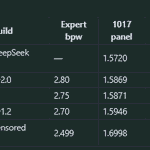
As a follow-up to a previous post I decided to test it using my 2 x Sparks and likely the best model and quant currently available @MiaAI_lab's Deepseek V4.1 1017 EXL3.
Depending on your preference the sweet spots are 2200 MHz for close to original performance or 1900 MHz if you seriously want to reduce Temperatures and power consumption.
Anything below 1900 MHz and the Sparks start fighting with themselves.


GPTware retweeted

🐳鲸鱼兄弟们!DeepSeek 要放大招来啦!
V5、V5-open、V5-next都端上桌了。
deepseek Harness 的最新代码中发现已经有相关的代码了。
看来离发布也不远了。
github.com/deepseek-ai/deeps…

GPTware retweeted

@AntLingAGI making moves!
Post training for Ling-Flash-3.1-1019 yielded a 3 point jump in the @ArtificialAnlys Intelligence Index (41 to 44) and puts this model ahead of 5.3-Flash and Haiku 5.5!
Weights available now: huggingface.co/inclusionAI/L…

GPTware retweeted

When you look at the spec of modern GPUs such as Blackwells, you'll see that it has FP4/FP8 tensor cores which older GPUs lacks. This means when we load a NVFP4 model on 3090, it cannot compute in FP4 and needs to go through extra steps to unpack it. So how much does this matter? Been wondering for awhile so put it to test
Bottom line is, negligible when it comes to decode, big impact on prefill. Also matters quite a bit when concurrency gets involved, so keep all this mind when you are selecting your next GPU.

GPTware retweeted

1/7 🥥 New speculative decoding method!
Introducing DCOCO: Contextual Correction of Parallel Drafts.
Parallel drafters are fast, but lose context between predicted tokens.
DCOCO restores it without giving up parallelism.
Up to 6.6× faster than vanilla decoding. 🧵
GPTware retweeted

Qwen4-27B spotted in Intel intel-xpu-kernels repo !
Work for Qwen4-27B support is already underway, this only means one thing and you know what that is.
LFGG @Alibaba_Qwen
Give us Qwen4-27B soon !
github.com/analytics-zoo/vll…


GPTware retweeted

🚨 @MiniMax_AI 𝗠𝟯.𝟭 𝗙𝗟𝗔𝗦𝗛 — 𝟰𝟮𝟴𝗕 𝗣𝗔𝗥𝗔𝗠𝗘𝗧𝗘𝗥𝗦. 𝗢𝗡𝗘 𝗗𝗚𝗫 𝗦𝗣𝗔𝗥𝗞. 𝟵𝟳% 𝗧𝗢𝗞𝗘𝗡 𝗔𝗚𝗥𝗘𝗘𝗠𝗘𝗡𝗧! 🧪🔥
I've done it AGAIN, and this time I'm releasing TWO new SAGE-EXL3 quantizations of the brand-new MiniMax M3.1 Flash!
428B total parameters.
23B active.
Native 1M-token context capability.
My goal was simple:
𝗦𝗤𝗨𝗘𝗘𝗭𝗘 𝗧𝗛𝗘 𝗠𝗢𝗗𝗘𝗟, 𝗡𝗢𝗧 𝗜𝗧𝗦 𝗜𝗡𝗧𝗘𝗟𝗟𝗜𝗚𝗘𝗡𝗖𝗘.
And the fidelity measurements are some of my most exciting yet! 🤯
━━━━━━━━━━━━━━━━━━━━
🟢 𝗥𝗘𝗟𝗘𝗔𝗦𝗘 #𝟭 — 𝗢𝗡𝗘 𝗗𝗚𝗫 𝗦𝗣𝗔𝗥𝗞
𝗠𝗶𝗻𝗶𝗠𝗮𝘅-𝗠𝟯.𝟭-𝗙𝗹𝗮𝘀𝗵-𝗘𝗫𝗟𝟯-𝗦𝗔𝗚𝗘-𝟮.𝟭𝟱𝗯𝗽𝘄
📦 108.64 GiB checkpoint
🧠 96.89% Top-1 Token Agreement
🎯 99.75% Top-5 Agreement
📉 Mean KL Divergence: 0.02528
𝗔𝗟𝗟 𝗢𝗙 𝗧𝗛𝗔𝗧 𝗜𝗡 𝗔 𝗦𝗜𝗡𝗚𝗟𝗘 𝟭𝟮𝟴𝗚𝗕 𝗗𝗚𝗫 𝗦𝗣𝗔𝗥𝗞!
And YES, I already have a working vLLM serving configuration!
But there's a catch, and I'll explain why shortly. 👀
━━━━━━━━━━━━━━━━━━━━
🟣 𝗥𝗘𝗟𝗘𝗔𝗦𝗘 #𝟮 — 𝗧𝗪𝗢 𝗗𝗚𝗫 𝗦𝗣𝗔𝗥𝗞𝗦
𝗠𝗶𝗻𝗶𝗠𝗮𝘅-𝗠𝟯.𝟭-𝗙𝗹𝗮𝘀𝗵-𝗘𝗫𝗟𝟯-𝗦𝗔𝗚𝗘-𝟰.𝟮𝟲𝗯𝗽𝘄
📦 209.88 GiB checkpoint
🧠 98.44% Top-1 Token Agreement
🎯 99.94% Top-5 Agreement
📉 Mean KL Divergence: JUST 0.00592!
𝗡𝗜𝗡𝗘𝗧𝗬-𝗘𝗜𝗚𝗛𝗧 𝗣𝗢𝗜𝗡𝗧 𝗙𝗢𝗨𝗥 𝗙𝗢𝗨𝗥 𝗣𝗘𝗥𝗖𝗘𝗡𝗧 𝗧𝗢𝗞𝗘𝗡 𝗔𝗚𝗥𝗘𝗘𝗠𝗘𝗡𝗧! 🤯
That's exceptionally close to the unquantized reference in my held-out token-level evaluation.
Both releases were measured against the original unquantized MiniMax checkpoint using full-vocabulary teacher-forced evaluation.
These are quantization-fidelity measurements, not task pass rates or proof of mathematically lossless behavior.
But THESE are the kinds of quality-per-bit results I'm chasing!
━━━━━━━━━━━━━━━━━━━━
⚠️ 𝗧𝗛𝗘 𝗣𝗥𝗢𝗕𝗟𝗘𝗠 𝗜𝗦𝗡'𝗧 𝗝𝗨𝗦𝗧 𝗧𝗛𝗘 𝗠𝗢𝗗𝗘𝗟 𝗔𝗡𝗬𝗠𝗢𝗥𝗘.
It's the inference engine.
My current ONE-SPARK vLLM recipe WORKS, but it's still a WORK IN PROGRESS.
The measured configuration currently reaches 32K context using a quantized KV cache.
MiniMax M3.1 Flash supports up to 1M native context, but vLLM's memory overhead on this hardware is consuming headroom I'd rather dedicate to the model and its context.
I could shrink the weights further to compensate.
𝗕𝗨𝗧 𝗪𝗛𝗬 𝗦𝗔𝗖𝗥𝗜𝗙𝗜𝗖𝗘 𝗠𝗢𝗗𝗘𝗟 𝗙𝗜𝗗𝗘𝗟𝗜𝗧𝗬 𝗧𝗢 𝗔𝗖𝗖𝗢𝗠𝗠𝗢𝗗𝗔𝗧𝗘 𝗥𝗨𝗡𝗧𝗜𝗠𝗘 𝗢𝗩𝗘𝗥𝗛𝗘𝗔𝗗?!
That's the wrong trade-off for what I'm trying to accomplish.
I'm optimizing for the BEST possible balance between model quality, memory usage and practical inference speed.
And that's where something else I've been building comes in...
⚡ 𝗥𝗘𝗫𝗟𝟯.
Our upcoming public inference engine and dedicated recipe are aimed at removing these limitations and making the model's full native context practical on Spark.
We're continuing to validate that work before release.
𝗦𝗧𝗔𝗬 𝗧𝗨𝗡𝗘𝗗. 𝗧𝗛𝗘 𝗣𝗨𝗕𝗟𝗜𝗖 𝗥𝗘𝗟𝗘𝗔𝗦𝗘 𝗜𝗦 𝗚𝗘𝗧𝗧𝗜𝗡𝗚 𝗖𝗟𝗢𝗦𝗘𝗥! 🚀
━━━━━━━━━━━━━━━━━━━━
🤝 𝗖𝗔𝗟𝗟𝗜𝗡𝗚 𝗔𝗟𝗟 𝗧𝗪𝗢-𝗦𝗣𝗔𝗥𝗞 𝗗𝗘𝗩𝗘𝗟𝗢𝗣𝗘𝗥𝗦!
Here's where I'd love some help from the community!
The 4.26 bpw model is already available on Hugging Face, but I haven't had the time to properly build and validate its TWO-SPARK serving recipe.
If you have two DGX Sparks and experience with distributed inference, I'd LOVE to collaborate!
Fork my GitHub recipe.
Experiment.
Submit a PR with your improvements and measurements.
𝗜 𝗪𝗔𝗡𝗧 𝗧𝗢 𝗪𝗘𝗟𝗖𝗢𝗠𝗘 𝗖𝗢𝗡𝗧𝗥𝗜𝗕𝗨𝗧𝗢𝗥𝗦 𝗔𝗡𝗗 𝗚𝗜𝗩𝗘 𝗧𝗛𝗘𝗠 𝗣𝗥𝗢𝗣𝗘𝗥 𝗖𝗥𝗘𝗗𝗜𝗧 𝗙𝗢𝗥 𝗧𝗛𝗘𝗜𝗥 𝗪𝗢𝗥𝗞! 💚
I want these releases to push the quality-per-bit frontier for EXL3, while making it easier for the community to reproduce and extend the inference results.
━━━━━━━━━━━━━━━━━━━━
🔗 𝗢𝗡𝗘 𝗦𝗣𝗔𝗥𝗞 — 𝟮.𝟭𝟱𝗕𝗣𝗪
huggingface.co/vcruz305/Mini…
🔗 𝗧𝗪𝗢 𝗦𝗣𝗔𝗥𝗞𝗦 — 𝟰.𝟮𝟲𝗕𝗣𝗪
huggingface.co/vcruz305/Mini…
🛠️ 𝗥𝗘𝗖𝗜𝗣𝗘 & 𝗖𝗢𝗠𝗠𝗨𝗡𝗜𝗧𝗬 𝗣𝗥𝗦
github.com/vcruz305/MiniMax-…
𝗧𝗪𝗢 𝗤𝗨𝗔𝗡𝗧𝗦. 𝗧𝗪𝗢 𝗠𝗘𝗠𝗢𝗥𝗬 𝗧𝗔𝗥𝗚𝗘𝗧𝗦. 𝗢𝗡𝗘 𝗣𝗥𝗜𝗢𝗥𝗜𝗧𝗬: 𝗙𝗜𝗗𝗘𝗟𝗜𝗧𝗬.
And the next chapter is getting very interesting. 🧪🔥


MiniMax M3.1 Flash weights are now public. 428B parameters total, 23B activated per token.
Agentic performance: A generational leap in agentic tasks, coding, and cybersecurity — 76.2 on BankerToolBench, 73.7% on DeepSWE v1.1, 61.7 on OSWorld V2, 29.6 on Agents' Last Exam, and 82.2 on CyberGym.
Efficient by design: MiniMax Sparse Attention and DSpark speculative decoding improve inference efficiency.
Hugging Face:
huggingface.co/MiniMaxAI/Min…
ModelScope:
modelscope.cn/models/MiniMax…
API: platform.minimax.io
M Plan: minimax.io/m-planMiniMax
MCode for desktop: agent.minimax.io/download


GPTware retweeted

🚨ThinkingCap: Qwen3.8-Flash-Next is out!
The most token-efficient Qwen3.8-Flash-Next available.
🚀Up to 51% fewer thinking tokens, 38.5% on average
🎯Negligible accuracy loss 1.03pp
🏢ThinkingCap PRO: 60% fewer thinking tokens on average - Contact our enterprise[at]bottlecapai [dot]com
📄Blogpost: bottlecapai.com/post/thinkin…
🤗Hugging Face: huggingface.co/bottlecapai/T…
🔗GGUF: huggingface.co/bottlecapai/T…

GPTware retweeted

Two years of work, and PySR v2 is finally out!
If you haven't used it before: PySR is a machine learning library that finds short equations that fit your data.
I've always wanted a PyTorch for symbolic learning. PySR v2 is a big step towards that:

