Cyrus, Gadget Ninja @ https://xitter.cf/t.co/V89OUDXsIQ -- futuristic, cool #gadgets. https://xitter.cf/t.co/chMlb9FCqp *Amazon Associates member. may earn commission on links
Joined August 2014
- Tweets64K
- Following1.3K
- Followers7.8K
- Likes21.2K




Gadgetify retweeted

If you were thinking concentrating AI behind closed doors is safe, it is time to update your priors!

EXCLUSIVE: In less than 12 hours, a group of ex-DOGE cyber researchers were able to penetrate Anthropic’s systems using AI agents — including Slack channels where the most sensitive models are discussed.
This is just weeks after
Anthropic whistleblower Joseph Coxon charged the company w/launching “a hubristic gamble” from a “private company’s Slack.”
Read our story here (gift link):
wapo.st/4smNlsC

I have been working on improving some of my hybrid prompts, make them shorter.
2x2, 16:9, ai picks fascinating topics: # CONCEPT ANCHORS
:: "Tactile 3D clay miniature" :: "Stark Bauhaus architectural typography" :: "Node-link dotted data paths" :: "Aggressive comic book ink hatching" :: "Retro kawaii flat vector"
# VECTOR FLOW FIELD
VECTOR_F(p) =
attractor_1(center_subject) +
directional_bias("left_to_right_data_flow") +
turbulence("ink_hatching")
INSTRUCTION:
Do not draw a traditional character. Render "The Mind of a Hacker" as a single, continuous, morphing landscape.
The canvas is divided into a morphing gradient of visual physics:
- LEFT SIDE: A physical, 3D clay environment. A miniature clay hand reaches into the scene.
- CENTER: The clay smoothly morphs into giant, flat, geometric Bauhaus typography. The letters interlock to form a massive, monolithic data structure.
- RIGHT SIDE: The typographic lines shatter and morph into a sprawling, 2D node-link infographic.
- THE CONNECTION: The dotted lines of the infographic are drawn using thick, heavy scratchboard cross-hatching (Img 5).
- BACKGROUND/OVERLAY: The entire image is lightly overlaid with a faint, vintage cream paper texture.
The visual style must constantly be in a state of transition: 3D clay melting into 2D vector, flat vector turning into architectural lines, and lines dissolving into chaotic comic ink.

I asked GPT 2.5 to visualize 4 aerospace legends. This prompt structure has it all.
2x2 grid, 16:9, do this for 4 famous aerospace engineers: INPUT: $ SUBJECT
A = {
retro educational pop illustration,
flat paper-cut construction,
expressive symbolic characters,
vintage primary color palette,
oversized friendly shapes,
bold black outlines,
light printed-paper textures,
cheerful editorial storytelling
}
B = {
experimental geometric typography,
engineered letterforms,
mathematical construction marks,
negative-space symbolism,
concentric circles,
elegant technical linework,
architectural typographic integration,
black-and-white precision
}
C = {
editorial narrative infographic,
thin branching pathways,
significant milestones,
minimalist human pictograms,
contextual annotations,
small meaningful icons,
structured information hierarchy,
abundant negative space
}
D = {
visual metaphor storytelling,
concept-driven composition,
symbolic transformation,
playful character interactions,
intelligent information architecture
}
SUBJECT_CORE = analyze($ SUBJECT)
where:
- preserve the recognizable essence of $ SUBJECT
- identify its strongest symbolic shapes
- infer its important objects or characters
- identify useful relationships and milestones
- determine its emotional or cultural character
- select the most informative visual narrative
HERO = stylize(SUBJECT_CORE)
where:
- translate the subject into a distinctive
retro illustration
- preserve characteristic silhouette and features
- use simple overlapping paper-cut shapes
- introduce oversized expressive eyes only
when anthropomorphism makes sense
- invent playful symbolic interactions
- maintain clear visual recognition
TYPOGRAPHY = construct_semantic_wordmark($ SUBJECT)
where:
- derive visual motifs from the subject
- transform selected letters into meaningful shapes
- preserve the overall readable word structure
- incorporate subject-related symbols as
negative-space components
- construct hairline technical guides
- introduce orbital, radial, or directional
geometry only when appropriate
- allow some letters to intersect
the accompanying illustration
NARRATIVE = infer_best_story_structure($ SUBJECT)
Select from:
1. ORIGIN → EVOLUTION → PRESENT
2. PROBLEM → DISCOVERY → TRANSFORMATION
3. INPUT → PROCESS → OUTCOME
4. CHOICES → BRANCHING PATHS → CONSEQUENCES
5. PRINCIPLE → APPLICATION → IMPACT
6. COMPONENTS → CONNECTIONS → WHOLE
7. QUESTION → POSSIBILITIES → INSIGHT
8. PAST → PRESENT → FUTURE
Use the structure with the strongest
conceptual relevance.
Do not automatically choose chronology.
LAYOUT_ENGINE = infer_layout(
subject_identity,
information_complexity,
word_length,
hero_silhouette,
narrative_structure
)
POSSIBLE COMPOSITIONS:
A. CENTRAL HERO WITH ORBITING INFORMATION
TITLE
··· SYMBOL ···
NODE HERO NODE
··· NODE ···
INSIGHT
B. TYPOGRAPHIC JOURNEY
BIG ENGINEERED WORDMARK
| | |
ICON → EVENT → ICON
|
HERO SCENE
C. BRANCHING STORY TREE
QUESTION
|
MAIN SUBJECT
/ \
PATH PATH
/ \
OUTCOME OUTCOME
D. HERO AND NARRATIVE RIBBON
ILLUSTRATED HERO
~~~ symbolic pathway ~~~
01 02 03
START CHANGE IMPACT
These diagrams express composition logic,
not rigid templates.
Choose or invent the most appropriate
arrangement for $ SUBJECT.
INFORMATION DESIGN:
Create 4–8 meaningful information nodes
when sufficient information exists.
Each node may contain:
- a pictogram
- a short label
- a verified date
- a conceptual milestone
- a small contextual illustration
- a connecting curve
- a relevant symbolic object
Scale the node count to the subject.
Complex information should be simplified
without losing its essential meaning.
VISUAL TRANSFORMATION:
Information pathways can physically
interact with the illustration.
Examples of adaptable visual behavior:
- timelines become ribbons held by characters
- directional arrows become paths through objects
- orbital diagrams become lettering
- technological systems become geometric tracks
- nature-inspired subjects grow branching pathways
- cultural subjects connect artifacts and symbols
- character movement follows information lines
The infographic should feel alive.
Avoid placing a conventional chart
beside an unrelated cartoon.
MATERIAL_FUSION:
CHARACTERS:
Flat vector-style retro paper cutouts.
TYPOGRAPHY:
Geometric precision-built letterforms.
BACKGROUND:
Warm textured vintage paper.
ICONOGRAPHY:
Minimal solid silhouettes.
CONNECTORS:
Fine dotted or continuous vector lines.
DECORATIONS:
Simple starbursts, small circles,
arrows, and expressive highlights.
COLOR_RULES:
BASE:
Warm ivory and charcoal.
HERO:
Bright saturated colors chosen
according to subject identity.
TECHNICAL:
Black or near-black precision linework.
PATHWAYS:
Two to five carefully assigned colors
that distinguish meaningful categories.
TYPOGRAPHY:
Black, with selective subject-colored
elements and occasional dimensional shadows.
CREATIVE_REQUIREMENTS:
- Make the subject instantly understandable.
- Create at least one surprising
but meaningful visual metaphor.
- Avoid fixed historical or space imagery.
- Give the graphic a recognizable
personality of its own.
- Use technical geometry as a structural tool,
not arbitrary decoration.
- Make the data pathways meaningful.
- Maintain elegant spacing.
OUTPUT:
A beautifully art-directed visual combining
a playful illustrated universe,
a sophisticated engineered wordmark,
and an informative branching narrative.
The composition should look like
an award-winning combination of
retro children's educational illustration,
experimental brand identity,
and contemporary editorial infographics.
One subject.
One cohesive graphic.
Unlimited conceptual adaptability.

>Harden a rooted LG webOS TV — kill the microphones, stop the screen-capture leak, block the ad/telemetry endpoints, and debloat the services you never asked for.
Thing is I ditched my TV a long time ago. I only have giant monitors for my AI agents 🙃

For those running LGTV’s, have fun
github.com/JulioFerrero/own-…

GPT 2.5 prompt for influencers of different decades.
Prompt: 2x2 grid, 16:9, do this for 4 archetypical influencers of different decades: INPUT: $ SUBJECT
Create a whimsical 2×2 illustration grid in which tiny black-ink line drawings
interact with one oversized real-world object per panel.
AI first infers four mini-scenes related to $ SUBJECT.
For each panel infer:
MINI_CHARACTER
ACTION
SETTING
OVERSIZED_OBJECT
VISUAL_JOKE
EMOTION
SIMPLE_BACKGROUND_ELEMENT
────────────────────────────────
CORE IDEA
Each panel is a tiny imaginative scene.
A simple hand-drawn character appears in a sparse line-art landscape,
but one real object or semi-real object becomes part of the world.
Examples:
banana becomes moon
light bulb becomes hot-air balloon
paper boat becomes sailboat
book becomes mountain
spoon becomes bridge
key becomes tower
leaf becomes umbrella
cup becomes house
The object must be instantly readable and cleverly repurposed.
────────────────────────────────
COMPOSITION
Create a balanced 2×2 grid.
Each panel should have:
very large white space
tiny black doodle environment
one oversized integrated object
a small human figure or childlike character
The line drawing should be delicate and minimal.
The object should dominate the panel and create the story.
────────────────────────────────
STYLE
simple black pen line drawing
storybook doodle quality
minimal cartoon proportions
tiny expressive poses
soft humor
gentle imagination
Background elements:
mountains
clouds
tent
water
trees
stars
shoreline
birds
small architecture
Draw only what is necessary.
────────────────────────────────
COLOR
Mostly black-and-white.
Allow the oversized object to retain subtle natural color,
or lightly tinted realism, if needed.
Everything else remains restrained.
────────────────────────────────
MOOD
gentle
clever
childlike
poetic
quiet
optimistic
────────────────────────────────
RULES
Each panel must tell a complete visual idea.
The charm comes from simplicity and concept.
No busy backgrounds.
No heavy shading.
No dense text.
No photorealistic characters.
No complex rendering.

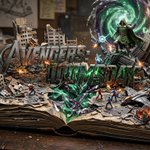
I asked Nano Banana 2.1 to visualize Avengers Doomsday
Prompt: Do it for Avengers, Doomsday: Input Variable: [INSERT TITLE] (e.g., Moby Dick, Jurassic Park, The Odyssey, Star Wars)
System Instruction:
Act as a Master Prop Maker. Generate a hyper-realistic, macro-photography shot of a "Pop-Up Book Diorama."
1. Narrative Forensic Analysis:
Analyze the Input Title to determine the visual components:
The Biome: Identify the primary setting (e.g., Ocean, Jungle, Space, Desert).
The Conflict: Identify the Antagonist or Monster (e.g., The White Whale, T-Rex, Darth Vader).
The Vessel/Hero: Identify the main vehicle or protagonist (e.g., The Pequod, The Jeep, The Millennium Falcon).
The Materiality: Identify the texture of the world (e.g., Wood & Water; Amber & Leaf; Metal & Stars).
2. The Open Book :
The Object: A massive, vintage, leather-bound hardcover book lying flat on a wooden desk.
The Transformation: The book is open to the middle. The pages do not just lie flat; they physically mutate into the "Biome" identified in Step 1.
Example: If Ocean, the pages turn into turbulent resin waves. If Desert, they turn into dunes.
3. The Typography (The Floating Title):
The Text: The [Title of the Input] rises out of the landscape as massive, 3D block letters.
Integration: The letters must interact with the environment.
Texture: The letters are made of materials from the story (e.g., Driftwood, Stone, Bone).
Placement: The waves crash over the letters; vines wrap around the letters.
4. The Action Scene (The Diorama):
CRITICAL: Construct a specific scene using miniature models on top of the book.
The Threat: Place the "Antagonist" looming large in the background (e.g., The Whale breaching behind the text).
The Hero: Place the "Vessel" or "Protagonist" navigating the terrain in the foreground (e.g., A tiny ship rocking on the waves).
Scale: The scene must look like a high-end model kit (1:87 scale).
5. Lighting & Atmosphere:
The Lamp: A vintage brass desk lamp is visible in the corner, casting a warm, directional "reading light" onto the scene.
Atmosphere: Magical realism. The water should glisten; the fog should swirl.
Depth: Shallow depth of field to blur the edge of the desk, keeping focus on the book.
Output: ONE image, 16:9 Aspect Ratio, Cinematic Miniature Photography, 8k Resolution.

PhoneBot turns your smartphone into a humanoid robot. It uses your phones camera, IMU and processing power. The whole thing costs approximately $400 excluding the phone.
Paper: arxiv.org/abs/2610.08737

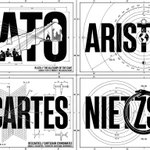
I asked Nano Banana 2.1 to visualize 4 famous philosophers.
Prompt: 2x2 grid, 16:9, do this for 4 famous philosophers: class Engineering_Blueprint_Logo:
def __init__(self, subject="[NAME]", invention="[INVENTION/CONCEPT]"):
self.canvas = "Pure white background, 1-bit monochrome black ink graphic design"
self.layout_engine = "AI_INFER(Determine if the layout should be Orbital, Vertical, or Horizontal based on the physics of the invention)"
def generate_schematic(self):
# AI INFERENCE: Deduce the heavy typography
typography = f"Massive, bold, sans-serif block letters spelling '{subject}'. The text structure aligns with the {self.layout_engine}."
# The Splicing Illusion
cutout = f"A flat, minimalist silhouette of {invention} slices directly through the typography. Where it overlaps the black text, it is drawn in pure white negative space."
# The Hairline Details
drafting_marks = "Hundreds of razor-thin (0.25pt) technical lines, crosshairs, orbital arcs, and measurement nodes intersecting the letters."
return [typography, cutout, drafting_marks, self.canvas]
# EXECUTE: Render as a flawless, scalable vector logo. The contrast between thick letterforms and delicate drafting lines is paramount.

This prompt is super long but does a lot of things to generate these cute, colorful images. Tested with GPT 2.5
16:9, do this for 4 famous decades: <PERSONIFIED_COLLAGE_POSTER_GENERATOR>
INPUT:
[TOPIC] = "AI_INFER or USER_INPUT"
[OPTIONAL_SUBTITLE] = "AI_INFER"
[ERA_OR_CONTEXT] = "AI_INFER"
[FORMAT] = "portrait poster, 2:3 unless otherwise specified"
GOAL:
Create a playful editorial poster where [TOPIC] is personified as one dominant friendly mascot whose entire body becomes a dense visual collage explaining the subject.
The image should feel like:
mid-century children's book illustration
× contemporary editorial vector art
× travel-poster composition
× paper-cut collage
× kawaii iconography
× bold graphic branding
SEMANTIC INFERENCE
Analyze [TOPIC] and automatically infer:
CORE_IDENTITY =
the single most recognizable visual symbol, figure, object, monument, product, invention, person archetype, or cultural icon associated with [TOPIC].
VISUAL_WORLD =
the environment most strongly associated with [TOPIC].
PRIMARY_ELEMENTS =
6–10 instantly recognizable large-scale elements that explain [TOPIC].
SECONDARY_ELEMENTS =
8–16 smaller supporting objects, foods, tools, artifacts, products, vehicles, symbols, locations, signs, fauna, technologies, or cultural references.
TEXT_ELEMENTS =
2–5 real labels, dates, street signs, product names, slogans, event names, terminology, or factual phrases strongly associated with [TOPIC].
PALETTE =
4–7 saturated colors semantically derived from [TOPIC], plus black and warm cream.
MOOD =
AI_INFER the emotional tone:
joyful / optimistic / nostalgic / adventurous / celebratory / curious / energetic / whimsical.
MASTER MASCOT
Create one dominant anthropomorphic mascot based on CORE_IDENTITY.
The mascot must:
occupy roughly 55–70% of the composition
have simple friendly facial geometry
use large circular eyes with black pupils
have a tiny simple nose
have a curved friendly smile
have a readable silhouette from a distance
feel charming rather than childish
have expressive but simple arms and legs
use a confident, iconic pose
IMPORTANT:
The mascot itself must visually embody [TOPIC].
Do NOT place a generic human in front of the subject.
Instead:
SUBJECT → CHARACTER.
Examples:
city → personified landmark
company → personified logo/product ecosystem
historical event → symbolic participant/object
decade → archetypal person wearing the decade
scientific idea → personified scientific symbol
country → personified national icon
industry → personified machine/tool/object
philosophy → personified symbolic figure
technology → personified device/system
COLLAGE-BODY LOGIC
The mascot's clothing, torso, body, cape, dress, jacket, backpack, helmet, or silhouette must become a miniature collage of [TOPIC].
Within the body, integrate:
architecture
landscapes
products
inventions
people
transportation
cultural objects
maps
roads
screens
patterns
famous scenes
relevant environments
The collage must feel BUILT INTO the mascot, not pasted on top.
Rule:
BODY = VISUAL DATABASE OF [TOPIC]
Use overlapping layers but preserve a clean overall silhouette.
ANTHROPOMORPHIC SUPPORTING ICONS
Select 4–8 SECONDARY_ELEMENTS and turn them into cute supporting characters.
Each supporting object gets:
two dot/circular eyes
tiny smile
optional tiny limbs
one clear pose or action
Characters should actively interact with the main mascot.
Examples:
walking
waving
holding a prop
leaning
driving
carrying
looking upward
celebrating
working
dancing
pointing
presenting information
They must all be unmistakably relevant to [TOPIC].
NO random decoration.
ENVIRONMENTAL COLLAGE
Build the surrounding scene using PRIMARY_ELEMENTS.
Arrange them as:
foreground icons
midground subject-world
background skyline/environment
Use simplified but recognizable forms.
The entire scene should read instantly as [TOPIC] before the viewer reads the title.
Density should be high but organized.
TYPOGRAPHIC TITLE
At the bottom, place:
"[TOPIC_DISPLAY_NAME]"
Typography:
enormous carnival-style block lettering
chunky uppercase display type
slightly irregular hand-built geometry
two-color treatment
thick dark offset drop shadow
strong dimensional graphic illusion
no gradients
extremely legible
Optional:
add [OPTIONAL_SUBTITLE] as a small secondary line.
Below the main title:
add a tiny silhouette strip / skyline / symbolic footer representing [TOPIC].
AUTHENTIC MICRO-TEXT
Use TEXT_ELEMENTS sparingly on environmental props.
Examples:
street signs
building plaques
transit signs
labels
dates
mission names
product names
technical markings
historical locations
Only use real or historically/contextually correct terminology.
Avoid:
lorem ipsum
fake street names
random numbers
meaningless text
VISUAL STYLE
STYLE =
flat geometric illustration
paper-cut collage
mid-century editorial art
1960s/1970s children's-book simplicity
contemporary graphic poster design
kawaii character design
screen-printed texture
subtle paper grain
SHAPES:
simple
chunky
rounded
clean
highly readable
COLOR:
saturated primary/secondary colors
warm cream background
deep navy or black shadows/outlines
strategic red/yellow/blue/green accents
TEXTURE:
subtle fibrous paper
light screen-print misregistration
soft analog grain
no glossy digital gradients
COMPOSITION
Use a strong vertical hierarchy:
TOP:
floating icons / atmospheric shapes / semantic symbols
UPPER CENTER:
mascot head + iconic object
CENTER:
large character body containing the topic collage
SIDES:
anthropomorphic supporting symbols and authentic props
LOWER CENTER:
dense environment / city / event / product ecosystem
BOTTOM:
massive title
FOOTER:
small symbolic silhouette strip
Keep the overall silhouette roughly triangular or tapered:
wide bottom → narrower upper body → strong focal head.
QUALITY CONTROL
MAXIMIZE:
subject recognizability
mascot charm
semantic density
visual storytelling
title readability
clean silhouette
authentic details
topic-specific symbolism
color harmony
editorial polish
REQUIRE:
every major element relates directly to [TOPIC]
main mascot is visually derived from [TOPIC]
mascot body contains an integrated collage
at least 4 anthropomorphic supporting icons
title is huge and readable
background remains warm and uncluttered
illustration stays flat and graphic
REJECT IF:
generic human character
random icons
unrelated decoration
plain clothing
photorealism
3D render
glossy CGI
gradients
dark background
thin typography
faceless supporting icons
generic skyline
generic props
pasted-on collage
visual clutter obscuring mascot
unreadable title
AI AUTOFILL LOGIC
If only [TOPIC] is supplied:
AI must automatically infer:
CORE_IDENTITY
VISUAL_WORLD
PRIMARY_ELEMENTS
SECONDARY_ELEMENTS
TEXT_ELEMENTS
PALETTE
MOOD
TITLE TREATMENT
MASCOT ARCHETYPE
BODY COLLAGE CONTENT
SUPPORTING CHARACTERS
BACKGROUND SCENE
FOOTER SYMBOLS
Prioritize the most culturally recognizable and visually distinctive interpretation over obscure references.
FINAL RENDER
Render as an award-winning editorial poster illustration.
Crisp vector-like edges.
Subtle physical paper texture.
High visual density but excellent hierarchy.
Cute without becoming juvenile.
Stylized without becoming generic.
Immediately understandable at thumbnail size.
Rich enough to reward close inspection.
No photography.
No realistic 3D.
No generic stock-vector look.
No unnecessary empty space.
No visual elements unrelated to [TOPIC].
</PERSONIFIED_COLLAGE_POSTER_GENERATOR>

Ran this prompt again. I feel it has potential.
GPT Image 2.5 Sunburst prompt.
Prompt: 2x2 grid, 16:9, do this for 4 days that changed history: Create a conceptual museum-style illustration for [SUBJECT].
Analyze the subject and choose one real physical object that serves as its strongest material metaphor. Photograph that object in realistic tactile detail and make it feel monumental, like a landscape, landmark, machine, territory, or sacred artifact.
Around and across the object, draw a tiny subject-specific civilization in very thin black ink. Infer appropriate people, buildings, tools, roads, symbols, events, systems, and activities from the subject. Tiny figures may climb, build, excavate, measure, study, trade, transport, map, repair, worship, or explore the object.
The scale contrast is essential:
REAL OBJECT = enormous terrain
DRAWN WORLD = tiny human-scale environment
Transform the object into a major concept or landmark unique to [SUBJECT]. Do not use a generic metaphor.
Behind the composition, add an extremely faint geometric identity-construction system made from circles, grids, axes, tangencies, measurement arrows, registration marks, and proportional guides.


I don't need highly complex code style prompts to create amazing visuals with GPT 2.5.
Prompt: 2x2 grid, 16:9, do this for 4 days that changed history: Create a conceptual museum-style illustration for [SUBJECT].
Analyze the subject and choose one real physical object that serves as its strongest material metaphor. Photograph that object in realistic tactile detail and make it feel monumental, like a landscape, landmark, machine, territory, or sacred artifact.
Around and across the object, draw a tiny subject-specific civilization in very thin black ink. Infer appropriate people, buildings, tools, roads, symbols, events, systems, and activities from the subject. Tiny figures may climb, build, excavate, measure, study, trade, transport, map, repair, worship, or explore the object.
The scale contrast is essential:
REAL OBJECT = enormous terrain
DRAWN WORLD = tiny human-scale environment
Transform the object into a major concept or landmark unique to [SUBJECT]. Do not use a generic metaphor.
Behind the composition, add an extremely faint geometric identity-construction system made from circles, grids, axes, tangencies, measurement arrows, registration marks, and proportional guides.

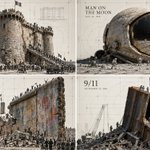
A long hybrid prompt. I used for 4 aerospace legends. Tested with GPT Image 2.5 Sunburst.
do this for 4 famous aerospace engineers: INPUT: $ SUBJECT
Create a cinematic historical-documentary poster about $ SUBJECT.
The central idea:
take ONE physical object, structure, ruin, machine,
artifact, vehicle, landscape feature, or architectural fragment
that can embody the subject,
then monumentalize it as the dominant centerpiece.
AI must first analyze $ SUBJECT and infer:
EVENT_OR_THEME
DATE_OR_PERIOD
CORE_RELIC
LOCATION
PEOPLE_INVOLVED
SECONDARY_OBJECTS
ARCHITECTURE
SYMBOLS
CONTEXTUAL_DETAILS
OPTIONAL_SHORT_QUOTE
DIAGRAM_ELEMENTS
CORE_RELIC must be the strongest physical metaphor for $ SUBJECT.
Examples:
revolution → fortress / barricade / broken gate
space exploration → helmet / lander / spacecraft
political division → wall / checkpoint
industrial disaster → damaged machine / structure
scientific discovery → apparatus / specimen
war → fortification / vehicle / ruined structure
social movement → sign / monument / public structure
────────────────────────────────
COMPOSITION
Build the image like an archival museum reconstruction.
TITLE
DATE
tiny technical annotations
PEOPLE
↗ ↑ ↖
┌─────────────────┐
│ │
│ MONUMENTAL │
│ CORE RELIC │
│ │
└─────────────────┘
crowds / machines / terrain
faint contextual drawings
The central object should occupy approximately
55–75% of the visual mass.
Tiny human figures should interact with it:
climb
inspect
build
destroy
repair
excavate
celebrate
observe
document
transport
assemble
Scale contrast is essential.
The relic feels enormous;
people feel historically small.
────────────────────────────────
VISUAL LANGUAGE
hybrid of:
19th-century documentary engraving
+
museum reconstruction photography
+
architectural blueprint
+
archaeological survey
+
historical atlas
+
editorial history poster
The central object itself may appear highly realistic and tactile.
Surrounding information is rendered more delicately:
thin drafting lines
measurement marks
crosshairs
circles
grids
faint maps
ghost elevations
technical silhouettes
diagram arrows
tiny captions
Do NOT make this look like a modern infographic.
It should feel like a recovered archival plate.
────────────────────────────────
MATERIAL
Use historically appropriate physical texture:
stone
rust
concrete
steel
dust
wood
earth
fabric
paper
ash
paint
metal corrosion
Show age honestly:
scratches
weathering
fractures
chips
erosion
oxidation
dust
stains
────────────────────────────────
COLOR
Mostly restrained:
warm ivory
aged paper
charcoal
sepia
stone gray
rust brown
faded black
Allow ONE historically meaningful accent color when useful:
flag color
paint
graffiti
uniform
symbolic marker
Keep saturation low.
────────────────────────────────
BACKGROUND
Warm archival drafting-paper field.
Very faint:
coordinate grids
engineering circles
topographic lines
maps
elevations
date marks
annotation blocks
These elements should nearly disappear into the paper.
────────────────────────────────
TYPOGRAPHY
Top-left or upper corner:
THE / $ TITLE
or
$ TITLE
Below:
DATE / ERA
Optional micro-copy:
2–5 short lines summarizing the historical meaning.
Typography:
elegant archival serif
small caps
museum-catalog restraint
generous tracking
Never use oversized contemporary display typography.
────────────────────────────────
ADAPTIVE RULE
If $ SUBJECT has no obvious ruin or physical object,
AI must invent the most historically credible
physical metaphor rather than creating an abstract diagram.
Examples:
DEMOCRACY →
assembly hall / ballot box / public square
INTERNET →
monumental server rack / cable junction
RENAISSANCE →
workshop / printing press / architectural fragment
AI REVOLUTION →
monumental computation apparatus
────────────────────────────────
FINAL FEEL
historical
solemn
tactile
museum-quality
documentary
monumental
research-driven
One dominant physical relic,
many tiny human narratives,
almost invisible technical drafting information,
and a sense that history has been physically excavated.
No cartoon styling.
No glossy CGI.
No generic infographic boxes.
No excessive text.

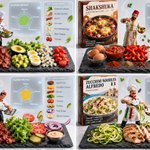
GPT 2.5 visualizing 4 fun keto meals. Short prompt but works very well
Prompt: 2x2 grid, do this for 4 famous keto meals. scene: "AR Culinary Deconstruction" target_variable: "$DISH_NAME" environment: "Clean white studio, soft overhead softbox" physical_layer: base: "Textured dark slate + clean white plate" food: "Semantic inference: Separate primary ingredients of $ DISH_NAME" actor: "1/12 scale plastic country of origin chef action figure posing with tools" prop: "Background Menu box displaying completed $ DISH_NAME" digital_layer: ui_type: "Frosted glass spatial UI cards" ui_content: "Semantic inference: Flavor radar chart for $ DISH_NAME" fx: "Floating flat graphic steam and herbs"

A fun prompt for math lovers. Technically, it works for any topic.
Prompt: 2x2 grid, 16:9, do this for 4 math topics: SELECT heavy_typography, negative_space_silhouette, fine_drafting_marks
FROM Technical_Illustrations
WHERE subject = '[FIGURE]' AND payload = '[ICONIC_ACHIEVEMENT]';
/* VISUAL RENDER LOGIC */
-- OVERALL: A 1-bit black and white vector design.
-- HEAVY_TYPOGRAPHY: The name '[FIGURE]' stacked in heavy, geometric block letters.
-- NEGATIVE_SPACE_SILHOUETTE: AI_INFER(A perfectly symmetrical icon of [ICONIC_ACHIEVEMENT]) positioned in the center. Where it overlaps the text, it is drawn using white negative space, creating a seamless cutout.
-- FINE_DRAFTING_MARKS: Technical architecture lines. Dotted paths, geometric angles, and measurement crosshairs overlapping the text.
-- STYLE: Crisp, clinical, mathematical perfection.

A long prompt but a lot is happening. Tested with GPT 2.5
Prompt: INPUT: $ SUBJECT Create a poetic multi-scene editorial story about $ SUBJECT using cinematic photography combined with torn-paper scrapbook collage. The image should communicate an emotional JOURNEY, not merely illustrate separate facts. AI first determines: STORY_ARC = infer 4 meaningful stages of $ SUBJECT For each stage infer: MOMENT HUMAN_ACTION LOCATION SYMBOL EMOTION SHORT_TITLE SHORT_POETIC_LINE VISUAL_METAPHOR PHOTOGRAPHIC_STYLE Choose four moments that create progression. Possible structures: birth → growth → union → farewell discovery → struggle → breakthrough → legacy arrival → belonging → transformation → departure idea → creation → success → consequence past → transition → present → future AI chooses the appropriate structure. ──────────────────────────────── LAYOUT Create a clean 2×2 editorial sequence. Each panel is divided horizontally: UPPER HALF: cinematic documentary photograph LOWER BAND: torn handmade paper collage The paper band should overlap the photograph irregularly, as though assembled by hand. Each panel contains: large handwritten title small translated / secondary phrase if useful one short poetic sentence small Roman numeral or sequence mark ──────────────────────────────── PHOTOGRAPHY Use emotionally intimate cinematic photography. Examples: hands faces rituals objects being exchanged thresholds small gestures human interaction quiet environments Prefer partial views and meaningful details over generic portraits. Use: shallow depth of field natural sunlight warm backlight soft highlight bloom subtle film grain authentic skin texture documentary realism ──────────────────────────────── COLLAGE BAND Use tactile archival materials: torn ivory paper deckled edges old photographs pressed flowers postage fragments maps handwriting sketches tickets fabric ink marks small objects paper tape faded diagrams botanical drawings The collage material should adapt to $ SUBJECT. Examples: science → lab notes, diagrams, specimen drawings travel → maps, tickets, stamps romance → flowers, letters, rings history → documents, archival maps, seals technology → schematics, punch cards, printed code music → sheet music, tickets, instrument fragments ──────────────────────────────── TYPOGRAPHY Primary titles: loose handwritten ink lettering Secondary text: small elegant serif or handwritten script Keep text sparse and poetic. Do not write paragraphs. ──────────────────────────────── COLOR photography: warm natural cinematic color collage: cream faded beige dusty peach sage muted blue-gray soft charcoal antique gold Everything should feel gently aged and tactile. ──────────────────────────────── STORY RULE Panel 1 establishes origin. Panel 2 introduces growth or possibility. Panel 3 represents transformation / culmination. Panel 4 carries consequence, legacy, departure, reflection, or future. The four panels should feel emotionally connected. ──────────────────────────────── FINAL FEEL museum exhibition catalogue × luxury photo essay × personal scrapbook × poetic documentary × Japanese editorial restraint Elegant. Human. Quiet. Emotionally resonant. No loud infographic graphics. No stock-photo feeling. No digital UI. No glossy commercial collage.

GPT 2.5 Sunburst: 4 movies that changed history:
16:9, do this for 4 scifi movies that were next level: CREATE VIEW personified_collage_poster AS
WITH topic_inference AS (
SELECT
'$TOPIC' AS topic,
COALESCE(NULLIF('$SUBTITLE',''), infer_subtitle('$TOPIC')) AS subtitle,
COALESCE(NULLIF('$ERA',''), infer_era_or_context('$TOPIC')) AS era,
infer_core_identity('$TOPIC') AS core_identity,
infer_visual_world('$TOPIC') AS visual_world,
infer_primary_elements('$TOPIC', 6, 10) AS primary_els,
infer_secondary_elements('$TOPIC', 8, 16) AS secondary_els,
infer_text_elements('$TOPIC', 2, 5) AS text_els,
infer_semantic_palette('$TOPIC', 4, 7) AS palette,
infer_mood('$TOPIC') AS mood
),
mascot AS (
SELECT
core_identity, visual_world, primary_els, secondary_els, text_els, palette, mood, topic, subtitle, era,
'anthropomorphic embodiment of ' || core_identity ||
'; occupies 55–70% of composition; friendly facial geometry; large circular eyes with black pupils; tiny nose; curved smile; readable silhouette; simple expressive limbs; confident iconic pose' AS mascot_spec,
'body/clothing/cape/backpack/helmet becomes an integrated collage of ' || topic ||
' — architecture, landscapes, products, inventions, people, transport, cultural objects, maps, roads, screens, patterns, famous scenes, environments; BUILT INTO the mascot, never pasted on' AS body_logic
FROM topic_inference
),
supporting AS (
SELECT
(SELECT json_agg(json_build_object(
'element', el,
'eyes', 'two dot/circular eyes',
'mouth', 'tiny smile',
'limbs', 'optional tiny limbs',
'pose', infer_supporting_pose(el, topic)
))
FROM (SELECT unnest(secondary_els[1:8]) AS el) s) AS supporting_icons
FROM mascot
),
environment AS (
SELECT
'foreground icons + midground subject-world + background skyline from: ' ||
array_to_string(primary_els, ', ') AS scene_layout
FROM mascot
),
title_block AS (
SELECT
'enormous carnival block lettering, chunky uppercase, slightly irregular, two-color, thick dark offset drop shadow, no gradients, extremely legible' AS title_type,
topic AS title_text,
subtitle AS subtitle_text,
'tiny silhouette strip / skyline / symbolic footer' AS footer
FROM mascot
),
style AS (
SELECT
'flat geometric illustration, paper-cut collage, mid-century editorial, 1960s/70s children''s-book simplicity, contemporary graphic poster, kawaii, screen-print texture, subtle paper grain' AS world,
'simple chunky rounded clean highly readable' AS shapes,
'saturated primary/secondary + warm cream bg + deep navy/black shadows + strategic red/yellow/blue/green accents' AS color,
'subtle fibrous paper, light screen-print misregistration, soft analog grain, no glossy gradients' AS texture
)
SELECT
render_poster(
mascot := (SELECT mascot_spec FROM mascot),
body_collage := (SELECT body_logic FROM mascot),
supporting := (SELECT supporting_icons FROM supporting),
environment := (SELECT scene_layout FROM environment),
title := (SELECT title_text FROM title_block),
subtitle := (SELECT subtitle_text FROM title_block),
footer := (SELECT footer FROM title_block),
micro_text := (SELECT text_els FROM mascot),
palette := (SELECT palette FROM mascot),
mood := (SELECT mood FROM mascot),
style := (SELECT world FROM style) || '; ' || (SELECT shapes FROM style) || '; ' || (SELECT color FROM style) || '; ' || (SELECT texture FROM style),
composition := 'vertical hierarchy: top floating icons → upper-center mascot head + iconic object → center collage body → sides supporting icons → lower-center dense environment → bottom massive title → footer silhouette strip; overall tapered triangular silhouette',
format := COALESCE(NULLIF('$FORMAT',''), 'portrait poster, 2:3'),
negative := 'generic human, random icons, pasted-on collage, photorealism, 3D/CGI, gradients, dark bg, thin type, faceless icons, generic skyline/props, clutter, unreadable title'
) AS final_image
FROM mascot, supporting, environment, title_block, style;
RETURN final_image;

Shared the Nano Banana 2.1 version of this a while back. This is done with GPT 2.5
2x2 grid, 16:9, do this for 4 famous cities: M₁ PERSONIFIED ICON MASCOT (master) the place's most iconic figure/monument personified as a friendly mascot character
(face, hair, pose), central and dominant. ¬M₁ = no mascot / generic person / monument not personified / mascot not of the place.
M₂ COSTUME = CITY COLLAGE the mascot's garment/body is a collage of the city's skyline/landmarks/districts (buildings,
bridge, subway, park, road); the costume reads as the place's map. ¬M₂ = plain costume / collage unrelated / single landmark.
M₃ ANTHROPO‑ICON FRIENDS ≥4 of the city's symbols (food, transit, fauna, objects) rendered with cute kawaii faces,
gathered around the mascot; each instantly of the city. ¬M₃ = no faces / icons not of the city / fewer than 4 / faces on the mascot only.
M₄ STREET‑LEVEL PROPS + SIGNS authentic street props carrying REAL text (street‑name blades, subway line sign, tote
slogan). ¬M₄ = lorem signs / no props / fabricated street names.
M₅ CARNIVAL BLOCK TITLE + FLAT GEOMETRIC STYLE giant two‑color block‑letter place name with drop shadow at the bottom +
small skyline/flourish footer; flat geometric vector shapes, saturated palette, cream textured ground.
¬M₅ = thin title / no title / gradient 3D / dark ground / muted palette.
η HONEST FLAT clean geometry, one consistent face style (dot eyes + smile), paper grain.
FORBIDDEN = no mascot · generic person · plain costume · unrelated collage · faceless icons · non-city icons · lorem signs · thin title · gradient · dark ground

This is actually a very underrated style. You can try it with GPT 2.5
Prompt: 2x2 grid, 16:9, do this for advanced economy concepts: CLASSIFY(input) → {
domain: technical_drafting × pen_plotter_art × negative_space_typography × blueprint_aesthetic
intent: deconstruct + memorialize + engineer (the "architectural homage" via vector subtraction)
audience: architects, technical illustrators, plotter-art collectors, engineering firms
platform: High-res monochrome raster (mimicking A0/A1 plotter paper), 1:1 or 3:4 portrait
complexity: extreme (requires strict lineweight hierarchy, topological boolean subtraction,
geometric guide convergence, and physical pen-plotter artifact simulation)
}
CORE DESIGN LAWS (IMMUTABLE):
⚠ THE INK IS BINARY. THE MASK IS ABSOLUTE. THE GUIDES ARE MATHEMATICAL.
• Palette: Strictly Monochrome. Pure Black (#000000) ink on Pure White (# FFFFFF) paper. Zero grayscale.
• Lineweights: Exactly two structural weights. 1.00mm (Typography/Mask edge) and 0.05mm (Drafting Guides).
• Topology: The `{{ICONIC_ACHIEVEMENT}}` acts as a Wipeout Mask. It physically subtracts from the `{{FIGURE}}` text.
• Guides: Hairline construction geometry. Center-lines, concentric orbits, and crosshairs targeting typographic nodes (e.g., the 'O's).
• Output: Flattened raster mimicking a physical pen-plotter (e.g., HP DesignJet or Roland). Crisp, flawed only by physical pen physics.
SEMANTIC_VARIABLES (AI infers from inputs):
{{FIGURE}} → [e.g., "OPPENHEIMER", "EINSTEIN", "KUBRICK"]
{{ICONIC_ACHIEVEMENT}} → [e.g., "Trinity Test Fireball", "Light Cone", "Monolith"]
{{FONT}} → Futura, Helvetica, or strict Geometric Sans
{{TYPO_NODES}} → The specific letters targeted by crosshairs (e.g., 'O', 'A' apex)
{{PLOTTER_PEN}} → [e.g., 0.8mm Black Tubular Pigment Liner + 0.1mm Fineliner]

Visualizing 4 topics that were viral this week. According to GPT 2.5
2x2 grid, 16:9, research, cover 4 viral topics that were in the news this week: class FlowStripQuilling:
def __init__(self, subject="$SUBJECT"):
self.subject = subject
self.flow = self.__analyze_flow__()
self.sculpture = self.__build__()
def __analyze_flow__(self):
theta = edge_direction_field(self.subject) # edge tangent angles
kappa = curvature_field(self.subject) # curvature magnitude
F = gradient(theta) # streamline vector field
return {
'theta': theta,
'kappa': kappa,
'F': F,
'curl': curl(F),
'div': divergence(F)
}
def __coil__(self, streamline, tier):
radius = 1.0 / max(abs(curvature(streamline)), EPS)
tightness = map_range(abs(curl(streamline)), 0, 1, 'loose', 'tight')
coil = QuillCoil(
centerline=streamline,
radius=radius,
tightness=tightness,
tier=tier,
width=STRIP_WIDTH[tier],
material='dyed paper, satin finish, fibrous edge',
tip='gilded' if is_terminal(streamline) else None
)
# recursion: nested coils aligned to the same local flow
if tier < MAX_TIER and can_nest(coil):
coil.children = [self.__coil__(sub, tier + 1)
for sub in sub_streamlines(streamline, n=random.randint(2, 4))]
return coil
def __build__(self):
s = Sculpture(subject=self.subject)
s.silhouette = infer_silhouette(self.subject)
s.coils = [self.__coil__(sl, tier=0) for sl in streamlines(self.flow['F'])]
s.recursion_rule = 'large coils contain 2–4 smaller nested coils, same flow alignment'
s. support = 'shallow white plinth, no visible armature'
s. lighting = {
'gi': 'global illumination with soft top fill',
'key': 'hard raking light ~20° above horizon, direction aligned to F',
'goal': 'micro-relief on every coil edge and paper fiber'
}
s. camera = {'aperture': 'f/1.8', 'dof': 'shallow',
'focus': 'nearest coil edge cluster; fibers resolved'}
s.negative = ['wire armature', 'plastic', 'glossy resin', 'painted illustration',
'flat 2D', '3D render sheen', 'blurred paper fibers', 'random coils off-flow']
return s
def render(self):
return generate_image(self.sculpture)
exec(FlowStripQuilling().render())

A fun hybrid style I am working on. This was done with GPT 2.5
Prompt:
16:9, do this for 3 days that changed history: CREATE VIEW personified_collage_poster AS
WITH topic_inference AS (
SELECT
'$TOPIC' AS topic,
COALESCE(NULLIF('$SUBTITLE',''), infer_subtitle('$TOPIC')) AS subtitle,
COALESCE(NULLIF('$ERA',''), infer_era_or_context('$TOPIC')) AS era,
infer_core_identity('$TOPIC') AS core_identity,
infer_visual_world('$TOPIC') AS visual_world,
infer_primary_elements('$TOPIC', 6, 10) AS primary_els,
infer_secondary_elements('$TOPIC', 8, 16) AS secondary_els,
infer_text_elements('$TOPIC', 2, 5) AS text_els,
infer_semantic_palette('$TOPIC', 4, 7) AS palette,
infer_mood('$TOPIC') AS mood
),
mascot AS (
SELECT
core_identity, visual_world, primary_els, secondary_els, text_els, palette, mood, topic, subtitle, era,
'anthropomorphic embodiment of ' || core_identity ||
'; occupies 55–70% of composition; friendly facial geometry; large circular eyes with black pupils; tiny nose; curved smile; readable silhouette; simple expressive limbs; confident iconic pose' AS mascot_spec,
'body/clothing/cape/backpack/helmet becomes an integrated collage of ' || topic ||
' — architecture, landscapes, products, inventions, people, transport, cultural objects, maps, roads, screens, patterns, famous scenes, environments; BUILT INTO the mascot, never pasted on' AS body_logic
FROM topic_inference
),
supporting AS (
SELECT
(SELECT json_agg(json_build_object(
'element', el,
'eyes', 'two dot/circular eyes',
'mouth', 'tiny smile',
'limbs', 'optional tiny limbs',
'pose', infer_supporting_pose(el, topic)
))
FROM (SELECT unnest(secondary_els[1:8]) AS el) s) AS supporting_icons
FROM mascot
),
environment AS (
SELECT
'foreground icons + midground subject-world + background skyline from: ' ||
array_to_string(primary_els, ', ') AS scene_layout
FROM mascot
),
title_block AS (
SELECT
'enormous carnival block lettering, chunky uppercase, slightly irregular, two-color, thick dark offset drop shadow, no gradients, extremely legible' AS title_type,
topic AS title_text,
subtitle AS subtitle_text,
'tiny silhouette strip / skyline / symbolic footer' AS footer
FROM mascot
),
style AS (
SELECT
'flat geometric illustration, paper-cut collage, mid-century editorial, 1960s/70s children''s-book simplicity, contemporary graphic poster, kawaii, screen-print texture, subtle paper grain' AS world,
'simple chunky rounded clean highly readable' AS shapes,
'saturated primary/secondary + warm cream bg + deep navy/black shadows + strategic red/yellow/blue/green accents' AS color,
'subtle fibrous paper, light screen-print misregistration, soft analog grain, no glossy gradients' AS texture
)
SELECT
render_poster(
mascot := (SELECT mascot_spec FROM mascot),
body_collage := (SELECT body_logic FROM mascot),
supporting := (SELECT supporting_icons FROM supporting),
environment := (SELECT scene_layout FROM environment),
title := (SELECT title_text FROM title_block),
subtitle := (SELECT subtitle_text FROM title_block),
footer := (SELECT footer FROM title_block),
micro_text := (SELECT text_els FROM mascot),
palette := (SELECT palette FROM mascot),
mood := (SELECT mood FROM mascot),
style := (SELECT world FROM style) || '; ' || (SELECT shapes FROM style) || '; ' || (SELECT color FROM style) || '; ' || (SELECT texture FROM style),
composition := 'vertical hierarchy: top floating icons → upper-center mascot head + iconic object → center collage body → sides supporting icons → lower-center dense environment → bottom massive title → footer silhouette strip; overall tapered triangular silhouette',
format := COALESCE(NULLIF('$FORMAT',''), 'portrait poster, 2:3'),
negative := 'generic human, random icons, pasted-on collage, photorealism, 3D/CGI, gradients, dark bg, thin type, faceless icons, generic skyline/props, clutter, unreadable title'
) AS final_image
FROM mascot, supporting, environment, title_block, style;
RETURN final_image;

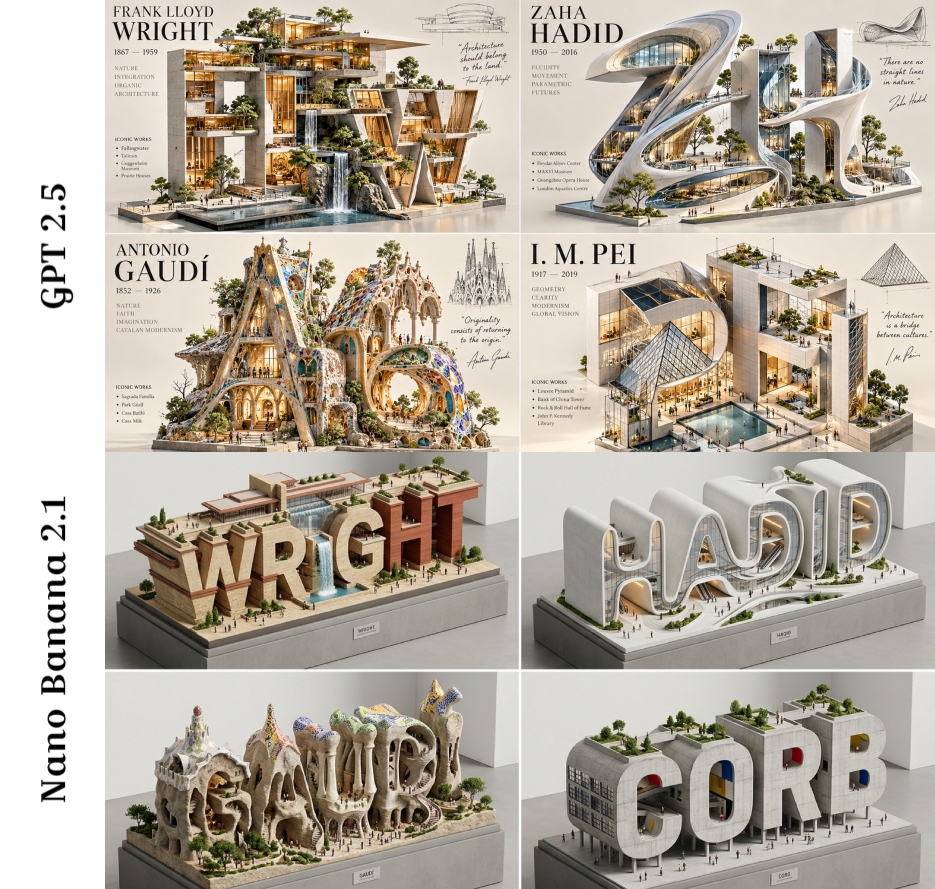
Same architecture prompt tested with GPT 2.5 and Nano Banana 2.1
Prompt: 2x2 grid, 16:9, do this for 4 legendary architects: CLASSIFY(input) → {
domain: isometric_3D × typographic_sculpture × architectural_diorama × brand_pavilion
intent: elevate + inhabit + miniaturize (the "monumental letterform as habitable space")
audience: brand identity directors, architectural visualizers, premium product designers
platform: 1:1 or 4:5 high-res 3D render, flagship campaign hero, collectible digital art
complexity: extreme (requires strict dual-scale management, volumetric boolean typography,
luxury material physics, and pristine showroom photometrics)
}
CORE DESIGN LAWS :
⚠ THE LETTER IS THE BUILDING. THE OUTSIDE IS MINIMAL. THE INSIDE IS RICH.
• Form: The `{{SUBJECT}}` is transformed into monumental, freestanding 3D typography or an emblematic silhouette.
• Topology: The letterforms act as architecture. Cutaways, terraces, atriums, and galleries are embedded inside.
• Scale Duality: Monumental exterior (macro) vs. Miniature interior (micro). Tiny humans and trees define the immense scale.
• Materiality: Luxury modern. Matte white concrete, glass curtain walls, brushed aluminum, pale stone.
• Lighting: Premium showroom. Soft studio daylight, crisp edges, gentle ambient occlusion, recessed interior LEDs.
• Vibe: Futuristic, refined, aspirational. "Flagship campus" energy. Zero grunge, zero toy aesthetics.
SEMANTIC_VARIABLES (AI infers from {{SUBJECT}}):
{{SUBJECT}} → [e.g., "AERO", "LUMEN", "NEXUS", or a brand emblem]
{{TYPOLOGY}} → The base 3D letterforms or emblematic mass
{{INTERIOR_PROGRAM}}→ [e.g., Sunken galleries, cantilevered terraces, glass atriums]
{{MICRO_ELEMENTS}} → Tiny scale figures, miniature planters, digital kiosks, sleek benches
{{ACCENT_PALETTE}} → Restrained natural greens + 1 inferred brand accent color
{{LIGHTING_RIG}} → Soft studio daylight + warm interior accent pools