

Vater², Managing Partner Emerging Markets Advisors, Historiker & PolWi (IB), @cdu, 🥰Lateinamerika & @scfreiburg , ex @KAS__Bolivia. Profilfoto @BAufarbeitung
Freiburg im Breisgau
Joined February 2015
- Tweets1K
- Following1.5K
- Followers354
- Likes17.8K






Episode "Global EU: New Realism and Untapped Potential" of our podcast "On the Ground - Geopolitics and Business" with @MKoehlerEU online.
Listen to the episode on YouTube and your streaming services.
1/5
podcasts.apple.com/de/podcas…
...why the Mediterranean will determine whether Europe’s neighborhood becomes a bridge or a divide—and why Brussels’ trade policy needs a “new #realism.”
4/5
1
29
For additional info & links on every episode of "On The Ground: Geopolitics and Business", visit our Website:
emergingmarketsadvisors.com/…
5/5

5
New podcast episode "On The Ground: #Geopolitics and #Business" Online: A Summer Recap and Outlook for the Second Half of 2026
Thomas Schiller and I take a look at future topics:
- #Colombia under De La Espriella
- Europe and #NorthAfrica . Importance of the Mediterranean (1/6)

1
43
Listen, subscribe, like and comment on Apple Podcasts:
podcasts.apple.com/de/podcas… (5/6)

1
9
Listen, subscribe, like and comment on Amazon Music:
music.amazon.de/podcasts/782…
And many more platforms. (6/6)

10
Dr. Georg Dufner retweeted

Gillian Tett, journalist: Remember what happened in Chechnya? Russians went in once, flattened the place, everyone said “peace.”
Russians withdrew, got beaten back as well. Everyone said, “Peace works.” Chechnya, meanwhile, was completely defenseless.
Russians waited few years, went back in again, and operated in even more brutal fashion. They flattened it even worse.
Then Russians went back in third time, and there was horrific killing. That’s a brutal and ghastly story from Russia’s past.
I would love to believe that Russia is about to sign some peace deal. But the reality is that Russia only respects strength.
And if Europe and UK don’t project strength, and help Ukraine project strength, then it will be Chechnya all over again.
Dr. Georg Dufner retweeted

Man sollte politische Statements von Künstlern nicht überschätzen. Aber diese klaren Sätze von Till Brönner sind klüger als die meisten Tagesthemen-Kommentare.
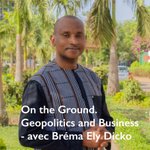
#Mali : The Roots of a Multidimensional #Crisis with @dickobrema . For years, Mali has epitomized the crises of the #Sahel: terrorism, separatism, and coups d’état. Listen to the whole french podcast episode on all major streaming platforms and on YouTube.
Podcast “On the Ground. Geopolitics and Business”
Episodes and additional content:
emergingmarketsadvisors.com/…
12

Dr. Georg Dufner retweeted

The Foreign Affairs piece on China's economic model is one of those rare analyses that actually cuts through the usual Western cope. Beijing didn't rise by magic or superior central planning. It rose because it got plugged straight into Western markets, technology transfers, and capital flows that the liberal order kept wide open. Now the same system is being weaponized against its creators, and the bill is coming due faster than Brussels wants to admit.
The core trap is exactly as laid out: China's growth model runs on suppressed domestic consumption and massive overinvestment in production capacity. Ordinary Chinese households capture too small a share of the pie, so factories churn out far more than the internal market can absorb. The surplus gets dumped abroad, subsidized by the state, whether we're talking EVs, solar panels, machinery, or steel. This isn't free trade. It's mercantilism with Chinese characteristics, and it is already triggering the predictable backlash: tariffs, anti-dumping probes, friend-shoring, and quiet efforts to rebuild supply chains that don't run through Guangzhou.
Europe is sleepwalking into the worst version of this trap. Cheap Chinese imports feel like a win for consumers in the short term, but they are hollowing out industrial competence, skilled jobs, and the ability to produce critical goods at home. Lose your own manufacturing base and you don't just become dependent on Beijing for widgets. You become dependent for the strategic means to defend yourself. That is not an economic problem anymore. It is a security problem with Chinese characteristics, especially when you remember that Beijing, Moscow, Tehran, and Pyongyang have been tightening their axis while we pretend separate bilateral deals will contain it.
The irony is brutal. The very openness that let China industrialize at warp speed is now being eroded by China's own behavior. The more aggressively Beijing floods markets and displaces competitors, the faster those competitors raise barriers and duplicate production elsewhere. Beijing is burning the bridge it used to cross the river, all while still needing Western consumers to keep its factories running. That is not master strategy. That is a structural contradiction dressed up in nationalist slogans and Xi Jinping photo-ops surrounded by red flags and ceremonial guards.
For Ukraine this matters directly. We are building our own defense industry at wartime speed precisely because we cannot afford strategic dependence on any single supplier, least of all actors aligned with the Moscow-Tehran-Pyongyang supply chain that keeps feeding our enemy. Europe should be doing the same instead of debating how many more subsidized Chinese EVs it can absorb before its own industrial base collapses. The choice is no longer abstract: subsidize your own productive capacity and protect critical sectors, or become the world's largest captive market for a rival civilization that views your openness as a weakness to exploit.
The post-appeasement era is here. Moscow taught us the hard way what happens when you let imperial revisionists rewrite the rules while you chase short-term margins. China is simply playing the same game at global scale. Time to stop pretending the rules still favor the open society that created the pie everyone wants to carve up. Either the West rebuilds its industrial sinews and strategic autonomy, or it learns the expensive way that gratitude for past growth does not buy immunity from future predation.

Dr. Georg Dufner retweeted

En octubre de 2011, Luis de la Fuente fue despedido del Deportivo Alavés después de nueve jornadas. Las llamadas dejaron de llegar. Pasó dieciocho meses sin trabajo.
Siguió yendo al mismo bar a desayunar. Siguió leyendo el periódico. Un día de 2013 encontró un anuncio pequeño en las páginas de deportes: la Real Federación Española de Fútbol buscaba entrenador para sus categorías inferiores. Llamó a Iñaki Sáez, antiguo seleccionador, que lo conocía. Mandó el currículum. Esperó.
La Federación le ofreció el puesto. El contrato duraba tres meses. La misión: clasificar a la sub-19 para el Europeo de Lituania. Sin garantías más allá de eso. De la Fuente firmó el 1 de mayo de 2013.
Lo que vino después fue un trabajo invisible. Campos juveniles, contratos cortos, categorías que nadie sigue. En 2015 ganó el Europeo sub-19 con un equipo que incluía a Rodri, Mikel Merino y Unai Simón. Luego la sub-21. Luego la absoluta. El 19 de julio de 2026, en el MetLife Stadium de Nueva York, levantó la Copa del Mundo.
Trece años después del anuncio en el periódico.
La carrera de De la Fuente no tiene la narrativa habitual del crack que triunfa: no dirigió al Madrid ni al Barça, no pasó por ningún gigante europeo, no tuvo un momento de revelación brillante que el mundo aplaudiera. Tuvo dieciocho meses sin llamadas, un anuncio pequeño, un contrato de tres meses y la decisión de presentarse.
