
Naïve Papist
Vienna, Austria, Europe
Joined March 2009
- Tweets3.5K
- Following236
- Followers143
- Likes3.8K





Gerd Heisz retweeted

All people in the Netherlands know by now Rutte is a natural born liar, this person is just evil and everything he does and says is false or misleading, he will sell war as a holiday in the tropics to get his globalist way


Gerd Heisz retweeted

🇺🇦 Man who receives billions of Western money to protect Kyiv's energy infrastructure - Vlad Sokolov is under investigation and this is his luxury penthouse in Kyiv
A Rolls-Royce, a gold-and-marble penthouse with an indoor pool... That's what investigators found during searches at the homes of suspects in the embezzlement of billions of euros intended to protect Kyiv's energy infrastructure.


Gerd Heisz retweeted

Der französische Pop scheint hier was verstanden zu haben, was in Deutschland hoffentlich auch bald ankommt :-)
@battleforeurope

Gerd Heisz retweeted

Hier eine Zusammenfassung, um was es geht bei den Vorgängen in Polen, damit ihr nicht warten müsst bis die Tagesschau und das heute journal davon berichten 🤡
Die linksliberale Regierung unter Premierminister Donald Tusk versucht gerade, das Verfassungsgericht komplett unter ihre Kontrolle zu bringen und mit eigenen Leuten zu besetzen.
Das Ziel ist die Abschaffung des Zloty. Der Zloty steht in der Verfassung als offizielle Währung. Um ihn abzuschaffen und Polen in die Eurozone zu führen, muss die Verfassung geändert werden – und dafür braucht die Regierung das Verfassungsgericht in der Hand.
Polen hat die größten Goldreserven der EU. Dieses Gold soll nach Frankfurt zur Europäischen Zentralbank gehen.
Die Grenzen sollen geöffnet werden, weil Deutschland illegale Migranten nach Polen zurückschicken will.
Nächstes Jahr sind in Polen Wahlen. Die Regierung weiß, dass sie verlieren wird, und will deshalb jetzt das Gericht kontrollieren, damit nach den Wahlen niemand mehr gegen sie vorgehen kann.
Es sind Globalisten, und es geht nicht nur um Polen, sondern um ganz Europa. Die Polen kämpfen und werden das gewinnen.

Gerd Heisz retweeted

Herr Van der Bellen,
„Das Volk sind schon wir alle.“ Schön. Klingt warm, klingt inklusiv, klingt nach dem, was man in Brüssel und in den Redaktionsstuben hören will. Aber es ist eine Vernebelungstaktik.
Das österreichische Volk – das ist zuerst einmal das Volk, das dieses Land über Jahrhunderte geprägt hat, das die Sprache spricht, die Kultur trägt, die Institutionen aufgebaut hat und das nach 1945 aus Trümmern wieder ein funktionierendes Land gemacht hat.
Wer heute hier lebt und die Spielregeln akzeptiert, die Sprache lernt und sich einordnet, gehört dazu. Wer das nicht tut, gehört nicht automatisch dazu – und schon gar nicht, weil jemand in der Hofburg beschließt, dass „bunt schön“ wichtiger ist als Bestand und Kontinuität.
Zur Nazi-Keule
Es reicht. Über 80 Jahre sind vergangen. Die Generation, die die Verbrechen begangen hat, ist weitgehend tot. Die Generation, die sie erlebt hat, stirbt. Was heute bleibt, ist eine instrumentalisierte Schuld, die bei jeder Debatte über Migration, Identität, Grenzen oder Souveränität hervorgeholt wird. Wer die österreichische Bevölkerung kollektiv für die Taten einer früheren Generation verantwortlich macht, betreibt keine Aufarbeitung – er betreibt politische Erpressung. Erinnerung ist notwendig. Endlose Sippenhaftung, um aktuelle politische Ziele durchzusetzen, ist Missbrauch der Geschichte.
Andere Völker führen keine Dauerschulddebatte über Kriege, die sie vor 100 oder 300 Jahren geführt haben. Österreich auch nicht – außer wenn es politisch nützlich ist.
Zur Identität und zum „Bunten“
Österreich ist kein leeres Gefäß, in das man beliebige Kulturen, Sprachen und Parallelgesellschaften gießt und dann „bunt ist schön“ draufschreibt.
Die Amtssprache ist Deutsch. Die Rechtsordnung ist die österreichische. Die kulturelle Prägung ist die österreichische – mit allen Brüchen und Leistungen. Wer das relativiert und jede fremde Tradition als gleichwertig und gleichförderungswürdig behandelt, betreibt die schleichende Auflösung des Landes. Andere Völker haben das Recht auf ihre Kultur in ihren Ländern. Das österreichische Volk hat dasselbe Recht in Österreich. Das ist keine „Ausgrenzung“, das ist Selbstverständlichkeit.
Zur Migration und zu den Grenzen
Echte Kriegsflüchtlinge und politisch Verfolgte verdienen vorübergehenden Schutz. Wenn der Krieg vorbei ist oder der politische Grund entfällt, kehren sie zurück – so wie es Generationen vor uns auch gemacht haben.
Wirtschaftsflüchtlinge und diejenigen, die dauerhaft Sozialleistungen beziehen wollen, ohne sich zu integrieren, sind ein anderes Thema. Wer Grenzen und Rückführung verweigert, überfordert die Sozialsysteme, die Schulen, die Sicherheit und den Zusammenhalt.
Das Land, das unsere Großväter und Großmütter nach 1945 aufgebaut haben, existiert nur, weil damals klar war: zuerst das eigene Land wieder aufbauen, dann helfen, wo es geht. Wer das umkehrt, zerstört die Grundlage, auf der Hilfe überhaupt möglich ist.
Zur EU und zur Souveränität
Österreich ist Mitgliedstaat der EU, kein Bundesland von Brüssel. Die Entscheidung über die eigene Bevölkerungszusammensetzung, die eigene Kulturpolitik und die eigenen Prioritäten liegt nicht bei der Kommission und auch nicht bei einem Bundespräsidenten, der sich lieber als europäischer Funktionär denn als Vertreter des österreichischen Volkes versteht. Wer Österreich systematisch zu einer austauschbaren Verwaltungseinheit machen will, in der die eigene Bevölkerung und ihre Traditionen im besten Fall noch Folklore sind, handelt gegen das Interesse des Landes.
Herr Van der Bellen, Sie sprechen vom Volk. Das Volk, das hier seit Generationen lebt und arbeitet, hat die Schnauze voll davon, dass seine Bedenken als moralisches Versagen abgetan werden, während die Kosten und die kulturellen Veränderungen einseitig auf ihm lasten. Es reicht.
Österreich zuerst – nicht als Parole, sondern als Selbstverständlichkeit.

The Catholic counter-revolution is dangerous to secularisation: orthodox bishops, holy priests, strong families, flourishing monasteries, beautiful liturgy, confessionals with queues, seminaries with vocations—and Catholics who actually believe eternal life is real.
8
Gerd Heisz retweeted

There's something fascinating about Macron, and a question that keeps coming back: is he cynical, or does he actually believe what he says?
My take: he believes it. And that's far more worrying.
Look at his path. His father was a neurology professor at a public hospital. His mother was a physician for the French social security system. His grandmother, a public school principal, partly raised him. Then the elite track: Henri-IV, Sciences Po, ENA (the school that trains France's top civil servants), the Finance Inspectorate, deputy chief of staff at the Élysée, Minister of the Economy, President.
From birth to power, he never really left the orbit of the State.
People will say: "He was a banker at Rothschild." Sure, for four years. But investment banking isn't entrepreneurship. You advise deals between large institutions. You don't risk your own capital. You never lie awake wondering how you'll make payroll. It's a world of networks, access and files. An extension of the high civil service, not its opposite.
He never started a company. Never hired anyone with his own money. Never watched a customer walk to a competitor. Never got a tax audit and wondered if his business would survive it.
For him, the reality of building something simply doesn't exist. It's not contempt. It's a blind spot.
The image that comes to mind is a beautifully machined gear, spinning perfectly, that doesn't mesh with anything. It spins in a vacuum.
His whole worldview works like that. Inside his world, everything is coherent. Every step follows logically. The reasoning is brilliant. But the axioms are wrong. And when you reason flawlessly from false premises, you reach false conclusions with flawless rigor.
The most interesting part is what happens when reality knocks on the door.
When you fail, you have two options. You can say: "I was wrong. What I've believed for fifteen or twenty years is false." That's brutal. It's an identity collapse. Or you keep the cognitive dissonance and explain the failure some other way: people didn't understand, we didn't explain it well enough, the reform didn't go far enough, the opposition blocked it.
It's the exact same mechanism as "that wasn't real communism." The model is never wrong. It just was never applied properly. Reality is wrong, the theory is right.
And meanwhile, the country burns.
That's why "cynical or disconnected?" is the right question. You can reason with a cynic. He follows his interests, so if you change his incentives, you change his behavior. A disconnected believer, you can't. Every failure becomes more proof that you need to push further in the same direction.
I think this explains much of the madness of European leadership. Not a bunch of villains plotting in a back room. Possibly sincere people, shaped in the same mold, raised on the same ideas, plugged into a system that is a flat denial of common sense. People so cut off from reality that their sincerity is what makes them dangerous.
Macron is the purest embodiment of it.
When you build a company, reality corrects you every single week. A customer who doesn't pay, a product that doesn't work, a competitor who moves faster. You don't get a choice: adapt or die.
The State never dies. It never gets the bill. And people who have only ever known the State end up believing reality is just one opinion among many.
The problem isn't that he lies. The problem is that he can't see.

Gerd Heisz retweeted

Message à la droite française.
Vous allez probablement gouverner en 2027. Alors je vous parle franchement, de l'extérieur : je suis économiste de l'école autrichienne et je vous écris de Suisse.
Hier soir, à Limoges, une mairie de 1883 a brûlé et son clocher est tombé. Elle avait été payée par une France qui produisait encore. Elle a été brûlée par une France qui ne fait plus que distribuer. Les formes survivent longtemps à leur raison d'être. Puis elles brûlent.
Rien de ce que l'État pleure aujourd'hui n'a été bâti par lui. Les banques, les lettres de change, la comptabilité, les bourses : les villes les ont faites, entre marchands qui se devaient des comptes. La couronne les a encaissées et a appelé le produit « la France ». Le comité a hérité du tout. Les fruits de la liberté se récoltent dans des phases de non-liberté croissante, et c'est pourquoi l'on prend si facilement le centralisme pour la cause de la prospérité.
Je le dis comme je le pense : la Révolution française fut une erreur, et le centralisme qui la suivit en fut une autre. La théorie étatique de la monnaie n'a fait en 1789 que changer d'habit, de l'hermine au comité. Le comité est devenu ministère, le ministère déficit.
Écoutez la rue : elle veut plus d'État. Un des plus gros déficits de la zone euro, et une foule qui le veut plus gros. Une religion de salut dont le dieu est en faillite ne perd pas de fidèles ; elle hausse la voix et, hélas, ses briquets.
Il n'y a pas de complot, ni à gauche ni à droite. L'Occident s'est relâché après une surtension excessive et névrotique, et dans le vide s'est avancée la religion de substitution de l'étatisme : le salut par l'État, la rédemption dans le nous collectif. La plus grande part de la faute, aussi paradoxal que cela paraisse, revient aux prétendus conservateurs. Un appareil se nourrissait en parasite des institutions et consommait leur capital, et les conservateurs appelaient cela préserver. Ils ont donné bonne conscience au déclin.
Et l'immigration ? Vous pouvez la régler demain matin, vous n'aurez soigné que la fièvre. L'immigration de masse subventionnée vers l'État-providence, menée sous le mensonge du réfugié, est le dernier symptôme : le point culminant d'une naïveté hors du réel, d'un formalisme aveugle et de la consommation de statut et de revenu dans l'État thérapeutique. Qui y voit la cause confond la poussée de fièvre avec la maladie.
Et ne comptez pas sur le patriotisme pour vous sauver de l'étatisme : il en est la forme d'origine. La nation est née en 1789 avec le comité, la conscription et l'impôt pour tous, et la droite « patriote » vit aujourd'hui du même jeu à somme nulle que la gauche : servir les nôtres contre les autres avec l'argent d'une machine qui ne produit rien. Sans la machine, elle n'aurait rien à promettre. L'électoralisme est le cœur du système, pas une faiblesse de vos candidats : il sélectionne une classe qui distribue et une foule qui attend la distribution. Il est trop tard pour le patriotisme ; il faisait partie du problème.
Ne cherchez pas non plus le moment où revenir. Ce moment n'existe pas : tout moment que l'on voudrait ramener est une récolte, et les récoltes ne se répètent pas, mais bien les semailles. Ce qui demeure de la nostalgie, c'est le costume, et le costume pris au sérieux devient un jeu de rôle qui ne veut plus que célébrer sa certitude de salut.
On ne renoue pas avec un moment. On renoue avec un momentum : l'autonomie des villes, la décentralisation, la confiance entre étrangers, l'ambition culturelle, l'esprit d'entreprise, l'invention, l'individu qui ose quelque chose et en répond. La France en avait plus que quiconque, dans ses villes, ses foires, ses salons et ses ateliers.
Il n'y faut pas de programme ; les programmes sont la figure sous laquelle un moment se défend contre le temps. Il y faut des hommes qui fondent, découvrent, inventent, tiennent une maison sur des générations et contredisent une autorité lorsqu'ils savent mieux qu'elle. Et des institutions qui leur donnent durée, dignité et liberté, au lieu de les traiter en suspects.
On ne ramène pas 1883. On peut ramener ce qui l'a bâti.
Gerd Heisz retweeted

The Babylon Bee 🐝 deserves an OSCAR for this depiction of who the LEFT is today!
Gerd Heisz retweeted
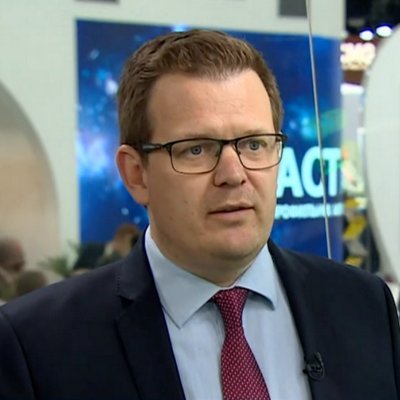
A Ukrainian man being kidnapped by Zelensky/NATO henchmen was rescued by his friends
Gerd Heisz retweeted

“SPAIN SHOULD RETURN CEUTA TO MOROCCO.”
Sure. Let’s start the clock in 711 and see who owes who:
In 711, a Berber commander named Tariq ibn Ziyad crossed from North Africa and landed in Spain. His launch point was Ceuta.
Within seven years almost the entire Iberian Peninsula was under Arab occupation, governed from Damascus. By 732 the Arab raiders were even at Tours, deep inside France.
Taking it back took 781 years: Covadonga 722. Toledo 1085. Lisbon 1147. Las Navas de Tolosa 1212. Córdoba 1236. Valencia 1238. Seville 1248.
Portugal finished in 1249 when Faro fell. The Portuguese-Spanish border has barely moved since and is one of the oldest continuous borders in Europe.
Castile and Aragon needed another 243 years. What was left was Granada, which survived from 1238 mostly by paying tribute to Castile and waiting out Christian civil wars.
Here is the part none of those “Ceuta is a Spanish colony” shills talk about:
In 1415 King João I of Portugal sailed across the strait and took Ceuta from the Marinids in a single day. One of his sons was Henry the Navigator. The Age of Discovery starts there. So Portugal was conquering African soil while European soil, less than 300 km to the northeast, was still under Muslim rule.
Boabdil, the last Nasrid Sultan of Granada, handed the keys to the Alhambra to Ferdinand II of Aragon and Isabella I of Castile on 2 January 1492, marking the end of nearly eight centuries of Muslim rule in Iberia. Later that same year, the Catholic Monarchs issued the Alhambra Decree, ordering the expulsion of Jews who refused to convert to Christianity. Coincidently, 1492 also marked the beginning of Spain’s rise as a global power, ushering in the Spanish Golden Age.
For context and scale: the First Crusade began in 1096. That is 385 years after Spain was invaded. Anyone who starts this story with the Crusades is starting in the middle.
Also, Spain never conquered Ceuta. In 1580 the Portuguese royal line died out and Philip II inherited the throne. When Portugal broke away again in 1640, Ceuta chose Madrid. Portugal formally ceded it in the Treaty of Lisbon in 1668.
TL;DR:
– Ceuta has been in Iberian hands since 1415. 611 years, uninterrupted.
– Spanish since 1640, by treaty since 1668. 386 and 358 years.
– Morocco independent in its current form since 1956. 70 years.
Ceuta was Roman, then Byzantine, then fought over by Visigoths, then taken by Arab armies around 710. It has never been part of an independent Morocco.
NOT ONE SINGLE DAY.
Before anyone calls Ceuta a colony, explain what was founded in Andalusia in 711. Go ahead. I’m waiting.
