
GM @matera. Founder @qunomedical. MD @drivy. Angel investor
Berlin
Joined April 2008
- Tweets226
- Following353
- Followers353
- Likes742




GeroGraf retweeted

I love Twitter — after posting about TSMC last week, a former ASML technician reached out to me...
His name is Daniel Hatton-Johnson, and he shared a bunch of cool behind-the-scenes stuff that you can only really learn by living it.
I asked, and he agreed to let me post his message in full:
Hi Christian,
I saw your Tweet on TSMC and why what they do is so hard. There were so many good answers and recommendations.
Background
The reason I thought to write is that I have lived in Eindhoven in the Netherlands for the last four years. I came to start a deep tech company at an incubator here (another story).
On arrival in October 2019 I had no manufacturing or production experience at all, so I got a part time evening job at ASML whilst working on the company. Then the following year moved to a company called SMART Photonics, who make Photonic Integrated Circuits. A relatively tiny semiconductor company, that has raised around €100 million to date.
I’ll mostly summarize those experiences below. I currently work as a Quality Technician at VDL Enabling Technologies Group, where we make some of the smaller machines and modules that go inside the giant ASML machines. This includes the vessel, which is the thing that vaporizes the tin droplets to generate UV light. I literally work with those and two other machines every day, the atmospheric wafer handler and the vacuum wafer handler.
————————
Eindhoven eco system
One thing to note is that all of these companies came out of Philips, what was originally a lighting company before electronics and now mostly advanced medical equipment. Eindhoven is named the city of light. Not because of light bulbs, but because there was a huge match industry from the 1840’s to the 1920’s.
Both ASML and SMART spun out of Philips, whilst VDL ETG was an acquisition by the VDL Group, a large Dutch industrial family business that also started as a single machine shop in Eindhoven in 1953, which included Philips among its first clients.
I gave this background because it gives some insight into the size and depth at least one chip making and industrial eco system here. For a long time it has attracted engineers, scientists and technicians from around the world. Then you have a very large supply chain to be able to build things and so it's easy to create companies that build things or service the companies that are building physical products. From basic things like chains, hoses, tractors and ceramics to advanced cooling, lasers and medical equipment.
Another fun fact is that Eindhoven has the highest concentration of patents per head of any city in the world. It also has the, by far, highest concentration of people with autism in the world as invention, autism, creativity and things like left handedness have been shown to be correlated. With the children of doctors and engineers the most likely to score highly for neurodivergent traits.
————————
Companies
ASML - I worked a basic technician job in a cleanroom of the servicing building so won’t
elaborate too much there. We basically used to check and ship parts to fix machines that were
installed globally.
VDL - I work on the two wafer handlers, the vessel and their spare parts. This role is fairly advanced manufacturing, but it's not too hard or intricate in comparison to making chips. The harder part is the design, iteration and prototyping when a new version of a machine gets built.
Thereafter its a fairly steady, standardized process. It then goes to ASML where they have to get those things working to spec which is pretty hard as it requires small tolerances that rely on great software to get all of the moving parts talking to each other. That’s where it really becomes rocket science again.
SMART Photonics - They are a foundry making tiny photonics chips. These chips are still relatively large compared to modern electronic integrated circuits. The reason being that light has a much longer wavelength than electrons do. The wavelength of light used in PICs is typically between 1500 nm and 1650 nm. This means that the features in a PIC must be at least as large as the wavelength of light in order to effectively guide and manipulate the light, always following a curve to take a smooth path and prevent reflection. In contrast, electrons have a much shorter wavelength, on the order of 0.1 nm so the feature size can get tiny. Meaning that the process is not just intricate, it’s unimaginably difficult to do and then to scale and have good yields. Any contamination like a tiny grain of dust on any layer can damage and destroy a photonics chip, and that same particle that would leave a photonics chip functional would likely destroy an electronic chip or two with such small feature sizes.
Much of our process was still similar and because of the larger feature size and being a lab to fab rather than a full chip fab, we did more experimentation and more manual handling than you’d ever see in a large scaled up electronic semiconductor plant.
So you got to see a wafer start from the beginning, blank and then see layers added, or removed and transformed by the process.
The base material for our foundry was mostly indium phosphide (InP), and sometimes gallium arsenide (GaAs) rather than silicon since as both materials are able to generate light. Though InP for example has comparatively high loss, compared to Silicon since it's such a great insulator meaning light propagates well though silicon waveguides. But they then need an external, usually larger light source.
With InP that can all be done on chip and [we were all in] on InP. Though the drawbacks are that the material is very brittle and the process is still not scaled like CMOS so we started with two and three inch wafers. The company has now moved to four inch wafers so with larger chips and smaller wafers, the yields don’t come anything close to electronic chips which tend to be about 12 inches across. So the costs are relatively high, but the applications such as quantum computing, sensing and detection cannot be done in silicon electronics, adding massive value to the areas where these chips are used.
As with silicon the production of a single finished wafer takes around 8-16 weeks and on the way there, there could be any number of challenges because you are using machines and materials that are undergoing nanoscale state changes. So for examples you may change the formula or your photoresist, or you could have two materials that interact well until there are changes in temperature with heating or cooling from the bake off process for example. Which could leave cracks in a layer of your chip because the materials could expand or contract at different rates or temperatures whilst being structurally connected.
Any metal or glass/silica waveguide on top of this could then have a short circuit in the electronic components and loss or scattering in the photonics components.
So you’d grow layers of InP in a huge reactor, do chemical etching, photolithography and a number of different process steps, adding and removing materials, building a working chip layer by layer.
The amount of processes involved are staggering. There are reactors for crystal growth which need to be connected to dangerous gases. This for us was generally done by experienced engineers and chemists/materials scientists who would go into those rooms with masks and oxygen tanks on. Then you have machines for photolithography that we mostly got from ASML.
These didn’t need to be top of the line due to larger feature sizes so we had older machines as they last a very long time. Then a newer one which is relatively cheap in the low tens of millions of euros.
Add to that ultra precise measuring and metrology equipment, SEM microscopes and other microscopes of varying strengths. The list of high tech machinery was endless. This all had to be maintained by experienced process engineers and technicians.
————————
The people
This is a summary of my experience as someone who was previously a layperson and went head first into this environment after a life of office work. I have a degree in sociology and did further study later in things like UX design and other things in digital and IT. Coming here was an expansive, mind bending experience. It’s like a totally different world compared to most cities.
I spent lots of time speaking to my colleagues and so many of these people were just incredible. They’d have to solve impossible problems constantly under pressure, in the middle of a batch that if ruined would take weeks to get back to the same place.
You could grab a colleague in the lunch room and ask anything about their area of expertise and the depth of knowledge and experience was generally unbelievably high. If you didn’t want to talk about work it could be a conversation about time dilation or any number of things related to the sciences as they are, or going over outstanding questions in science.
For some time I sat next to a guy who was a brilliant mathematician, trying to solve Goldbach's conjecture in his spare time. He believed only prime numbers were truly numbers as opposed to base 10, or base 12 number systems which as he said were largely culturally defined and arbitrary. That guy was incredibly interesting, as were many people there. The guy who swapped desks with him was trained in chemical engineering and was equally brilliant. These were two middle aged white guys who wore glasses and had a kind, calm demeanour, which makes you
stop believing in both ageism and talented assholes as a pathway to success.
With companies like ASML and TSMC, they have many, many more of these individuals. In fact some of our best people had come from ASML and the large chip companies like NXP. But they generally wanted more freedom, creativity and a better work life balance as the big companies require a lot of overseas travel. Those people work under immense pressure and are pretty well compensated for it.
This is mostly personal experience and it’s a little short, but I wanted to at least give some insight from one part of the global semiconductor ecosystem here in Eindhoven. I’d be happy to either talk a little more, or try to put you in touch with a colleague or former colleague who knows more.
I also have a friend working at Schunk Xycarb in the next town over, which is a company specializing in Carbon manufacturing at scale. They grow the large crystals that become the wafers for semiconductor, which again is a highly specialized process in itself.
This whole thing is a huge, huge ecosystem, and the fabrication of chips, the epicenter of it, is probably the hardest part along with creating and operating the lithography machines at scale in a way that generates profits. I have missed entire areas like mask design, testing, reliability testing, logistics, transportation design, and delivery processes for multiple customers.


GeroGraf retweeted

Learning THIS about Discipline changed my life:
(6 steps to developing unbreakable discipline)
You are your own greatest enemy.
But the question is... which "you"?
The Biological You simply wants to keep you alive. Other than that, it's pretty damn lazy.
The Modern You, however, isn't content to merely survive.
This YOU wants to thrive.
These two Yous are at war.
The default weapon most people rely on in their battle against the Biological You is Motivation.
But Motivation is a fickle resource and can't be relied upon.
The only weapon capable of consistently defeating the Biological You is Discipline.
Here's the 6-Part System to Developing Develop Unbreakable Discipline
1. Treat every decision as though it's important
Imagine standing in the middle of a road stretching to the horizon in both directions.
In front of you there are signs spaced equally that say +1, +1, +1.
Behind you, the signs say -1, -1, -1.
Each sign represents a single decision.
And with that decision, you can either make the +1 decision that moves you forward, or the -1 decision that moves you back.
This is called The +1 Framework of Decision Making.
Here's the important thing about this framework:
It does not matter how important the decision is.
Each decision you make is an opportunity to either move forward or backwards ONE sign. That's it.
The power in this framework is in developing the habit of treating every decision as though it's important...
Which they are.
Because at the end of the day, your life is nothing more than a sequence of small decisions stacked upon one another.
2. You don't have to love it... do it anyways
The Biological You is great at making you feel unprepared, overwhelmed, and insecure so you don't take action.
But remember this:
The Universe doesn't care how you FEEL.
It cares what you do.
So go do it.
3. Remove Temptations
Focus is the ability to resist distractions.
Discipline helps...
But you can get by on less than you think by designing your environment to eliminate distractions from every appearing.
4. Become the Master AND the Slave
"He who cannot obey himself will be commanded. That is the nature of living creatures." - Nietzche
If you can't discipline yourself, the world will have to do it for you.
The trick:
Treat yourself like two people:
Current-You and Future You
Current-Yous job is to design the schedule for Future-You.
Future-Yous job is to just do as they are told.
Timeblocking is how I do this...
And it's how I create a life by design, not by default.
5. Identify your Why
"The man with a strong enough WHY can endure any HOW." - Nietzche
It's almost impossible to muster discipline for activities that truly DON'T matter.
To overcome this, attach deep meaning and purpose to your activities (and discipline will follow).
6. Develop a Daily Discipline Practice
Discipline is a muscle.
To strengthen it, you must regularly stress it.
The trick:
Do Hard Things Daily.
Take a cold shower, go for a run, have an awkward conversation with a stranger...
Doesn't matter what it is, just do it.
TLDR:
1. Treat every decision as though it's important
2. You don't have to love it... do it anyways
3. Remove temptations
4. Become the Master AND the Slave
5. Identify your Why
6. Develop a daily discipline practice
Hate big blocks of text?
Check out the video version of this post (I'll drop it below).
P.S. Give me a follow @AnthonyVicino if you love content like this.

GeroGraf retweeted

If you don't set your priorities, someone else will set them for you.
If you don't set your boundaries, someone else will set them for you.
If you don't set your goals, someone else will set them for you.
Stop letting other people set the terms of YOUR life.
Take control.
GeroGraf retweeted

Today’s my 45th birthday! 🎉📷🎉
My memo to my 25 year old self:
1// Most “bad” things that happen to you are not as important as they feel at the time.
You can make more money, fall in love again, or start a new company.
You can’t recover time or health lost stressing about what went wrong.
2// Keep being a kid at heart.
Say yes when people invite you to Burning Man.
Make friends with people younger than you (and older than you).
Push yourself outside your comfort zone.
3// Every year, take 10% of your income (even if its not much) and buy stock in companies you understand and believe in.
Never sell unless management changes and some bozo takes over. Prices that look high now will look ridiculously cheap in ten years.
I sold Apple and Nvidia in 2011 and Google in 2008. Don’t be me.
4// Keep traveling like crazy. Keep exploring the world wherever your curiousity takes you. If you need more money to keep going, figure it out. You are resourceful.
Find a way to work from wherever you are in the world - there will be time to make more money later on, but you may never again have this level of freedom and flexibility.
5// Lift weights, find a sport you love, sauna/cold plunge regularly. Run consistently 3x a week, regardless of amount.
6// Your choice of romantic partner will be the single most important decision in your life - treat it as such.
Whoever you choose, know that the real work starts when you say yes. Every great relationship takes as much work as a great startup.
7// Your most important mission in yours 20s is to surround yourself with the most talented people in the world in your chosen craft and learn from them.
Go find them, wherever they are in the world, and figure out a way to give them some value and earn their respect.
8// You don't need to have kids in your 20's, but don't wait too long. it is the greatest joy of life.
You get to choose your own adventure with kids. If you want to travel the world and go to Burning Man with your toddler, they're happy to be along for the ride.
9// Don't stress too much about getting older. It is great. You will never be too old to:
1. Road trip with your friends.
2. Make new friends.
3. Learn new skills.
4. Start new companies.
5. Invent new technologies.
6. Reinvent yourself.
7. Get stronger.
8. Get healthier.
9. Get wiser.
GeroGraf retweeted
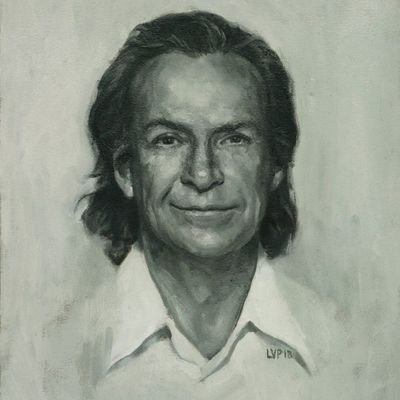
Five great signs of intelligence:
• You're not afraid or ashamed to find errors in your understanding of things.
• You take mistakes as lessons.
• You don't get offended with accepting the facts.
• You are highly adaptable and very curious.
• You know what you don't know.
GeroGraf retweeted

Harvard University is offering free online courses.
No textbooks, application, or fees required.
Here are 10 FREE courses you don't want to miss:



GeroGraf retweeted

“Don't fear failure. Not failure, but low aim, is the crime. In great attempts it is glorious even to fail.” — Bruce Lee
GeroGraf retweeted
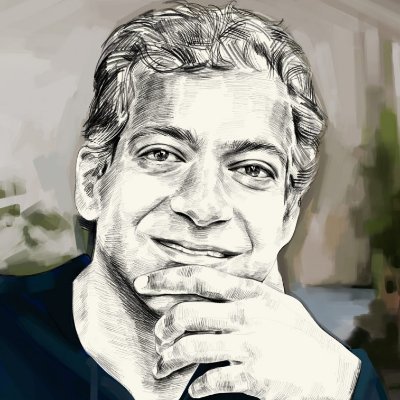
Siddhartha by Hermann Hesse is recommended by many of my podcast guests.
There is one takeaway that Naval Ravikant (@naval) has reinforced with me several times on our long walks.
The protagonist, Siddhartha, a monk who looks like a beggar, has come to the city and falls in love with a famous courtesan. He attempts to court her, and she asks, “What do you have?” A well-known merchant similarly asks, “What can you give that you have learned?” His answer is the same in both cases, so I’ve included the latter story below.
Merchant: “. . . If you are without possessions, how can you give?”
Siddhartha: “Everyone gives what he has. The soldier gives strength, the merchant goods, the teacher instruction, the farmer rice, the fisherman fish.”
Merchant: “Very well, and what can you give? What have you learned that you can give?”
Siddhartha: “I can think, I can wait, I can fast.”
Merchant: “Is that all?”
Siddhartha: “I think that is all.”
Merchant: “And of what use are they? For example, fasting, what good is that?”
Siddhartha: “It is of great value, sir. If a man has nothing to eat, fasting is the most intelligent thing he can do. If, for instance, Siddhartha had not learned to fast, he would have had to seek some kind of work today, either with you, or elsewhere, for hunger would have driven him. But, as it is, Siddhartha can wait calmly. He is not impatient, he is not in need, he can ward off hunger for a long time and laugh at it. ”
***
I think of Siddhartha’s answers often and in the following terms:
“I can think” → Having good rules for decision-making, and having good questions you can ask yourself and others.
“I can wait” → Being able to plan long-term, play the long game, and not misallocate your resources.
“I can fast” → Being able to withstand difficulties and disaster. Training yourself to be uncommonly resilient and have a high pain tolerance.
GeroGraf retweeted

You would be 5x more successful if you started replacing the word "should" with the word "will."
GeroGraf retweeted

As we age, staying connected to the world around us becomes increasingly important. At Mangrove, we see high potential in the needs of an aging population.
If you are working in the space, reach out.
We are excited to see how you are shaping a better future to age in.

GeroGraf retweeted

In reviewing your day, here are some helpful questions to journal:
• What did I plan to happen?
• What actually happened?
• What went well? What didn't go well?
• How can I improve for tomorrow?
An HBR study found a 25% increase in performance for those who journal at night
GeroGraf retweeted

Every idea can be written 4 ways:
• Actionable (here's how)
• Analytical (here's a teardown)
• Aspirational (yes, you can)
• Anthropological (here's why)
Browse any section on Amazon.
The 4A's are everywhere.

GeroGraf retweeted
The next 12 months will be *crazy*
• Uncertainty
• Recession
• Inflation
• Job cuts
Anything could happen.
But the people with these 7 skills will thrive no matter what:
GeroGraf retweeted
The Fancy Car Paradox
You see a fancy car and dream of the respect you'd get by driving it...while ignoring the person actually in it.
We all want respect. We believe fancy stuff will earn it.
It won't.
"No one is more impressed with your stuff than you are.” - @morganhousel