

AI/ML & Systems Engineer | Researcher Building intelligent systems. Exploring where technology creates new opportunities.
Chicago, IL
Joined November 2014
- Tweets5.5K
- Following704
- Followers967
- Likes14.4K


JohnBosco Goecol retweeted

A flat line means nothing is happening.
Look at any heartbeat monitor, stock chart or growth curve.
The ups and downs are the proof of life.
A straight line means it’s over.
Careers and lives work the same way.
The setbacks, pivots, failures and comebacks teach you things a comfortable, predictable path never will.
Every dip builds resilience.
Every climb builds confidence.
And every cycle makes you a little faster, stronger and wiser than before.
A monotonous, linear life may feel safe, but it rarely stretches you. Growth happens when you take risks, get knocked down, learn and rise again.
So if you’re in a low season right now, don’t panic. You’re not falling behind. You’re gaining momentum.
The ups and downs aren’t getting in the way of your journey.
They are your journey.

JohnBosco Goecol retweeted

A small but big win: my guide to growing on X has sold to 10 users.
talkfirstplaybook.com

JohnBosco Goecol retweeted
This is an interesting glimpse of how scientific research could change. AI can search enormous spaces, generate hypotheses, and propose experiments, while humans validate the results in the physical world. The opportunity may be in making that entire discovery loop faster.
JohnBosco Goecol retweeted

2026 FIFA WORLD CUP OPENING CEREMONY
HOST NATIONS - USA 🇺🇸 /MEXICO 🇲🇽 /CANADA 🇨🇦
🤖 Made with AI
Readers added context they thought people might want to know
This video depicts an AI-generated fake, not the real FIFA World Cup 2026 opening ceremony. fifa.com/en/tournaments… cbsnews.com/news/2026-fifa…

JohnBosco Goecol retweeted

Dressed in @Arsenal red again. ❤️🔥
JohnBosco Goecol retweeted

All I've been seeing on X since last night are joyful declarations:
"Officially Catholic!"
"I'm Catholic now!"
"Baptized into the Catholic Church tonight"
"Received First Holy Communion in the Catholic Church"
It is a great feeling to be a Catholic❤️
JohnBosco Goecol retweeted

As we begin our journey through #Lent, let us ask the Lord to grant us the gift of true conversion of heart, so that we may better respond to His love for us and share that love with those around us.


JohnBosco Goecol retweeted
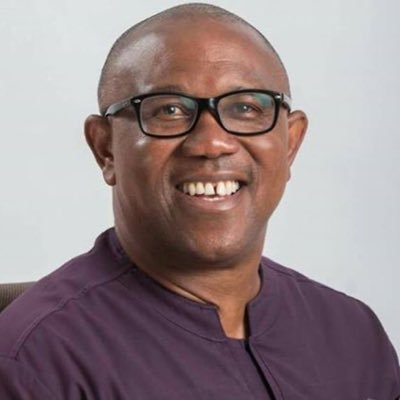
Yesterday, I had the privilege of attending, on invitation, the National Political Consultative Northern Group Meeting, where I spoke passionately about the North, its resilience, untapped potential, and the urgent need for inclusive development and trust.
I echoed how we have underutilised our resources, especially in the North. One of our greatest physical assets in Nigeria is our underutilized land mass in the Northern region, and I firmly believe that we can generate more revenue from agriculture than we currently make from oil.
I tried to cite some examples to show that it's doable; Nigeria today produces about 10% of Bangladesh’s rice production, which is about 5-6 million tonnes of rice annually.
Bangladesh, with a land area of about 148,600 square kilometres, is nearly the same size as just two northern Nigerian states: Niger State, which has about 76,300 sq km and Borno State, which has about 70,800 sq km, only these 2 states have a combined 147,100 sq km and so almost equal entire Bangladesh. Despite its relatively small land size, Bangladesh, with a population of about 170 million people, is a global 3rd global rice producer of 50-60 million tonnes. Meanwhile, these two states (Niger and Borno) have a combined population of just about 10 million people (Niger with around 4 million and Borno with about 6.2 million), which means Niger and Borno have more land space for cultivation than Bangladesh, yet both states cannot produce 5% of that. And sadly, this is the same situation across the vast land of Northern Nigeria.
Taraba State, with a land area of 54,400 square kilometres, has the potential to produce significant quantities of tea and coffee for the world.
For comparison, Sri Lanka, which makes between $1.5 to $2 billion annually from tea exports, has a land area of just 65,610 square kilometres, which is barely larger than Taraba State. Because there are 22 million people in Sri Lanka and Taraba has just about 4 million people, Taraba has more space for agriculture and cultivation than the whole of Sri Lanka, but the land in Taraba is underutilised.
The North holds immense potential to transform Nigeria through agriculture.
Ukraine has become a world grain powerhouse and, despite being at war, is donating grain to help Nigeria fight hunger, when northern Nigeria, with over 720,000 sqm, is 20% larger than Ukraine’s 600,000, and we are accepting grains from Ukraine without shame.
On the issue of education, it’s almost the same story. The majority of the over 20 million out-of-school children in Nigeria are in the North.
Just this year alone, I have travelled by road from Abuja to Kafanchan, Abuja to Kaduna, Abuja to Kano, Abuja to Nasarawa and Jos, Abuja to Dutse, and many other parts of North. In some of these places, I spent time with the children in Almajiri schools, and I can tell you, these children are eager to learn. If children can memorize the Qur’an, then in those same spaces, they can also be taught English, Mathematics, and Science. If they can’t access formal schools, then let’s take the schools to them, just like it’s already being done successfully in parts of Kaduna.
We must stop seeing these children as a problem. They are our greatest human assets. With the right investment in teachers and basic educational tools, there would be transformation not just for the children, but for the entire communities. This is how we change the North. This is how we lift people out of poverty.
Imagine channeling the over ₦7 trillion uncovered in the padded budget into these critical areas, of insecurity, education, healthcare, and agriculture. The impact on the safety of our communities, farms, improvement in our education, healthcare, agricultural production will be immeasurable.
Our leaders must have compassion and start investing in humanity and the people.


JohnBosco Goecol retweeted
I just came across the official results from JAMB showing the recent exam figures.
According to the data shared, a total of 1,955,069 candidates sat for the exam.
Shockingly, out of this number, only about 420,000 candidates scored above 200, while over 1.5 million scored below 200.
This means that over 78% of the total candidates failed to meet the 200-mark threshold — a reflection of the deep-rooted challenges in our educational system.
The latest JAMB results once again highlight the consequences of decades of underinvestment in education, a sector that should be central to our national development strategy.
Currently, Nigeria's total university enrollment stands at approximately 2 million students. By comparison, the National University of Bangladesh — a single university — has over 3.4 million students enrolled, despite the country having only about 75% of Nigeria’s population. One university in Bangladesh surpasses the entire university enrollment in Nigeria.
Bangladesh, which once lagged behind Nigeria in virtually every measurable development index, now surpasses us in all key areas of development and in the Human Development Index (HDI).
Similarly, Turkey, with a population of about 87.7 million people, has over 7 million university students — more than three times Nigeria’s total university enrollment.
I have consistently said it: education is not just a social service; it is a strategic investment. It is the most critical driver of national development and the most powerful tool for lifting people out of poverty.
We must now invest aggressively in education — at all levels — if we are serious about building a prosperous, secure, and equitable Nigeria.
A New Nigeria is POssible. -PO
JohnBosco Goecol retweeted

teapawt.net/ballercoinsol/status/1…
$BALLER IS HEATING UP



JohnBosco Goecol retweeted
A British soldier hides behind a bush while a woman casually mows the lawn during The Troubles, 1973. Photo by Phillip Jones Griffiths.
The Troubles was a conflict in Northern Ireland that lasted between 1968 and 1998. It was an irregular war that saw tensions between Protestants and Catholics reach a critical point, which resulted in 3,500 deaths.
The picture above shows how people in Northern Ireland were so used to the conflict and tension that they would about their daily lives, even while British soldiers were on edge.

JohnBosco Goecol retweeted
When you believe in God, the unthinkable happens, the unimaginable take place and we see his mighty power at work in us.


