

We create the world’s most detailed maps of social media landscapes and use our technology to analyze information flows online.
New York, NY
Joined February 2015
- Tweets3.1K
- Following1.7K
- Followers9.2K
- Likes460





Pinned Tweet
Why do some controversies fade quickly while others develop into significant reputational issues?
A spike in online conversation is only one signal. Understanding what’s actually happening means looking beneath the volume: what set the backlash off, who is carrying it, what it has become about and what is changing its trajectory.
Join Graphika on November 10 for our live webinar, The Anatomy of Backlash: Why Some Crises Spread — and Others Don’t, an interactive discussion grounded in recent real-world controversies and Graphika’s original research.
Register now to reserve your seat and join the conversation: buff.ly/sqHZRNs

Organizations have never had more ways to know when something is happening online.
Mentions rise. Sentiment shifts. A story gains traction. A new issue emerges.
But seeing the signal isn’t the same as understanding what’s behind it.
Is the conversation contained or reaching audiences that matter? Who is shaping it? What narratives are gaining ground? And is the change significant enough to warrant attention?
Narrative Intelligence connects those signals to the narratives, communities and relationships behind them — and how they are changing over time. It gives organizations the context to understand not just what is happening, but why it matters and what deserves their attention.
We created the Complete Guide to Narrative Intelligence to explain how this approach works, how it complements existing forms of digital analysis and how it can support better-informed decisions.
Explore the guide now to learn more. buff.ly/4bQyz0S

As the U.S. midterms approach, Russia-linked influence operations are using AI-generated content to target political candidates and shape the online information environment.
A new Politico report features an intelligence insight from the Graphika Platform about Storm-1516, a Russia-linked influence network that circulated deepfake videos accusing Texas Senate candidate James Talarico of sexual assault.
The findings underscore how foreign influence operations can weaponize fabricated content to damage candidates’ reputations and undermine trust ahead of an election.
Read more in POLITICO: buff.ly/BJwn780
#Graphika #Russia #USMidterms #Midterms2026 #ElectionIntegrity #ForeignInterference #Deepfakes

A complaint about a $15,000 mechanical bird probably wasn’t on anyone’s crisis communications bingo card.
But the Kelly Clarkson–Art of Play controversy showed how quickly a public feud can evolve into something bigger and how much can change as new audiences join the conversation.
What begins as one person’s account of a bad experience can become a broader debate about credibility, influence and accountability. Then new narratives, unexpected memes, and shifting public attention can take the conversation in entirely different directions.
At Graphika, we’re tracking these dynamics through our Anatomy of Backlash framework:
The Spark → The Carriers → The Narrative → The Crossover → The Turn → The Afterlife
In our latest blog, we break down how these stages are playing out in the Kelly Clarkson controversy — and why understanding what a backlash becomes matters just as much as tracking how much attention it attracts:
Read the blog: buff.ly/4hg1XOw

And this is just one case we’re examining. Join us for our upcoming webinar The Anatomy of Backlash: Why Some Crises Spread — and Others Don’t, where we’ll explore this controversy and other real-world cases to unpack what drives backlash, how it evolves, and what marketing, PR, and communications teams can learn from the signals.
Register for the November 10 webinar: buff.ly/sqHZRNs

The digital landscape never stands still. The challenge is knowing which changes matter.
In the latest edition of The Graphika Lens, we explore how misleading interpretations of digital signals can distort our understanding of influence operations, how AI-powered intelligence can help teams stay ahead of emerging threats, and why some online controversies become lasting reputational risks.
Read now for the latest from Graphika: buff.ly/pKnFoGd

How are supporters of the Venezuelan criminal organization Tren de Aragua using TikTok to signal identity, glorify violence, and recruit across borders?
Tren-ding on TikTok, Graphika's new report out today, examines 100 TikTok accounts displaying indicators of support for the group, uncovering patterns of coded language, threats, recruitment activity, and attempts to evade content moderation.
The findings reveal how online communities can signal affiliation and amplify criminal activity across borders, often through seemingly niche references and coded symbols.
Read the full report to learn more. buff.ly/AjIjmiZ
#Graphika #TikTok #OnlineSafety #ThreatIntelligence #Venezuela #Trendearagua

Russian influence operations are evolving ahead of the 2026 U.S. midterms, using AI-generated videos and bot networks to make fabricated content appear more popular than it really is.
A new Bloomberg investigation examines how the Russian state-backed Matryoshka operation is targeting U.S. candidates with fake videos and artificially inflated view counts. Graphika’s research helped corroborate and expand on the narratives identified in the investigation.
Graphika's @jean_leroux told @Bloomberg that "even though they’re not actually making an impact on the US midterms or the way people vote, they’re probably still going to use this as a kind of a measure of success within Russia to report back to say how effective the campaign was... They rely so much on those inflated metrics to prove their success.”
Read the full story to learn more about how these campaigns are evolving and why online engagement metrics don’t always tell the whole story. buff.ly/qNiOfXM
#Graphika #InfluenceOperations #ElectionIntegrity #Russia #MidtermElections #2026Midterms

Russian-aligned influence operations are continuing to evolve ahead of the U.S. midterm elections, including a push from a Kremlin-linked operation known as Operation Overload or Matryoshka that often impersonates real news organizations to spread fabricated content.
In @nytimes, Graphika senior analyst @jean_leroux shares insights on these efforts, including a campaign that spread fabricated corruption allegations about Democratic Senators @CoryBooker and @Hickenlooper.
He highlighted what Graphika's observations into these campaigns reveal about their underlying objectives, noting that they "give us a glimpse of what their objectives are... They’re not targeting Republican candidates in the same way.”
nytimes.com/2026/10/16/us/po…

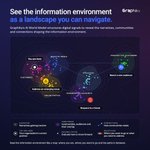
A map doesn't tell you where to go. It shows you where you are, what's around you and the paths in between.
That's how we think about the information environment at Graphika.
Every organization already sits inside it, surrounded by its customers, the media, critics, investors and communities just beyond its reach.
At any given moment, it might be:
→ Trying to reach a new audience
→ Addressing an issue emerging among people it already cares about
→ Responding to a threat taking shape elsewhere
Sometimes, several at once.

Graphika's AI World Model structures digital signals into a dynamic view of that landscape: the narratives gaining traction, the communities they reach and how those communities connect.
It doesn't hand you a route. It gives you the terrain and context to decide how to move.
Read more from Graphika's Guyte McCord, Dr. John Kelly, and Dr. Vladimir Barash about how the AI World Model works, why AI needs one, and what it makes possible for narrative intelligence: buff.ly/NFOloH4
#AI #DecisionIntelligence #StrategicCommunications #Graphika #AIWorldModel

Did the Yandex data center strikes silence Russian bots?
In recent days, viral posts claimed Ukrainian drone strikes on three data centers in Russia operated by the Russian technology company Yandex silenced Russian-run accounts in AfD, MAGA and Reform UK communities.
We tested each claim against our live mappings of thousands of geopolitical communities and against public Reddit counts. Graphika's data shows no notable changes among those communities and the episode shows the difficulty of assessing Russian influence operations in real time.
While Russian influence operations are real and well documented, these posts did not show that they run on Yandex's data centers.
Read the full breakdown and learn more about what the Yandex episode shows about assessing Russian influence operations online from Graphika's Dr. John Kelly @apidictionist: buff.ly/5zg7K4G
#Graphika #InfluenceOperations #Russia #YandexStrikes

When an online conversation about your brand starts gaining traction, the instinct may be to respond quickly. But knowing when to respond starts with understanding what’s actually happening.
A spike in negative posts doesn’t necessarily signal a reputation crisis. Viral conversations don’t always reflect broader public opinion, and sentiment alone may not reveal how audiences really feel about your brand.
In our blog Before You Respond: 5 Things Brands Need to Understand About Online Narratives, Graphika explores five critical questions for communications and marketing teams. It covers everything from identifying who’s driving a conversation to understanding how narratives spread and when they warrant action.
The goal isn’t to react to every conversation. It’s to separate noise from meaningful risk and make more informed decisions about what to do next.
Read the blog to learn more: buff.ly/SLbj2Pd
#CrisisCommunications #BrandReputation #StrategicCommunications #NarrativeIntelligence #Graphika #BrandBacklash

Romance scams are about more than stolen money. They’re carefully orchestrated schemes designed to build trust, exploit emotions and ultimately cause devastating financial losses for their victims.
In a new @MoneyLion article, Graphika Senior Analyst @jean_leroux explains the common stages of romance scams and the red flags to watch for, from relationships that move unusually fast to unexpected investment opportunities and requests for money.
Understanding how these schemes unfold is critical to recognizing manipulation before it’s too late. Graphika helps organizations detect emerging scams and fraud by analyzing online conversations, networks and narratives to uncover threats as they develop.
Read the article for insights from Graphika: buff.ly/wpnAwyW

Learn how Graphika helps organizations detect scams and fraud: buff.ly/ikSjYol
#Graphika #ScamAwareness #FraudPrevention #RomanceScams
What do online influence operations look like in the age of AI?
Graphika's Tyler Williams compared them to traditional marketing techniques in a new interview with @soontechnology's Zeke Spector examining the Dead Internet Theory and how its hallmarks, combined with generative AI, impact the content you see on your feed.
"What we've seen over time is that it doesn't really matter if the content is AI-generated. People still engage with and share things that resonate emotionally with them," Williams said. "You're tapping into an existing emotion or thought."
Watch the full video now: buff.ly/uAmcV89

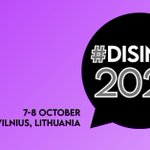
Graphika is on site at EU DisinfoLab's #Disinfo2026, where our senior investigator Léa Ronzaud will be leading an OSINT workshop for early-career analysts and new FIMI researchers this week alongside researcher Ruty Korotaev.
At this year's conference and want to connect with our team? Please let us know!

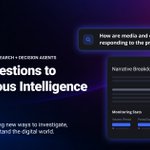
Decision Agents and Deep Research, Graphika's AI-powered capabilities built on our proprietary AI World Model, are now available to help organizations investigating complex questions and seeking to understand what’s changing around them.
Our AI World Model structures actors, communities, relationships, narratives and momentum as they evolve, giving our AI the context to distinguish meaningful change from noise.
With Deep Research, teams can investigate complex intelligence questions in depth. With Decision Agents, they can continuously monitor the issues that matter most and surface meaningful developments as they emerge.
Our first Decision Agents include:
- Monitoring Agent, which helps teams recognize meaningful shifts in narratives and communities and understand when they warrant attention.
- Threat Detection Agent, which detects threatening or violent narratives that may result in real-world harm.
- Scams & Fraud Agent, which uncovers coordinated scams, impersonation, fraud campaigns and financial threats.
Together, Deep Research and Decision Agents create a continuous connection between investigation and ongoing intelligence — helping teams spend less time searching for what changed and more time understanding what it means.
Explore Decision Agents and learn about how they can support your intelligence needs: buff.ly/OwTYI1D
#Graphika #DecisionIntelligence #AI #AgenticAI #DecisionAgents #AIWorldModel
