

Co-Founder & CEO, IdentifySensors Biologics | Former Level I trauma surgeon | Former NASA medical consultant | Pioneering digital diagnostics with Check4®
Shaker Heights, Ohio
Joined September 2026
- Tweets97
- Following2.5K
- Followers136
- Likes1.4K



Pinned Tweet
From the trauma bay to NASA to digital diagnostics, my career in medicine has taken me to some remarkable places—and introduced me to some extraordinary people along the way.
I'm Dr. Gregory Hummer, a former Level I trauma surgeon and NASA medical consultant, now Co-Founder & CEO of IdentifySensors Biologics.
Today, my team and I are developing Check4®, a graphene semiconductor-based platform designed to detect actionable cancer mutations and infectious disease targets directly from blood, in minutes.
Our initial oncology focus is EGFR and KRAS mutations in lung cancer. We're also advancing Ebola detection technology to support outbreak preparedness.
Different diseases. One digital platform. One mission: helping physicians get important molecular information sooner.
After a lifetime in medicine, I believe some of my most meaningful work still lies ahead.
I'd be honored to have you join me for this next chapter of my medical journey.
The future of diagnostics is digital.
IdentifySensors Biologics has partnered with Baylor Scott & White Health (@bswhealth), the largest not-for-profit health system in Texas, to advance clinical validation of our Check4® digital molecular testing platform for cancer.
Our fully digital, semiconductor-based technology is designed to detect actionable cancer mutations directly from plasma and deliver results in minutes, with the goal of helping physicians make more informed treatment decisions.
Our initial focus is EGFR mutations in non-small cell lung cancer (NSCLC), with plans to expand into KRAS and additional cancer biomarkers.
This is the kind of innovation we're working to bring to patients.
We're seeking collaborations with oncologists and clinical researchers for upcoming studies in 2027.
I will keep you updated!
#Texas #Science #Research #LungCancer #PrecisionOncology
New targeted therapies are changing what's possible in #LungCancer care. But those advances depend on identifying the mutations that help guide treatment decisions.
My team and I are developing Check4® to detect EGFR and KRAS mutations directly from blood, in minutes.
Progress in diagnostics should keep pace with progress in treatment.
What does it really take to change healthcare for the better?
Watching @mcuban live with @Reuters. What a terrific conversation!
Mark is tackling an extraordinary range of healthcare challenges. What impresses me most is that he's not just talking about change. He's doing the research, asking the right questions, and using his knowledge and influence to make it happen.
We need more people like Mark who are willing to roll up their sleeves and help make healthcare more accessible for everyone.

LIVE: Reuters NEXT Newsmaker featuring entrepreneur and investor Mark Cuban xitter.cf/i/broadcasts/1rxmqpMEj…

To physicians, nurses and #Ebola response teams in the DRC, Kenya, Nigeria and Uganda:
Every case identified, every contact traced, every patient isolated—this work saves lives.
As a fellow physician, you have my deepest respect.
@WHOAFRO @AfricaCDC @MinSanteRDC @MOH_Kenya @Fmohnigeria @MinofHealthUG
The future of medicine isn't something we wait for. It's something we build together.
To everyone who's joined us recently — physicians, researchers, science enthusiasts, and a few fellow Trekkies 🖖 — thank you for the wonderful support!
At IdentifySensors, we're developing Check4® to detect actionable cancer mutations from a blood sample in minutes.
Excited for what's ahead!
#MedTech #Entrepreneurship #PrecisionOncology #DigitalDiagnostics #BoldlyGo
Gregory Hummer, MD retweeted

Meet @GregoryHummerMD, a physician, entrepreneur, and medical innovator working to change how we detect cancer.
As founder and CEO of IdentifySensors Biologics, he's pioneering technology designed to detect cancer-related mutations from a simple blood sample, potentially making diagnosis faster, easier, and more accessible.
He's not just talking about the future of medicine. He's working to build it.
As a trauma surgeon, I learned how much every minute matters.
Today, I'm bringing that same sense of urgency to molecular diagnostics with Check4®.
Different chapter. Same purpose. Helping patients.
What becomes possible when molecular testing moves closer to where an outbreak is unfolding — and the result itself is digital?
Connectivity can change what’s possible.
@Starlink, this intersection is worth exploring.
#PrecisionMedicine #DigitalDiagnostics
🤖 Made with AI

And then there’s the bigger question:
What happens when molecular data can be connected, analyzed and understood across locations in real time?
@HHSGov @WHO @FINDdx — worth exploring.
#GlobalHealth
🤖 Made with AI

27 days from biopsy to genomic profiling results.
A recent study in JCO Oncology Practice found that a median of 14 days passed before testing was even ordered in non-small cell lung cancer.
Precision oncology needs faster diagnostics AND more efficient clinical workflows.
#PrecisionOncology
Study published in JCO Oncology Practice (June 2026):
ascopubs.org/doi/full/10.120…

What if we could detect specific cancer mutations directly from blood — in minutes?
That’s what we’re working toward.
#PrecisionMedicine #DigitalDiagnostics

A question for oncologists:
When you’re looking for just a few specific follow up actionable mutations, is comprehensive NGS sometimes more than you need?
If a focused molecular test could answer that question in minutes, would that change how you approach the workflow?
#PrecisionOncology
As a physician and former Level-1 trauma surgeon, I learned early how much timely information can matter in making clinical decisions.
That experience still shapes how I think about diagnostics.
With Check4®, we’re building molecular testing differently — direct electronic detection of actionable mutations from blood, without PCR-based amplification or liquid reagents.
Our goal: meaningful molecular information in physicians’ hands in minutes.

Cancer is complex.
Molecular testing doesn’t have to be.
With Check4®, we’re building a faster, simpler path from blood to actionable mutations.
In cancer care, time matters.
With Check4®, we’re working to put actionable mutation information in physicians’ hands in minutes — when it can matter most.
What if molecular cancer testing didn’t require enzymes, reagents, or amplification?
With Check4®, we’re developing a semiconductor-based approach to detect cancer mutations digitally, directly from blood, with results in minutes.
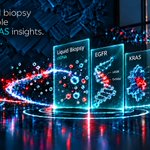
It’s a whole new way to think about molecular diagnostics and #LiquidBiopsy.
#PrecisionOncology
Gregory Hummer, MD retweeted

Timely, @Thelancet on GRAIL today!
"To date, there is no evidence that any multicancer detection testing prevents cancer, consistently detects it at an earlier stage, or reduces cancer-associated mortality. Meanwhile, false-positive rates have been predictably high. The costs associated with evaluating false-positive results are very real, as are the psychological burdens borne by patients who are incorrectly told they have cancer—or incorrectly reassured that they do not."
thelancet.com/journals/lance…


In its pivotal clinical trial, the GRAIL test to detect early cancer failed its primary endpoint. It detected only 3 early cases per 1,000 people assessed. There were more false negative results (N=196) than true positives (N=133). Reviewed here erictopol.substack.com/p/the…
But you wouldn't know any of that if you read today's WSJ editorial!
gift link
wsj.com/opinion/a-grail-canc…

Gregory Hummer, MD retweeted
In its pivotal clinical trial, the GRAIL test to detect early cancer failed its primary endpoint. It detected only 3 early cases per 1,000 people assessed. There were more false negative results (N=196) than true positives (N=133). Reviewed here erictopol.substack.com/p/the…
But you wouldn't know any of that if you read today's WSJ editorial!
gift link
wsj.com/opinion/a-grail-canc…