


Paarslaars retweeted

I found two George Soros documents that explain how a guy who arrived in New York with roughly $5,000 ended up building a $7.5 billion fortune
inside, Soros explains why being wrong is not the problem - staying wrong is. his entire process starts with building a hypothesis, watching how the market reacts, and changing the view the moment reality stops confirming it
the interesting part is how little of his framework depends on predicting the future perfectly
no fixed forecasts. no attachment to one thesis. no need to be right from the beginning
bookmark this and read both documents below


Stephen Schwarzman started Blackstone with $400,000 and tried to raise a $1 billion first fund. after months of rejection, Prudential’s CIO listened to the pitch over a tuna sandwich and said: “why don’t you put me down for a hundred million dollars?”
two decades later, Blackstone won a bidding war for $39 billion of real estate near the top of the market. Schwarzman thought the risk was so high they sold half of it the same day
three days later, they sold half of what remained. the market crashed soon after, and many of the buyers on the other side ran into serious trouble
Blackstone kept only a quarter of the original portfolio and still made roughly 3x its money: “I don’t want to take any risk that the world’s gonna change and we’re gonna be stuck with all of this.”
this is him explaining how a $100 million lunch helped save Blackstone’s first fund, how they survived a $39 billion real estate bet before the 2007 crash, and how Hilton later became a roughly $14 billion profit
bookmark & watch this full interview
Paarslaars retweeted

My fellow Bitcoiners -
You didn’t HODL through $126K to fold at $60K.
No-coiners may laugh now.
They always laugh near the bottom.
Remember why you bought.
Fiat is fake.
The system is rigged.
You are getting robbed in slow motion.
Your time is being stolen.
Make Wall St. beg for your corn. 🤘
BTC is freedom.
#HODL
Paarslaars retweeted

I was just suspended by Ghent University. They will almost certainly fire me.
The decision was made by rector Petra De Sutter, a former leader of the Green Party.


Paarslaars retweeted

Silver ended the day down over 28.54%
Here's why Silver / $SLV crashed today:
Jan 13th: CME shifted from fixed-dollar margin to percentage based margin.
This scaled collat requirements with contract value, effectively capping leverage as it goes higher.
The capital required to maintain a single COMEX contract increased in tandem, creating an environment where even minor price drops would trigger massive margin calls.
Jan 27th: CME had increased the maintenance margin percentage twice this week to ensure "adequate collateral coverage" amid extreme volatility.
This forced leveraged positions to liquidate their long positions or post substantial additional capital.
There were five margin hikes within nine days that created a "coiled spring" of potential selling pressure.
Today: Western markets focused on the Federal Reserve, but the new Fed chair likely did not play much of an impact as this is just noise.
Pricing dislocations happened in Asian markets. UBS SDIC Silver Futures Fund traded at 36-64% premiums over SHFE contracts. And this was the main source of silver exposure in China.
On January 30, the Shenzhen Stock Exchange implemented an emergency full-day trading halt for the SDIC Silver LOF.
This suspension created a "liquidity trap" for Chinese institutional and retail traders. Unable to liquidate their domestic holdings, these participants were forced to dump $SLV and COMEX futures to raise cash or hedge their exposure.
TLDR:
The $SLV crash of January 30, 2026 today was not a failure of silver's fundamental value, but a failure of the "paper game" that dictated price discovery.
CME hiking margin requirements repeatedly and the China liquidity trap led to cascading margin liquidations that caused selloffs of leveraged positions.
Other events such as the Fed chair was likely known awhile, looks to be "narrative noise" regarding what actually happened.
Today was a "Paper Game" failure and leverage used to trade it was systematically wiped out by exchange rules.


Paarslaars retweeted

Red line Shanghai Silver price.
Blue line Western Silver price.
The western price is a lie build on paper and manipulation.

Paarslaars retweeted

This, in my view, is the single most asymmetric trade in global markets today on a risk-adjusted basis. The convexity is extraordinary, yet the multi-strategy PMs at Citadel, Millennium, Balyasny and Jane Street can’t go near it (go figure out why) and retail, meanwhile, is hypnotised by the AI HPC BTC treasury complex and shitcoins... chasing pipe dreams. The real opportunity, the one hiding in plain sight, is right here.
BACKGROUND INFORMATION
Silver has entered a historic structural break, not a rally.
Spot $53/oz. Backwardation vs Dec ~$3. London lease rates near 100% annualised; the tightest since 1980.
17m oz delivered into COMEX this month. London’s free float just 140m oz vs 600m oz traded daily. Buyers are standing for delivery, draining vaults as China, Russia, Saudi funds and the US (now classifying silver as a “critical mineral”) hoard the metal.
Premiums and delays are rising. The physical chain is breaking. If delivery failure occurs, paper breaks and silver gaps higher; it doesn’t grind. The system is showing stress, not strength.
Silver’s strategic status is no longer conspiracy; it’s policy. USGS 2025 Draft Critical Minerals List formally adds silver alongside copper, potash and silicon; first recognition of its strategic role in US industry and defence.
These are the areas that reshape economies, not just markets:
1. Military and Defence Systems
2. Artificial Intelligence Infrastructure
3. Electric-Vehicle and Transportation Electrification
4. Energy Transition and Grid Stability
5. Medical and Biotech
6. Computing Hardware and Semiconductors
7. Space, Optics, and Energy Storage
8. National-Security and Strategic Reserve Function
Meanwhile, India’s silver imports nearly doubled in September to 410.8t ($451.6m). Russia’s central bank is reportedly accumulating via undeclared channels. Russia China precious metal trade has surged ~80% YoY to $1bn.
Conclusion: silver is quietly shifting from industrial commodity to strategic reserve asset. The “monetary metal” is being re-monetised.
Gold’s re-monetisation is the macro tide lifting silver.
Central banks bought ~1,200t of gold per year for 3 years, cutting USD reserves from ~72% to <58%, while global debt exploded from $5T to $37.2T since 2000.
Fiat dilution is structural; metals are repricing against it.
Gold miners print margins of ~$2,000/oz (Agnico Eagle guiding $2–3B FCF this quarter) yet still trade near 3× cash flow and <1× NAV on 5% discount rates.
That same undervaluation logic applies to silver but magnified. Silver miners carry higher operational leverage with costs anchored as price doubles. The market still prices them as cyclical, not monetary.
Lassonde said in every gold bull’s final stage, silver outperforms. Once it breaks $50, $100 can follow “in a couple of heartbeats.” Today, public and institutional positioning are near record lows. $GDX / $GDXJ share counts at multi-year troughs.
The structural setup is unmatched:
Industrial demand (PV, EV, semiconductors) at record highs. USGS classification formalises strategic importance. ~70% of mine output is by-product; inelastic to price. Persistent physical deficits and premiums in India. Gold is the signal; silver is the leverage.
Profitability and margins:
Gold miners ~45%
Silver miners ~30%, rising to ~45% at $55 and ~50% by early 2026 if spot holds above $55–60.
Cost inflation muted; energy stable. A 12–24-month “perfect-storm” window where revenues rise while costs stay anchored.
Earnings and valuation:
Q3 financials expected to be stellar, with strong Q4 guidance. Even after YTD rallies, valuations remain compressed:
HUI Index 200 to 600 since Feb 2024, still below historic multiples. $GDXJ +135% YTD yet <1× NAV.
The entire sector remains a rounding error in global market caps; small inflows can reprice it violently.
Leverage and capital elasticity:
Miners show ~10× elasticity to a 10% bullion move. As silver outperforms gold, operating leverage compounds, creating non-linear margin expansion.
Market structure:
Institutional exposure negligible. Passive index penetration >60% in S&P 500 vs minimal in miners.
Only ~3 silver ETFs and 6–9 gold-miner ETFs globally; easy channels for re-allocation.
Volatility and risk:
-15% to -25% drawdowns typical of bull market volatility.
-------------------------------------------------
POSITION INITIATED
$SILJ JAN 2027 $30 CALLS
$SILJ (Amplify Junior Silver Miners ETF) focuses on high torque juniors.
Top weights Oct 2025:
$CDE 13.5%
$HL 13.3%
$AG 10.3%
$EXK 5.2%
$MAG 4.9%
These names carry 2.5× beta to silver; convexity by design.
Earnings cluster catalysts:
$CDE Oct 29 (AC)
$HL Nov 5 (BO)
$AG Nov 4–6
$EXK Nov 7 (BO )
$MAG Nov 11
(see table below)
This window captures $53 silver with unchanged cost decks... peak earnings elasticity.
Q2 anchors:
$PAAS +7 % AH on record FCF and dividend hike
$HL +5–19 % window on record revenue.
$AG −2–3 % premarket on mixed EPS.
Clean beats rewarded, mixed prints punished; expect the same in Q3.
At $53 silver, junior margins ≈ 35–40 %. Above $55–60 trend to 50 %. Energy inputs stable, valuations compressed vs cash flow. Room for multiple expansion as earnings confirm spot.
Social engagement (Stocktwits followers 16 Oct 2025):
$SILJ 3,031
$SLV 45,157
$GDXJ 12,112
$AG 17,862
(see chart below)
$SILJ retail penetration ≈ 7 % of $SLV and 25 % of $GDXJ. Uncrowded and under-observed.
At $100 silver $SILJ NAV ≈ $60–65 (beta 2.5×).
Jan 2027 $30 calls project 5–10× return if spot holds ($70–80 yields 2–3×). Downside limited to premium. Right tail open. Gamma-positive convexity. Policy driven floor forming.
Silver is evolving from industrial metal to monetary collateral to strategic reserve. Policy recognition, sovereign accumulation, and supply deficits signal re-rating; not a cycle.
$SILJ Jan 2027 $30 calls offer the cleanest, most convex, least crowded expression of silver re-monetisation. Left tail capped (defined premium)
Right tail open (convex pay-off). Implied vol + open interest expanding... strong setup for a gamma squeeze potential. Industrial + strategic demand converging with monetary drivers.
Optionality is still cheap. Asymmetry is clear.
Disclaimer: For informational purposes only; not financial advice.


Paarslaars retweeted

People often say that the developing world is poor because the Western world colonized them and stole their resources.
The truth, however, is that over the past century, the developing world has, for the most part, shown that they are completely incapable of harnessing their own resources. They are not poor because we stole from them. They are poor because they do not know how to run and administer their own countries, resources be damned.
Take Venezuela. The world's largest oil reserves mean nothing if you have a corrupt communist as your leader. People will actually be starving and trying to eat zoo animals while you sit on trillions of dollars in resources!
Africa is another example. Europeans left behind farmland, trains, roads, and mines in Africa. What happened to it all?
It's not that all of a sudden, the Africans started running things like anti-colonialist activists had envisioned at the time. No, no.
All the infrastructure fell into disrepair and/or was stripped down and looted. They were literally handed fully functioning, completed supply chains for resource extraction, and basically unlimited wealth, but they couldn't manage the simple upkeep.
Now, the defense for Africa might be that "The Europeans didn't teach the Africans how to manage any of this! It's not the Africans' fault they couldn't run it independently! They were never trained!"
But my brother in Christ, the Europeans DID try to train locals for management! Obviously it would have been easier to have at least some locals in administration, rather than having to import an ENTIRE workforce, but efforts to find African talent were largely unsuccessful.
Don't believe me? Just look at the different outcomes in Hong Kong and Singapore when compared to Africa. In East Asia, Europeans often did work with locals in administrative and management capacities. When colonialism ended, Hong Kong and Singapore were able to manage themselves. Not the case with Africa.
Now, none of this is to say that colonialism is good. People have the right to self-rule and seld-determination. However, the idea that colonialism and resources extraction are responsible for the developing world's ongoing poverty? That is quite simply a crock of shit.


Paarslaars retweeted

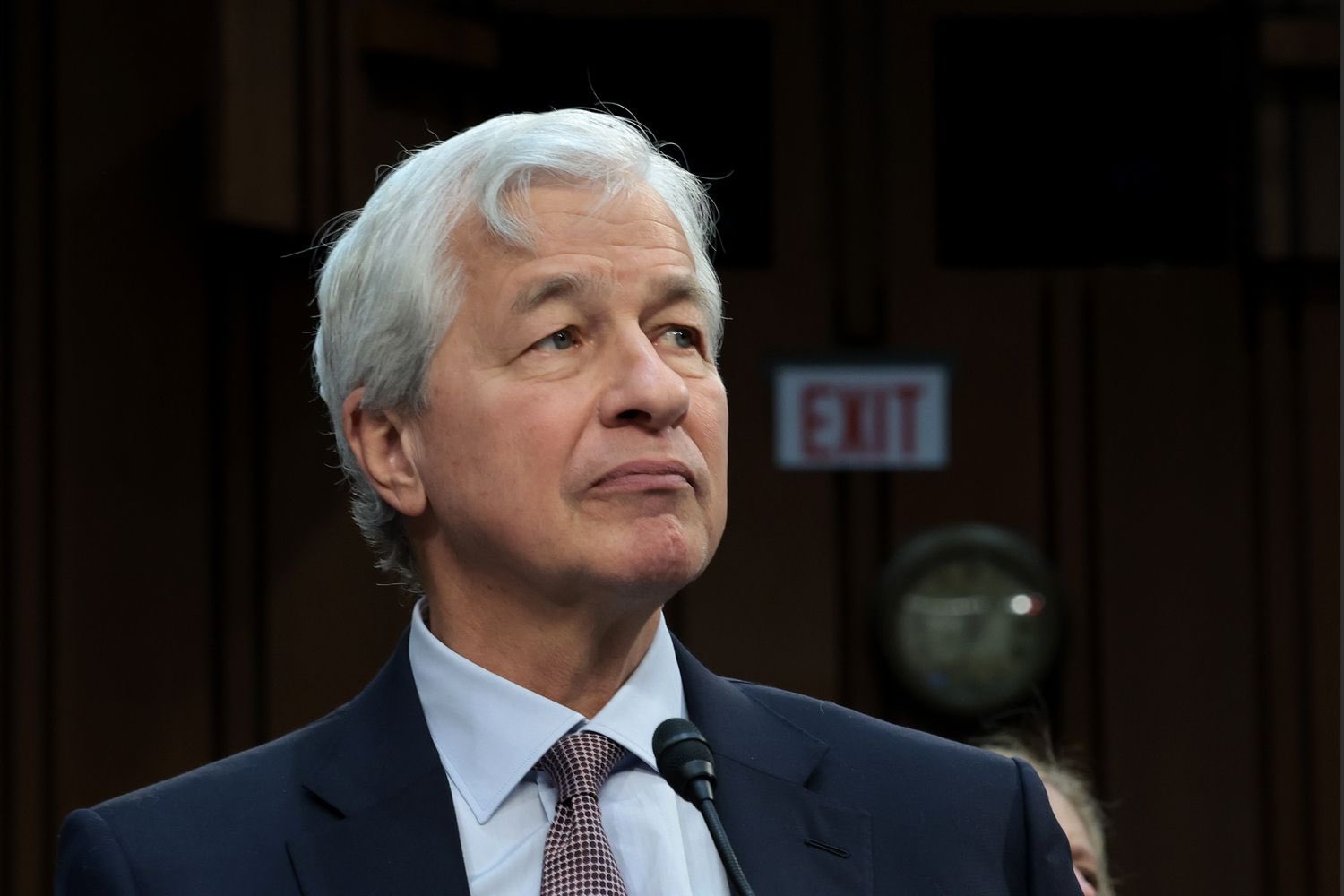
JP Morgan Chase has the perfect business model - make $100B manipulating silver and precious metals and then only pay a $1B fine.
Banks like @jpmorgan are a cancer on our society. But government officials let them get away with time and time again.
They financed Jeffrey Epstein and the largest child sex-trafficking operation in history - then settle with the victims for $290M and the U.S. Virgin Islands for $75M - while career politicians like @ewarren @EdMarkey @SenSchumer and @SenMcConnell DO NOTHING.
Warren claims to be a fighter for women and a fighter against the banks - but she’s a fraud like all the other career politicians who say nothing so they can collect donations to stay in power. I confronted Warren about it a year before Epstein became the latest “talking point” - watch the guilt display on Warren’s face.


Paarslaars retweeted

JPMORGAN ACCUSED OF PARTICIPATING IN MARKET MANIPULATION🚨
🤔🩳 JP Morgan sells shares of MSTR, increases margin req. from 50-95%, pushes for Strategy’s exclusion from the MSCI index, has a history of manipulating BTC price, calls for lower price, waits for -35% drawdown and announces a Bitcoin backed bond $MSTR
Lets see how this started ⬇️
💥JPMorgan’s alleged play against MSTR began months before the drastic crash from $440 to $155, starting with a narrative push in May: “Long Bitcoin, Short MSTR.”
💥 JPMorgan sold a massive chunk of MSTR before the drop: Public filings show JPMorgan reduced its MSTR position by over 770,000 shares ahead of the breakdown.
💥 JPMorgan allegedly opened a short position against MSTR, adding even more downside pressure during the setup.
💥July: JPMorgan raised MSTR’s margin requirements from 50% → 95%, weakening the stock before any MSCI news.
💥August–October: Big banks rolled out IBIT-linked Bitcoin products while MSCI introduced rules targeting BTC-heavy companies like MSTR.
💥Morgan Stanley and JPMorgan filed IBIT product documents right after the MSCI note funneling BTC exposure toward their own offerings.
💥Nov 20: JPMorgan simultaneously promoted its new IBIT Note and resurfaced MSCI fears about MSTR, pressuring the stock.
💥Overall pattern: Drain MSTR, push FUD, then redirect capital into institution-controlled Bitcoin products.
SHORT INTEREST🩳
Now, MSTR reportedly shows a short interest near 10%, with ~27.49M shares shorted, the highest level since April 2025.
The October failures-to-deliver (FTDs) in $MSTR line up almost exactly with the timing of JPMorgan’s released short-focused analysis on MicroStrategy, which many traders point to as a potential catalyst.
This marks the highest level of FTD-related borrowed shares for MSTR in the past year, adding to the overall pressure narrative surrounding the stock.
📈📉 MSTR has fallen sharply from its highs of around $440 down toward the $150 range today, even as the company continues to strengthen its fundamentals.
✅MicroStrategy recently announced plans for a $1+ billion dividend reserve and is still actively acquiring Bitcoin, reinforcing its long-term BTC strategy despite the price pressure.
Who’s side are you on???🤔
Like👍 for Strategy $MSTR
IGNORE❌ for JPMorgan
REPOST to spread the awareness of MARKET MANIPULATION by hedge funds and banks 🔂🔄


Paarslaars retweeted

In 1875, an Ohio farmer sketched a simple chart that accurately predicted a century of booms and busts
According to the pattern, 2026 will be a major boom year for #Bitcoin 👀

Paarslaars retweeted

Some things never change.
Good luck New York! @ZohranKMamdani


Paarslaars retweeted

Metaplanet has a strong foundation for growth and has developed the ability to harness a variety of financing tools. We are now temporarily suspending the 20th-22nd Series of Stock Acquisition Rights as we optimize our capital raising strategies in our relentless pursuit of expanding our Bitcoin holdings and maximizing BTC Yield.


Paarslaars retweeted

Palestinians experiencing a “genocide” in Gaza celebrate the actual genocide they committed on October 7.
Paarslaars retweeted

INCEST LEGALIZED.
At the request of the Muslim lobby, Keir Starmer legalized in the United Kingdom marriages between brothers and sisters, fathers and daughters, sons, and mothers.
An appeal from one of the deputies to Starmer:
— Mr. Starmer, do you understand what you are doing?
You are legalizing marriages between brothers and sisters, between parents and children.
This carries catastrophic health risks for people, many of which can not be determined until the child is born.
If this practice continues from generation to generation, the English people will disappear.”
Starmer:
— Yes. I have already stated my position.
Readers added context they thought people might want to know
Simply by listening to the video in the post it is absolutely clear this is about marriage between 1st cousins - which has never been outlawed in the UK.
A BBC link confirming the debate: bbc.co.uk/news/articles/…
Paarslaars retweeted

1. I am limited to what I can address regarding the transaction specifically, due to Reg S, Rule 144A restrictions in place, but I can speak about capital markets in general rather than this transaction specifically. If you study primary public offerings; a reason large institutional investors may come to the table for a company they have not had a prior relationship with is because a capital markets transaction enables sufficient size at an attractive price. i.e. MSTR converts, and prefs, have been massively upsized, in part because of the offered pricing. This has been strategic by MSTR, specifically with the prefs, as the discount at IPO brings about large capital markets players who read the prospectus, study the capital structure, and learn about the business strategy who might not otherwise if the transaction didn’t take place or was priced at par. One could strongly argue that this is remarkably positive in terms of expected value given the type of investor this brings to the table in the short, medium and longer term, as the investors who both invested and ultimately passed on the deal are now intimately familiar and actively/passively following the pricing of the security on an ongoing basis following the transaction. Additionally, discounts to market/par aren’t atypical for billion dollar capital market transactions. This is the reality of capital markets. Scale of billions of dollars is different than millions , or tens of millions, or even hundreds of millions. Additionally, when considering the range of a discount especially for a common equity transaction for institutional investors, the standard daily variance of the stock plays a role. A 5% discount for a stock with 30% volatility is very different in terms of its level of attractiveness than a 5% discount for a company that trades with 100% volatility. Furthermore, one may consider the positive reverberations of being able to discuss their business plan with some of the largest portfolio managers in the world, as underwriters have reached out to their network of global investors to bring them to the table. This process does not occur without an incentive. Long term, the second and third order effects of this exposure could greatly outweigh a face value discount on the capital market transaction, given the positive exposure the transaction brought out. On all of the above, I am speaking broadly about capital markets and primary transactions, and not about Metaplanet, given Reg S, Rule 144A restrictions.
2. With regards to the question on short selling, an extraordinary report was filed with the relevant authorities in Japan under the FIEA, which established it to be unlawful for investors to cover short sales with securities purchased in the offering. All registered securities brokers in Japan were advised of these restrictions in advance and were prohibited from allocating offering securities to investors seeking to settle such short positions. Any notion to pinpoint negative price action on one factor or another, is speculation, which we cannot comment or address here, and instead we should communicate that to the best of our ability we aimed to protect investors interests through the transaction, with the relavent legal authorities being involved to enforce this.
3. There have been a lot of lessons learned through the experience. More importantly and meangingfully, we believe the experience was a large net positive given the engagement during the period with institutional investors whom we aim to have an ongoing relationship into the future. Non-deal roadshows compared to primary capital market transactions can bring about an entirely different attitude and level of engagement with an institutional investor base, which is required to reach a deca-centi billion dollar scale. These relationships are vitally important when looking at the general roadmap for a BTCTC to reach sufficient scale to succeed in accessing the institutional grade credit market/s.
Paarslaars retweeted
The shareholding ratio declined because total shares outstanding increased, not because any shares were sold.
You should properly read the materials before spreading false information.

