
Joined January 2013
- Tweets11.3K
- Following3.6K
- Followers1.5K
- Likes229K
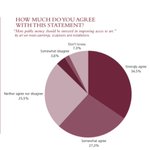





The National Gallery Citzens' Jury was a cynical exercise in manufacturing support for transformational changes. An unrepresentative sample was hand-picked and given a narrow assignment. Then they were led to the answer by approved cultural entrepreneurs with no dissenting voice. – at Ilford, London

Do have a look at the whole thing and look at the 'experts' they chose. An expensive sham. nationalgallery.org.uk/media…
2
95
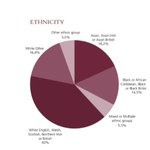
They say they want to represent the UK, but this is London demography, not the UK. – at Ilford, London


Michael Savage retweeted

You know what I really want from a national gallery? Pictures. Pictures on walls. That's it.
Maybe a little plaque next to them listing the title, artist, date, and what movement it represents.
What I don't want - and would frankly pay good money to never have to suffer through again - are 'installations' or insufferable woke lectures on how the cis-normative artist used imagery of waterlilies to impose patriarchal ideas of femininity onto unsuspecting female members of his audience, or any other similar nonsense.
@NationalGallery - just let us view the pictures in peace, for God's sake.

The bell tolls for National Gallery, London. Yesterday, the NG announced plans for sweeping changes. Phrases such as "taking an audience- and customercentric approach in everything we do", "removing barriers to engagement" and "reach new, more diverse visitors" will send a chill down your spine. (1/2)

Michael Savage retweeted

The bell tolls for National Gallery, London. Yesterday, the NG announced plans for sweeping changes. Phrases such as "taking an audience- and customercentric approach in everything we do", "removing barriers to engagement" and "reach new, more diverse visitors" will send a chill down your spine. (1/2)
Michael Savage retweeted

Why did the National Trust "queer" the Ham House Chapel? I've written about this extraordinary treatment of a Christian place of worship @Telegraph in next post...


Michael Savage retweeted

It’s not often I share an article with friends on the grounds that it is genuinely deranged, but this one vaulted over the bar.


Michael Savage retweeted

Another of the former treasures of @WarwickCastle about to leave these shores. It was sold from the castle in 2005 at Sotheby’s.


Michael Savage retweeted

Le chat le plus grincheux de la peinture passe en vente le 10 novembre prochain chez @Artcurial : ne le ratez pas❗️
C’est un chef-d’oeuvre de Jacob Jordaens 😍


Michael Savage retweeted

Some things I learned working at Microsoft:
1/ large numbers everywhere. $100M ARR service isn't even a footnote on executive slide decks. Leadership time is too valuable, come back when you're $1B+. Msft ecosystem is so rich that $1B+ sales are common (it's ludicrous how much work goes into closing these). Azure has ~250 services, some are a few mil and stagnant, others in hypergrowth, some are cash cows, you see every quadrant of the growth-share matrix. Imagine the imperial navy with ships of vastly different sizes as far the eye can see
2/ more on immense scale-- the smallest of Azure services run on 10K+ VMs. Large services run on 1M+ (some maybe 10M+ VMs, idk). Msft is stamping one new datacenter into the ground every four days (!!!!), a bewildering rate. Demand is so high, even with all this buildout we're forever capacity constrained. Azure brings in $100B in revenue and is growing 40%+ annually (at this size!!) There are ~225K msft employees. You almost have to think in scientific notation, 10^4 is a tiny number here
3/ msft is totalitarian re serving the customer. It's counterintuitive to outsiders, but the warts in msft products fall out of this culture. For example, it would be easy to improve the Azure Portal. But in all my time working with customers and partners here, I haven't heard even one person complain about the portal UI. Msft invests $0.00 dollars in anything that doesn't serve the customer and is completely unapologetic about downstream implications of this mindset
4/ msft can reshape itself overnight (when it has the will). People argued whether we waited too long to adapt after Storm-0558/Midnight Blizzard hacks (with the benefit of hindsight, we definitely did). But once the leadership team privileged security, everyone's job changed in two weeks. LT tied every engineer's comp to security, centralized reporting of embedded security teams, every org reshuffled its roadmap. Within days everyone was pushing PRs with security fixes. I would have thought it inconceivable to mobilize 200K+ employees this fast
5/ Azure is complicated. Postgres depends on compute, networking, AKS (or EKS for you aws people), secrets, etc. AKS depends on compute, networking, some datastore (probably Cosmos but idk), a dozen other things. Cosmos depends on... you get the idea. When anything breaks, everything above can break too. Some construction crew accidentally cuts a fiber cable in Brazil South, or a dedicated hardware compression chip browns out in storage, or compute failure rate in west eu spikes for some reason, or a million other failure modes. Msft is relentless about improving this, idk exactly but fully loaded probably 50% of engineer time goes into resilience
6/ re lifers who work 20+ years here, SV sneers at this but I now see it differently. I was once on the bridge debugging some IO issue, we call storage, the guy diagnoses it in about a minute, we chitchat, turns out he built NT asyncio support. Or same story but with networking, the guy built NT tcp/ip stack. I used to have a boss here, we were bumping into some problem, she casually goes oh yeah, we hit that when I was working on .NET bytecode. The ex-DEC VAX/VMS database engineers built SQL Server, some are still here. I love bumping into these people
7/ I never *really* understood distribution until I got here. As an example, our team had a customer in Seoul w/ a deep performance problem. We had to fix it to unlock one of these giant contracts. We don't speak Korean, they don't speak English. Of course msft has specialists in Seoul who get to the customer site before you could even get on a plane. There is an office in every major city, a relationship with every major entity, legal experts in every jurisdiction. You can reach these ppl instantly. Claude tells me msft has ~180 offices in ~100 countries (!!) U.S. government has ~270 consulates in ~170 countries. So msft outposts aren't quite as vast as U.S. diplomatic network, but pretty vast
8/ in the 90s everyone was afraid of msft. The lore is that BillG was ruthless. He'd clone you, beat you via ecosystem/distribution strength, and moreover make the ecosystem stronger with the new product. I wasn't there to compare, but msft of today is ruthless about winning, has the will to adapt, and has the wherewithal to undertake colossal projects. Ppl see Teams bugs or whatever and completely misread the signals. Teams is less polished than Slack because msft doesn't care one iota about polish. It cares about winning, and is frighteningly good at it. Underestimate at your own risk
Michael Savage retweeted

I have a new book on the dangers of populism, so instead of talking primarily about the book, which you can get elsewhere, @tylercowen suggested that we discuss Conrad's Nostromo, a 1904 novel that addressed many of the themes I cover. It was an inspired recommendation. The result was a wide-ranging conversation on nationalism, state capacity, demagoguery, Western interests in the developing world, and more. Maybe the best podcast I've done. Watch or listen here.
conversationswithtyler.com/e…

Michael Savage retweeted

Abdul El-Sayed looks like an absolute prick here.
Literally telling a journalist he won't answer his question because he is British. Belittling, condescending, twat.
Michael Savage retweeted

It seems to me that democracy has on the whole worked very well in America over the last decade, and perhaps better than in any other major country in the West. National outcomes have repeatedly been responsive to underlying voter preferences on meaningful questions, and significant changes in policy have ensued. I’ve been reading Democracy in America this past week, and it’s striking how much it still rhymes nearly two centuries later.
Michael Savage retweeted

I've built a proprietary election forecasting model that ignores trendy inputs like polls, demographics and fundamentals, and relies entirely on interviews with voters posted on social. We are some some WILD swings today.
Michael Savage retweeted
Nouvelle publication passionnante sur le paysage au temps de Louis XIV chez ARTHENA par Hugo Coulais: Prix de souscription: 99 €
Offre valable jusqu'au 16 novembre 2026
Prix de vente public après cette date : 130 €
Parution : 16 novembre 2026
Contact: [email protected]

Bad move. The end of the museum, rise of the celebrity curator who will decide what you can see. – at Chigwell, East

🎯 “Permanent doesn’t exist anymore,” he said, before adding that it was a good exercise to “think about a collection as something that is constantly changing.” The director concluded, “We can’t own everything. The answer to that is, simply, #collaboration.” Via @artmarket


2
10
386
Michael Savage retweeted

My take on the philosophy of wine—and what people who don't drink it might be missing. neelburton.com/2026/07/10/wh…

Michael Savage retweeted

A lot of times now, when you argue with people, you can feel that you're arguing with an LLM (and you can often tell which one).
In fact, that's good. It means people are getting a better understanding of the world. But you can still win the arguments because people so routinely misunderstand or misapply what the AI tells them -- or prompt it to confirm their biases.
Michael Savage retweeted

People who have been in research fields develop a felt sense that most "research" (in almost any field that isn't exactingly technical) is research theater, and many superstar careers enjoy star status not because of a unique connection to the truth but because of a unique connection with an audience. No one really has the time or stature to, from a position of objectivity and trust, bring popular researchers to heel. But it will get increasingly hard to hide from serious critique. The machines can do critique now, at the level of depth and rigor previously only possible for the academically deranged. We're going to have to revise a lot of what we "know" about the world that isn't really knowledge but is actually just received popular consensus - like floating voltages without grounding wires. The grounding wires are coming.

Tyler Cowen:
'I am not even sure what to say at this point. We need a radical revaluation of this work, and of the associated policy arguments. More generally, this is only a single step in the story of how AI is going to revise economic science, and indeed past research more generally. As I stress in many of my recent talks, there will be significant gains and losses in status, with the losses often outweighing the gains. I see this as one of those cases.'
