

Marine ecologist at AZTI - Marine Research and climate change
Sukarrieta, España
Joined December 2016
- Tweets79
- Following137
- Followers227
- Likes397






Guillem Chust retweeted

Out in #ContinentalShelfResearch Villarino et al. show Contrasting diversity patterns using Autonomous Reef Monitoring Structures deployed in pelagic vs. benthic environments #ecology #ARMS 🦀 🧬🌊 @azti_brta @AngelBorjaYerro @GuillemChust @ambulanzen sciencedirect.com/science/ar…
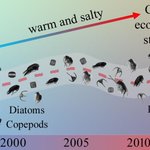
Glad to share this new paper lead by T. Matos: Early warning indicators of decadal shifts in the planktonic assemblage of the Cabo Frio upwelling ecosystem
sciencedirect.com/science/ar…

1
128
Guillem Chust retweeted

Establish an #AtlanticResearch Lab in Sao Paolo (BR), with a #StartingGrant by @AgencyFAPESP PROASA & international support by @MISSIONATLANTIC & @EU_AtlantECO
ZOOM Info Call 13 Nov 16hr CET: dtudk.zoom.us/my/ivogrigorov…
Call Info: lnkd.in/eACnmzCXDeadline
Preproposals 25 Nov 2024

Guillem Chust retweeted

🌊 #Uhinak2024 se celebró los días 23 y 24 de octubre en @FicobaFundazioa reuniendo a 160 congresistas y con la presentación de más de 50 ponencias centradas en el #cambioclimático y sus repercusiones en el litoral.
🙋♀️ Aquí un resumen de lo que pasó 🔽
azti.es/resumen-de-uhinak-so…

Guillem Chust retweeted
🌍🌊 ¡El Congreso #Uhinak 2024 presenta su programa!! 🌊🌍
El 23 y 24 de octubre en @ficoba, contará con destacados ponentes como Peter Ditlevsen y Marta Coll, 8 ponencias invitadas y 36 comunicaciones sobre #CambioClimático en zonas costeras
🔗Info: uhinak.com
Este 2024 seguimos monitorizando el bentos mediante ARMS para estudiar los cambios en esta comunidad en relación al calentamiento del mar, como parte del Observatorio Marino de Cambio Climático del proyecto
@urbanklima2050. @azti_brta

Guillem Chust retweeted

Chust et al. show that ongoing ocean warming has led to increases of warm-water species and declines of cold-water species in European seas.
@GuillemChust @azti_brta
nature.com/articles/s41467-0…
Seascape connectivity shapes biodiversity turnover and tropicalization in warming seas.
A large compilation of time series from 1,817 marine species in @FutureMares
Read our latest research: nature.com/articles/s41467-0…
@azti_brta

Do you know how transequatorial migration of some cold-water affinity fishes through deep layers maintain both sub-polar Atlantic populations connected?
while in other species, tropical waters have disconnected populations in the past?
doi.org/10.1016/j.ecolmodel.…


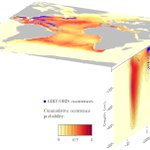
Happy to share our paper Pan-Atlantic 3D distribution model incorporating water column for commercial fish in Ecological Modelling: doi.org/10.1016/j.ecolmodel.…
@err_blueingreen @Libaibarriaga LeireCitores JoseanFernades-Salvador @GuillemChust @azti_brta @MISSIONATLANTIC
🧶1/3
Glad to see GAM-NICHE (gam-niche.azti.es/) implemented in 3D to map pan-Atlantic fish distributions.
@MISSIONATLANTIC @azti_brta

Happy to share our paper Pan-Atlantic 3D distribution model incorporating water column for commercial fish in Ecological Modelling: doi.org/10.1016/j.ecolmodel.…
@err_blueingreen @Libaibarriaga LeireCitores JoseanFernades-Salvador @GuillemChust @azti_brta @MISSIONATLANTIC
🧶1/3
Guillem Chust retweeted
❓👩🎓¿Quieres solicitar una tesis #FPU? En AZTI tenemos una oferta de proyecto sobre #EcologíaEspacial de megafauna aplicada a la gestión medioambiental.
Si te interesa, escribe a:
👩🔬 Maite Louzao | [email protected]
👩🔬Isabel García Barón | [email protected]
⚠Hasta el 15/02

Guillem Chust retweeted
New research sheds light on mesozooplankton's vital role in oceans, uncovering hidden diversity in the Indian Ocean & deep sea. Despite varied patterns, vertical & horizontal structuring is evident, highlighting reduced connectivity at deeper layers.
📰rb.gy/2t189v

Guillem Chust retweeted

And now published in Molecular Ecology!
doi.org/10.1111/mec.17286


Here is our new preprint "Global mesozooplankton communities show lower connectivity in deep oceanic layers", where we applied DNA metabarcoding to mesozooplankton samples collected during the Malaspina-2010 circumnavigation expedition.
authorea.com/users/602523/ar…


We built a new research group to address "Global Change in Marine Ecosystems". Our team met yesterday for the first time at the Sukarrieta center, in the amazing Urdaibai estuary. @azti_brta

Guillem Chust retweeted

"Fast Science is bad for scientists and bad for science."
--Uta Frith, Fast Lane to Slow Science #slowscience
https://teapawt.net/t.co/7nzsOMgjVI

Why anchovies in the Bay of Biscay are smaller than 30 years ago?
Our research suggests a complex interaction of factors between sea warming and population abundance.
Check our new paper: onlinelibrary.wiley.com/doi/…
@azti_brta

We have just launched our report on #marineclimatechange.
Two decades of research in @azti_brta to finding a scientific response to the impact of climate change on oceans and seas.
Download it here 📷azti.es/en/productos/marine-…

Guillem Chust retweeted
📢Acabamos de lanzar nuestra memoria sobre #cambioclimático marino.
Décadas de trabajo investigador y compromiso en buscar una respuesta científica al impacto del cambio climático sobre mares y océanos.
Descárgatela aquí ⏩azti.es/productos/memoria-de…
#LaRespuestaEstáEnLaCiencia

Glad to present GAM-NICHE tool in the @MISSIONATLANTIC General Assembly in Brazil.
👀📷 Take a look 📷 gam-niche.azti.es/
@azti_brta


📝Day 3 Recap: Digital Ocean. Scientific session started with speeches by Jason Holt (@NOCnews), @GuillemChust (ATZI), Luis Conti and @BonettiJarbas (@UFSC).
Follow the scientific sessions at 🔗dtudk.zoom.us/s/66664292830


Acclimatization pathways to ocean warming may differ in similar pelagic species sciencedirect.com/science/ar…


🌡🐟 For every degree of warming in the sea, the Atlantic mackerel spawns 370 km further north, while the horse mackerel breeds around 12 days earlier.
Very useful data in the context of #ClimateChange.
@urbanklima2050 @Ihobe_Eus @LifeIntemares
👇👇
bit.ly/3Rbj6o6