






Pinned Tweet
New blogpost out 📃
"Detecting LLM Misbehaviors from the Inside Out with Deep Learning on Structured Data" (ffabffrasca.substack.com/p/d…) [1/8]

[1/5] 🍋 New paper: LEMON, a misbehavior monitor that transfers zero-shot to LLMs it has never seen.
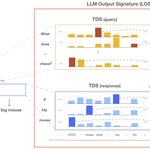
It flags hallucinations & jailbreaks online, token by token, from attention maps, with <10% overhead.
w/ @megamor2 @ffabffrasca @HaggaiMaron
🌐 barsguy.github.io/LEMON_proj…
🧵👇
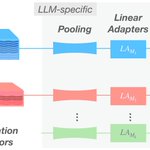
[4/5] Our fix: treat the mismatch as a symmetry. Heads can be permuted within a layer, layers can be shifted.
LEMON is a GNN over attention graphs made equivariant to exactly these symmetries, so its predictions don't depend on how an LLM orders its heads and layers.
[5/5] In comprehensive zero-shot experiments, across 16 LLMs and 6 datasets:
• best on hallucination and jailbreak monitoring
• up to +14 ROC-AUC over the strongest baseline
Paper:
📄 arxiv.org/abs/2610.22723

Guy Bar-Shalom retweeted

🥳 Excited to share UniProbe: A learnable, token-level hallucination detection for large VLMs 🔎
UniProbe looks inside a VLM’s internals to identify hallucinated response tokens and mitigate them before they reach the user.
📉 55% fewer hallucinations
⚡ Just 1.06× latency
Guy Bar-Shalom retweeted

AI safety starts with understanding what happens inside the model. Researchers from the Technion’s Andrew and Erna Viterbi Faculty of Electrical and Computer Engineering have developed new methods to detect hallucinations and failure modes in LLMs by analyzing their internal computations.
Their work earned acceptances at NeurIPS 2025, ICLR 2026, and AAAI 2026. Congratulations to Prof. Haggai Maron’s team on this outstanding achievement! #AI #MachineLearning #AISafety #Technion
technion.ac.il/en/blog/artic…

Guy Bar-Shalom retweeted

Conditional diffusion/flow models often produce outputs inconsistent with the very signal conditioning them. The error is easily measurable, yet models are never trained to act on it.
In FlowBender (now on arXiv), we train the model to correct its own errors. 🧵
Guy Bar-Shalom retweeted

1/
How much can you compress an LLM’s KV cache?
tl;dr it depends on how you train your model.
Many strong context compaction methods, such as Cartridges and attention matching, operate post-hoc: given a fixed model and a context, they try to compress the resulting KV cache.
@yoav_gelberg and I ask the complementary question:
can we train the model to produce KV representations that are easier to compress?
In other words: keep the compression method fixed, and change the representations it sees.

- "Neural Message-Passing on Attention Graphs for Hallucination Detection", ICLR 2026 (arxiv.org/pdf/2509.24770) [7/8]
- "Beyond Next Token Probabilities: Learnable, Fast Detection of Hallucinations and Data Contamination on LLM Output Distributions", AAAI 2026 (arxiv.org/pdf/2503.14043) [8/8]
Check out our new ICLR 2026 paper - we explore hallucination detection through graph learning. Take a look!

🧵"Neural Message Passing on Attention Graphs for Hallucination Detection" at #ICLR2026 !
🕸️We apply GNNs on the structured data LLMs produce as they generate text (e.g. attentions) to predict their errors.
📄 arxiv.org/abs/2509.24770
🤝 @GuyBarSh (co-1st) @YftahZ @HaggaiMaron

📌 [4/4] On the Expressive Power of GNN Derivatives
We study how using gradients of GNNs can increase their expressive power, providing a principled way to go beyond standard message passing.
arxiv.org/pdf/2510.02565
These works were joint efforts with a group of amazing collaborators: @ffabffrasca @HaggaiMaron @YftahZ @ytn_ym @yaniv_galron @yoav_gelberg @itayevron @mayabechlerspei @ido_guy Ami Tavory Moshe Eliasof Ran Elbaz