

A central platform connecting Web3 innovations and communities across multiple blockchains HUB App: https://teapawt.net/t.co/VB6S4WQ0JM
onchain
Joined October 2025
- Tweets332
- Following92
- Followers589
- Likes413






Still haven’t checked your $HUB allocation? 👀
If you’ve been active on #Base, completed quests, joined campaigns, or used HUB Portal, your share of the #Airdrop could already be waiting for you. 🪂
📸 Snapshot: Oct 23
💰 Claim: Oct 31
Check your allocation and tell us how much $HUB you got. 👇
And this is just the beginning...
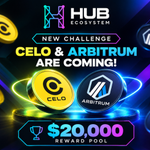
🚀 A new challenge is coming soon on #Celo and #Arbitrum with a $20,000 #reward pool for participants. User activity on both networks will count, so start preparing now. 🔥


Check your $HUB airdrop allocation and see how much you've earned 👇
🔍 Airdrop Checker: hubecosystem.xyz/
💬 HUB Ecosystem App: hubecosystem.xyz/
Don't forget - upcoming challenges on #Celo and #Arbitrum will feature massive reward pools. 🚀
Many people discovered HUB Ecosystem through the $HUB airdrop checker.
But HUB is much more than an #airdrop.
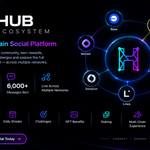
HUB Portal is a live multi-chain #Web3 application where users can connect with the community, earn #rewards for their activity, maintain daily streaks, participate in ongoing challenges, and unlock additional benefits through staking and #NFTs.
────────────
• Community activity rewards
• Daily streaks and bonus incentives
• Ongoing challenges with prize pools
• NFT holder benefits
• Staking and future ecosystem utility
• Multi-chain support across #Base, #Celo, #Arbitrum, #Polygon, #Linea, #Soneium
────────────
No downloads required ⚠️
No complicated setup ⚠️
Simply connect your wallet and start exploring the ecosystem.
The airdrop is only one part of what we're building. The real value comes from being active, growing with the community, and positioning yourself for future rewards, campaigns, and ecosystem opportunities.
💙 Like
🔄 Repost
Application link in the comments 👇
Which network are you most active on today?

𝗪𝗵𝘆 𝗖𝗼𝗺𝗺𝘂𝗻𝗶𝘁𝘆 𝗜𝗻𝗳𝗿𝗮𝘀𝘁𝗿𝘂𝗰𝘁𝘂𝗿𝗲 𝗜𝘀 𝗕𝗲𝗰𝗼𝗺𝗶𝗻𝗴 𝗮 𝗖𝗼𝗺𝗽𝗲𝘁𝗶𝘁𝗶𝘃𝗲 𝗔𝗱𝘃𝗮𝗻𝘁𝗮𝗴𝗲
══════════════════════════
Most technology discussions focus on products.
Features.
Protocols.
Blockchains.
Smart contracts.
However, some of the most successful ecosystems in crypto were not built solely because of technology.
They were built because communities continued to grow around that technology.
══════════════════════════
Community infrastructure is often underestimated.
Communication channels.
Governance systems.
Reputation layers.
Participation mechanisms.
These elements rarely generate headlines, yet they determine whether users remain engaged over time.
A protocol may have excellent technology.
Without strong community infrastructure, growth becomes difficult to sustain.
══════════════════════════
This is because communities are not created by technology alone.
Communities emerge through repeated interactions.
Shared experiences.
Collective goals.
Trust.
The role of infrastructure is to make these interactions easier, more visible and more rewarding.
══════════════════════════
As Web3 matures, community infrastructure may become one of the most important differentiators between ecosystems.
Technology attracts users.
Communities keep them.
══════════════════════════
#Web3 #Community #Blockchain


We've been building HUB Ecosystem around
an ERC-20 on Base, so B20 caught my attention.
We already rely on concepts like AccessControl, Pausable and a fixed supply. B20 brings similar primitives directly into Base's native token infrastructure, while adding policy registries, granular controls, memos, permit and freeze/reissue capabilities.
The interesting part for HUB isn't replacing an ERC-20 just for the sake of it.
It's what becomes possible when the token itself can act as programmable infrastructure for the applications, rewards and governance layers built around it.
Definitely something we're exploring for the next evolution of $HUB on Base. 🔵🪙


We’re joining the Agents at Work Hackathon. 🤖
And this one feels special.
HUB Portal started its journey on @CeloDevs , where we built, tested and shared our first versions with the community.
Now we’re returning to those roots - this time to build with AI agents and explore what’s possible at the intersection of communities, identity and on-chain infrastructure.
Back to where it started.
Let’s build. 🟡
#Celo #Web3 #AI #HUB

Submissions for the Agents at Work Hackathon close Sept 21 at 9am GMT. Now is the best time to pressure-test your build and fix anything broken before submitting it.
🗓️ Join our team for Office Hours this Thursday from 12pm GMT
Sign up now: luma.com/vj92t5w1

𝗪𝗵𝘆 𝗗𝗶𝗴𝗶𝘁𝗮𝗹 𝗜𝗱𝗲𝗻𝘁𝗶𝘁𝘆 𝗠𝗮𝘆 𝗕𝗲𝗰𝗼𝗺𝗲 𝗪𝗲𝗯𝟯'𝘀 𝗠𝗼𝘀𝘁 𝗜𝗺𝗽𝗼𝗿𝘁𝗮𝗻𝘁 𝗜𝗻𝗳𝗿𝗮𝘀𝘁𝗿𝘂𝗰𝘁𝘂𝗿𝗲
══════════════════════════
Most blockchain discussions focus on assets.
Yet assets are only one component of a digital ecosystem.
Identity is becoming increasingly important.
• Without identity, communities struggle to establish trust.
• Without trust, coordination becomes difficult.
• Without coordination, ecosystems cannot scale efficiently.
══════════════════════════
The internet has traditionally relied on platform-controlled identities.
Users create accounts.
Platforms own the data.
Platforms define the rules.
Platforms determine visibility.
Web3 introduces a different possibility:
• An identity that belongs to the user rather than the application.
• An identity capable of moving across ecosystems.
• An identity that preserves history and reputation.
══════════════════════════
This shift may have profound implications.
Instead of rebuilding credibility every time they join a new platform, users could carry years of contribution history with them.
• Applications could make better decisions.
• Communities could recognize valuable contributors more effectively.
• Trust could become portable.
══════════════════════════
The future of Web3 may not be defined by ownership alone.
It may be defined by the relationship between:
• Ownership
• Reputation
• Identity
And identity may ultimately become the infrastructure connecting everything else.
══════════════════════════
#Web3 @GithubProjects
𝗪𝗵𝘆 𝗠𝗼𝘀𝘁 𝗥𝗲𝘄𝗮𝗿𝗱 𝗦𝘆𝘀𝘁𝗲𝗺𝘀 𝗙𝗮𝗶𝗹
══════════════════════════
Reward systems are among the most popular mechanisms in Web3.
◈ Points
◈ Tokens
◈ Badges
◈ Achievements
◈ Mining systems
◈ Streaks
Almost every ecosystem experiments with some form of incentive design.
Yet most reward systems eventually face the same problem.
Users begin optimizing for rewards rather than value creation.
══════════════════════════
𝗪𝗵𝗮𝘁 𝗴𝗼𝗲𝘀 𝘄𝗿𝗼𝗻𝗴?
▸ Rewards become the main objective
▸ Activity becomes more important than contribution
▸ Users optimize for extraction
▸ Short term behavior replaces long term participation
This is not a blockchain problem.
It is a human behavior problem.
Whenever incentives exist, optimization follows.
And when optimization becomes the primary objective, the original purpose of the system often begins to erode.
A community designed around meaningful participation can quickly transform into a #community focused entirely on extraction.
══════════════════════════
𝗪𝗵𝗮𝘁 𝗴𝗼𝗼𝗱 𝗶𝗻𝗰𝗲𝗻𝘁𝗶𝘃𝗲𝘀 𝗿𝗲𝗾𝘂𝗶𝗿𝗲
◆ Encourage participation
◆ Prevent abuse
◆ Remain economically sustainable
◆ Reward meaningful contributions
◆ Avoid rewarding pure activity volume
Designing effective incentives requires balancing multiple objectives simultaneously.
This is significantly more difficult than distributing tokens.
══════════════════════════
𝗪𝗵𝗮𝘁 𝘁𝗵𝗲 𝗯𝗲𝘀𝘁 𝘀𝘆𝘀𝘁𝗲𝗺𝘀 𝗱𝗼 𝗱𝗶𝗳𝗳𝗲𝗿𝗲𝗻𝘁𝗹𝘆
→ Align user behavior with #ecosystem growth
→ Reward contribution instead of noise
→ Create sustainable participation
→ Shape behavior over time
The most successful systems are rarely the ones offering the largest #rewards.
They are the systems that create alignment between platform growth and user behavior.
Good incentives do not simply distribute value.
They shape behavior.
And behavior ultimately shapes communities.
══════════════════════════
#Web3 #Tokenomics #SocialFi

𝗧𝗵𝗲 𝗛𝗶𝗱𝗱𝗲𝗻 𝗖𝗵𝗮𝗹𝗹𝗲𝗻𝗴𝗲 𝗼𝗳 𝗗𝗲𝗰𝗲𝗻𝘁𝗿𝗮𝗹𝗶𝘇𝗲𝗱 𝗠𝗲𝘀𝘀𝗮𝗴𝗶𝗻𝗴
══════════════════════════
Messaging appears simple.
A user writes a message.
Another user receives it.
The interaction lasts only a few seconds.
Behind the scenes, however, messaging is one of the most technically demanding systems on the internet.
This becomes even more complicated when decentralization enters the equation.
══════════════════════════
Traditional messaging platforms rely on centralized infrastructure.
Messages are processed by servers controlled by a single organization.
Synchronization is straightforward.
Moderation is straightforward.
Storage is straightforward.
Decentralized environments introduce entirely different constraints.
Data may exist across multiple networks.
Users may interact through wallet identities rather than traditional accounts.
Applications must balance transparency, scalability and usability simultaneously.
══════════════════════════
One of the biggest misconceptions in Web3 is that every interaction should be stored directly on-chain.
In reality, doing so would often create unnecessary costs and performance bottlenecks.
This is why modern decentralized applications increasingly combine multiple layers.
#Blockchain for ownership.
Off-chain infrastructure for speed.
Indexing systems for accessibility.
Identity layers for persistence.
══════════════════════════
The future of decentralized communication will likely depend on how effectively these layers can work together.
The challenge is not creating another chat application.
The challenge is creating communication systems that preserve ownership without sacrificing usability.
══════════════════════════
#Web3 #SocialFi #Tech

𝗪𝗵𝘆 𝗢𝗻-𝗖𝗵𝗮𝗶𝗻 𝗥𝗲𝗽𝘂𝘁𝗮𝘁𝗶𝗼𝗻 𝗜𝘀 𝗦𝘁𝗶𝗹𝗹 𝗮𝗻 𝗨𝗻𝘀𝗼𝗹𝘃𝗲𝗱 𝗣𝗿𝗼𝗯𝗹𝗲𝗺
══════════════════════════
One of the most interesting paradoxes in Web3 is that blockchains are extremely good at recording ownership, yet surprisingly poor at recording reputation.
A wallet can tell us what somebody owns.
It can show transaction history, token balances and #NFT collections.
What it cannot easily show is whether somebody has spent years contributing to communities, helping other users, participating in governance or creating value inside an ecosystem.
Those signals often matter far more than assets.
══════════════════════════
In traditional platforms, reputation is usually stored inside private databases.
Reddit has karma.
#GitHub tracks contributions.
#Stack Overflow measures expertise.
The problem is that these systems are isolated.
The reputation you build in one platform rarely follows you elsewhere.
Web3 has an opportunity to change that.
For the first time, contribution history can potentially become portable.
A user's activity could move with them across applications, ecosystems and networks.
However, building such systems is significantly more difficult than most people realize.
══════════════════════════
The challenge is not collecting data.
Blockchains already generate enormous amounts of data.
The challenge is determining which actions actually represent value.
Should governance participation increase reputation?
Should social activity matter?
Should educational contributions carry more weight than transaction volume?
How do we prevent manipulation?
How do we prevent users from simply farming reputation scores?
These questions have no universal answers.
══════════════════════════
The next generation of #Web3 applications may spend less time measuring wealth and more time measuring contribution.
Because in the long run, healthy ecosystems are built by people.
Not wallets.
══════════════════════════
#Web3 #SocialFi #Blockchain @ethereum @Bitcoin
𝗧𝗵𝗲 𝗛𝗶𝗱𝗱𝗲𝗻 𝗖𝗼𝘀𝘁 𝗼𝗳 𝗕𝗹𝗼𝗰𝗸𝗰𝗵𝗮𝗶𝗻 𝗙𝗿𝗮𝗴𝗺𝗲𝗻𝘁𝗮𝘁𝗶𝗼𝗻
══════════════════════════
When people discuss blockchain infrastructure, the conversation almost always revolves around performance.
Which chain is faster.
Which chain is cheaper.
Which chain can process more transactions.
Which chain offers the highest throughput.
These discussions dominate headlines, conference panels and technical debates.
Yet one of the most important infrastructure challenges facing Web3 today receives far less attention.
Fragmentation.
Not liquidity fragmentation.
Not developer fragmentation.
User fragmentation.
As the industry grows, users are becoming increasingly distributed across independent ecosystems, each with its own applications, standards, identities and data structures.
The irony is that blockchain technology was originally designed to create shared and transparent systems.
Yet the more ecosystems emerge, the more fragmented the user experience becomes.
══════════════════════════
A few years ago, many believed the industry would eventually converge around a small number of dominant networks.
That prediction never materialized.
Instead, we witnessed specialization.
Different ecosystems evolved to solve different problems.
Some optimized for scalability.
Some focused on security.
Others prioritized user experience, low transaction costs or developer tooling.
From a technological perspective, this evolution is healthy.
Competition drives innovation.
Specialization creates efficiency.
However, it also introduces a new challenge.
A user's digital footprint is no longer contained within a single environment.
══════════════════════════
Imagine a typical participant in today's Web3 ecosystem.
They may trade on Base.
Provide liquidity on Arbitrum.
Collect NFTs on Polygon.
Experiment with emerging applications on Monad.
Participate in governance elsewhere.
Contribute educational content to multiple communities.
Build reputation across several independent ecosystems.
From the user's perspective, this is still one person.
One identity.
One history.
One collection of experiences accumulated over time.
But blockchain infrastructure does not see one person.
It sees a collection of disconnected wallet addresses, transaction records and isolated activities distributed across multiple networks.
The same individual appears fragmented into pieces.
And each ecosystem only sees a small part of the overall picture.
══════════════════════════
This is where fragmentation becomes more than an inconvenience.
It becomes an infrastructure problem.
Most applications are designed around the information they can access.
If an application only sees activity occurring within its own ecosystem, then every decision it makes is based on incomplete data.
A user may have years of valuable contributions elsewhere.
Thousands of interactions.
Governance participation.
Community building efforts.
Educational work.
Moderation experience.
Yet none of this may be visible when entering a new application.
Not because the information does not exist.
But because the information is trapped inside different environments.
In many ways, Web3 currently suffers from a context problem.
Data exists.
History exists.
Reputation exists.
But these signals rarely travel with the user.
══════════════════════════
The consequences are larger than they initially appear.
Communities lose context.
Applications lose trust signals.
Governance systems lose historical perspective.
Users repeatedly rebuild credibility from the ground up.
The same person may need to prove themselves over and over again despite years of prior contributions.
This creates inefficiencies that cannot be solved through faster block production or lower transaction fees.
Because the issue is not performance.
The issue is continuity.
══════════════════════════
𝗧𝗵𝗲 𝗻𝗲𝘅𝘁 𝗽𝗵𝗮𝘀𝗲 𝗼𝗳 𝗪𝗲𝗯𝟯 𝗺𝗮𝘆 𝗳𝗼𝗰𝘂𝘀 𝗼𝗻 𝗮 𝗱𝗶𝗳𝗳𝗲𝗿𝗲𝗻𝘁 𝗾𝘂𝗲𝘀𝘁𝗶𝗼𝗻.
Not:
"How do we move assets between chains?"
But:
"How do we move context between chains?"
▸ Can users carry reputation between applications?
▸ Can communities recognize contributions made elsewhere?
▸ Can participation become portable?
▸ Can trust move as freely as assets?
▸ Can identity become independent from any single network?
These questions may ultimately prove more important than transaction throughput itself.
══════════════════════════
The first generation of blockchain infrastructure focused on moving value.
The next generation may focus on moving context.
Because context is what transforms an address into an identity.
And identity is what transforms a network into a community.
══════════════════════════
#Web3 #Blockchain #MultiChain
Don’t qualify for the $HUB allocation?
Not enough transactions on #Base?
We’re opening a second chance.
A dedicated $HUB community allocation is being set aside for people who want into the HUB Ecosystem - including those left out because their Base activity was too low.
To qualify:
◆ Follow our profile @HUB_Ecosystem
◆ Quote this post
◆ Drop your wallet
➤ Tell us you don’t have enough Base txs yet, or why you still want in
Wallet alone is not enough.
Low-activity wallets and farm replies won’t be treated the same as real participation.
This allocation is for people who want to join the ecosystem, not only those who already farmed Base hard.
Already active on Base or a HUB Portal user?
Check whether you qualified for the official $HUB allocation.
🔹 Visit the allocation checker below
hubecosystem.xyz/


ABOUT HUB PORTAL
HUB Portal was created to solve one of the biggest challenges in #Web3 : the lack of a place where communities, user activity, and token economies can seamlessly work together.
From day one, our goal has been to build more than just another chat application. We are creating the foundation for a new generation of community-driven ecosystems, where engagement is rewarded and participation has real value.
━━━━━━━━━━━━━━━━━━━━
OUR JOURNEY
The HUB Portal journey began on the #Celo network, where the first versions of the platform were designed, tested, and shared with the community.
Since the earliest stages of development, we have believed in building in public. Our progress, milestones, updates, and development process have been openly documented and shared with the Web3 community.
We participated in grant programs such as Proof of Ship, where our work and progress were publicly tracked and reviewed by the ecosystem.
Our development history remains publicly visible through platforms such as Karma @karmahq_ allowing anyone to follow the evolution of HUB Portal from its earliest concept to the ecosystem we are building today.
Project progress:
karmahq.org/project/hub-port…
━━━━━━━━━━━━━━━━━━━━
WHAT WE HAVE BUILT
Today, HUB Portal operates across 8 blockchain networks, with #Base serving as the core network of the HUB Ecosystem.
The platform already includes:
• Multi-channel community chat system
• Real-time messaging infrastructure
• User profiles and on-chain statistics
• Activity-based reward systems
• Daily GM Streak mechanics
• Community leaderboards
• Genesis NFT integrations
• HUB Token ecosystem
• Multi-tier HUB staking
Over the past months, we have successfully designed, deployed, and tested key components that form the foundation of our long-term vision.
━━━━━━━━━━━━━━━━━━━━
OUR VISION
HUB Portal is not being built solely for $HUB.
Our vision is to create the social infrastructure layer for Web3 communities.
We are building a platform where any project can launch, grow, and manage its own token-powered community without needing to build custom engagement systems from scratch.
Instead of spending months developing #reward mechanisms, leaderboards, retention systems, community portals, or social infrastructure, projects will be able to leverage HUB Portal as a ready-to-use ecosystem.
━━━━━━━━━━━━━━━━━━━━
THE FUTURE
We envision a future where every Web3 project can launch its own community token directly within HUB Portal and use it to reward users for meaningful participation.
Community members could earn project-specific tokens by:
• Participating in discussions
• Maintaining activity streaks
• Creating valuable content
• Completing community objectives
• Supporting ecosystem growth
• Contributing to project development
Each project would have the ability to create its own economy, reward systems, and #community experience while benefiting from the infrastructure already built within HUB Portal.
Our goal is to make launching and managing a tokenized community as simple as creating a new channel.
━━━━━━━━━━━━━━━━━━━━
WHY IT MATTERS
We believe the next generation of social platforms will not be driven by advertisements, algorithms, or centralized ownership.
They will be driven by communities.
Communities that create value.
Communities that share ownership.
Communities that are rewarded for their participation.
━━━━━━━━━━━━━━━━━━━━
OUR MISSION
To become the social infrastructure layer for Web3 communities.
A place where communication, engagement, rewards, identity, and token economies come together within a single ecosystem.
Community First.
Building the infrastructure for the next generation of Web3 communities.
@CeloDevs @buildonbase @Celo @base

HUB Portal is still in active development, but the long-term vision is clear:
A platform where projects can launch communities, reward participation, and build their own token economies without reinventing the wheel every time.
We're curious to hear your thoughts.
What features would you expect from the next generation of Web3 community platforms?
What's next for HUB Portal? 👀
We're working on private messaging that will take communication within the HUB Ecosystem to the next level.
Our goal is simple: give users complete freedom to choose between decentralization, convenience, and privacy.
🔹 On-Chain Mode
Built for users who value transparency and true ownership of their data. Messages will be linked to the blockchain, and access to conversations will require wallet authentication, staying true to the core principles of Web3.
🔹 Standard Mode
Designed for speed and convenience. Messages will be stored within our infrastructure, delivering a seamless and familiar messaging experience while remaining fully integrated with the HUB ecosystem.
🔹 Premium Privacy Mode
Our most private messaging option. Messages will automatically disappear after being read or after a selected period of time and will not remain in the application's chat history. Built for users who want maximum privacy in their conversations.
We believe the future of communication isn't about forcing everyone into the same solution.
It's about giving users the power to decide how their conversations are stored, accessed, and protected.
This is another step toward making HUB Portal the ultimate multi-chain Web3 social platform. 🚀

What do you think about the future of messaging in Web3?
Would you prefer fully decentralized on-chain conversations, the convenience of traditional messaging, or maximum privacy with disappearing messages?
We're building HUB for the community, so your feedback matters. Let us know which option you would use the most and what features you'd like to see added. 👇🚀