

VR developer. These tweets are satire and do not necessarily reflect the opinions of myself.
Austin, TX
Joined March 2009
- Tweets9.2K
- Following609
- Followers448
- Likes13.1K



David Busch retweeted

Hyper Visor HAS OFFICIALLY LAUNCHED!
🕶️ Slip on the shades.
👀See beyond your reality.
💥Blast your way to victory.
This new original reality-bending arcade blaster is available now for $1.99 on XREAL Aura and Android XR: tr.ee/o1XH4D
David Busch retweeted

The coding interview is dead, at least for my team at Anthropic. I've seen enough to know that it no longer provides signal. I removed it from loops this month.
I have a spicy, optimistic take - I think there's an opportunity for junior engineers: felixrieseberg.com/hunger-be…

David Busch retweeted

"Hunger beats tenure."
Great write-up by Felix on why his team at Anthropic dropped coding interviews: newer engineers are flying past stronger, more tenured coders.
Execution isn't expensive anymore. Inside a company, the signal is picking an idea that moves the business and prototyping it. Outside, it's a portfolio of small prototypes. Both should show off your taste and judgment.
Claude Code Desktop started as a weekend prototype by two newer engineers.

The coding interview is dead, at least for my team at Anthropic. I've seen enough to know that it no longer provides signal. I removed it from loops this month.
I have a spicy, optimistic take - I think there's an opportunity for junior engineers: felixrieseberg.com/hunger-be…


David Busch retweeted
Agents write code "much better on average at scale" is right. The "at scale" part comes from verification. Agents make checking cheap.
The stuff that made "Good Code" expensive (tests, benchmarks, specs, real e2e runs) is now a cheap thing you can ask an agent for. You can improve the checks.
So our work is less "review every line" and more "build loops the agent can run itself". Give the agent a way to verify the work. That loop is where quality comes from.
And make taste compound. When the agent gets something wrong, write it down (shared config, a hook, a test) so it doesn't happen twice. A human still owns what ships but now they're reviewing evidence and not just diffs.

codebases have always contained slop. we have always been okay with this because code rarely needs to be perfect, outside of mission critical "hard" (eg embedded) software.
swe is a unique form of engineering because you're often building something that constantly evolves and is almost organic - user tastes change, your mental models evolve, and features come and go.
admittedly, i and many others who've been coding for a long time were initially (like back in 2024) skeptical that agents would write production code. "but what about all the slop that would enter our beautiful codebase?".
well, even before, we had human slop, and there was a lot of it! if we're being truthful, most people call "code i didn't write" slop. the reality is that 99% of people (i include myself in that number) don't even know what Good Code looks like, let alone be capable of writing it. i would propose that Good Code is:
• correct
• bug free
• fast and cost efficient to run
it has always been exceedingly difficult and expensive to write truly Good Code, because for the longest time (maybe @bendlang will change that), code was not something you could cheaply and formally guarantee to have all 3 of these properties. this is why writing hard software is much more difficult and expensive, because depending on the use case, you may only get one chance and so you have to be right from the start.
but the vast majority of software we use does not need to be Good Code to provide value to users. in fact, it is very likely that most software we use is not formally verifiable! we accepted some bugs in exchange for velocity and progress, so we rely on tests and o11y instead and have adopted a more incremental approach. this is a good thing!
agents help us move faster, and if you're open to the idea, are capable of helping us write better code. it won't be Good Code (that is still expensive), but it is likely to be much better on average at scale.
the new craft of swe is to figure out how to do this. it's your job now! if your productivity with and without agents is not significantly different, you're doing something wrong. but it's not too late to embrace it and use it as an opportunity to learn a whole new skill tree


David Busch retweeted

Hot take: good teams have always had this problem. Great teams learn to solve it.
Back in the days before AI, I would regularly spend weekends on yolo PRs changing thousands of lines of code. The goal wasn’t to merge. I just wanted to get a feel for what the changes would look like.
Tons of reasons for this:
- exploring architecture
- figuring out blast radius of changes
- getting early product feedback
- feeling out different flows, APIs etc
The key to making this work: assume all PRs will be closed, not merged.
The PR you merge can be built differently than the branch you used to explore. It often should be.
I’d go as far as to say that all PRs filled by non-maintainers should be closed by default, meant only as references for future humans and agents

Every startup would secretly admit how much of a pain the "slop grenade" problem is. Bold of Tobi to say it out loud.
Everyone else is dealing with the same thing: balancing output volume, quality, and confusion about who's responsible for what comes out.
Keep holding people accountable for their actual work. The quality vs productivity pressure works itself out when accountability is clear.
David Busch retweeted

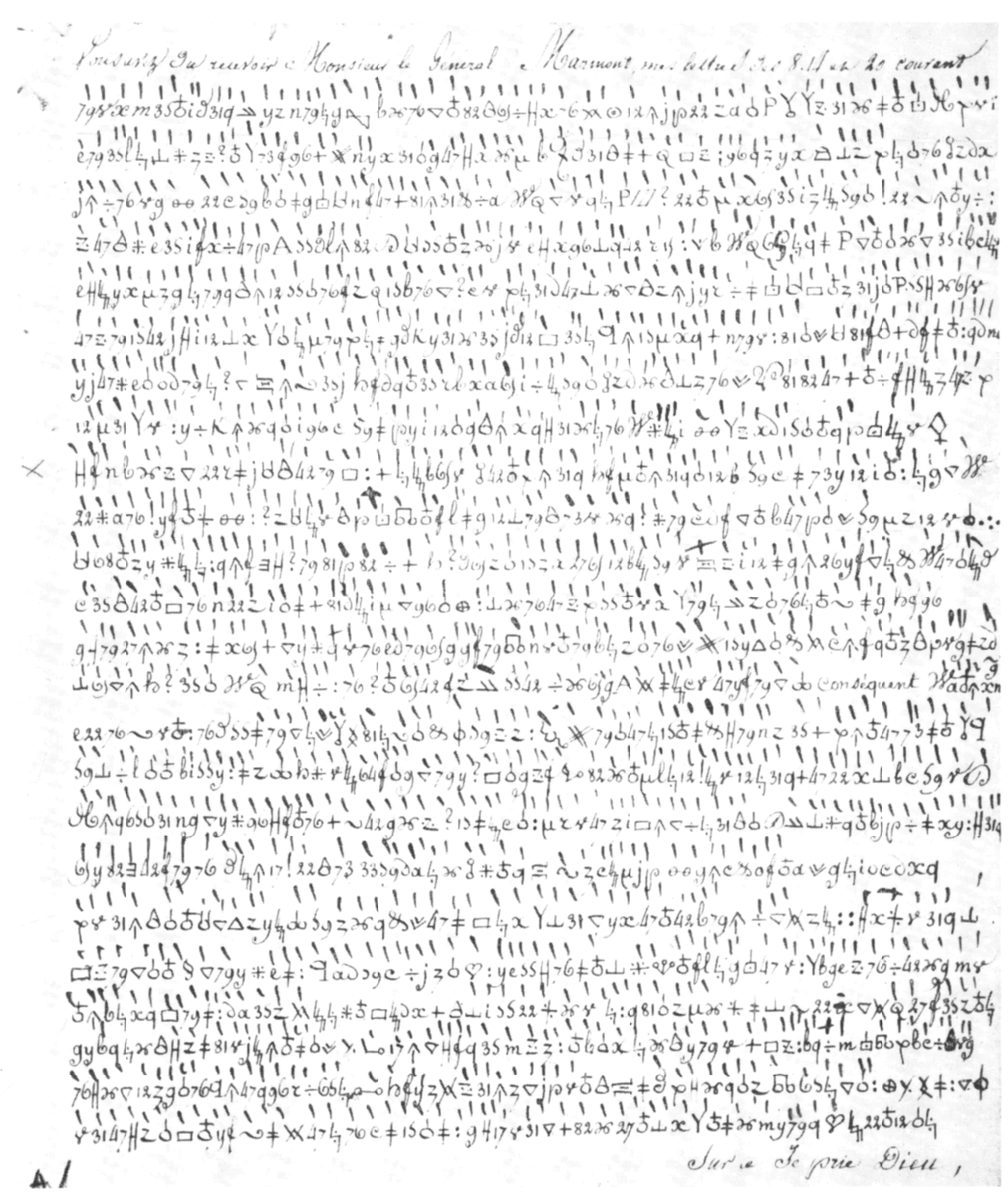
I used GPT-6 Astra to break an unsolved cipher to one of Napoleon's generals that had gone unread for 217 years.
What makes this impressive isn't actually the codebreaking, but that Astra completed the entire multi-modal workflow in ~6 hours from a single image and goal.
1/6🧵
Chase gave a great talk about performance and optimization in Unity at the Austin Unity meetup and it’s always a pleasure to chat with Chase about VR dev and whatever else. He would be a great addition to any team!

Unfortunately I was apart of this layoff and am looking for what's next very soon!
Lead / Senior Tech Artist or Senior Unity Developer— remote or Austin. Walkabout Mini Golf was my home for 4 years, now I'm ready for the next set of problems.
portfolio → chaseshields.com
intros welcome 🙏
David Busch retweeted

Announcing Gemini 4 Argon, our new frontier model.
Argon is built to sustain deep reasoning across complex, long-horizon workflows and delivers frontier performance in complex workflows across real-world software engineering, enterprise knowledge work like legal and finance, and cybersecurity defense.
We’re also expanding the model’s output token limit to an industry-leading 1M tokens.
Argon is currently rolling out to a set of trusted cyber defenders in the Fairwind Program, with broader availability as soon as possible.

Higher effort passion projects are finally making the rounds on X instead of “look at my oneshot” posts. Turns out games are still hard to make and good ones take lots of time and effort.


I was hoping Blender MCP would increase access to geo nodes. I’ve made a few throw away ones, but rarely if ever do you see someone post a node setup made via agents, let alone one as close to good as something @MatterCg or @erindale_xyz can cook.

Or rediscovered
en.wikipedia.org/wiki/AlphaS…

New benchmark dropped bw.swerdlow.dev/report

David Busch retweeted

why i'm sad about vr (and why there's still hope)
youtu.be/QjWgVKV4WKI
David Busch retweeted
One of our MOST REQUESTED modes ever is coming to Dimensional Double Shift! 🎉🤖
Get your first look at Single Player 👇
David Busch retweeted
🎉🎉 BIG NEWS EVERYONE! 🎉🎉 Owlchemy VR Games are COMING TO STEAM FRAME! Get ready to [JOB], [VACATION], school and shift!
☕Job Simulator- Now!
🌴Vacation Simulator - Now!
🌭Dimensional Double Shift - Soon!
💗Cosmonious High - Soon!
🧵⬇️

ALT A promotional graphic with large, bubbly orange text at the top that reads 'CONTROLLER SUPPORT!!' and text at the bottom reading 'OWLCHEMY GAMES + STEAM FRAME!'. The left side of the image features diagonal panels showcasing characters from various Owlchemy games, including the purple alien from Cosmonious High and the computer monitor character from Job Simulator. On the right side, two black Valve Index VR controllers are displayed against a vibrant purple and pink background.
