

Keep building on Tapeout. Building the most powerful applications on BNB Chain. Independent team Part of the Tapeout ecosystem.
UK
Joined September 2026
- Tweets684
- Following27
- Followers596
- Likes1.2K



Pinned Tweet
HashPort takes a key step forward!
HPA has launched and graduated on TapeHub, and will serve as a core functional token in the future HashPort container ecosystem, carrying important roles such as usage, circulation, and ecosystem collaboration!
HashPort will also work together with TapeOut to co-build a more open on-chain container ecosystem, allowing more projects, assets, and communities to connect, operate, and grow within it
HPA
CA: 0x0Df25a91A6d7A7af201bCfdC721aA9CbE7611010
The easier it becomes to create software, the more important it becomes to verify what gets published
AI can help Builders produce applications at a much greater speed
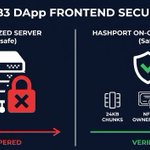
But users still need ways to distinguish intended releases from altered or unexpected content
HashPort explores verifiable Web publishing as part of this changing development landscape
A future with more applications should also be a future with better tools for checking what those applications deliver
One click deployment sounds simple
But real development workflows involve errors, costs, revisions, and unexpected interruptions
TapeCode's latest improvements make progress visible, explain unavailable actions, and allow certain design changes to be undone
These details matter because developer experience is more than the final deployment button
For DeWEB infrastructure, usability and verifiability should develop together
Powerful tools are most useful when Builders can understand and control them
Powerful infrastructure means little if users cannot easily access it
As TapeOut continues exploring TapeKit integration with major wallets and mobile device manufacturers, an important question comes into focus
How can verifiable Web experiences become part of the tools people already use?
For HashPort, the long term opportunity is not simply publishing more applications
It is making verifiable applications easier to discover, access, and use

TapeOut现阶段核心规划 进展:
进展 1 :已完成,已上线推出了 核心开发者工具TapeCode,目前正在不断迭代。
进展 2 、已完成,且还在推进更多中。与大型知名平台 OKX Wallet、XLayer、FourMeme 等同时推进围绕TapeOut协议、围绕BEM进行的合作,同时还在与其他大型平台进行推动中。
进展 3、已完成,矿机跨链目前已经完成,目前支持了XLayer和BNBChain的双向跨链。
进展 4、ITO 尚未推出,正在等待合适的时机,推向市场。
进展 5、TapeOut V2 版本尚未推出,正在等待合适的时机,推向市场。
进展 6、正在推动 TapeKit 内置 业内主流钱包、以及全球区域性龙头手机厂商中,将会在每一个落地,陆续公告出来!!
我在努力将每一句话,每一个承诺,全部落地,带着成果,带着市场价格的反馈,呈现给大家!!让TapeOut的坚定支持者们,得到应有的回报!
Putting game rules On Chain does not automatically make every part of a game trustworthy
The rules may be verifiable
But inputs, interfaces, wallet permissions, and external data can introduce different risks
That is why application trust should be examined layer by layer
For HashPort, verifiable frontend publishing addresses one specific part of this problem
A stronger Web is built by understanding what each layer can prove and what it cannot
Most users do not begin by asking how an application's blockchain infrastructure works
They want to know whether it is useful, understandable, and reliable
The same applies to On Chain games
Players care about gameplay before they care about circuit architecture
For HashPort, verifiable infrastructure should support the user experience rather than overwhelm it
The strongest technical foundations are often the ones users can benefit from without needing to understand every detail
An application goes through several stages before reaching users
Idea
Code generation
Testing
Deployment
Publishing
Verification
AI tools are making the earlier stages faster
HashPort focuses on the publishing and content integrity side of this journey
The next generation of developer workflows should not stop when code is generated
They should also consider how the finished application can be delivered and verified
When a game involves wallets, tokens, or other On Chain assets, the frontend becomes part of a sensitive user interaction
A familiar looking interface is not enough to establish trust
Users need to understand what they are signing and which contracts they are interacting with
Verifiable frontend content can help establish whether delivered files match a published reference
For HashPort, content integrity is one important layer of safer Web interactions
Not a replacement for transaction review or contract security
Games evolve through updates
Interfaces change
Features are added
Bugs are fixed
But users should still have ways to identify which version of an application they are accessing
Content hashes can provide verifiable references for published files
HashPort explores how Web publishing can make content integrity easier to check
A changing application does not have to mean an unverifiable application
Verification should not always require users to perform extra technical steps
TapeCode's updated game workflow includes automatic On Chain rule verification when a game starts
This makes verification part of the application experience rather than a separate manual process
The broader opportunity for DeWEB is similar
Useful verification should be accessible without requiring every user to become a blockchain expert
A game interface shows players what is happening
Its underlying rules determine why those outcomes occur
TapeCode now supports turning game rules into On Chain Circuits with verification during game startup
This creates an interesting separation between presentation and computation
For HashPort, another question matters
Can users also verify that the frontend they receive matches the intended published version?
Trust involves both what an application computes and what it delivers
AI can generate code faster than ever
But faster generation does not guarantee that the final application is correct, secure, or unchanged
Developers still need to test functionality and review what gets published
HashPort focuses on another important layer
Making published Web content independently verifiable
Creation and verification solve different problems
Both matter when building applications people can trust
One more table in your README
After the upload
list every file path and its SHA-256 in the repo
Anyone can clone and build it themselves
then check line by line
If it matches it's the same build
If not you know exactly which file
The project itself didn't change
You just added a table anyone can check
Astro works too
After npm run build
Astro puts your site in dist by default
No adapter swap
No routing changes
Connect your wallet and pick a circuit
Drag dist into the console
Every file gets its own path and SHA-256
Check once and you know the onchain copy is your local build
No more silent swaps
Is the page you open today
the same one you opened yesterday
You don't have to guess
Every file has a fingerprint
Any change shows
What HashPort is building
is a record for frontends that can't be quietly rewritten
Onchain apps deserve an onchain face
The contracts are onchain
The assets are onchain
The page users actually see
should be onchain too
HashPort wants to put that face
back where it belongs
Real On Chain applications need more than smart contracts
They also need interfaces through which users can understand data, review actions, and interact with the underlying protocol
HashPort approaches this challenge from the publishing and content integrity layer
Verifiable website files can help users check whether the content they receive matches a known published reference
This does not replace smart contract audits or transaction verification
It adds another way to examine what users actually access
DeWEB becomes meaningful when verifiable infrastructure supports applications people genuinely need
Launching an application is only the beginning of its operational lifecycle
Real users bring new requirements
Reliable access, accurate information, maintenance, updates, and clear handling of unexpected issues
Applications involving financial interactions face additional expectations around security and transparency
For DeWEB, the challenge is not simply helping Builders publish applications
It is supporting a Web where applications can evolve while their published content remains verifiable
Shipping matters
Maintaining what you ship matters just as much
A familiar interface is not proof of a safe transaction
Before signing, users should understand which contract they are interacting with, what permissions they are granting, and which assets may be affected
This becomes especially important for applications involving pooled resources and transferable reward rights
For HashPort, verifiable content is one layer of a broader trust model
Knowing that website files match a published version is valuable
Understanding what the transaction actually authorizes remains essential
An audit reviews a defined version of code
Deployment determines what actually runs
These are not automatically the same thing
For applications handling On Chain assets, it matters whether the deployed contracts correspond to the reviewed implementation and whether users can identify the intended interface version
The TapeOut mining pool has submitted code to Salus for review, with the report still pending according to the announcement
For HashPort, this highlights a broader principle
Security claims should be connected to verifiable implementations