
Just a red-blooded, God-fearing, Constitution-loving American who wants this country strong like she should be. God bless America!
Wall Street
Joined October 2022
- Tweets2.4K
- Following10.5K
- Followers14.9K
- Likes10.2K




HDBooker 🇺🇸 retweeted

$TSM short-term structure is still bullish. 🚨📊
On the 15-minute chart, TSMC completed a strong breakout after consolidating around the 407–421 area.
The stock pushed sharply higher and reached the 443 area, showing strong short-term buying pressure.
Right now, $TSM is trading near the upper range around 440, close to the recent high.
That means momentum is still strong, but the price is already near a short-term high, so I would not chase aggressively here.
My plan is simple:
Buy zone: 421
This is the first pullback area I would watch after the breakout.
Key support: 407
As long as $TSM holds above 407, the short-term bullish structure remains intact.
If $TSM breaks and holds above 443, the next upside move could open.
But if price fails near 443, I would watch for a pullback toward 421 first.
My view is simple:
Trend is strong.
Momentum is bullish.
Buyers are still in control.
But the price is already near the high.
I would rather wait for a clean pullback near support than chase strength at the top. 🚀📊
Not financial advice.

HDBooker 🇺🇸 retweeted
$AVGO short-term structure is still bullish. 🚨📊
On the 15-minute chart, Broadcom has completed a strong breakout after consolidating around the 416–424 area.
The stock pushed through 437, 442, and 448, then reached a high near 460.58.
This shows strong short-term buying pressure.
Right now, $AVGO is consolidating near the upper range around 455, which means bulls are still in control, but the price is already close to the short-term high.
I would not chase aggressively at 455–460.
My plan is simple:
Buy zone: 442–443
This is the pullback area I would watch for a better risk/reward entry.
Key support: 431–432
As long as $AVGO holds above this area, the short-term bullish structure remains intact.
If $AVGO breaks and holds above 460, the next upside move could open.
But if price fails near 460, I would watch for a pullback toward 442.
My view is simple:
Trend is strong.
Momentum is bullish.
But the price is near the high.
I would rather wait for a clean pullback than chase strength at the top. 🚀📊
Not financial advice.

$TSM is still one of the biggest AI chip stocks out there. 🚨📊
Fundamentally, TSMC isn't just a chip maker.
It's the world's most important foundry, making top-tier chips for $NVDA, $AAPL, $AMD, $AVGO and tons of other AI and semiconductor giants.
In this AI era, that's huge—because nearly every major AI chip still needs advanced manufacturing.
GPUs.
Custom AI chips.
Apple Silicon.
High-performance computing chips.
Data center processors.
A big chunk of that whole ecosystem relies on TSMC.
The latest numbers show just how strong demand is.
TSMC reported Q1 2026 revenue of $35.90B, up 40.6% year over year. Net income and diluted EPS both jumped 58.3% YoY, with gross margin at 66.2% and operating margin at 58.1%. 3nm made up 25% of wafer revenue, highlighting strong demand for advanced nodes. (台积电)
This is why $TSM matters so much.
It's behind the entire AI hardware cycle.
$NVDA might design the GPUs.
$AAPL might design Apple Silicon.
$AMD and $AVGO might design AI and custom chips.
But TSMC is the one making many of the most advanced chips.
That makes $TSM one of the cleanest plays for the long-term AI semiconductor supply chain.
Now look at the chart.
Major trend: $TSM is still in a clear bullish structure. The stock bounced hard from around 310, broke through several key levels, and hit a new high near 431.
Short term: It's now consolidating near highs. Momentum is still strong, but after a move like this, I wouldn't chase aggressively at these elevated levels.
My plan is simple:
Buy zone 1: 386
This is the first dip area I'd watch.
Buy zone 2: 358–359
This is the deeper buy zone and also the key structural support.
Key support: 358–359
If $TSM stays above 358–359, the bullish structure holds.
If the daily or weekly candle closes below 358, I'd cut risk and wait for a deeper reset toward 338–340 before reassessing.
My take is simple:
Strong AI demand.
Strong advanced-node leadership.
Strong margin profile.
Strong semiconductor supply-chain position.
Strong bullish chart structure.
But even great stocks need good entry points.
I'd rather buy weakness near support than chase after a big run. 🚀📊
Not financial advice.

$AAPL is still one of the strongest platform stocks out there. 🚨📊
At its core, Apple isn't just about iPhones anymore.
They've got the iPhone, iOS, App Store, Apple Pay, Services, Apple Silicon, privacy, identity, payments, and a super loyal customer base.
In the AI world, the real winners might not be the ones with the best models.
They could be the platforms that control where users interact.
And that's exactly where $AAPL is.
Apple's last quarter shows the core business is still solid. Revenue hit $111.2B, up 17% from last year, and diluted EPS grew 22% to $2.01. They also set March quarter records for total revenue, iPhone revenue, EPS, and all-time high for Services.
Services is a big deal.
It brings in high-margin recurring money from the App Store, subscriptions, payments, cloud, music, TV, and more.
Now the bigger story is AI.
If Apple can turn Siri into a full systemwide AI assistant in iOS, they could own the most valuable AI entry point:
The iPhone.
That means AI search, apps, payments, workflow, personal stuff, identity, and trust all flowing through Apple's ecosystem.
That's why $AAPL is still a long-term winner.
Now look at the chart.
Major trend: $AAPL is clearly bullish. It broke above the old high near 288, pushed to a new high around 315, and is holding near the top.
Short term: Recent candles are mostly green, with just small red dips in between. No clear long breakdown yet, so bulls are still in charge.
The recent pullbacks are shallow too. Buyers step in fast, and it looks like healthy consolidation in an uptrend, not a reversal.
My plan is simple:
Buy zone 1: 289
That's where I'd first look for a dip.
Buy zone 2: 273
That's a deeper buy spot and key support.
Key support: 273
If $AAPL stays above 273, the bullish structure holds.
If a daily or weekly candle closes below 273, I'd cut risk and wait for a reset toward 261–262 before rethinking.
My take:
Strong ecosystem.
Strong Services revenue.
Strong iPhone base.
Strong AI potential.
Strong bullish chart.
But even great companies need good entry points.
I'd rather buy weakness near support than chase after a big move. 🚀📊
Not financial advice.

🚨 OPTION WATCHLIST — 6/1/2026
Here’s what I’m watching this week:
Breakouts. Gap fills. Call flow. Momentum plays.
I’m not jumping into random names.
Only stocks where charts, flow, and key levels are coming together.
$PLTR
Breaking out of a weekly descending triangle.
Call flow is picking up fast.
Key level: $160
If it breaks and holds, I see potential moves to:
$185 → $200
Indicators look solid.
One of the cleanest breakouts I’m tracking.
$HOOD
Breaking out of a weekly downtrend channel.
Still has a weekly gap to fill from:
$96.26 → $99.34
Call buyers are stepping in.
If $101 breaks, the gap fill could spark more upside.
$TEAM
Breaking out of a daily consolidation range.
Software names are gaining momentum again.
Two upside gaps left:
$109.75 → $114.80
$125.50 → $135
If buyers keep pushing, this could be a strong software recovery play.
$IBM
Still in a major uptrend.
Approaching $300 resistance, already trying to break it pre-market.
Key level: $325
A break above $325 could lead to:
$350+
Only issue: it’s overbought, so risk management is key.
$NOW
Software stocks are on my radar, and $NOW fits that theme.
Key breakout level: $125
If it breaks, I’m looking at:
$140+
Indicators are decent, but need confirmation.
$UNH
Flagging on the daily chart, testing 9 EMA support.
Key breakout level: $385
If it breaks, potential move to:
$400+
Clean setup if the 9 EMA holds.
$META
Filling half of its daily gap.
Watching for calls above: $640
If it breaks, target:
$645 → $668 gap fill
Indicators look okay here.
$AVGO
Broke all-time highs last week.
Still one of the strongest AI infrastructure names.
Key level: $450
If it breaks and holds, upside to:
$475 → $500
High on my watchlist.
$MSFT
Breaking out of a daily bull flag.
Already cleared $430 resistance.
Key level now: $450
If it breaks, gap-fill move to:
$480
Indicators are strong.
One of the cleanest mega-cap tech setups.
$ZS
Sold off after earnings.
Key level: $140
If it breaks, I’m watching for the earnings gap fill.
High watch, but needs confirmation first.
My view:
Strongest themes this week:
Software momentum
AI infrastructure leaders
Breakout continuation setups
Gap-fill plays
Call flow confirmation
But I’m not chasing every green candle.
For options, the rule is simple:
Wait for the level.
Wait for confirmation.
Control risk.
Don’t force trades.
Best setups for me this week:
$PLTR, $AVGO, $MSFT, $META, $HOOD
Not financial advice.
Just my watchlist and key levels. 📊🔥


🚨 People need to stop thinking of $TSM as just a chip foundry.
Price right now: $418.45
Market cap: around $10.85T.
TSMC’s Q1 2026 revenue came in at $35.9B, up 40.6% from last year.
Gross margin was 66.2%, operating margin hit 58.1%, and net margin landed at 50.5%.
That’s not typical for a manufacturing biz.
That’s platform-level pricing power.
The market keeps treating $TSM like a simple factory.
That’s a mistake.
TSMC is the manufacturing foundation of the AI economy.
$NVDA can design AI GPUs.
$AMD can design AI accelerators.
$AAPL can design custom silicon.
$AVGO can design custom AI chips.
But the most advanced chips still need someone to make them.
And that’s where TSMC controls the door.
The real logic is straightforward:
AI needs chips.
Advanced chips need leading-edge nodes.
Leading-edge nodes need TSMC.
In Q1 2026, 3nm made up 25% of wafer revenue, 5nm was 36%, and 7nm was 13%. Advanced nodes totaled 74% of wafer revenue.
That’s why TSMC isn’t a normal semiconductor stock.
It’s the bedrock under the whole AI hardware stack.
And it gets bigger:
$NVDA + $TSM are bringing AI inside fabs — using it for defect checks, lithography speed-ups, process simulations, and optimizing fab operations.
So AI isn’t just increasing demand for TSMC chips.
AI is also making TSMC better at making those chips.
That’s a powerful loop.
More AI demand → more advanced chips → more TSMC capacity needed → AI boosts fab efficiency → TSMC becomes even tougher to replace.
This isn’t just a foundry story.
It’s an AI infrastructure story.
Right now, I’m watching:
$TSM — advanced chip manufacturing backbone
$NVDA — AI compute leader
$ASML — EUV lithography near-monopoly
$AVGO — custom AI chips + networking
$MU — AI memory / HBM demand
But I’m not blindly chasing green candles here.
The better move is simple:
Wait for pullbacks.
Watch support levels.
Buy the companies that own the infrastructure layer.
If AI is the new industrial revolution, then $TSM is one of the factories building the machines behind it.
Don’t chase hype.
Buy the backbone when the market brings fear. 🚀

HDBooker 🇺🇸 retweeted
$MRVL is becoming one of the most important AI infrastructure names in the market. 🚨📊
Fundamentally, Marvell is no longer just a traditional semiconductor company.
It is positioned directly inside the AI data center buildout, especially in AI networking, optical interconnects, custom silicon, and high-speed data movement.
This matters because the AI trade is not only about GPUs.
Large AI clusters need GPUs to compute, but they also need fast networking to move data between GPUs, servers, racks, and data centers.
That is where $MRVL becomes important.
The company’s latest earnings showed strong AI momentum, with data center revenue becoming the main growth engine. Management also pointed to exceptional AI-related bookings and raised future revenue expectations.
Now look at the chart.
Major trend: $MRVL has clearly shifted into a strong bullish weekly structure. The stock broke out from a long consolidation zone and pushed toward the 218 area. I do not see a clear topping or reversal signal yet.
Short term: The stock is now consolidating near new highs after a massive move higher. Bullish momentum is still present, but the current price is elevated, so I would not chase aggressively here.
My plan is simple:
Buy zone 1: 163–164
This is the first pullback area I would watch.
Buy zone 2: 129–130
This is the deeper buy zone and also the most important weekly support level.
Key support: 129–130
If $MRVL holds above 129–130, the bigger bullish structure remains intact.
If the weekly candle closes below 129, I would reduce risk and wait for a deeper reset toward 105–106 before reassessing.
My view is simple:
Strong AI networking story.
Strong data center demand.
Strong custom chip opportunity.
Strong weekly trend.
But even great companies need good entry points.
I would rather buy weakness near support than chase after a major move. 🚀📊
Not financial advice.


$AVGO is still one of the top AI infrastructure plays besides Nvidia. 🚨📊
Broadcom isn't just a regular chip company anymore.
It's sitting right in the middle of two critical parts of AI data centers:
Custom AI chips.
AI networking.
This matters because AI infrastructure isn't just about GPUs now.
Big hyperscalers need custom chips, faster networking, smoother data flow, Ethernet switching, and full data center connections.
That's exactly where $AVGO fits.
Broadcom's latest quarter showed strong AI momentum, with AI revenue up over 100% year over year, thanks to custom accelerators and networking demand.
$NVDA might own the GPU space, but $AVGO is becoming a big player in custom silicon and AI networking.
Take a look at the chart now.
Long-term trend: $AVGO is still in a clear bullish pattern on the weekly chart. I don't see any obvious top or reversal signal yet. As long as the key support at 350–351 holds on a weekly close, the bigger trend stays bullish.
Short-term: The stock is consolidating near new highs. Bullish momentum is still there. If $AVGO can break and stay above the 450 previous high, it could trigger a new upward move. But if the breakout fails, I'd watch for a pullback to 388–390 or 350–351 support.
Here's my simple plan:
Buy zone 1: 388–390
This is the first dip area I'd watch.
Buy zone 2: 350–351
This is the deeper entry point and the most important weekly support level.
Key support: 350–351
If $AVGO stays above 350–351, the larger bullish trend stays intact.
If the weekly candle closes under 350, I'd cut risk and wait for a deeper drop to 322 before rethinking.
My take is simple:
Strong AI revenue.
Strong custom chip demand.
Strong AI networking exposure.
Strong weekly trend.
But even great companies need good entry points.
I'd rather buy the dip near support than chase a big rally. 🚀📊
Not financial advice.


HDBooker 🇺🇸 retweeted
$NVDA remains the most important AI infrastructure stock in the market. 🚨📊
Fundamentally, Nvidia is no longer just a GPU company.
It has become the platform layer of the AI economy.
Nvidia controls the most important parts of the AI compute stack: GPUs, CUDA, AI networking, NVLink, Blackwell, Vera Rubin, data center systems, robotics, autonomous driving, and Physical AI.
That matters because AI does not run on hype.
AI runs on compute.
And right now, Nvidia is still the company sitting at the center of that compute demand.
The latest numbers prove it.
Nvidia reported record Q1 FY2027 revenue of $81.6B, up 85% year over year.
Data Center revenue reached $75.2B, up 92% year over year.
Data Center compute revenue was $60.4B, up 77% year over year.
Data Center networking revenue was $14.8B, up 199% year over year.
The key point is simple:
The AI story is no longer only about GPUs.
Networking is becoming one of the fastest-growing parts of Nvidia’s business.
As AI clusters get larger, GPUs need to communicate faster.
That means more demand for NVLink, Spectrum-X, InfiniBand, Ethernet, optics, and full AI data center infrastructure.
This is why $NVDA is different from most semiconductor companies.
Most chip companies sell components.
Nvidia sells the full AI infrastructure platform.
But the chart matters too.
From the weekly chart, $NVDA remains in a bullish structure, but after a strong move higher, the stock is now pulling back from the upper range.
Current price is around 211, and the first support area is 208–211.
If $NVDA holds above this zone, the pullback still looks healthy.
My plan is simple:
Buy zone 1: 208–211
This is the first support area I would watch.
Buy zone 2: 191–192
This is the deeper buy zone and also the most important weekly support level.
Key support: 191–192
If $NVDA holds above 191–192, the bigger bullish structure remains intact.
If the weekly candle closes below 191, I would reduce risk and wait for a deeper reset toward 178–180 before reassessing.
My view is simple:
$NVDA is still the king of AI infrastructure.
But even the best company in the market needs good entry points.
I would rather buy weakness near support than chase after a major move.
Strong fundamentals.
Record AI revenue.
Massive data center demand.
Exploding networking growth.
Bullish weekly structure.
But risk management always comes first. 🚀📊
Not financial advice.


$GOOGL is still one of the biggest AI platform stocks out there. 🚨📊
When you look at the fundamentals, Google isn't just a search engine anymore.
It runs Search, YouTube, Android, Google Cloud, Gemini, ad distribution, and has one of the most valuable data networks globally.
In the AI world, that matters because real power sits with platforms that control what users want, traffic, cloud systems, personal data, and how money is made.
Alphabet's latest earnings already showed this.
Revenue jumped 22% year over year to $109.9B.
Google Services went up 16% to $89.6B.
Search & Other climbed 19%.
YouTube ads rose 11%.
Google Cloud revenue shot up 63% to $20.0B.
Operating income increased 30%, with margins hitting 36.1%.
Google Cloud is the big part of the $GOOGL re-rating story.
It hit $20B in revenue for the first time, and backlog nearly doubled from last quarter to over $460B.
That gives $GOOGL way better visibility on future enterprise AI and cloud demand.
That's why I still think $GOOGL is a long-term AI platform winner.
But the chart matters too.
Looking at the weekly chart, $GOOGL is still in a bullish setup.
Still, after such a big run-up, I wouldn't chase it at these high levels.
My plan is simple:
First buy zone: 351–360
That's the first dip I'm watching.
Second buy zone: 323
That's the deeper entry and also the most important weekly support.
Key support: 323
If $GOOGL stays above 323, the bullish trend stays solid.
If the weekly candle closes under 323, I'd cut risk and wait for a deeper drop toward 300 before rechecking.
My view is simple:
$GOOGL is a top company with a strong AI story.
But even great companies need good entry points.
I'd rather buy on weakness near support than chase after a big move.
Strong fundamentals.
Strong AI positioning.
Strong weekly trend.
But risk management always comes first. 🚀📊
Not financial advice.

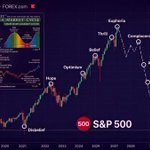
🚨 S&P 500 could be heading into a risky late-cycle phase.
$SPY is around $756, and $QQQ is near $738. Indexes keep climbing, buyers keep piling in, and market confidence is growing fast.
But this might be when the market gets too comfortable.
The rally isn’t fueled by the whole economy.
It’s driven by a handful of mega-cap leaders, AI stocks, liquidity hopes, and strong earnings expectations.
The S&P 500 isn’t just a stock chart.
It reflects corporate profits, margins, cash flow, interest rates, and investor bets.
That’s why it’s not an ordinary asset.
When the S&P 500 goes up, passive money flows in.
When passive money flows in, valuations get high.
When valuations get too high, even solid stocks can take a hit when sentiment shifts.
Right now, I’m keeping an eye on:
$SPY $QQQ
$NVDA $MSFT $AAPL $GOOGL $AMZN
$AMD $AVGO $TSM $MU
The smart play isn’t to chase a vertical rally.
It’s to wait for dips, watch key support levels, and buy strong names only when the risk/reward looks good again.
Late-cycle markets can run longer than expected.
But when the turn comes, it usually hits fast. ⚠️📉📈
Not financial advice.

HDBooker 🇺🇸 retweeted
Americans have rarely been this bullish on stocks.
In December, 55% of US consumers expected stock prices to be higher over the next 12 months.
That is the 3rd highest reading since 1987.
Since April 2025, bullish sentiment has surged +17 percentage points and is now close to the all-time high from December 2024.
To understand how extreme this is:
During the 2000 Dot-Com Bubble, this number peaked around 47%.
In 2018, it peaked around 51%.
Today?
We are at 55%.
This is far above the long-term average of 36%.
At the same time, only 25% of consumers expect stocks to fall over the next year.
That is near the lowest level since 2020.
What does this mean?
Investors are extremely confident
Market sentiment is very crowded
$SPY and $QQQ are being supported by strong belief in higher prices
Mega-cap leaders like $NVDA $MSFT $AAPL $META $GOOGL are carrying confidence
When everyone becomes bullish, risk management becomes even more important
I am NOT saying the market must crash.
I am saying you NEED to be smart.
When sentiment is this strong, do not blindly chase.
Keep your winners.
Trim when positions get too stretched.
Buy quality on pullbacks.
Stay balanced with growth + defensive names.
Bullish sentiment is powerful.
But the best investors never get emotional.
They prepare before the crowd panics. 📊🔥

🚨 The Nasdaq 100 / $QQQ is one of the best money-making machines in modern market history.
Current price: $738.31
2026 so far: +20%
2025: +20.8%
2024: +25.6%
2023: +54.9%
Since 1999, $QQQ has weathered:
2000 dot-com bust: -36.1%
2001 bear market: -33.4%
2002 meltdown: -37.4%
2008 financial crash: -41.7%
2022 rate chaos: -32.6%
And yet every time people said tech was done, the Nasdaq 100 bounced back stronger.
That's the real takeaway.
The market keeps making the same mistake:
It zeroes in on the drop.
It zeroes in on valuations.
It zeroes in on fear.
But it overlooks the actual businesses.
$QQQ isn't just a tech fund. It follows the Nasdaq-100, giving investors access to a bunch of the biggest non-financial stocks on Nasdaq, including some key innovation leaders.
This isn't just a line on a screen.
This is the index behind AI, cloud, chips, software, ads, online retail, security, and digital backbone.
That's why it always recovers.
The Nasdaq 100 isn't your average tech bet.
It's a collection of companies building tomorrow.
Right now, I wouldn't blindly jump into $QQQ after a big run.
But I'm watching every real dip in the top names here:
$QQQ — broad Nasdaq 100 exposure
$NVDA — AI chips and fast computing
$MSFT — cloud, business AI, Windows AI stuff
$GOOG — Search, YouTube, Gemini, Cloud, Waymo
$AMZN — AWS, AI infrastructure, online shopping
$META — AI ads, cash flow, social apps
$AVGO — custom AI chips and networking
$AMD / $ARM — AI processing and next-gen chip design
Big money doesn't come from freaking out every time things drop.
Big money comes from knowing that innovation cycles cause ups and downs first — and wealth later.
Don't blindly buy green bars.
Wait for panic.
Buy the leaders.
Stick with the strongest trends. 🚀

US tech stocks are making history in the market right now.
The Information Technology sector $XLK now makes up 37% of the S&P 500 $SPY total value.
That's the highest it's ever been.
To put this in perspective:
At the peak of the 2000 Dot-Com Bubble, tech was 35% of the S&P 500.
And now?
We're above that level.
Tech's total market value has hit a record $29 TRILLION.
This is all driven by the biggest tech giants out there:
$NVDA $MSFT $AAPL $GOOGL $META $AMZN $AVGO
These companies aren't just part of the market.
They basically are the market.
Meanwhile, the other 10 sectors together add up to about $49 trillion of the total US market.
So what's the takeaway?
The market has never been this concentrated
Tech is carrying the whole index
$SPY and $QQQ rely heavily on mega-cap tech now
If tech keeps going strong, the bull run continues
If tech crashes, everything feels it
This isn't the same market from 20 years ago.
AI, cloud, chips, software, data centers, and automation are now the foundation of the US stock market.
But here's the risk you need to know:
When one sector gets this powerful, leadership gets narrow.
That means picking the right stocks matters way more now.
Don't just buy everything blindly.
Focus on real leaders.
Real revenue.
Real profits.
Real AI demand.
Real market power.
Technology isn't just one sector anymore.
Technology IS the market. 🔥📈

HDBooker 🇺🇸 retweeted
Peter Lynch’s real edge was never about predicting tomorrow’s stock price.
His real edge was understanding one simple idea:
Before you buy a stock, you must understand the company.
Too many investors only look at charts, headlines, or trending tickers. But a stock is not just a symbol on a screen. A stock represents a real business.
If you don’t understand how the company makes money, where its growth comes from, who its customers are, and why it can keep winning, then you are not investing. You are gambling.
The best stocks usually have a few things in common:
Clear business model.
Consistent revenue and earnings growth.
Strong industry position.
Reasonable valuation.
Real competitive advantage.
A market that has not fully priced in the long-term story.
That is why I focus on the business behind the ticker.
$NVDA is not just a chip company. It is the backbone of AI infrastructure.
$MSFT is not just a software company. It is a cloud, enterprise AI and productivity ecosystem.
$AAPL is not just an iPhone company. It is a global hardware, services and user ecosystem.
$TSM is not just a manufacturer. It is the foundation of advanced chip production.
$AVGO is not just a semiconductor company. It is a key player in AI networking and custom chips.
Peter Lynch’s lesson is clear:
A great stock is not great because everyone is talking about it.
A great stock is great because the company’s long-term growth logic is clear.
Retail investors do not have more capital than institutions, but they do have one advantage: flexibility.
Institutions are often limited by size, liquidity, mandates, and quarterly performance pressure.
Individual investors can research earlier, move faster, and hold with more patience when the long-term story remains intact.
Real stock picking is not about chasing hype.
It is about asking:
What does this company do?
Where does its revenue growth come from?
Does it have a real competitive moat?
Is valuation still reasonable?
If the stock drops, has the business actually changed?
Would I still want to own it after a market correction?
Short-term prices are driven by emotion.
Long-term stock performance is driven by earnings, growth, and business quality.
That is the core of Peter Lynch’s investment philosophy:
You are not buying a ticker.
You are buying the future growth of a business.
The market will always have hype.
What matters is whether you can see the real business before the crowd fully prices it in.

HDBooker 🇺🇸 retweeted
This is one of the strangest divergences we have ever seen in the market.
The S&P 500 $SPY 3-month implied correlation has dropped to around 15%, the lowest level on record.
At the same time, the Nasdaq 100 $QQQ 12-month implied correlation has fallen to 25.5%, also an all-time low.
This is NOT normal.
What does this mean?
Stocks inside the same index are no longer moving together.
The market looks strong on the surface, but underneath, leadership is extremely narrow.
A small group of mega-cap technology stocks is carrying the entire market.
Look at names like:
$NVDA $MSFT $AAPL $AMZN $META $GOOGL $AVGO
These leaders are holding up the index.
But many other stocks are not participating.
This is why you NEED to be selective.
Do NOT blindly buy everything.
Do NOT assume every stock will follow $SPY and $QQQ higher.
In this type of market:
Strong leaders can keep leading
Weak stocks can stay weak
Rotation becomes very important
Stock picking matters more than ever
Risk management is critical
Market leadership has rarely been this narrow.
This is not the time to be lazy.
Focus on strength.
Focus on revenue.
Focus on profits.
Focus on companies that actually deserve to lead.
The index may look healthy.
But under the surface, this market is divided. 📊

This is honestly one of the weirdest market divergences I've ever seen.
The S&P 500 $SPY 3-month implied correlation just hit about 15%, the lowest ever recorded.
And the Nasdaq 100 $QQQ 12-month implied correlation dropped to 25.5%, also an all-time low.
This is definitely NOT normal.
So what's going on?
Stocks within the same index aren't moving together anymore.
On the surface, the market looks strong. But underneath, leadership is super narrow.
Just a handful of mega-cap tech names are carrying everything.
Think stocks like:
$NVDA $MSFT $AAPL $AMZN $META $GOOGL $AVGO
These leaders are holding up the indexes.
But a lot of other stocks? They're not joining in.
That's why you HAVE to pick your spots carefully.
Don't just blindly buy everything.
Don't assume every stock will rise just because $SPY and $QQQ are up.
In this kind of market:
Strong leaders can keep running
Weak stocks can stay stuck
Rotation matters a ton
Stock selection is key
Risk management is crucial
Leadership has rarely been this concentrated.
Now's not the time to get sloppy.
Stick with strength.
Focus on revenue.
Focus on profits.
Focus on companies that actually earn the right to lead.
The index might look fine.
But underneath? This market is split. 📊🔥

🚨 The best S&P 500 stocks of 2026 aren't the ones people guessed.
$SNDK Sandisk: +608%
Current price: $1695.00
$MU Micron: +239%
Current price: $971.02
$DELL Dell: +223%
Current price: $420.93
Everyone was watching $NVDA.
Everyone kept chasing the obvious AI play.
But the real gains were hiding underneath:
Memory. Storage. Servers. AI infrastructure.
That's the takeaway.
AI isn't just about GPUs.
AI needs HBM, DRAM, NAND, enterprise servers, data-center stuff, and huge infrastructure buildout.
That's why $SNDK, $MU, and $DELL shot up.
People thought these were boring hardware names.
Nope.
$SNDK is a storage cycle + AI data demand story.
$MU is a memory / HBM / DRAM cycle story.
$DELL is an AI server and enterprise infrastructure play.
These aren't dull legacy tech stocks anymore.
They're the hidden picks-and-shovels behind the AI boom.
But here's where most folks mess up:
After a stock is already up 200%–600%, you don't blindly chase the green candle.
You wait.
You let the market settle down.
You watch for pullbacks.
You look for bases forming.
You buy the strongest leaders when fear returns.
Right now, I'd focus on:
$MU — best pure memory / HBM setup
$DELL — AI server infrastructure leader
$SNDK — high-momentum storage winner, but needs a pullback
$NVDA — still the AI king, but only on dips
$AVGO — custom AI chips + infrastructure
$STX / $WDC — storage cycle watchlist names
The AI trade isn't over.
It's just moving past GPUs.
The next big winners might be the companies powering the full AI infrastructure stack. 🚀


Heads up—you really need to pay attention.
The S&P 500 $SPY just hit an all-time high and racked up a 9-week winning streak for the first time since 2023.
From the March 30 low, $SPY is up +20.1%.
That means the market piled on about +$11.4 TRILLION in value in just 2 months.
This is NOT normal.
$SPY and $QQQ have been super strong.
Big stocks like $NVDA $MSFT $AAPL $AMZN $META $GOOGL led the charge.
But here's what you need to get:
When things move this far this fast, risk starts creeping up.
I'm NOT telling you to sell everything.
I'm saying play it smart.
Hold onto your best winners
Don't chase overpriced stocks
Trim positions when they get too extended
Keep a mix of growth and safer names
Get ready to buy when the next healthy drop happens
The market made a lot of people money these past 2 months.
Now the game is simple:
Lock in gains. Stay chill. Wait for the next move.
Don't get greedy near the top.
Don't freak out on the dip.
The next drop will bring the next big chance. 💪📈

HDBooker 🇺🇸 retweeted
The market has REACHED my target.
$SPY and $QQQ are now at a very crucial level where the market is starting to look EXHAUSTED.
This is NOT the time to lump sum big into stocks that already ran too far.
Names like $NVDA $TSLA $PLTR $AMD $HOOD have been strong, but when stocks get too stretched, you need to be smart.
What should you do?
You can KEEP your big winners, but trim around 20% profits
Do NOT chase stocks that are already extended
Look for bottoming stocks where rotation may happen
These stocks can still go down, but they may go down LESS
Balance your portfolio with defensive compounders like $COST $WMT $PG $KO $JNJ
A healthy -5% dip is coming soon.
But for volatile stocks, you must be prepared for -20% to -50% drawdowns.
This is why risk management matters.
This is why balance matters.
Growth stocks can make you rich.
But defensive stocks help you survive.
You NEED to stay safe.
Please, I am begging you.
Do not panic.
Do not chase.
Protect your profits.
Get ready for the next opportunity. 💪📉
