
Wagga Wagga, New South Wales
Joined September 2015
- Tweets1.4K
- Following882
- Followers247
- Likes23K






Heath Brown retweeted

Senator Pauline Hanson at her fiery best just exposed the fact that this incompetent Labor Government has sold out 20% of our water to foreign interests.
Infuriated by the dodge and weave of Senator Murray Watt she snapped that she would have more luck getting a straight answer if she asked where he kept his phone!!
Epic troll 💥💥💥

Heath Brown retweeted

Try to get your hands on @HProspecting /Gina Rinehart’s response to the Nine /SMH hit job. It doesn’t miss. She doesn’t do all her benevolence for accolades but it’s about time people learnt how much she actually does for this country. She is a national treasure, unlike the scumbags determined to bring her down.
Heath Brown retweeted

Gai Waterhouse. Bruce McAvaney. A special Cox Plate Day chat.
Good luck in the big one, Gai 💛
@GaiWaterhouse1
Heath Brown retweeted

🏇 What a horse Northerly was. One of my all-time favourites, and a horse who taught me plenty.
Back in 2001, I started getting into sectionals from the SportsColour sheets, which had to be printed, and I did my calculations manually from there (no digital files). Northerly was the first horse who really taught me how different sectional profiles could be.
He didn’t have a blistering sprint. His strength was sustaining speed better than his rivals. He often looked under pressure and in trouble, but he kept giving, and when others faded, he got the upper hand. That's how he earned the nickname The Fighting Tiger, and it fit.
Sunline did it differently. She would ramp up the speed in the middle stages and break her rivals’ will. Often, she tired notably late herself, but she’d exhausted the opposition even more. That style suited Northerly because he could absorb the pressure and keep coming.
Different ways of winning, both absolute champions.
🏆 And what a spring Northerly had in 2002. Already the reigning Cox Plate winner, he put together this sequence:
• 1st G2 Craiglea Stakes, now the G1 Makybe Diva
• 1st G1 Underwood Stakes
• 1st G1 Turnbull Stakes
• 1st G1 Caulfield Cup carrying 58kg
• 1st G1 Cox Plate just seven days later
A proper champion.
I've had his photo framed in my office since he retired in 2004, and it’s still there today.

His finest hour? 🤔 🐅
Northerly overcame a world class field to go back to back in the 2002 Cox Plate. The final Group 1 of the year on Saturday at Ascot is named in honour of the all-time great 💛🖤
@RacingWA_Tbreds
Heath Brown retweeted

Hard to fathom losing Wentworth Park. 94 years of History and it will obviously NEVER be replaced
Losing Harold Park was horrendous. But this really feels like the end of an era and potentially the industry #TheGreatGame
Heath Brown retweeted
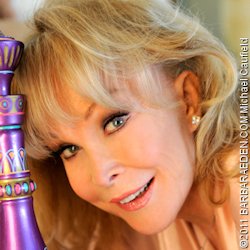
We don’t often think about the passage of time when we’re living in the moment. While today marks the 61st anniversary of I Dream of Jeannie, 61 years into the future was the furthest thought from my mind on that frigid day in December of 1964.
That was when we filmed the pilot on the beach at Point Dume!
When you’re filming on location, you don’t think about anything other than work. After all, daylight is changing, shadows are moving, wind is blowing. We were there to get the shots and get the job done on schedule.
Between hitting our marks and getting the shots, the biggest memory that stands out that day is that it was so horribly cold! There I was in a harem costume on the beach in December, shivering! It was so cold my lips were blue!
I look back now, at that day, and I truly cannot quite express how amazing it is to me that 61 years later, Jeannie is still with me. I had no idea what was starting on that beach, or how it would find a home in the hearts of so many, for so many years.
I also had no expectation that Jeannie, a delightful mythological, classic entity, would still be here! But she is, just over my shoulder, watching over everything!
I think of those magical 5 years of my life, where every day was an adventure. Between Larry and Billy and Hayden, and the whole crew, we never knew what would happen! Even with a script in hand, you could never predict everything. From our hilarious guest stars, to being locked in a safe and playing the wonderfully mischievous naughty twin sister…
I’ve said it many times and I mean it every time; I Dream of Jeannie was often more fun than work.
Here’s to 61 years of magic! To all the laughter, all the joy, all the silliness and adventures that remain with me in my heart today.
Here’s to you, the fans! Your love, dedication and fascination with the show keeps the magic alive. I cannot thank you enough for the love you’ve shown me and for the memories you’ve helped keep bright.
Happy Anniversary Jeannie, still bringing laughs, granting wishes and reminding me of what a joy it was. -Barbara Eden

Heath Brown retweeted

This may well go down as the single greatest transfer of public assets by elected democratic governments in world history.
Without any serious consultation with their own citizens, Western governments eagerly aligned with the UN and signed onto framework agreements like the 2015 Paris Accord. What began as voluntary international targets rapidly morphed into binding domestic legislation.
The resulting legacy is the systematic exclusion of taxpayers from decision-making, while administrations power ahead, committing billions in subsidies to unproven pet projects—such as Australia’s much-hyped green hydrogen initiative.
Virtually all heavy industry across the West is now in chronic decline. Manufacturing jobs are being hollowed out, striking directly at power-intensive sectors like electric arc steel, aluminium smelting, and fertiliser production. Once-abundant, cheap, and reliable hydrocarbon energy is being degraded and decommissioned in favour of weather-dependent renewables.
Simultaneously, the supply chain for this transition has been handed lock, stock, and barrel to Beijing. China now produces roughly 90% of all photovoltaic components, refined critical minerals, and panel hardware—cementing its position as the greatest manufacturing power in history through an unprecedented transfer of Western wealth.
In place of high-density power generation, more than a million wind turbines and an estimated 9 billion solar panels are now scattered across open farmlands, hillsides, and coastal vistas. Because these sources are intermittent and unreliable, integrating them into existing power grids presents a colossal $21 trillion global infrastructure challenge.
Prior to this shift, Western industrial policy prioritised dense, dispatchable energy security. Today, governments unilaterally lock in multi-decade decarbonisation commitments that outlast their electoral tenures by decades. Vast tracts of public and agricultural land are greenlit and bulldozed for transmission corridors, access roads, and sprawling industrial turbine arrays—all to serve an intangible belief system that vilifies carbon dioxide, the very driver of essential energy and biological growth.
The tangible result? Some of the most expensive household power bills in modern history, the destruction of dispatchable coal and gas capacity, and severe damage to national industrial, economic, and defensive resilience.
As one outraged writer noted, Net Zero stands as perhaps the most diabolical act of self-inflicted harm ever visited upon democratic nations by their own leadership.
Government by regulatory decree is not government by representation. Mandating a multi-decade economic rewiring without an explicit electoral mandate violates the fundamental social contract between the state and the citizen. Locking in 30-year subsidy contracts strips future generations of their democratic right to adjust policy based on real-world performance.
If we weren’t so accustomed to being betrayed, it would be recognised for what it is: a raw, heavy-handed exercise in power at the expense of the people.

Heath Brown retweeted

Anthony Albanese calls someone who works hard their entire life to pay off their home and then pass it down to their children as “intergenerational inequality”
And then taxes that house again when you try to pass it on.
But if you live in housing commission house occupied for four generations, like his own family, that isn’t inequality.
That’s just being a “proud houso”



Heath Brown retweeted
The United Nations worst case global warming scenario collapsed a few months ago after admissions the modellers got it wrong.
The world is no longer facing a 5.5°C warming trajectory by 2100 at all. That target has been removed as 'implausible'. Yet this was the chief driving reason for a global transition away from fossil fuels, and replacing them with energy from wind turbines and solar panels.
This effort to harness wind and sunlight could become one of the greatest economic disasters in modern history, costing $275 trillion by the time a new fully developed infrastructure is in place by 2050. This would include a second global power grid costing $21 trillion.
The UN explanation—'We are on track for a 5°C apocalypse if we don't immediately upend the global economy'—is dead.
Removing its extreme scenario creates a distinct institutional challenge for a climate bureaucracy that spent 25 years leveraging fear. We are left with a blighted rural landscape, trillions of dollars spent on a gigantic physical overbuild and the likelihood that this will become a self-fulfilling, replacement loop every 20 to 30 years.
The scientific community has acknowledged that the catastrophic, upper-end predictions were built on flawed, outdated economic models, because early modelers failed to understand real-world market trends.
First made available in 2011 to drive global climate policy, this extreme scenario—known widely as RCP8.5 (and later SSP5-8.5)—served as the primary engine for the media's terrifying 'business-as-usual' headlines for over a decade.
It was built on assumptions that humanity would aggressively abandon clean tech, undergo an unprecedented five-fold increase in coal use, and even resort to converting coal to oil to run vehicles. Those apocalyptic projections simply didn't occur and fossil fuels produce 81% of global primary energy; wind-solar 6.5%.
With the retirement of the extreme 5C baseline for the upcoming 7th Assessment Report (AR7), the ceiling for projected global warming has dropped significantly. The newly proposed high-emissions baseline has been downgraded to a maximum of 3.3°C by 2100.
The climate narrative has now officially shifted from an existential struggle of 'apocalypse versus survival' to a standard problem of risk management.
Developed in the early 2010s, RCP8.5 was intended to reflect its worst-case scenario available at the time, according to an analysis by Carbon Brief. It modeled a future with rapid population growth and massive, unchecked coal expansion where global coal use would increase multifold by 2100.
Media outlets, advocacy groups, and financial regulators defaulted to RCP8.5, creating a vision of unchecked coal expansion. Yet while real-world coal production did rise—driven by China and India to roughly 9 billion tons annually—it never approached the absurd 5x multiplier required by the UN’s old models.

Heath Brown retweeted

A few thoughts on moves to shorten the Victoria Derby
The Derby at Epsom has existed since 1780. The Victoria Derby has been part of Australian racing since 1855 and, from its second running, was established over the classic mile and a half, or half a furlong more.
For nearly 170 years its purpose has been understood: to identify the best precocious staying three-year-old of the season.
There is now a suggestion that the Victoria Derby should be shortened, effectively moving it towards the territory already occupied by the 2000-metre Spring Champion Stakes. Some might say this argument is the infamous “Dunning-Kruger Effect” at work.
I believe that would be a serious mistake.
Both the Victoria Derby and Spring Champion have suffered a decline in racing's estimation. Three arguments are usually advanced:
1their winners have supposedly performed poorly subsequently;
2official ratings have tended to undervalue their performances; and
3commercial studs have relatively little interest in their winners.
None is a persuasive reason to shorten the Derby.
1. A Derby winner does not need to prove itself twice
The Victoria Derby is a target race. It asks a particular question at a particular moment in a horse's development: which of this generation's three-year-olds can run 2500 metres best on Derby Day?
That is the examination. The winner has passed it.
It makes little sense subsequently to downgrade that performance because the horse fails to reproduce it over 1400, 1600 or 2000 metres. We don't mark down the best mathematics student because he subsequently performs less well in English.
Nor is the subsequent record of Victoria Derby winners nearly as poor as sometimes suggested.
Last year’s Riff Rocket went on to win the CS Hayes Stakes, Rosehill Guineas and Australian Derby. Year before’s Goldrush Guru subsequently placed in the Australian Guineas. Before that Observer has already won an Australian Guineas. And before that Manzoice subsequently won the Tattersalls Cup.
Compare that with winners of the 2000-metre Spring Champion Stakes—the very model towards which some apparently want to move the Derby. Recent winners include horses which either failed to win again, took a considerable time to do so, or did little subsequently: 2025 El Castello no wins; Tom Kitten took 18 months to win again; 2024 Sharp ‘N’ Smart didn’t win in Australia again; 2023 Profundo failed thereafter; 2022 Montefilla did win a Ranvet.
In other words, shortening a three-year-old staying championship to 2000 metres provides no guarantee whatsoever of producing more successful horses.
We already have a Spring Champion Stakes. Why would we want another one?
2. The ratings are measuring the wrong thing
I also question the relatively low official ratings routinely attached to Derby performances.
If the methodology effectively says that a Derby winner must subsequently demonstrate comparable superiority under quite different conditions before its Derby rating can be taken seriously, then the methodology—not the Derby—is the problem.
I repeat, imagine ranking students in mathematics and subsequently marking down the mathematics champion because he was less successful in English.
A Derby should be rated on the performance required to win the Derby.
The combination of age, distance and timing is precisely what makes the examination valuable. A three-year-old capable of running 2500 metres at Flemington in early November is demonstrating an unusual combination of precocity, stamina, soundness and class.
Remove the stamina test and you haven't improved the examination. You have changed the subject.
3. Racing is creating the breeding problem it complains about
The argument that commercial studs aren't interested in Derby winners gets cause and effect backwards.
Australian breeding has become increasingly concentrated on speed because that is where racing increasingly puts the money.
Heath Brown retweeted

I have long maintained this is the stupidest federal government in history. I rest my case

Heath Brown retweeted

Albanese, who has to wear the $275 power price promise and his “50 times lies” about the budget, and who sets up class warfare between “workers” and “investors”, saying that One Nation trades on lies, disinformation, and division is just a little much.
Heath Brown retweeted

What an absolute moment. Well done to all involved. I got absolute butterflies.
YNWA JAI


Heath Brown retweeted

Incredible censorship by Labor majority on this Committee today.
MPs have an obligation to use credible material at Budget Estimates to raise problems in NSW public administration and that’s what Cate Faehrmann MLC did.
Minister Harris undertook to get a response from Racing NSW.

Key questions from a budget estimates hearing involving NSW Racing Minister David Harris have been expunged from the record after it was determined that the details provided adverse mention of racing industry figures.
Full story: thestraight.com.au/extraordi…

Heath Brown retweeted

In 1988 Dolly Parton pulled every 7th and 8th grader in Sevier County into a room and told them to pick a buddy.
She made them sign a contract.. if BOTH graduate, she hands you both $500. One fails, nobody gets paid.
The county dropout rate went from 35% to 6%.
She handed out the checks herself.
In 1989 she offered $500 to every kid in the county who wanted to go to the local college.
When Gatlinburg burned in 2016, she sent 900 families $1,000 a month for six months.
You've probably heard that part.
Here's the part you haven't:
The fund raised more than expected, so she showed up in May and handed every one of those families another $5,000 on top.
Then she quietly put $3 million into the recovery group that handles the years after the news trucks leave.
She built her county an entire hospital.
She played a benefit concert in 2007, Dollywood and the Stampede matched it, and LeConte Medical Center opened in 2010 with a birthing unit and a women's center in it.
In 2022 she started covering 100% of tuition, books, and fees for Dollywood employees.
Full-time, part-time, AND seasonal.
In 1991 she paid for a bald eagle sanctuary because the birds couldn't be released back into the wild, no press release.
And when Hurricane Helene came through here in Western North Carolina, she wrote a personal check for $1 million and her companies matched it.
She didn't owe North Carolina anything, but she helped us anyway.
She started the Imagination Library because her daddy couldn't read or write. Before he passed, he told her it was the most important thing she ever did.
Rest in Peace, Dolly 🇺🇸
