

aicreater retweeted

来感受一下 NotebookLM 生成的中文播客的效果,远超出我的预期,素材是斯坦福 2025 AI 指数报告的 PDF

This just in... the @NotebookLM hosts have some rather exciting news they'd like to share with you all:
aicreater retweeted

GPT-4.1 in the API
openai.com/live/

aicreater retweeted

GitHub Copilot Agent Mode & MCP support is rolling out to all VS Code users: github.blog/news-insights/pr…

aicreater retweeted
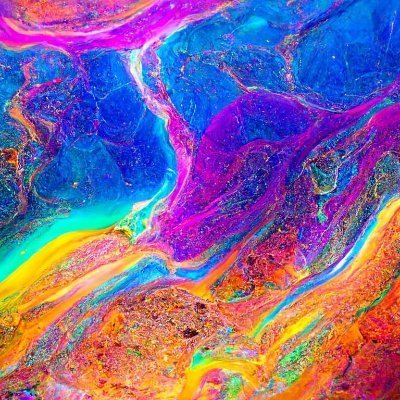
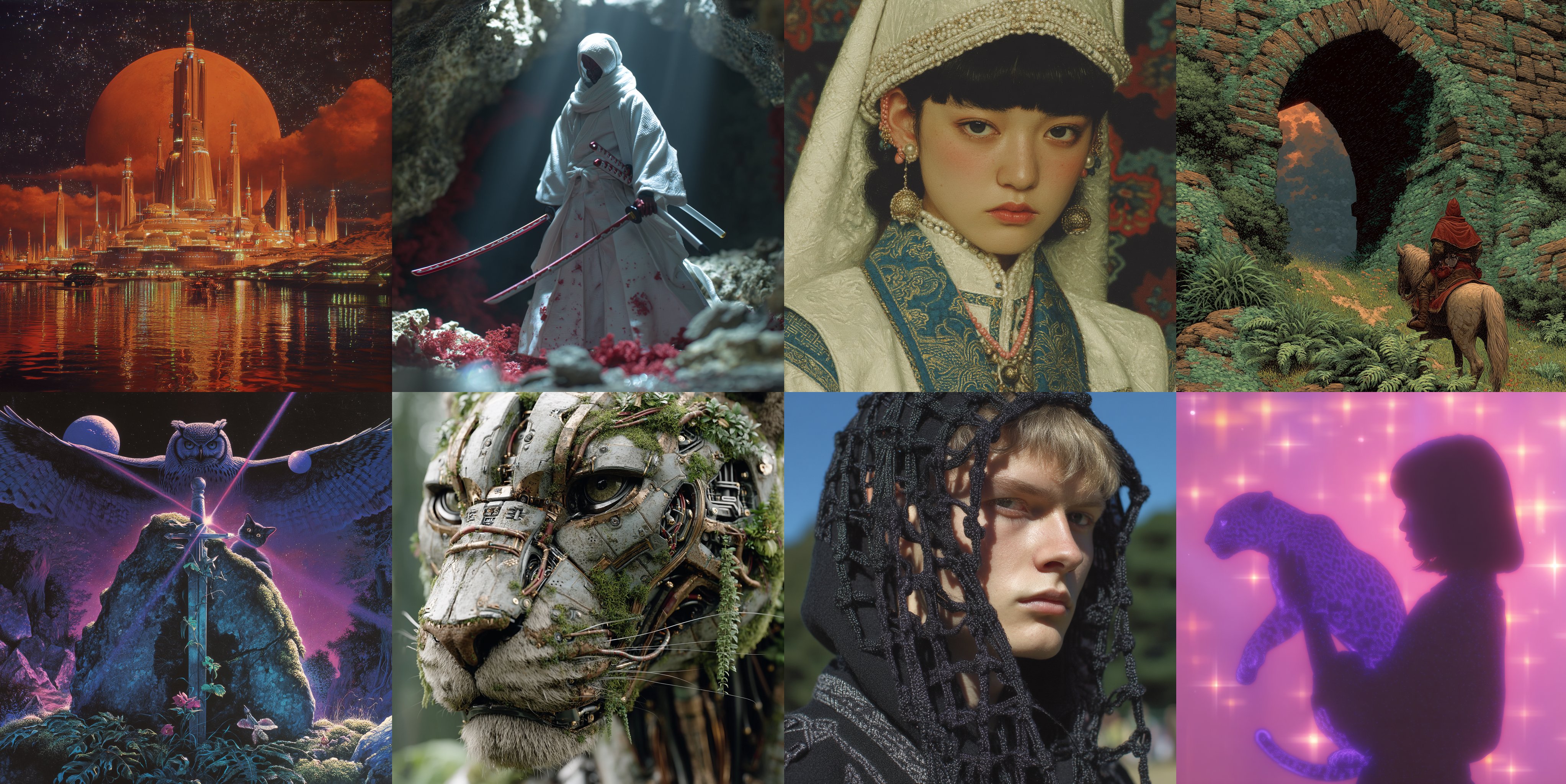
We're now beginning the alpha-test phase of our new V7 image Model. It's our smartest, most beautiful, most coherent model yet. Give it a shot and expect updates every week or two for the next two months.
aicreater retweeted

Gemini 2.5 is our most intelligent model + now our most in demand (we've seen an 80%+ increase in active users in AI Studio + Gemini API this month).
So today we’re moving Gemini 2.5 Pro into public preview in AI Studio with higher rate limits (free tier is still available!). We’re also setting usage records every day with the model in the @GeminiApp. All powered by years of investing in our compute infrastructure purpose-built for AI. More to come at Cloud Next, stay tuned.
aicreater retweeted

change of plans: we are going to release o3 and o4-mini after all, probably in a couple of weeks, and then do GPT-5 in a few months.
there are a bunch of reasons for this, but the most exciting one is that we are going to be able to make GPT-5 much better than we originally though. we also found it harder than we thought it was going to be to smoothly integrate everything. and we want to make sure we have enough capacity to support what we expect to be unprecedented demand.
aicreater retweeted
We're ending the RELAX-ATHON as we prepare our server clusters for a V7 model launch. We hope everyone has had a fun time with unlimited relax mode over the past few months, and we hope you'll begin having even more fun *soon*

aicreater retweeted

🎉 Excited to see everyone’s enthusiasm for deploying DeepSeek-R1! Here are our recommended settings for the best experience:
• No system prompt
• Temperature: 0.6
• Official prompts for search & file upload: bit.ly/4hyH8np
• Guidelines to mitigate model bypass thinking: bit.ly/4gJrhkF
The official DeepSeek deployment runs the same model as the open-source version—enjoy the full DeepSeek-R1 experience! 🚀
aicreater retweeted

The buzz over DeepSeek this week crystallized, for many people, a few important trends that have been happening in plain sight: (i) China is catching up to the U.S. in generative AI, with implications for the AI supply chain. (ii) Open weight models are commoditizing the foundation-model layer, which creates opportunities for application builders. (iii) Scaling up isn’t the only path to AI progress. Despite the massive focus on and hype around processing power, algorithmic innovations are rapidly pushing down training costs.
About a week ago, DeepSeek, a company based in China, released DeepSeek-R1, a remarkable model whose performance on benchmarks is comparable to OpenAI’s o1. Further, it was released as an open weight model with a permissive MIT license. At Davos last week, I got a lot of questions about it from non-technical business leaders. And on Monday, the stock market saw a “DeepSeek selloff”: The share prices of Nvidia and a number of other U.S. tech companies plunged. (As of the time of writing, some have recovered somewhat.)
Here’s what I think DeepSeek has caused many people to realize:
China is catching up to the U.S. in generative AI. When ChatGPT was launched in November 2022, the U.S. was significantly ahead of China in generative AI. Impressions change slowly, and so even recently I heard friends in both the U.S. and China say they thought China was behind. But in reality, this gap has rapidly eroded over the past two years. With models from China such as Qwen (which my teams have used for months), Kimi, InternVL, and DeepSeek, China had clearly been closing the gap, and in areas such as video generation there were already moments where China seemed to be in the lead.
I’m thrilled that DeepSeek-R1 was released as an open weight model, with a technical report that shares many details. In contrast, a number of U.S. companies have pushed for regulation to stifle open source by hyping up hypothetical AI dangers such as human extinction. It is now clear that open source/open weight models are a key part of the AI supply chain: Many companies will use them. If the U.S. continues to stymie open source, China will come to dominate this part of the supply chain and many businesses will end up using models that reflect China’s values much more than America’s.
Open weight models are commoditizing the foundation-model layer. As I wrote previously, LLM token prices have been falling rapidly, and open weights have contributed to this trend and given developers more choice. OpenAI’s o1 costs $60 per million output tokens; DeepSeek R1 costs $2.19. This nearly 30x difference brought the trend of falling prices to the attention of many people.
The business of training foundation models and selling API access is tough. Many companies in this area are still looking for a path to recouping the massive cost of model training. Sequoia’s article “AI’s $600B Question” lays out the challenge well (but, to be clear, I think the foundation model companies are doing great work, and I hope they succeed). In contrast, building applications on top of foundation models presents many great business opportunities. Now that others have spent billions training such models, you can access these models for mere dollars to build customer service chatbots, email summarizers, AI doctors, legal document assistants, and much more.
Scaling up isn’t the only path to AI progress. There’s been a lot of hype around scaling up models as a way to drive progress. To be fair, I was an early proponent of scaling up models. A number of companies raised billions of dollars by generating buzz around the narrative that, with more capital, they could (i) scale up and (ii) predictably drive improvements. Consequently, there has been a huge focus on scaling up, as opposed to a more nuanced view that gives due attention to the many different ways we can make progress. Driven in part by the U.S. AI chip embargo, the DeepSeek team had to innovate on many optimizations to run on less-capable H800 GPUs rather than H100s, leading ultimately to a model trained (omitting research costs) for under $6M of compute.
It remains to be seen if this will actually reduce demand for compute. Sometimes making each unit of a good cheaper can result in more dollars in total going to buy that good. I think the demand for intelligence and compute has practically no ceiling over the long term, so I remain bullish that humanity will use more intelligence even as it gets cheaper.
I saw many different interpretations of DeepSeek’s progress here in X, as if it was a Rorschach test that allowed many people to project their own meaning onto it. I think DeepSeek-R1 has geopolitical implications that are yet to be worked out. And it’s also great for AI application builders. My team has already been brainstorming ideas that are newly possible only because we have easy access to an open advanced reasoning model. This continues to be a great time to build!
[Original text: deeplearning.ai/the-batch/is… ]
aicreater retweeted

Hey folks, PixVerse V3.5 has arrived! 🚀 app.pixverse.ai/
⏱️ Create in a flash—under 10 seconds!
🎨 Unleash jaw-dropping anime magic.
📺 Crystal-clear 1080p HD that dazzles.
🌟 Step into the future of creation now!
aicreater retweeted
Day 12: Early evals for OpenAI o3 (yes, we skipped a number)
openai.com/12-days/?day=12


aicreater retweeted
Google 的新玩具 Whisk,可以简单的用图片组合生成新的图片,用户可以输入三类图片:
- 主题图片(subject)
- 场景图片(scene)
- 风格图片(style)
就可以基于输入生成新的风格突破
背后的技术技术原理:
- 后端使用Gemini模型自动为输入的图片生成详细描述
- 然后将这些描述输入到Google最新的图像生成模型Imagen 3中
- 系统会提取图片的关键特征,而不是完全复制
主要用途:
- 快速视觉创意探索
- 可以创作数字玩偶、珐琅徽章或贴纸等
- 适合进行快速创意迭代,而不是精确的图像编辑
目前该服务仅在美国地区开放使用,可以通过labs.google/whisk 访问。

We’re also launching our newest experiment in generative AI: Whisk. Instead of generating images with long, detailed text prompts, Whisk lets you prompt with images. Simply drag in images, and start creating → goo.gle/4iz2eTo

ALT Diagrammatic illustration showing how the subject of a woman, the scene of a beach and a specific illustration style combine into one image.