Home Grown is a national collaborative of funders committed to improving the quality of and access to home-based child care. #SolveChildCare

Joined April 2020
A child care system can only work if families and providers can actually access and navigate it. As we look toward a future of universal child care, Home Grown has worked with provider leaders and our advisory communities to define what an inclusive, responsive system should look like. We’ve created five principles that are a starting point for that shared vision. Principle 5: An effective system is welcoming and easy to navigate. The system should treat everyone with dignity. It should be accessible across all languages and types of care, with supportive entry points, low-barrier requirements, and flexible participation. Families and child care providers should never have to fight the system to be a part of it. A strong system meets people where they are rather than wearing them down with confusing processes, frustrating interactions, or unreasonable expectations. Personal data should only be collected for the purpose of improving care and access. The system should be seamlessly connected to other programs and resources that families may want and need, such as early intervention, food programs, and other comprehensive services. Learn more about the 5 principles at the heart of our vision for universal child care: homegrownchildcare.org/unive…
15
Home Grown’s vision for universal child care was developed with the people who know home-based child care best: provider leaders and members of our advisory communities. Together, we identified five principles to guide a truly universal system. Principle 4: Families and caregivers must have real power in shaping all levels of the system. Systems often work on paper, but not in real life. The child care system must be radically reimagined to be more transparent, responsive, and accountable to parents and providers. A strong system assumes good intent on the part of parents and providers, and seeks to give children all they need to thrive. Red tape should never interfere with providing care. Accountability structures should be attuned to the realities of child care, and focus on supporting providers, strengthening systems, and promoting retention—not punishment and restrictions. The primary measures of system success should be family satisfaction, child well-being, and provider stability. Learn more: homegrownchildcare.org/unive…
21
Head Start provides nearly 700,000 children and families with early learning, developmental support, and access to services that help children thrive. Under current federal regulations, children generally cannot be expelled from Head Start, and suspension is permitted only as a last resort after other interventions have been attempted. But the Administration’s proposed rule would remove these federal protections, allowing programs to establish their own discipline policies based on state and local requirements. In states without equivalent protections, children who need additional behavioral or developmental support could face suspension or expulsion instead of receiving the help they need. Natalie Renew, executive director of Home Grown, spoke with @The74 about what’s at stake: “Head Start, I would argue, in most cases, is a rare glimmer of where there’s both the rule and the resources. And I think what we’re going to see here is a pulling back of both.” She also warned about the consequences for children who have few alternatives for care: “This issue of suspension and expulsion — and some of the other financial implications — are going to mean that a lot of the children who can’t be served elsewhere will have nowhere.” Read more: the74million.org/zero2eight/… Read Home Grown’s full statement on the proposed Head Start rule: homegrownchildcare.org/_reso…
32
For over six decades, Head Start has provided high-quality early learning and comprehensive developmental supports to millions of children and families across the country. The Administration for Children and Families’s (ACF) proposed rule, “Reducing Federal Burden for Head Start Programs,” threatens to overhaul nearly the entire Head Start program and weaken federal standards that are core to the Head Start evidence-based model while eroding the administrative infrastructure that makes home-based care participation in Head Start possible. Home Grown (HG) urges ACF to withdraw the proposed rule to protect quality, safety, and equitable access to early childhood services. Read our full statement: homegrownchildcare.org/_reso…
28
On the last day of Hispanic Heritage Month, we’re re-sharing the stories of two child care providers who discovered their passion for organizing and community work. Leticia Barcenas, a family child care provider in Oregon, and Claudia Valentín, a Honduran and Garifuna community leader in New Orleans, took different paths to the United States. But both found their way to work that supports children, families, and their communities. Through their experiences, Leticia and Claudia show how child care can become a catalyst for community leadership, advocacy, and connection. From organizing to ensure providers have access to resources to creating educational opportunities for children and families, their stories reflect the many ways Hispanic and Latino communities support one another and build a stronger future together. Read their stories and reflections on Hispanic heritage: homegrownchildcare.org/home-…
27
Carmela Enriquez has been a family, friend and neighbor (FFN) caregiver for over 20 years. During #HispanicHeritageMonth, we’re excited to share her blog, “Hispanic Heritage Is Heritage for Everyone.” Carmela reflects on the essential role FFN caregivers play in their communities, the cultural traditions they share with the children in their care, and why all caregivers deserve to feel proud of their work. “Despite the fear and uncertainty that sometimes exist in our communities because of the political climate, I feel immense pride in the work we do every single day. That is why, during this Hispanic Heritage Month, I want to remind everyone that we leave a mark of love on the families we serve—whether they are Hispanic or not.” Read more: homegrownchildcare.org/hispa…
23
On Saturday, October 10, Daynne Glover, Home Grown team member, and Haneuska Vasquez, a New Jersey family child care provider, participated in the keynote panel at the 2026 @njaeyc Family Child Care Annual Conference. The panel, “Building Stronger Networks of Support for Family Child Care,” brought together family child care providers and leaders from organizations supporting family child care across New Jersey. The discussion focused on how organizations and providers can work together to strengthen connections, share resources, reduce barriers, and build more coordinated support for family child care providers. Building stronger networks means making inclusive, accessible resources available while centering providers’ voices and lived experiences. By recognizing providers as experts in their own work, organizations can better ensure that the policies, programs, and resources they develop reflect providers’ needs and priorities.
12
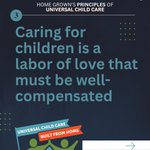
Home-based child care providers have sustained children and families across generations, but their work has long been overlooked, undervalued, and underpaid. With our advisory community of provider leaders, Home Grown has been shaping a five-principle vision for universal child care that recognizes and values the essential work of home-based providers. Principle 3: Caring for children is a labor of love that must be well-compensated. All child care providers deserve respect and recognition for their essential work. They also deserve stable and timely living wages that cover the full cost of care, as well as family-sustaining benefits. For many child care providers, this work is a calling, sustained by the belief that caring for children is among the most important things a person can do. That this work is priceless is no excuse for underpaying it. A strong system credits the wisdom and experience of providers. It offers opportunities for building community with peers and receiving coaching and training aligned with their interests and goals. Learn more about the 5 principles at the heart of our vision for universal child care: homegrownchildcare.org/unive…
25
The Build More Agenda, announced earlier this week, includes important policy recommendations to strengthen child care, recognizing it as essential to a thriving economy and addressing the barriers that keep supply low and prices high. Home Grown is proud to have contributed to the child care section of this plan, including the recommendation to remove zoning barriers that prevent home-based child care providers from opening and operating in residential communities. Home-based child care is the most prevalent form of child care in the U.S., yet providers can face zoning and building code barriers that make it harder to start or sustain a program. When we remove these barriers, we can help grow the supply of care families rely on while supporting providers who are building businesses in their own communities. States are already taking steps to address these barriers. Get started today by exploring Home Grown’s resource on states working to make it easier for home-based child care providers to operate where families live. Read Home Grown’s brief on removing housing barriers for home-based child care: homegrownchildcare.org/_reso… Read the Build More Agenda: harder.house.gov/sites/evo-s…
1
25
Every child deserves care that supports their growth and helps them thrive. Over the past several months, Home Grown has worked alongside provider leaders and our advisory communities to imagine what universal child care can look like when home-based child care is at the center. Principle 2: Children grow and thrive when they are safe, healthy, and nurtured. Every child deserves early learning experiences rooted in relationships, culture, and consistency to meet their unique needs. The care that shapes a child’s earliest years grows from truly knowing them: their language, their background, their strengths, and their challenges. Children who feel seen, comforted, and supported learn early that the world is safe and that they belong in it. Whatever support and resources a child needs should be available to them regardless of their care setting. Confusing administrative requirements and unfair penalties take valuable time and attention away from children. Parents and providers must have a central role in defining what best supports inclusive child development and safety across different settings. Learn more about the 5 principles at the heart of our vision for universal child care: homegrownchildcare.org/unive…
22
Azizah Arline, Family Child Care Educator and member of Home Grown’s Provider Insights Panel, is featured in @njaeyc’s inaugural digital magazine issue with her article, “Grow: Creating Warm, Welcoming Spaces in Home-Based Programs.” Azizah shares how she builds trust with families, supports children’s learning through play, and creates small moments that help them feel like they belong. “Creating a welcoming environment is not about having fancy decorations, expensive materials, or a perfect space. It is about the relationships we build and how we make children and families feel when they walk through the door.” Read more: online.fliphtml5.com/NJAEYC/…
17
Every family should have access to child care they trust, in the setting that works for them. Home Grown has developed a shared vision for universal child care with provider leaders and our advisory communities. Together, we identified five principles for a truly universal system. Principle 1: Everybody wins when child care is a right, not a privilege Child care should be universal and guaranteed because no family should have to struggle to find care they trust, no child care provider should struggle to offer it, and no society can flourish without it. Every family deserves affordable, reliable, nurturing child care in the setting that works for them: a school setting, a child care center, a family child care home, their own home, or the home of a family member, friend or neighbor. That care should be accessible regardless of income, language, schedule, employment, immigration status, disability status, or where you live. When every family can count on child care, the whole community is stronger. Learn more about the 5 principles at the heart of our vision for universal child care: homegrownchildcare.org/unive…
1
20
Last week, Home Grown’s team joined Arizona partner Candelen for their 50th anniversary Family, Friend & Neighbor (FFN) Summit in Phoenix, Arizona. Alexandra Patterson, Home Grown’s Deputy Executive Director, participated as a panelist during the summit; Sarah Ocampo, Director of Programs; Joyceline Felix, Senior Program Manager, Community Partnerships; and home-based child care provider leader Susan Randolph were also in attendance. We were so glad to be included in this gathering of FFN caregivers, community leaders, advocates, and early childhood partners, coming together to listen, learn, and elevate the lived experiences of the caregivers themselves.
24
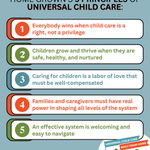
Universal child care is gaining momentum. States and cities are taking action, and the case for treating child care as a public good — something we all contribute to and all benefit from — is stronger than it has been in decades. At Home Grown, we believe this moment is real, and we intend to help shape it. But a universal child care system that overlooks the providers and caregivers families already rely on most is not truly universal. Home-based child care — especially care provided by family, friends, and neighbors (FFN) — is the most prevalent care arrangement in the country. Over the past several months, Home Grown has worked alongside provider leaders and our advisory communities to develop a shared vision for a universal child care system that centers home-based child care providers. Together, we identified five principles. Learn more: homegrownchildcare.org/unive…
13
After Hurricane Helene devastated communities across Western North Carolina in 2024, home-based child care providers faced significant losses — including damage to their homes and child care programs. Yet many were eager to reopen because families depended on them. Community organizations stepped in with the fast, flexible assistance providers needed. Through the Home-Based Child Care Emergency Fund for Severe Weather and National Disaster Response, Home Grown worked with local leaders to provide 800–1,500 grants to 89 caregivers across the region. As communities prepare for future disasters, home-based child care providers must be part of emergency response and recovery planning. “Home-based providers deserve to be elevated and invested in during these times of crisis, because they’re not just standing back up their own business, they are essential infrastructure that shows up for children, for families, and for other care providers when they need it,” said Natalie Renew, Home Grown’s Executive Director. Read more in The Daily Yonder: dailyyonder.com/childcare-is… 🎥 Watch Home Grown’s documentary, After the Storm: A Child Care Crisis Revealed: homegrownchildcare.org/_reso…
21
New Mexico is dismantling two of the biggest barriers to growing the supply of home-based child care (HBCC): low reimbursement rates and restrictive zoning. With nearly a third of infants and toddlers attending home-based child care, HBCC is the backbone of America’s infant-toddler care system. Families choose home-based care because it meets their needs and preferences — providers may be their neighbors, speak their language, or offer weekend or overnight care. The availability of HBCC is especially important in rural and immigrant communities and for parents working nontraditional shifts. But low reimbursement rates and restrictive zoning can make it difficult for providers to open and sustain home-based programs. To address these barriers, New Mexico has: 🔸 started offering reimbursement rates that are among the highest in the country for high-quality, home-based infant and toddler care — as much as $2,175 a month, a 58 percent increase from previous rates 🔸 passed a law requiring that all licensed and registered child care homes be treated as residential, clearing roadblocks unrelated to the quality of care Since New Mexico announced universal child care a year ago, the state has licensed more than 70 additional home-based providers, creating more than 700 new child care slots. Learn more from Home Grown Executive Director Natalie Renew: hechingerreport.org/opinion-…
27
“The cost for childcare for him is about the same as our mortgage.” Across the U.S., the rising cost of child care has made family support even more critical for parents who may not otherwise be able to afford care. According to Child Care Aware of America, the average annual cost of child care for children under 5 in the U.S. was $13,184 in 2025. In some cases, child care costs can rival the price of rent or college tuition. For many families, grandparents offer an alternative. Parents may prefer turning to grandparents because of shared parenting philosophies, convenience and familiarity — and because care may come at little or no financial cost. AARP estimates that grandparents provide around $731 billion worth of unpaid caregiving each year. Grandparents provide essential care for young children, but that care is not without cost. Grandparent caregivers may take on direct expenses and give up income or other opportunities to provide care. Our child care system must recognize the value of this caregiving and ensure that grandparent caregivers have the resources and support they need to care for themselves and the children they love. Read more from NPR: npr.org/2026/09/20/nx-s1-596…
35
For families who work nights and early mornings, finding child care they can trust can be a challenge. Home-based child care providers are often the ones stepping in to meet that need. Juana Grisel Peña runs Al Despertar, a licensed, home-based child care program in the Bronx that provides overnight care Monday through Friday. From about 6 p.m. to 9 a.m., she and her staff care for up to six children whose parents work late-night or overnight shifts. “I want the parents to go to work and be in peace,” Peña said. “I remember when I had my kids I didn’t feel that peace when they were in someone else’s care and I don’t want anyone to feel that way. I understand it’s not easy.” The photographs in this article, taken at Peña’s apartment during one of her overnight shifts, offer a glimpse inside one provider’s experience operating around-the-clock care, revealing a side of childcare that’s rarely seen. the74million.org/zero2eight/…
1
36
For parents who work evenings, overnight or on weekends, child care can’t always fit neatly into traditional hours. That’s where home-based child care providers often step in. The vast majority of nontraditional-hour care is provided in homes, through a mix of licensed and unlicensed caregivers. In these smaller, more intimate settings, providers often build close relationships with the families they serve — relationships rooted in trust and familiarity. That trust can make it easier for providers to respond when a family’s schedule changes or they need extra support. As Home Grown Executive Director Natalie Renew explains, “In a home-based environment, children are an extension of the family.” Read more: the74million.org/zero2eight/…
24
FFN care is the most common form of child care across North Carolina and the country — and for many families, it’s a first choice. In Transylvania County, North Carolina, Smart Start’s FFN network includes 73 providers, most of them grandparents, caring for around 180 children under 5. Thirty providers are participating in Home Grown’s Thriving Providers Project (TPP), receiving compensation for the care they provide over 18 months. Read more from EdNC about the Transylvania County pilot and the caregivers making this work possible: ednc.org/8-4-2026-a-transylv…
34