

100+ years as a leading international relations journal. Published by @ChathamHouse & @OUPAcademic. Follow us on Bluesky: https://xitter.cf/t.co/EvAqgrsG24
London
Joined January 2014
- Tweets14K
- Following3.1K
- Followers53.6K
- Likes8.1K






Pinned Tweet
📢 NEW ISSUE ALERT!
The September issue of IA is out now! It features:
🚁 11 articles in a special section on Jus ad vim at 20: on the continued relevance of force-short-of-war guest edited by @ChristianBraun, Daniel Brunstetter & Esther Reed
📖 6 articles on topics like People’s Tribunals, African security, digital non-alignment and more
💰 A policy paper on direct funding for indigenous organizations
📚 14 reviews of the latest International Relations books
Check it out here: academic.oup.com/ia/issue/10…

What is ‘digital non-alignment’ and how has it emerged as a leading framework for technology policy across Europe and Asia?
Read about India’s approach to navigating the technological competition between the US and China in @smalcomson’s #openaccess article: doi.org/10.1093/ia/iiag084

In their latest article, @DrLauraEsq and Karia Hartung focus on the gendered erasures that ‘limited force’ can permit in our time of limitless war, through a feminist evaluation.
Read their critique of jus ad vim #openaccess here: doi.org/10.1093/ia/iiag118

When military force or a ‘warrior’ mindset is applied to peace enforcement, counterterrorism, stabilization or supporting civil authorities, it can lead to ethical confusion and misuse of lethal force.
Read Shannon Brandt Ford’s analysis of Australia’s intervention in the Solomon Islands in her #openaccess article: doi.org/10.1093/ia/iiag112

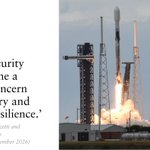
A combined international law and just war theory framework to distinguish force, limited force and 'soft war' acts in space is needed to determine proportionate responses, writes @Louisa_hm1 and @LonPeperkamp.
Read their article now: doi.org/10.1093/ia/iiag127

‘Transferring sophisticated autonomous and AI-enabled weapon systems represents a maximal means for exerting force without implicating one's own military or state,’ writes @WoodNathanG.
Read his analysis of the Russo-Ukrainian war: doi.org/10.1093/ia/iiag126

‘The change away from project funding to a more efficient contract funding model is urgent and necessary,’ writes Patrick Cunningham in his latest IA policy paper.
Read his policy recommendations for direct funding of indigenous organizations here: doi.org/10.1093/ia/iiag124

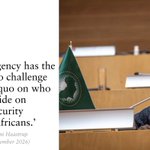
How does the EU’s shifting foreign policy doctrine affect African security?
@UeliStaeger and Toni Haastrup’s #openaccess article shows how the European Peace Facility constrains African Union autonomy despite claims of partnership. Read more: doi.org/10.1093/ia/iiag119

Is ‘tit-for-tat’ proxy warfare justifiable? Focusing on Russia's use of the Wagner Group as a proxy in Africa and its ‘grey zone’ operations in Ukraine, James Pattison finds that measures of vis are often abused.
Read his #openaccess article: doi.org/10.1093/ia/iiag122

In his guest edited special section, @ChristianBraun and Jonathan David Thompson analyse the ethics of proxy warfare through the lens of jus ad vim.
Read their examination of the March 23 Movement: doi.org/10.1093/ia/iiag123

Drawing on ten cases, Aldo Zammit Borda shows how People’s Tribunals have constructed their legitimacy not in isolation, but in reference to formal justice mechanisms.
Learn more in our latest Editors’ Choice article: doi.org/10.1093/ia/iiag089

Have you checked our September issue yet? What are you waiting for!
📜 The latest issue features a special section on jus ad vim, with different perspectives on the ethics of force-short-of-war. It also includes 6 research articles, a policy paper and 14 book reviews.

How does the US–China rivalry impact Australia’s strategic alignment with the US?
Find out in Zanxu Pu’s latest article in our September issue: doi.org/10.1093/ia/iiag121

Jus ad vim (limited force) does not prevent escalation, but rather shifts the burden to political decision-making, asserts @AgatKleczkowska in her #openaccess article.
Read more in our latest special section: doi.org/10.1093/ia/iiag052

France's withdrawal from the Sahel during 2022–2024 marked a transitional securitization era, what logics justified the use of armed drones in the region?
Read Daniel R Brunstetter’s #openaccess article in his guest-edited special section: doi.org/10.1093/ia/iiag060

Gender expertise is often marginalized as a ‘political’ or ‘subjective’ form of knowledge despite recognition of the gendered impacts of scientific and technical problems, write Mariel Verroya, @DaviesSaraE and Jessica Kirk.
Read more in their latest #openaccess article: doi.org/10.1093/ia/iiag058

In his latest article, James M. Page questions the lawfulness of jus ad vim as it falls outside the UN’s self-defence authorization.
Read about how limited force can blur the line between war and peace in our latest special section: doi.org/10.1093/ia/iiag117

‘If jus ad vim is to provide to provide practical guidance, it must account for how such force can be terminated responsibly and how political actors can facilitate peace’ write @ChristianBraun, Daniel Brunstetter & Esther Reed.
Read their introduction: doi.org/10.1093/ia/iiag125

In his latest article, Kaushik Roy connects ancient Indian grand strategy with jus ad vim, using Kautilya's concept of tusnimyuddha (silent war) to explain diplomacy and de-escalation in India's counterterrorism, cyber-deterrence and post-conflict policy.
doi.org/10.1093/ia/iiag113

Is there a feminist theory of the ethics of using jus ad vim (limited force)?
According to @DrLauraEsq and Karia Hartung, 'there is not, and cannot be, a feminist jus ad vim.' Read their #openaccess article in our latest special section: doi.org/10.1093/ia/iiag118

How should militaries respond to hostile acts in space without escalating to war?
@Louisa_hm1 and @LonPeperkamp argue that counter-space operations require a combined international law and just war theory framework in their latest article: doi.org/10.1093/ia/iiag127
