

International experts on cannabis that provides accurate information to guide decisions. Increased use of cannabis risks serious medical & social consequences.
Joined April 2021
- Tweets1.4K
- Following487
- Followers577
- Likes277




Cannabis-induced psychosis represents a significant and growing public health concern that requires urgent attention from clinicians, researchers, and policymakers.
media.sciltp.com/articles/25…
🚨 NEW RESEARCH | ADOLESCENT SUBSTANCE USE & MISSED OPPORTUNITIES FOR TREATMENT
A new study in the Journal of Pediatric Surgery highlights a critical gap in connecting injured adolescents who screen positive for substance use with treatment and support. 🏥🧠
🔎 Among 683 injured adolescents ages 12–17:
• Only 63.4% received substance-use screening
• Of those screened, 20.3% had at least one positive result
• Yet only 36.4% of adolescents with a positive screen had a documented referral to substance-use support services
• Cannabis and alcohol use were associated with referrals in the initial analysis
The researchers emphasize that trauma encounters can provide an important opportunity to identify substance use early and connect young people with appropriate intervention and treatment.
🔗 Read the study:
sciencedirect.com/science/ar…
📖 Journal of Pediatric Surgery (2026)
DOI: 10.1016/j.jpedsurg.2026.163461
#IASIC #YouthSubstanceUse #Cannabis #AdolescentHealth #EarlyIntervention #AddictionTreatment #YouthPrevention #PediatricHealth #PublicHealth
🚨 NEW RESEARCH | CANNABIS USE & BREASTFEEDING
A new study published in Breastfeeding Medicine examined cannabis use, perceptions of risk, clinical counseling, and breastfeeding initiation using multistate Pregnancy Risk Assessment Monitoring
System data. 🤱🧠
🔎 Among respondents reporting perinatal cannabis use, researchers found:
• Breastfeeding initiation was lowest among those reporting cannabis use both prenatally and postpartum (71.9%)
• Initiation was highest among those reporting postpartum-only cannabis use (89.5%)
• Breastfeeding initiation also differed based on whether patients received clinical advice regarding cannabis use while breastfeeding
🩺 The authors emphasize the importance of clear clinician counseling that discourages cannabis use while breastfeeding while continuing to support breastfeeding.
🔗 Read the study:
journals.sagepub.com/doi/abs…
📖 Breastfeeding Medicine (2026)
DOI: 10.1177/15568253261490303
#IASIC #CannabisResearch #Breastfeeding #MaternalHealth #InfantHealth #PerinatalHealth #CannabisEducation #PublicHealth

🚨 NEW RESEARCH | ADOLESCENT THC & LATER OPIOID RESPONSES
A new preclinical study in rats raises important questions about how THC exposure during adolescence may produce lasting changes in brain reward systems. 🧠
🔎 Researchers found that adolescent THC exposure:
• Increased heroin reward later in adulthood
• Increased seeking of the opioid remifentanil, with particularly strong effects in female rats
• Altered activity in brain networks involved in reward and stress
• Produced behavioral and neural effects that differed by sex
Importantly, this was an animal study, so the findings cannot establish that adolescent THC exposure causes later opioid addiction in humans. However, the researchers say the results support further investigation into biological mechanisms that may contribute to vulnerability to opioids following adolescent THC exposure.
🔗 Read the study:
sciencedirect.com/science/ar…
📖 Addiction Neuroscience (2026)
DOI: 10.1016/j.addicn.2026.100282
#IASIC #CannabisResearch #THC #AdolescentBrain #BrainDevelopment #Opioids #AddictionScience #Neuroscience #YouthPrevention
🚨 NEW RESEARCH | HEALTH CARE EXPERIENCES & MARIJUANA USE
A new study published by SAGE examined nationally representative data from 6,665 U.S. adults to explore how experiences with the health care system relate to marijuana use and perceptions.
🔎 Researchers found that:
• Lower perceived quality of care was associated with a greater likelihood of reporting marijuana use for medical or combined medical/recreational reasons.
• Fewer opportunities to ask health care providers questions were also associated with these patterns of use.
• Lower trust in the health care system was associated with medical and combined marijuana use and with a lower likelihood of perceiving marijuana as harmful.
🩺 The authors conclude that strengthening patient-provider communication, trust, and evidence-based educationmay help people make more informed decisions about marijuana use.
🩺 The authors conclude that strengthening patient-provider communication, trust, and evidence-based education may help people make more informed decisions about marijuana use.
📖 How Health Care Experiences Shape Marijuana Use Motivations and Perceptions Among U.S. Adults
DOI: 10.1177/25785125261490171
#IASIC #CannabisResearch #Marijuana #PatientEducation #Healthcare #PublicHealth #CannabisScience #InformedDecisionMaking
🎓 NEW RESEARCH | CANNABIS, CHRONIC PAIN & EMOTIONAL HEALTH
A 2026 Boston University thesis examined cannabis use among adults living with chronic post-surgical pain, looking at pain, stress, anxiety, depression, emotional functioning, cortisol, and brain activity.
🔎 Among 63 adults, preliminary findings suggested differences in the relationship between anxiety, emotional functioning, and cannabis use. Researchers found no significant differences in hair cortisol or the brain measures examined.
Importantly, the author notes the small sample size and emphasizes that more research is needed to understand how cannabis use, stress, and pain interact—including potential benefits and risks.
🔗 Read the research:
open.bu.edu/items/7b11812d-f…
📖 Cannabis Use in a Chronic Post-Surgical Pain Population
Boston University, 2026
#IASIC #CannabisResearch #ChronicPain #CannabisScience #MentalHealth #PainManagement #Cannabinoids
🚨 NEW RESEARCH | PRENATAL CANNABIS EXPOSURE & THE DEVELOPING BRAIN
A new study published in NeuroImage found measurable differences in brain structure among newborns with prenatal cannabis exposure. 🧠👶
Researchers used MRI scans during the first month of life and compared 18 cannabis-exposed newborns with 21 unexposed newborns. Importantly, the study excluded reported alcohol, tobacco, and other substance use.
🔎 Researchers found significantly lower brain surface area in two right occipitotemporal regions—the fusiform and lingual gyri—among cannabis-exposed newborns. No differences in cortical thickness were detected in the regions studied.
The authors concluded that differences associated with prenatal cannabis exposure were detectable within the first month of life.
🔗 Read the study:
sciencedirect.com/science/ar…
📖 NeuroImage (2026)
DOI: 10.1016/j.neuroimage.2026.122242
#IASIC #PrenatalCannabis #Pregnancy #CannabisResearch #BrainDevelopment #Neurodevelopment #MaternalHealth #CannabisScience #PublicHealth
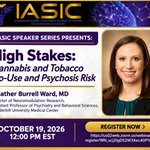
🧠 IASIC Speaker Series Presents: “High Stakes: Cannabis and Tobacco Co-Use and Psychosis Risk”
Join Heather Burrell Ward, MD, Director of Neuromodulation Research and Assistant Professor of Psychiatry and Behavioral Sciences at Vanderbilt University Medical Center, for the October IASIC Speaker Series.
Dr. Ward will examine the growing evidence on the co-use of cannabis and tobacco, its association with psychosis risk, and its impact on cognitive performance. This evidence-based discussion will provide valuable insights for clinicians, researchers, policymakers, and prevention professionals seeking to better understand the mental health implications of concurrent cannabis and tobacco use.
A nationally recognized investigator, Dr. Ward earned her medical degree from Duke University School of Medicine and completed psychiatry residency training at Brigham & Women’s Hospital–Harvard Medical School, followed by fellowship training in behavioral neurology and noninvasive brain stimulation at Harvard Medical School. She was also named a 2021 STAT News Wunderkind for her contributions to neuroscience and addiction research.
📅 October 19, 2026 ⏰ 12:00 PM EST
Register here: us02web.zoom.us/webinar/regi…
Please register, share, and invite others to join us!
#IASIC #CannabisResearch #Psychosis #Cannabis #Tobacco #AddictionScience #Neuroscience #MentalHealth #BrainHealth #SubstanceUseDisorder #MedicalEducation

🚨 NEW RESEARCH | CANNABIS & PSYCHOSIS IN YOUNG PEOPLE
A newly published chapter from Bristol University Press examines cannabis use and psychosis among young people in Trinidad.
🧠 The authors describe cannabis as a key modifiable risk factor for psychotic disorders and report that:
• Early initiation of cannabis use was strongly associated with increased psychosis risk
• Frequent cannabis use was associated with increased risk
• Earlier and more frequent use was associated with an earlier onset of psychotic symptoms
The findings reinforce the importance of youth prevention, education, and early intervention to protect developing brains.
🔗 Read the chapter:
bristoluniversitypressdigita…
📖 Cannabis use and risk of psychosis among young people in Trinidad
Bristol University Press, September 29, 2026
DOI: 10.51952/9781447382300.ch013
#IASIC #CannabisAndPsychosis #CannabisResearch #Psychosis #YouthMentalHealth #CannabisScience #YouthPrevention #MentalHealth #PublicHealth

🚨 NEW RESEARCH | CANNABIS USE DISORDER & HOSPITALIZATIONS
A new study published in Public Health examined more than 216 million inpatient discharges across 18 U.S. statesfrom 2005–2023.
A new study published in Public Health examined more than 216 million inpatient discharges across 18 U.S. states from 2005–2023.
A new study published in Public Health examined more than 216 million inpatient discharges across 18 U.S. states from 2005–2023.
📈 The proportion of hospital discharges with a cannabis use disorder (CUD) diagnosis code more than tripled, rising from 1.02% in 2005 to 3.15% in 2023.
🔎 In 2023, CUD coding was:
• 9.33% among adolescents ages 10–19—the highest of any age group
• 4.19% among males vs. 2.32% among females
• 5.43% among non-Hispanic Black patients
The researchers concluded that CUD-coded inpatient discharges increased substantially over time, highlighting the need for screening, surveillance, prevention, and connections to treatment.
🔗 Read the study:
sciencedirect.com/science/ar…
📖 Public Health (2026)
DOI: 10.1016/j.puhe.2026.106500
#IASIC #CannabisUseDisorder #CannabisResearch #CannabisScience #YouthHealth #Addiction #PublicHealth #Prevention
🚨 NEW RESEARCH | WOMEN, CANNABIS & POLYSUBSTANCE USE
A new study published in Addictive Behaviors Reports examined substance-use patterns among 2,296 U.S. women ages 18–70 who reported substance use in the previous 30 days.
🔎 Key findings:
• About 22% reported cannabis use on 16+ days per month
• More than half used more than one substance
• Researchers identified a group characterized by heavy cannabis use with some alcohol use
• Substance-use patterns varied significantly across age groups
📚 The researchers emphasize that polysubstance use, age, and life stage should be considered when developing prevention, early intervention, and treatment strategies for women.
🔗 Read the study:
sciencedirect.com/science/ar…
📖 Addictive Behaviors Reports (2026)
DOI: 10.1016/j.abrep.2026.100748
#IASIC #CannabisResearch #CannabisScience #WomensHealth #PolysubstanceUse #SubstanceUse #Prevention #PublicHealth
Two new case reports highlight a potential cardiovascular risk associated with cannabis use.
Researchers reported two young men who experienced ST-elevation myocardial infarctions (STEMIs) following cannabis consumption. One patient died after cardiac arrest; the second, who also used cocaine, had coronary thrombosis requiring intervention.
The authors conclude that cannabis may act as a trigger for acute myocardial infarction, including in young adults without traditional cardiovascular risk factors, while emphasizing that larger prospective studies are needed.
Read the report:
reference-global.com/article…
#IASIC #CannabisResearch #CannabisScience #HeartHealth #HeartAttack #CardiovascularHealth #MyocardialInfarction #PublicHealth #PatientSafety

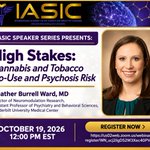
🧠 IASIC Speaker Series Presents: “High Stakes: Cannabis and Tobacco Co-Use and Psychosis Risk”
Join Heather Burrell Ward, MD, Director of Neuromodulation Research and Assistant Professor of Psychiatry and Behavioral Sciences at Vanderbilt University Medical Center, for the October IASIC Speaker Series.
Dr. Ward will examine the growing evidence on the co-use of cannabis and tobacco, its association with psychosis risk, and its impact on cognitive performance. This evidence-based discussion will provide valuable insights for clinicians, researchers, policymakers, and prevention professionals seeking to better understand the mental health implications of concurrent cannabis and tobacco use.
A nationally recognized investigator, Dr. Ward earned her medical degree from Duke University School of Medicine and completed psychiatry residency training at Brigham & Women’s Hospital–Harvard Medical School, followed by fellowship training in behavioral neurology and noninvasive brain stimulation at Harvard Medical School. She was also named a 2021 STAT News Wunderkind for her contributions to neuroscience and addiction research.
📅 October 19, 2026 ⏰ 12:00 PM EST
Register here: us02web.zoom.us/webinar/regi…
Please register, share, and invite others to join us!
#IASIC #CannabisResearch #Psychosis #Cannabis #Tobacco #AddictionScience #Neuroscience #MentalHealth #BrainHealth #SubstanceUseDisorder #MedicalEducation

New research in JAAOS Global Research & Reviews examined whether perioperative cannabis use reduced pain or opioid use after ankle fracture surgery.
Among 259 patients, cannabis users reported longer opioid use before adjustment, but cannabis use was not independently associated with opioid duration after accounting for other factors. Researchers also found no difference in pain scores or opioid dosage.
The authors concluded: “Our findings do not support cannabis as an effective standalone analgesic in this population.”
Read the study:
journals.lww.com/jaaosglobal…
#IASIC #CannabisResearch #CannabisScience #PainManagement #Opioids #Orthopedics #PatientSafety #PublicHealth

New research in Clinical Toxicology examined blood cannabinoid levels in emergency department patients with cannabinoid hyperemesis syndrome (CHS) compared with patients experiencing acute cannabis intoxication.
Researchers found no significant differences in THC, THC metabolites, or other measured cannabinoids between the two groups—suggesting that acute CHS episodes may not simply be explained by higher cannabinoid concentrations or accumulation.
More research is needed to understand why some cannabis users develop this serious condition.
Read the study:
tandfonline.com/doi/full/10.…
#IASIC #CannabinoidHyperemesisSyndrome #CHS #CannabisResearch #CannabisScience #ClinicalToxicology #EmergencyMedicine #PublicHealth

🚨 NEW RESEARCH | ADOLESCENT SUBSTANCE USE & CHRONIC PAIN
A new study published in Drug and Alcohol Dependence Reports examined alcohol use among adolescents ages 14–19 receiving care for chronic pain.
🔎 Key findings among 243 adolescents:
• 32.1% reported lifetime alcohol use
• 30.5% reported past-year alcohol use
• Lifetime cannabis use was associated with 5.7 times the odds of more frequent past-year alcohol use
• Older age and perceiving alcohol as less risky were also associated with more frequent alcohol use
• Higher depressive symptoms were associated with lifetime alcohol use
📚 The findings highlight the importance of addressing risk perception, mental health, and polysubstance use when developing prevention and intervention strategies for adolescents with chronic pain.
🔗 Read the study:
sciencedirect.com/science/ar…
📖 Drug and Alcohol Dependence Reports (2026)
DOI: 10.1016/j.dadr.2026.100481
#IASIC #CannabisResearch #YouthPrevention #AdolescentHealth #SubstanceUse #ChronicPain #AlcoholResearch #PublicHealth
New research explores the complex relationship between cannabinoids, the microbiome, and melanoma.
This 2026 review examines the cannabinoid system in normal and diseased skin and research into cannabinoids in metastatic melanoma and immunotherapy. Importantly, the authors emphasize that more research is needed, including investigation of non-psychoactive cannabinoids such as CBD and CBG.
Read the review:
bpspubs.onlinelibrary.wiley.…
#IASIC #CannabisResearch #Cannabinoids #Melanoma #CancerResearch #Immunotherapy #MedicalCannabis #CannabisScience #PublicHealth

New research continues to examine the relationship between cannabis use and mental health.
Understanding these risks—and communicating them clearly—is essential for prevention, informed decision-making, and protecting public health.
Read the research:
proquest.com/docview/3385901…
#IASIC #CannabisResearch #CannabisScience #MentalHealth #PublicHealth #CannabisEducation #Prevention
🚨 NEW JAMA REPORT: Cannabis Use Is Rising—and So Are Concerns About the Health Risks
A new article published October 9, 2026, in JAMA highlights a troubling increase in marijuana use among American adults, particularly young adults.
📈 Key Findings:
🔹 42% of young adults ages 19–30 reported using marijuana in the past year in 2025, up from 31% in 2015.
🔹 Nearly 12% of young adults reported using marijuana daily in the past month.
🔹 Cannabis Use Disorder is a growing concern. Among people who used marijuana in 2024, approximately 36% of males and 27% of females met criteria for cannabis use disorder.
🔹 High-potency THC increases risks, including addiction and psychosis, particularly among younger adults.
🔹 Nearly 200,000 emergency department visits involving cannabinoid hyperemesis syndrome (CHS) occurred between January 2023 and May 2026.
⚠️ Researchers also highlighted concerns about schizophrenia, impaired driving, cardiovascular complications, and the effects of THC on the developing brain.
As marijuana becomes more accessible and socially accepted, public education about its risks is more important than ever.
📖 Read the JAMA article:
jamanetwork.com/journals/jam…
#ISAIC #CannabisAwareness #THCRisks #BrainHealth #CannabisUseDisorder #Prevention #PublicHealth

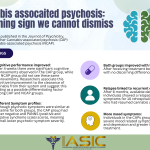
A recent study published in the Journal of psychiatry sought to understand whether Cannabis-associated psychosis (CAP) differs from Non-cannabis-associated psychosis (NCAP). Researchers focused on the first psychotic episode and their findings provide some hope and warning sign we cannot dismiss.
The study included a group of 119 men hospitalized for new-onset psychosis: 66 with confirmed cannabis exposure, designated CAP group and 53 without, designated NCAP.
All patients were evaluated upon arrival using cognitive testing, electroencephalography (EEG), and several symptom scales.
The following findings compare results at admission and after 4 weeks of being hospitalized in a drug-free environment:
Cognitive performance improved: After 4 weeks there were significant cognitive improvements observed in the CAP group, while the NCAP group did not see these same improvements. Researchers associate this cognitive improvement to the clearance of cannabis from their system and suggest this finding as a possible differentiating factor among CAP and NCAP groups.
Different Symptom profiles: Although psychotic symptoms were similar at baseline for both groups, the CAP group had lower negative and PANNS (positive and negative syndrome scale) scores, meaning overall lower psychotic-symptom severity.
More mood symptoms: Individuals in the CAPs group showed more severe mood related symptoms, worse mania and depression and greater improvement after treatment.
Both groups improved with treatment: After receiving treatment both groups improved with no discerning differences.
Brain activity differed: Researchers interpreted the EEG differences between PSD exponent and E/I balance at follow up as a possible tool to differentiate NCAP and CAP groups.
Relapse linked to recurrent cannabis use: After 6 months, available data for 16 CAP individuals showed a relapse of psychotic symptoms for 10 rehospitalized participants who had resumed cannabis use.
Overall, testing after cannabis cessation showed improvements in the CAP group.
These findings offer both hope and a clear warning. Individuals with CAP may experience meaningful improvements after stopping cannabis use and receiving treatment. However, the risk of relapse raises the concern of later development of chronic psychotic disorder, meaning that a single episode cannot be dismissed as temporary.
Source: D’Souza, D. C., Cortes-Briones, J., Raj, J., Ganesh, S., Vidya, K. L., Krishna Tikka, S., … Goyal, N. (2026). Cognitive, Electrophysiological, and Behavioral Presentation of First-Episode Psychosis With or Without Cannabis Exposure. American Journal of Psychiatry, 183(8), 552–561. doi.org/10.1176/appi.ajp.202…

Cannabis-associated psychosis is a warning sign we cannot afford to dismiss.
New research highlights important differences in symptom patterns and recovery—and shows that relapse to cannabis use was linked to recurrent psychotic symptoms. Understanding these outcomes is essential for prevention, early intervention, treatment, and informed public health policy.
Please read, share, and help raise awareness of the science.
Source: psychiatryonline.org/doi/10.…
#IASIC #CannabisScience #CannabisPsychosis #Psychosis #MentalHealth #CannabisResearch #PublicHealth #Prevention #CannabisUse #CannabisEducation
