
⚕️Critical Care & Neurocritical Care Physician | Research | Evidence-Based Medicine
Joined January 2025
- Tweets302
- Following1.2K
- Followers1.2K
- Likes2K




🧠 Decompressive Craniectomy in Moderate-to-Severe TBI: Does It Improve Outcomes?
📊 Systematic Review & Meta-analysis
• 8 RCTs | N = 1,326 patients
🔹 Key Findings:
• Unfavourable neurological outcomes: RR 1.00 (95% CI 0.83–1.20)
• Overall mortality: RR 0.84 (95% CI 0.59–1.19)
• Possible mortality benefit in refractory intracranial hypertension.
• No demonstrated improvement in functional outcomes.
⚠️ Clinical Implications:
Decompressive craniectomy may improve survival in selected patients, potentially at the cost of severe disability.
🎯 Bottom Line: No overall mortality or functional benefit demonstrated. Individualized decision-making is essential.
📚 Critical Care and Resuscitation (2026)
sciencedirect.com/science/ar…
#NeurocriticalCare #TBI #TraumaticBrainInjury #Neurosurgery #CriticalCare #IntensiveCare #EvidenceBasedMedicine


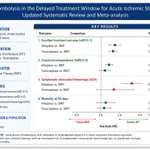
🧠 Late-Window Thrombolysis in Acute Ischemic Stroke | Stroke 2026
📊 Systematic review & meta-analysis
🔹 14 RCTs | n=4,192
🔹 IV alteplase/tenecteplase beyond 4.5 h or in wake-up/unknown-onset stroke, with imaging-based selection.
Key findings (90 days):
✅ Excellent functional outcome (mRS 0–1): RR 1.22 (95% CI 1.16–1.29)
✅ Functional independence (mRS 0–2): RR 1.12 (1.06–1.18)
⚠️ Symptomatic ICH: RR 2.58 (1.58–4.22)
↔️ Mortality: RR 1.15 (0.97–1.35), NS
📌 Take-home: Imaging-selected late-window thrombolysis improves functional outcomes but increases symptomatic ICH, supporting a tissue-based rather than strictly time-based approach.
🔗 doi.org/10.1161/STROKEAHA.12…
#Stroke #Neurology #Thrombolysis

🚨 PELICAN Trial | JAMA 2026
Does individualized cardiac index (CI)–guided therapy improve outcomes after major abdominal surgery?
🔹 Multicenter RCT | n=1,095
🔹 CI-guided vs routine hemodynamic therapy
🔹 Primary composite outcome at 7 days:
• CI-guided: 44.3%
• Routine care: 46.9%
🔹 RR 0.94 (95.1% CI 0.83–1.08); P=.38
📌 Conclusion: Targeting preoperative resting CI did not reduce postoperative complications.
⚠️ Findings do not rule out benefits from other goal-directed strategies.
🔗 doi.org/10.1001/jama.2026.18…
#CriticalCare #Anesthesiology #JAMA

🧠 💧Neurogenic Cerebral Edema: A Novel Hypothesis After aSAH
📖 Neurocritical Care (2026) | Viewpoint
🔹 Proposed mechanism: Autonomic imbalance following aSAH may contribute to blood–brain barrier (BBB) disruption and vasogenic edema.
🔹 Pathophysiology: Sympathetic catecholamine surge and parasympathetic activation may amplify neurovascular injury.
🔹 Molecular pathways: SUR1-TRPM4 upregulation and tight-junction dysfunction may increase BBB permeability.
🔹 Clinical parallel: Neurogenic pulmonary edema suggests a potential analogous mechanism in the brain.
🎯 Key message: Neurogenic cerebral edema is a hypothesis, not an established mechanism. Prospective studies integrating autonomic biomarkers and BBB permeability imaging are needed.
link.springer.com/article/10…
#NeurocriticalCare #aSAH #CerebralEdema #NeuroICU


Acute Spinal Cord Injury: A Clinical Review
📖 Journal of the Intensive Care Society (2026)
🔹 Etiology: Falls and road traffic accidents are leading causes of traumatic SCI.
🔹 Clinical presentation: Sensorimotor deficits, autonomic dysfunction, and associated traumatic injuries.
🔹 Acute management: Multidisciplinary care involving emergency medicine, spinal surgery, and intensive care.
🔹 Rehabilitation: Early referral to specialized spinal cord injury centers is essential for comprehensive management.
🎯 Key message: Acute SCI requires coordinated multidisciplinary care, from initial stabilization to early rehabilitation.
🔗 doi.org/10.1177/175114372614…
#NeurocriticalCare #IntensiveCare #SpinalCordInjury


💊 🚽Laxatives in the ICU: Are We Doing More Harm Than Good?
📊 Systematic review of 28 studies (21 observational studies, 6 RCTs, 1 meta-analysis).
🔹 Prophylactic laxatives: Limited evidence supporting routine use in critically ill patients.
🔹 Clinical outcomes: No consistent improvement in clinically meaningful endpoints.
🔹 ICU-associated diarrhea: Prophylactic laxative exposure may contribute to increased diarrhea.
🔹 Therapeutic use: Effective in inducing defecation, but optimal agent, dose, timing, and patient selection remain unclear.
🔹 Evidence gaps: Heterogeneity and inconsistent definitions limit conclusions.
🎯 Bottom line: Routine prophylactic laxative use in the ICU lacks robust evidence of clinical benefit and may contribute to diarrhea. Individualized bowel management and high-quality RCTs are needed.
📚 Journal of the Intensive Care Society, 2026.
🔗 doi.org/10.1177/175114372614…
#CriticalCare #ICU #IntensiveCare #FOAMcc

🫀O2 -Oxygen Targets After Cardiac Arrest: Does Restrictive Oxygenation Improve Outcomes?
📊 Systematic review & meta-analysis of 11 RCTs (n = 4,136).
🔹 Mortality: No significant benefit (RR 0.96; 95% CI 0.88–1.06).
🔹 Unfavorable neurological outcomes: No significant difference (RR 0.96; 95% CI 0.88–1.04).
🔹 Hypoxemia: Increased risk with restrictive oxygenation (RR 1.65).
🔹 Ventilator-free days: Increased by 2.14 days.
🔹 Trial sequential analysis: Evidence trends toward futility under contemporary normothermia protocols, although the required information size has not been reached.
🎯 Bottom line: Restrictive oxygenation after ROSC does not improve survival or neurological outcomes and increases hypoxemia risk.
📚 Academic Emergency Medicine, 2026.
pubmed.ncbi.nlm.nih.gov/4287…
#CardiacArrest #CriticalCare #ROSC #ICU #EvidenceBasedMedicine

🫁 Personalizing Mechanical Ventilation: Combining Lung Ultrasound and Pressure–Volume Loops
📖 Diagnostics (2026) | Review
🔬 A multimodal bedside approach to acute hypoxemic respiratory failure (AHRF) and ARDS.
🩺 Lung Ultrasound (LUS):
🔹 Differential diagnosis of AHRF
🔹 Assessment of lung aeration
🔹 Identification of ARDS morphological phenotypes
🔹 Monitoring disease progression and complications
📈 Pressure–Volume (PV) Loops:
🔹 Assessment of tidal hysteresis
🔹 Detection of cyclic recruitment/derecruitment
🔹 Identification of potential overdistension
🔹 Guidance for individualized PEEP titration
🎯 Why combine both?
🫁 LUS → Lung morphology and aeration
📈 PV loops → Respiratory mechanics and tidal recruitment
Together, these complementary tools may help optimize PEEP, identify potentially injurious ventilation patterns, and personalize ventilatory management.
💡 Clinical Takeaway:
Integrating lung ultrasound with tidal PV loop analysis offers a promising, repeatable bedside strategy to individualize mechanical ventilation and potentially reduce ventilator-induced lung injury (VILI).
🔗 doi.org/10.3390/diagnostics1…
#CriticalCare #ARDS #MechanicalVentilation #POCUS


🎗️ ICU Admission in Patients with Solid Tumors: Beyond Cancer Stage
📖 Cancers (2026) | Narrative Review
🔬 Should advanced cancer automatically exclude patients from intensive care?
No. Cancer diagnosis, metastatic disease, or palliative treatment intent alone should not determine ICU eligibility.
🔎 Key Factors in ICU Decision-Making:
🔹 Severity and reversibility of acute illness
🔹 Organ dysfunction and support requirements
🔹 Baseline functional status and frailty
🔹 Cancer prognosis and available treatments
🔹 Expected functional recovery
🔹 Patient preferences and goals of care
🏥 Proposed Management Framework:
🟢 Full ICU Support: When meaningful recovery is considered achievable.
🟠 Time-Limited ICU Trial: Organ support with predefined goals and scheduled reassessment.
🔵 Comfort-Focused Care: When intensive treatment is unlikely to provide meaningful benefit or conflicts with patient preferences.
🎯 Clinical Takeaway:
ICU admission decisions in patients with solid tumors should be individualized, multidisciplinary, and dynamically reassessed.
Early collaboration between oncology and critical care teams may prevent both premature exclusion from life-saving treatment and inappropriate escalation of care.
🔗 doi.org/10.3390/cancers18193…
#CriticalCare #Oncology #IntensiveCare #OncoCriticalCare #ICU

💉 IV Glutamine Supplementation in Critically Ill Patients: Does It Improve Outcomes?
📖 Acute and Critical Care (2026)
🔬 Systematic Review & Meta-analysis
👥 10 RCTs | 1,593 critically ill adults
📊 Key Findings:
🔴 Mortality: No significant reduction
RR 0.93 (95% CI 0.77–1.13)
🔴 Overall infections: No significant reduction
RR 0.86 (95% CI 0.63–1.18)
🟢 Pneumonia: Reduced incidence
RR 0.65 (95% CI 0.49–0.87)
🟢 Mechanical ventilation: Shorter duration
Mean difference: −0.97 days (95% CI −1.62 to −0.32)
🔴 ICU & hospital length of stay: Longer in the glutamine group.
⚠️ Benefits for pneumonia and ventilation duration were based on a limited number of small studies.
🎯 Clinical Takeaway:
IV glutamine supplementation does not improve survival or overall infection rates in critically ill adults. Current evidence does not support its routine use in unselected ICU patients.
🔗 doi.org/10.4266/acc.002132
#CriticalCare #IntensiveCare #ICU #ClinicalNutrition #EvidenceBasedMedicine
🧠 Hemolytic Brain Edema: A New Concept in Traumatic Brain Injury
📖 Experimental Neurology (2026)
🔬 A proposed new mechanism of secondary brain injury: Hemolytic brain edema, driven by erythrocyte lysis following traumatic intracranial hemorrhage.
⚙️ Pathophysiology:
🩸 RBC lysis → hemoglobin and heme release
🔴 Free iron accumulation → ROS generation
🔴 Thrombin activation → neurotoxicity
🔴 Complement activation → neuroinflammation
🔴 Microglial activation → BBB disruption
💧 Extracellular fluid accumulation → perivascular edema
🎯 Potential therapeutic targets:
• Iron chelation
• Thrombin inhibition
• Complement pathway modulation
• Targeted antioxidant therapies
💡 Key Takeaway: Hemolytic brain edema is a proposed distinct pathophysiological entity that may reshape neuroimaging interpretation, neuromonitoring, and therapeutic strategies in hemorrhagic TBI.
⚠️ These interventions remain investigational; clinical efficacy has not been established.
🔗 doi.org/10.1016/j.expneurol.…
#NeurocriticalCare #TBI #BrainEdema #Neurotrauma

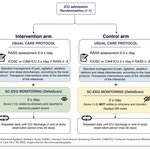
🧠 Automated EEG Monitoring for Delirium: Can It Reduce ICU Length of Stay?
📖 European Journal of Anaesthesiology Intensive Care, 2026
🔬 Multicenter RCT | 3 ICUs
👥 120 patients
🔹 Intervention: Automated single-channel EEG monitoring with results available to clinicians vs. usual care with blinded EEG results.
📊 Key Findings:
✅ ICU length of stay reduced by a median of 48 hours (14–94 h).
✅ Adjusted ICU LOS reduction: 29% (RR 0.71; P=0.027).
💊 Reduced prescription of antipsychotics, quetiapine, dexmedetomidine, and zopiclone.
⚠️ Trial terminated early at 40% enrollment due to manufacturer bankruptcy.
🔎 Conclusion: Automated single-channel EEG monitoring was associated with shorter ICU stays and reduced sedative/antipsychotic prescribing. Larger RCTs are needed to confirm these findings.
🔗 DOI: 10.1097/EA9.0000000000000138
ovid.com/jnls/ejaintensiveca…
#CriticalCare #Delirium #EEG #ICU


🧠❄️ ReCCLAIM II Trial: Hypothermia During Mechanical Thrombectomy
📖 Stroke, 2026 | Phase II Multicenter RCT
👥 66 randomized patients | 10 US centers
🔹 Systemic hypothermia (<34°C) vs. standard care
✅ 91% achieved hypothermia within 1 hour
✅ 70% reached target temperature before reperfusion
⏱️ No reperfusion delay: 95 vs. 94 min (P=0.70)
🧠 Infarct volume: 11 vs. 30 cm³ (P=0.13)
⚠️ Serious adverse events: 45.5% vs. 24.2% (P=0.12)
🩸 No significant difference in hemorrhagic conversion
🔎 Conclusion: Rapid intravascular hypothermia during thrombectomy is feasible without delaying reperfusion. However, clinical efficacy remains unproven, and potential safety concerns require further investigation.
🔗 DOI: 10.1161/STROKEAHA.126.056651
ahajournals.org/doi/10.1161/…
#Stroke #Thrombectomy #NeurocriticalCare

🚨 Mechanical vs. Manual Ventilation During CPR: Does It Matter?
📖 Systematic Review & Bayesian Meta-analysis
👥 8 studies | 6,847 patients
🔹 Mechanical ventilation vs. bag-valve ventilation:
✅ Higher ROSC: RR 1.20 (95% CrI 1.04–1.42)
✅ 99% posterior probability of ROSC benefit
📈 Survival to admission: 92.3% probability of benefit
📈 Survival to discharge: 93.6%
🧠 Favorable neurological outcome: 92.2%
🫁 Similar pneumothorax incidence
🔎 Conclusion: Mechanical ventilation during CPR was associated with improved ROSC, but survival and neurological benefits remain uncertain.
⚠️ Further high-quality studies are needed to establish clinical superiority.
resuscitationjournal.com/art…
#CPR #CardiacArrest #CriticalCare #Resuscitation

🧠🩸 Optimal Transfusion Thresholds in Acute Brain Injury
📖 Neurocritical Care | October 2026
🔬 Bayesian network meta-analysis
• 6 RCTs | 2,599 patients
• Hb transfusion thresholds: 7, 8, 9, and 10 g/dL
📊 Key findings:
• Hb 9 vs 7 g/dL: ↓ unfavorable neurological outcomes (RR 0.86; 95% CrI 0.78–0.94).
• Hb 9 vs 8 g/dL: trend favoring 9 g/dL (RR 0.79; 95% CrI 0.63–1.00).
• Hb 9 g/dL ranked highest for mortality and neurological outcomes (SUCRA).
• No clear differences in mortality, infections, or thromboembolic events.
link.springer.com/article/10…
🎯 Takeaway: A transfusion threshold of 9 g/dL may improve neurological outcomes after acute brain injury compared with 7 g/dL, without a demonstrated mortality benefit.
#NeurocriticalCare #Transfusion #BrainInjury #CriticalCare

Platelet Dysfunction After Traumatic Brain Injury: Beyond Platelet Count
📄 Neurocritical Care | Viewpoint | October 2026
Quintana Diaz & Godoy
link.springer.com/article/10…
🔹 Key Insights:
• Platelet dysfunction may occur after TBI despite a normal platelet count.
• Functional impairment can develop early and is associated with TBI severity, hemorrhagic progression, transfusion requirements, and mortality.
• Conventional coagulation tests and platelet counts may fail to detect this dysfunction.
• TEG with platelet mapping and other platelet function assays may help identify high-risk phenotypes, but evidence remains limited and assay agreement is poor.
• Routine platelet transfusion or desmopressin is not supported by current evidence.
🎯 Take-home message: TBI-associated platelet dysfunction should be viewed as a dynamic hemostatic phenotype rather than simply thrombocytopenia. Prospective phenotype-guided trials are needed.
#NeurocriticalCare #TBI #Coagulopathy #NeuroICU


🔎 POCUS in ED sepsis: identifying the source & reassessing physiology
This narrative review proposes a pragmatic framework addressing two bedside questions:
📍 Where is the likely infection source?
💧 Will more fluid improve perfusion or worsen congestion?
Two complementary approaches:
1️⃣ Source-oriented assessment
Targeted scans may identify findings suggesting pneumonia, pleural complications, biliary disease, urinary obstruction, or drainable soft-tissue infection—triggering formal imaging, consultation, and source-control pathways.
2️⃣ Physiologic reassessment
🫀 Focused cardiac ultrasound to characterize hemodynamics.
🔄 PLR + LVOT VTI to assess fluid responsiveness.
🫁 Serial lung ultrasound to monitor pulmonary congestion.
🔵 Venous Doppler/VExUS as optional advanced assessments: ED sepsis-specific evidence remains limited.
⚠️ Diagnostic capability does not establish outcome benefit. Direct evidence that POCUS-guided ED sepsis pathways improve patient-centered outcomes remains limited.
💡 Use targeted, time-limited POCUS to support decisions. It should never delay antimicrobials, definitive imaging, or specialist involvement.
📖 Chen et al. | Frontiers in Medicine | 2026
doi.org/10.3389/fmed.2026.19…
#Sepsis #SepticShock #POCUS #EmergencyMedicine #CriticalCare #IntensiveCare #Hemodynamics #FluidResponsiveness #FluidManagement #VExUS #LungUltrasound #SourceControl #MedEd


🫀 The venous dimension of shock: beyond arterial pressure
Adequate MAP does not necessarily mean adequate organ perfusion. Elevated venous back-pressure can impair perfusion despite apparently preserved arterial hemodynamics.
This narrative review highlights:
🔹 Organ perfusion reflects arterial inflow, venous outflow pressure, and microcirculatory function.
🔹 Venous congestion may contribute to renal, hepatic, splanchnic, cerebral, and right-heart dysfunction.
🔹 POCUS, venous Doppler, and ultrasound-based congestion scores can complement bedside assessment.
🔹 A proposed phenotype-based approach integrates arterial pressure, forward flow, venous congestion, and tissue perfusion.
💡 Persistent hypoperfusion warrants assessment of both inflow and outflow, alongside the microcirculation.
📖 Kataria et al. | World J Crit Care Med | 2026
doi.org/10.5492/wjccm.122632
#CriticalCare #IntensiveCare #ICU #Hemodynamics #Shock #VenousCongestion #POCUS #VExUS #Ultrasound #OrganPerfusion #Microcirculation #FluidManagement #Resuscitation #CardiorenalSyndrome #MedEd


💪 Rethinking Muscle Wasting in Critical Illness
📖 Critical Care Medicine, 2026
Systematic Review & Meta-Analysis
📊 75 studies | 2,023 ICU patients | 642 controls
🔹 Myofiber size: 22% smaller in critically ill patients, with predominant type II fiber atrophy.
🔹 Protein synthesis: No significant difference vs. controls (p = 0.36).
🔹 Protein degradation: Significantly elevated markers (SMD 0.5–1.7).
🔹 Additional findings: Mitochondrial dysfunction, inflammation, fibrosis, and structural degeneration.
🎯 Conclusion: Muscle wasting in critical illness is associated with increased protein degradation markers rather than a demonstrable reduction in protein synthesis. Multiple biological pathways contribute to muscle dysfunction.
🔗 DOI: 10.1097/CCM.0000000000007288
ovid.com/jnls/ccmjournal/ful…
#CriticalCare #ICU #MuscleWasting


🧠 Prone Positioning in Acute Brain Injury: Systematic Review & Meta-Analysis
📊 10 studies | 177 patients (8 studies, n=120 for ICP analysis)
🔹 ICP increased by 5.06 mmHg (95% CI 2.05–8.06) during prone positioning.
🔹 Mean ICP: 11.10 → 16.13 mmHg.
🔹 After returning to supine, ICP returned to baseline (mean change −0.41 mmHg).
🔹 Both systemic and brain tissue oxygenation improved.
Conclusion: Prone positioning may be considered in selected neurocritical care patients with respiratory failure, preferably with invasive ICP monitoring. ICP elevations are generally transient and reversible, although clinically significant increases can occur.
⚠️ Evidence remains limited; larger prospective studies are needed.
link.springer.com/article/10…
#NeurocriticalCare #ARDS #CriticalCare

