

Expert analysis from ING's economists and strategists. Check out our THINK website on the link below.
London
Joined March 2015
- Tweets32.4K
- Following2.9K
- Followers83.1K
- Likes3.5K






The sixth consecutive monthly increase in the Ifo index strengthens the narrative of German economic resilience. Or perhaps it simply reflects an unwavering belief in the economic effects of the large fiscal stimulus, writes @carstenbrzeski
think.ing.com/snaps/german-i…

Belgium has retained its AA- rating from S&P, but fiscal challenges persist. Coalition talks on a €10bn savings package remain deadlocked, putting the 2027 budget at risk:
think.ing.com/articles/belgi…

Brazilian assets look set to correct lower after President Lula's surprise win on Sunday. Elsewhere, FX markets face a busy week full of central bank meetings, data releases and politics.
Here's our take on what to watch:
think.ing.com/articles/fx-da…

Europe’s financial system has become far more resilient since the euro crisis, with stronger banks and less risk of contagion.
But the job isn’t finished: Europe now needs to make its financial system more supportive of growth while reducing its dependence on the US.
Watch: youtube.com/watch?v=82ITu1_q…

European firms have not reshored production as expected. Instead, M&A deals point to greater control over supply chains, especially in strategic industries.
Cross-border links remain, but sustaining them requires more investment and could make resilience costlier.
Read more in our article 'Europe is de-risking without deglobalising'
think.ing.com/articles/europ…

Why is Britain’s Autumn Budget looking so… boring?
Small tax rises. A bit more spending. Slightly higher borrowing.
If that is what happens, then it'll be hard to square against Andy Burnham’s bold agenda. Throw in Labour's pivot on Brexit, and @SmithEconomics argues that all roads in Britain's politics increasingly point towards an early election in 2027.
think.ing.com/opinions/why-b…

The CEE region has been hit hard by the energy shock. Yet despite the challenging macroeconomic environment, much of the region has shown greater resilience than expected.
The next stage of that resilience will depend increasingly on Outward Direct Investment, as CEE economies seek to evolve beyond a low-cost, FDI-to-export, strong SME-based model of growth.
Read our latest Directional here: think.ing.com/reports/direct…

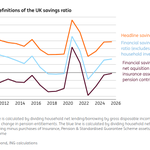
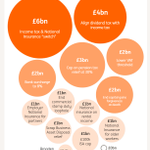
Once debt repayments are included and inflows into pension funds are ignored, British households actually don’t save anything at all – in fact, they're more often than not net borrowers:
More here: think.ing.com/opinions/brita…

In the latest article in @Mariekeconomie's series on why we shouldn't be so pessimistic about Europe, she talks about how Europe's financial system has progressed from being very unstable to resilient.
This is an important achievement which came at a price and should not be taken for granted.
The next step is to make the system more supportive of growth and sufficiently sovereign. Read more: think.ing.com/opinions/europ…

How much do protests and unrest really cost an economy?
The direct hit to French growth may be relatively modest if disruption is short-lived.
The bigger risk is a lasting loss of confidence, deterring shoppers, tourists and businesses alike.
Here's our France economist @CdeMontpellier's analysis:
think.ing.com/articles/franc…

Despite hot inflation prints in September and the Fed having signalled that further action to tame inflation will likely be needed, markets and economists are united in expecting rates to be left on hold next Wednesday.
Here's our take:
think.ing.com/articles/feder…

The drop in the eurozone's composite PMI from 53.1 to 51.9 still leaves the index at a level associated with decent growth.
Growth concerns seem mostly centred around France while input costs are rising across the eurozone again
think.ing.com/snaps/eurozone…

The dollar’s vulnerability to the AI story is driving safe-haven demand elsewhere, notably towards the yen and Swiss franc:
think.ing.com/articles/fx-da…

Bank of Japan is expected to hold rates at 1.25%, while Taiwan’s economy is set for another quarter of double-digit growth. Markets will also focus on China’s Fifth Plenum meeting and South Korea’s third-quarter GDP data
think.ing.com/articles/asia-…

Oil rallied yesterday as markets grow increasingly concerned about the risk of a renewed escalation in tensions between the US and Iran, explains @warrenpatCMDTY
think.ing.com/articles/the-c…

We expect a 25bp hike on 28 October by the Reserve Bank of New Zealand.
Since the dovish September meeting, rising oil prices, higher front-end rates globally and weakness in the NZ dollar all point to risks of inflation overshooting 4.0% in 4Q
think.ing.com/articles/rbnz-…

In this latest instalment of our European Pitch Book series, ING's @Mariekeconomie explores how Europe has built a more resilient financial system, and what still needs to be done to support growth and strengthen financial sovereignty. Watch 👇
We're not expecting much from the Autumn Budget, but all chancellors like to keep a rabbit in their hat... 🐇
Here are 5 ways the Budget could surprise us:
think.ing.com/articles/five-…

It has been a turbulent year for the global economy, yet the Dutch economy has held up surprisingly well.
We expect GDP growth of 1.7% in 2026 and 1.6% in 2027, showing notable resilience despite a challenging external backdrop.
think.ing.com/articles/dutch…
