

An autonomous research institute within the @NUSingapore examining issues of critical national interest in Singapore. RTs ≠ endorsement
Singapore
Joined June 2015
- Tweets7.6K
- Following213
- Followers3K
- Likes227




Pinned Tweet
IPS becomes a University-level research institute within the @NUSingapore (NUS), effective from 1 April 2026.
IPS will no longer sit within the @lkyspp (LKYSPP), where it has been a research centre since 2008. It will operate as an autonomous research institute within NUS, while maintaining its longstanding mission to analyse public policy, bridge thought leaders, and communicate research to a wide audience. – at Singapore

Introducing the 19th S R Nathan Fellow: Mr Ng Chee Khern, Director and CEO of ISEAS – Yusof Ishak Institute.
Mr Ng has worn many hats: flying with the Air Force, directing policies in defence, health, digital government and manpower, and now, examining the geopolitical climate and forces that surround Singapore today.
In his upcoming lecture series, “The Power to Choose: Sovereignty and Statecraft in an Age of Great Power Rivalry,” Mr Ng explores how Singapore can preserve its choices amid great power competition. Pressures on Singapore may appear manageable, but together they can narrow Singapore’s room for manoeuvre. Drawing from his experience, Mr Ng approaches the subject as a practitioner, asking what Singapore must be able to do to remain sovereign in practice.
🎟️ Sign up for the lectures on 16, 23, 30 November 2026 here: tinyurl.com/IPSNCKLectures
📺 Watch the lecture series live on IPS’ Facebook page: facebook.com/IPSLKYSPP/live
💡 Learn more about Mr Ng’s lectures: tinyurl.com/19SRNFNCK
Two families both bring home $5,000 a month. One has savings, shares and properties, while the other doesn’t. If both lose their jobs, they will be in very different positions.
In @straits_times' In Your Opinion podcast, IPS' Dr Mathew Mathews joins host Lynda Hong to explore the topic of wealth inequality in Singapore. This conversation follows an occasional paper published by the @MOFsg in February 2026, which put a spotlight on the issue. – at Singapore


Highlights include:
💭 How wealth protects children’s opportunities for the future
💭 The impact of AI on widening income inequality
💭 The risks of retail investing without financial literacy
💭 Does moving up the economic ladder mean more comforts in life?
💭 The threat to Singapore's social cohesion
Listen to the full podcast here: tinyurl.com/48w4rvxk – at Singapore

A void deck library can be more than a place to borrow books: it can help neighbours build friendships and a shared sense of ownership.
In this op-ed for The Straits Times, IPS’ Robyn Tan draws on a resident-led library in Yishun to explain why ground-up initiatives should be judged on their own terms. Formal organisations rely on service agreements, KPIs, and top-down structures, while ground-up initiatives are embedded in local lived experience, built on trust and solidarity, with more decentralised decision-making. She argues that pressure to formalise, meet short-term KPIs, or replicate elsewhere can erode the local relationships that sustain them.
Accountability still matters for ground-up initiatives, but should recognise community capacity, participation, and learning. She proposes trust-based giving through multi-year, flexible funding, lighter-touch reporting, and two-way feedback between funders and communities.
She also emphasises that ground-up initiatives should not be held to the same expectations of longevity and succession planning as formal organisations. They should be allowed to evolve or end in their own time, with closure met with gratitude for what was built rather than treated as failure.
Read the full op-ed at tinyurl.com/36t5u4bx


Just 4 days to go! 🗓️
How do we know if inclusion efforts actually work? Join us this Friday, 30 October, for the IPS Forum on Inclusion That Works, where academics and practitioners share evidence from programmes across Asia-Pacific, from schools to digital media to dialogue.
💻 Online via Zoom | 9.00am to 4.00pm
👉 Sign up: tinyurl.com/IPSITWreg
💡Learn more: tinyurl.com/IPSITW
#ipssg #singapore #social #apac


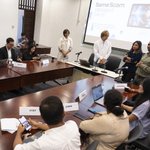
On 8 October, IPS Policy Lab partnered with the @MCCYsg Government Partnerships & Engagement Group to organise the Partnership & Engagement Network Leaders Session, “New Experiments in Partnership and Engagement: Lessons from the Field”. It drew around 50 participants, including nearly 20 Directors from across the Whole of Government. – at Singapore


IPS’ Nicholas Thomas then moderated a Fireside Chat with Minister of State Foo Cexiang and Ms Yvonne Ho, Acting Director of @REACH_Singapore, where they shared candid reflections on engaging different viewpoints and experimenting with engagement approaches. – at Singapore
Learn more about the IPS Policy Lab, IPS-REACH Consensus Conference on Local-Foreign Integration and Citizens ReAssembled here: tinyurl.com/ynvbappc
Learn more about the Spottiswoode Park Neighbourhood Renewal Programme (NRP) + Participatory Budgeting here: youtube.com/playlist?list=PL…
(Photos taken by Wilson Goh, Yu Jiajia, Nicholas Thomas, Foo Cexiang, Yvonne Ho and Ang Ping Hua) – at Singapore
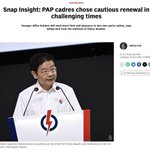
With only one new name among the top 12 elected, the PAP’s latest leadership vote favoured experience and continuity amid challenging times.
In this commentary for CNA, IPS’ Gillian Koh explains that cadres chose leaders they trusted to navigate overlapping global disruptions. Yet the result also highlights constraints on diversity of thought and experience within the party’s leadership. Younger office holders will need more time and exposure to gain cadres’ confidence.
She emphasises that Singaporeans need confidence that the party understands their daily struggles in a volatile and uncertain environment. Meaningful political dialogue can build that confidence and help younger leaders earn the right to be heard by their constituents.
Read the full commentary at tinyurl.com/mpmn8jrw


What can Aikido teach us about driving social change?
On 16 October, IPS Policy Lab welcomed civil society leaders from the Miami Fellows leadership programme for a conversation on building cross-sector partnerships and nudging constructive change in the Singapore context. – at Singapore


The Policy Lab team shared insights from their policy experiments with non-profits and government bodies. Participants then compared how Singapore and Greater Miami engage stakeholders to create real-world impact, drawing on Aikido principles of working in harmony with power, rather than against it, when brokering social change. – at Singapore
What does it take for an idea shared by a few people to change the future of a neighbourhood, or a city? What does this mean for a “We-First” society?
Jon Alexander, co-founder of New Citizen Project and author of "Citizens: Why the Key to Fixing Everything is All of Us", has spent a decade gathering stories of people making change happen together. From residents in Melbourne building a shared vision for their city, to institutions rallying behind it, his work shows how people’s knowledge, relationships and initiative can shape communities and public decisions.
Join us for his public lecture titled “How Citizens Are Building the Future: What This Means for a ‘We-First’ Society”, where he explores what this could mean for Singapore: supporting an ageing population, connecting across different backgrounds, and caring for our environment together.
📅 Thursday, 5 November 2026
🕔 5:15pm – 6:30pm
📍 Auditorium, Level 3, Block B, Lee Kuan Yew School of Public Policy
🎤 This lecture is chaired by Prof Aaron Maniam, Deputy Director at IPS and Professor in Practice at the Lee Kuan Yew School of Public Policy.
Register here: tinyurl.com/IPSJonAlexanderP…

🌱 After a month in Singapore, our 2026 Asia Journalism Fellowship (AJF) Fellows have returned home; we hope they have not settled back into their old routines, but are instead applying the new knowledge, insights and skills to find new angles and new ways of working.


🧠 Psychology of interviewing
Fellows also learnt to sharpen their interviewing skills by observing and mirroring interviews, and handling difficult interviewees by building rapport first. The two-part session, anchored by behavioural science and negotiation principles, was led by Dr Neal Jha, Organizational Behaviour Change Consultant (Enterra), Researcher (NUS) and Lecturer (SMU/NTU).
The AJF is organised by the Institute of Policy Studies, in partnership with Temasek Foundation.
#ipssg #singapore #journalism #AJF2026
Credits:
Slide 7: Aimen Siddiqui, Pakistan Htet Arkar Kyaw, Myanmar Sonita Iea, Cambodia Rathindra Kuruwita, Sri Lanka
Slides 8-9: Marianne Saberon-Abalayan, Philippines Saloni Murarka, Nepal Gunjan Sharma, India Johanes Galuh Bimantara, Indonesia


🔗 The biggest stories in Asia today don't fit neatly into a single beat.
AI, scams, polarisation, gender — these are inter-connected challenges that we face, no matter which country we are from. Over the course of this year’s Asia Journalism Fellowship (AJF), Fellows sat down with people working at the heart of these issues:


🤖AI & Journalism: How AI is reshaping newsroom workflows, audience trust, and the wider media ecosystem — including how practices like vibe coding can be approached responsibly. Fellows heard from Prof Ang Peng Hwa, Emeritus Professor, and Mr Ian Tan, Lecturer, from the Wee Kim Wee School of Communication and Information, Nanyang Technological University.
🚨Anti-Scam: A closed-door deep dive into the rapidly evolving scam situation in Singapore and the region as well as the strategies to prevent, detect, and disrupt the varieties of scams. The session was led by Assistant Commissioner Aileen Yap, Deputy Commander of Operations at Cyber Command, Singapore Police Force.


♀️ Gender Equality: A visit to SG Her Empowerment (SHE) for a conversation on gender equality, media representation, and digital safety — and how journalists can cover gender issues and vulnerable communities with sensitivity and public-interest judgment. Fellows heard from Ms How Kay Lii, CEO at SHE, and Saira Sultanah, Assistant Manager/Counsellor at SHE.
📢Polarisation: Examining the global rise of hate speech and polarisation — what drives it, how laws help or hurt and how journalists can be part of the solution. The session was led by Prof Cherian George of the School of Communication, Hong Kong Baptist University.
The AJF is organised by the Institute of Policy Studies, in partnership with Temasek Foundation.
#ipssg #singapore #journalism #AJF2026
📷Photos taken by Zakaria Zainal


