




Il Vate retweeted

New Situational Awareness letter is littered with many instances of the same flawed trope that has become very common in AI market predictions:
step 1. heavily mischaracterize the essence of a business or asset class and where its pricing power comes from
step 2. declare that AI will replace xyz parts of the business which seem salient
step 3. "therefore this business has no moat anymore"
step 4. "if you are really AGI pilled you know this business will be worth nothing in 5 years"
For example, Leopold says "the majority of real estate value today reflects the value of their physical structures" and that robotics will crash the cost of building structures and there's plenty of land to build stuff so cost of real estate drops to zero.
What... the value of real estate especially at the high end is heavily location driven and that is a fundamental scarcity driven by zoning and network effects that compound on the order of decades to centuries. You aren't going to create another Manhattan, Shenzhen, Deer Valley, Hamptons with just dropping construction costs. In fact, those things will become disproportionately more scarce with respect to the rest of the economy's dropping costs (see: Baumol's cost disease), driving their prices even higher (opposite of the half baked "AGI pilled" conclusion here.
Similarly he talks about all of NVIDIA's IP/talent being commoditized by AI and CUDA moat eroded therefore rip NVIDIA. This one is more directionally valid but also NVIDIA is much more than just CUDA/software talent, they have very complex and deep supplier networks, are potentially far ahead on networking technology, may be able to compound their chip building expertise/operational scale/capital scale into farther compounding compute buildout. (that being said, being short NVIDIA broadly seems valid, but the analysis feels a bit half baked)
But in general we see this trope in a lot of places. Ex: the Citrini Intelligence Crisis post "DoorDash dies because anyone can code a DoorDash app" - but was the app really the barrier to creating DoorDash? Or more egregiously "Amazon dies because anyone can code Amazon and agents will be buying stuff for you" - but wasn't Amazons edge their physical logistics network? Who else can deliver something to you consistently by tomorrow, or maybe even within the next 4 hours?
The point is, many of the great businesses have structural advantages that are still very AGI proof. AGI converts anything bottlenecked by intelligence to being able to substitute for the cost of compute. Any business where intelligence of some form (whether it be experiential like consulting, or more organizational/communication flows based) is the source of pricing power will suffer, yes.
But network effects (especially physical networks), process power (reality still has a rate limit for signal release/learning), fiat (ie. regulatory), positional scarcity still remain very powerful forces to maintain pricing power.
(Btw, this isn't meant to be a dunk on SALP letter. Many good ideas in there still.)


Il Vate retweeted

Vinod Khosla: AI models and quantum computers together will break most of today’s encryption before 2030.
Says "crypto is the most vulnerable"
He expects quantum computers to run Shor’s algorithm well before 2030. At that point crypto and most of today’s security get cracked, and China has been collecting encrypted data so it can read it once that happens.
He says the post-quantum algorithms being deployed now only make the math harder, which buys 6 to 12 months, and he expects most of them to break before 2030, with crypto the most vulnerable. In his view, lasting security has to come from quantum encoding, not from harder equations.
----
Full video on "WSJ Events" YouTube channel, (link in comment)

FT published a piece. AI-driven mathematics may threaten RSA encryption before quantum computers do, experts now warn.
ex-OpenAI researcher Scott Aaronson this week has said he is "virtually certain" AI labs are hiding encryption-relevant math breakthroughs.
Only 8% of 85 EU banks surveyed have a working roadmap for quantum-resistant encryption.
Banks are poorly placed if he's right, because only 8% of 85 EU banks surveyed by the European Banking Authority had an operational roadmap for quantum-resistant encryption.
That slow migration makes "harvest now, decrypt later" a present risk, since data stolen today could be read whenever a classical factoring shortcut appears.

Il Vate retweeted

I appreciate automated theorem proving probably more than the average person, but the below is ridiculously ignorant -- pure engagement farming.
Somehow we're supposed to believe that the field of mathematics has made more progress in 2026 than in the 140 years prior... In reality our understanding of mathematics is nearly unchanged compared to 2025, while the 140 prior years saw the development of axiomatic set theory, category theory, algebraic topology, game theory, information theory, chaos theory, all modern statistics, etc...
Math is just night and day if you compare 1880 to 2025. What new insights have we produced in 2026 that exceed that? Ever wonder where those "open problems in math" come from?

Il Vate retweeted

Tyler Cowen, economist at George Mason University and member of Anthropic's economic advisory board, explains why AI will move slower than the technology allows.
AI may be the greatest learning tool ever, yet universities, governments and healthcare systems, up to half the economy, are barely adapting.
The technology is ready. Institutions are not.
"The human bottlenecks are severe."

Il Vate retweeted

When trying to unzip a backpack, both models fail to hold the backpack fixed, so the entire backpack slides instead of unzipping.
Il Vate retweeted
When trying to unlock a padlock, Astra drops the key before it can insert it. Fable cannot pick up the key.
Il Vate retweeted
When trying to insert a letter into an envelope, Astra is obstructed by the envelope flap. Fable fails to pick up the letter.
Il Vate retweeted
When trying to cap a bottle, GPT-6.2 Astra gets the cap onto the mouth but never threads it, and it falls off on release. Fable 5.2 rarely gets the cap to the mouth at all.
Il Vate retweeted
GPT-6.2 Astra (Codex) and Fable 5.2 (Claude Code) failed at all 72 real-world trials, but human teleoperators can complete all six tasks with the same robot arms.
Il Vate retweeted
We present Six Easy Tasks (SET), a real-world robotics benchmark that humans score 100% on, while frontier AI models score 0%.
We explain how the agents do below 🧵
Il Vate retweeted

Most ppl are seeing the recent OAI pre-training info as evidence for short timelines and intelligence explosion
But i'm having a different reaction
So, yes, pre-training has been improving way more quickly than I thought.
But:
1. I *already knew* how quickly OAI's capabilities had improved. They were impressive! But that was baked in.
So it just adjusts how much of the gain comes from pre vs post training. But that's doesn't change my capabilities extrapolation.
And if anything, there's now *less* possibility that we could accelerate AI progress further by kickstarting pre-training again. Bc it's already kickstarted and that's baked into the trend.
2. OAI said the gains weren't due to AI automation.
If this is true, then maybe the Anthropic pre-train compute multipliers weren't due to AI automation either.
Like, maybe Anthropic's accelerated progress is just from mining some low-hanging fruit on pre-training. Like OAI's doing.
Which cuts against the case for RSI being close.
---
So yeah, why am I wrong?
Il Vate retweeted

happy thanksgiving! I wrote about Recursive Self Alignment.
during RSI, models fix broken RL envs and end up estimating their own rewards. fixing reward hacks makes models more capable, so labs actually "get paid" to build better alignment-estimators
lesswrong.com/posts/qvy8Tvhz…

Il Vate retweeted
Thanks Toby. I do find this convincing.
I'm much more sold on "it would be a big deal if there was a 2x speedup" than on "that there was in fact a 2x speedup."
I don't know how much to trust METR and I agree that they are very much embedded in the same community.
But I'm much less convinced by the idea that it's a one-off effect from a big pretrain because over time we will continue to scale up our pretrains. I think that the METR report specifically considers and rejects this hypothesis. I think the general track record of thinking that effects from AI are one-off and will not continue to compound is a very bad track record
I do think the recent evidence from OpenAI and seeing their pretrains accelerate (but not attributing it to AI acceleration) is more evidence that Anthropic might just be wrong about the role that AI is playing in their progress
Il Vate retweeted

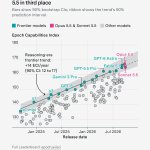
On this matter, I feel I'd want to see a couple of doublings in sequence to be convinced it wasn't just a one-off or transitory effect. I'd really want to see the convexity. e.g seeing ten 10% speed increases in a row, with each one taking 10% less time would be very compelling.


Il Vate retweeted

Nobody disputes that, but a lot of people, including me, would question whether it matters. Already a huge amount of the crud has been removed, and almost certainly what we'll end up with farily quickly is a far better proof.
Il Vate retweeted

It's been three weeks since this post. Many people, myself included, are incredibly interested in this report, and more specifically, in Anthropic's AL4 number. I was really hoping it would drop this week, but if we don't see it in the next few hours it will probably be next week now at the earliest.
AL4 stands for Automation Level 4, and it's a really strong indicator of how close we are to RSI. It basically means a human dev picks something for Claude to work on, Claude handles the rest end-to-end, and then the human reviews and deploys it. It's the last step before Claude chooses what to work on itself and deploys it itself (AL5), at which point no human is required anymore for model development, though they can still choose to take part. The only speed limit after that is how much compute you have and how many electrons you can pour into it. It's also possible that Anthropic's workflow already contains a small amount of AL5. Speculation abounds.
In February, Anthropic's AL4 was under 1%. By August, it had jumped to 26%. We haven't seen any new numbers since then, and it's now November 26th. This is approximately 700 years in AI time. Naturally, a lot of us want to see how fast that number has climbed.
Sam McCandlish said in a follow-up reply that the reason Anthropic redacted so much of the METR report on their internal acceleration was that 'the unredacted information would allow others to speed up their research.' It's possible the same thinking is behind the delay here. There are many possibilities, one being that if Anthropic's automated research levels really are as high as some people are speculating, it will shock their competitors - making them realize how much is possible and how fast Anthropic is taking off. That would incentivize other labs into pursuing RSI even harder than they already are (difficult to do in some cases), and throwing even more resources at it. Sometimes knowing what's possible is enough.
Still, Christmas is less than a month away. We're now approaching 2027, when many are predicting we reach full RSI, and some even ASI shortly afterward following the resultant acceleration. So it feels like it's past time to let us all know what's going on inside the mysterious Tower of Claude and reveal the current shape of the invisible frontier.


I'm Sam, one of Anthropic's co-founders, and I lead much of our safety work. I'm going to have more to share on that work over the coming months.
I thought I'd start by sharing a few thoughts on the latest report from @METR_Evals.
The speed of progress in model capabilities is one of the most important questions in AI safety, and METR’s work here provides the public with an independent, external view into how this is happening inside Anthropic. I’ll talk more about some of the details below, but first some context for those new to this work.
How quickly AI progress is accelerating has many important safety implications, since it determines how quickly the risks from advanced models increase. But, because most research happens within the frontier labs, it’s difficult for external observers and policy makers to get a strong sense of what that rate is. We kicked off the process with METR that led to this report earlier in the year, in anticipation of progress continuing to accelerate.
For this report, we gave METR access to a range of sensitive internal data, including benchmark scores for unreleased models, estimates of how models are progressing, and interviews with our researchers. They had complete independence to form their own conclusions.
Many of their conclusions match my own. AI is speeding up our research, but it’s hard to say exactly how much. While they conclude AI can't yet make the most important contributions to model training on its own, they think the pace of development could, by default, accelerate further.
This work began well before and is separate from the embedded third-party evaluators that are part of our commitment to pacing the frontier, but it’s a good illustration of why we think evaluators are a good idea. The more access reviewers have, the clearer a picture they can form of the situation and the better-positioned they are to highlight situations like this one.
We redacted a lot, and I accept that this makes it harder for others to check METR’s work. But we determined that sharing exactly what is driving the speedup isn’t the right thing to do, both because it’s commercially sensitive and because it risks handing out a roadmap for others to go faster. That would make the risks METR is worried about worse. That’s a tradeoff. I think we made the right call, though we’re continuing to assess the pros and cons here.
In the coming weeks, we plan to share a report with our own analysis of the speed of AI progress within Anthropic, including where we stand against our Responsible Scaling Policy, plus new steps we’re taking to strengthen our safety and security practices as AI keeps improving quickly.
Il Vate retweeted

Why release AI-generated solutions to research-level math problems? There are many reasons**, but one good one is to provide the world with some view of the rate of progress:
AI can’t do research level math
-> AI can only find counter-examples
-> AI can only find what’s in the convex hull of known ideas
-> AI is doing novel theory-building (we’re now here)
If you’re trying to convince policymakers to prioritize thinking about AI, first convincing the world of its powerful capabilities seems like a good thing to do.
** A non-reason is financial. If you think solving math problems helps a company’s stock price, just look at $ANT the day of the RH release (last Friday)! (hint: pure math/TCS is not a big revenue-generator…)
(disclaimer: I only claim to represent my own opinion here)
