

Official account of the Indian Pulsar Timing Array, hunting for nanohertz gravitational waves using the uGMRT
India
Joined November 2022
- Tweets130
- Following176
- Followers1.3K
- Likes570







Pinned Tweet
✨ From the heart of the cosmos to our telescopes on Earth 🌍
The Indian Pulsar Timing Array (InPTA) proudly presents its Second Data Release! 📡
Part I. Dataset and Timing Analysis
Check it out👇
doi.org/10.1017/pasa.2025.10…
#Pulsars #InPTA #GravitationalWaves

InPTA retweeted

Exactly 8 years ago, detection of #gravitationalwaves from the binary neutron star merger #GW170817 unfolded a new era of multi-messenger astronomy✨ Recently, a workshop was held at
@IMScChennai to discuss about the state-of-the-art in neutron stars & multi-messenger astronomy


The Indian Pulsar Timing Array is preparing to share something exciting.
Stay tuned!!! — the skies have a story to tell.
#InPTA #Pulsars #RadioAstronomy #GravitationalWaves #StayTuned

🚀🇩🇪 InPTA at SKAO 2025!
Dr. Manoneeta Chakraborty (IIT Indore) & Dr. Krishnakumar M.A. (NCRA Pune) represented InPTA at the SKAO Science Meeting in Görlitz, Germany (June 16–20) discussing the future of radio astronomy & GW science at DZA.📡
#InPTA #SKAO2025 #GW #RadioAstronomy


InPTA members at #IPTAScienceWeek2024
1. with Prof. Jocelyn Bell ✨
2. Dr. Prerna Rana @PrernaR62337441 presenting the upcoming DR2 results
3. Dr. Jaikhomba Singha @MJaikhombaS presenting the new scatter broadening estimation technique.


InPTA retweeted

Life Update: Forgot to mention that I joined Max Planck Institute für Radioastronomie for my PhD :)


InPTA retweeted

IISER Kolkata Integrated PhD student Yoshita Baruah of Physics and CESSI Space Weather activities are spotlighted in @Nature. For details see
nature.com/articles/d41586-0…
Happy Diwali! 🪔
@NANOGrav @EPTAGW @IPTA_GW @APT_GW @CSIRO_ATNF @ARC_OzGRav
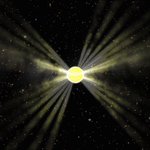
(animation of vela pulsar-credit: Joeri van Leeuwen)
#DiwaliCelebration #PulsarAstronomy
InPTA retweeted
Our latest #ipta paper comparing the June 29 results from @EPTAGW , @InPTA_GW , @NANOGrav , @CSIRO_ATNF is now on arxiv: arxiv.org/pdf/2309.00693
In this study, we compared the GWB properties from each PTA and also the Noise properties of each pulsar from different PTA.
#GWB
InPTA retweeted
Four pulsar timing array (PTA) collaborations recently reported, at varying levels, evidence for the presence of a nanohertz gravitational wave background (GWB). But how similar are these results, even after each PTA made different choices for modeling their data?
InPTA retweeted

Right now the IPTA is busy at work combining data from @EPTAGW , @InPTA_GW , @APT_GW , @NANOGrav, and @CSIRO_ATNF to make the third data release from the IPTA, IPTA-DR3. The fully combined data will be even more sensitive than the simple extensions shown above!
InPTA retweeted
The properties of the GW background seen independently by EPTA+InPTA, NANOGrav, and PPTA are consistent

InPTA retweeted
The IPTA gravitational wave analysis group just finished a comparison of the PTA (@NANOGrav @EPTAGW @InPTA_GW) results published this past summer. You can read all about it here: arxiv.org/abs/2309.00693 🧵
InPTA retweeted

Colloquium by Prof. Bhal Chandra Joshi (@NCRA_Outreach, Pune) @ Dept. of Physics (@Phys_BitsHyd), BITS Pilani, Hyderabad Campus (@bitshyd).
Title: Using Galactic Clocks to Observe The Universe In Long Wavelength Gravitational Wave
Date: September 11, 2023
Time: 5 pm
Venue: F207
