



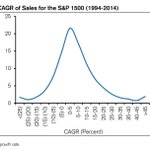


Remember that a 10% CAGR is very good. Chasing 30% CAGRs is tempting, but something that has rarely been done. If you're pricing in a 30% CAGR across your entire portfolio, there are some risks you're not considering.
for PAs, i’ve always thought it would be a good idea to take your 10 favorite managers and make each of their largest positions a 10% position.
have to imagine this outperforms the s&p over time.
crazy to me that some people still aren’t interested in power stocks.
“the limiting factor for ai deployment is fundamentally electrical power. we’re seeing the rate of ai chip production increase exponentially, but the rate of electricity being brought online is negligible. it’s clear that very soon, maybe even later this year, we’ll be producing more chips than we can turn on.”
— elon musk in january 2026
please welcome me to #BuildInPublic.
starting with fulltableapp.com.
current MRR: $0
goal by end of year: $5,000
this chart shows how crazy it is that anthropic has grown its ARR from ~$1B last January to $20B today.


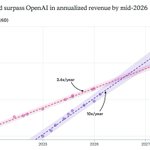
going to be honest, this surprised me. but it’s reflected in the latest funding rounds. openai’s feb 2026 valuation was ~$850b and anthropic’s was ~$380b. based on expected 2026 revenue, openai is trading around ~31x revenue while anthropic is ~44x. so certainly expected that anthropic will grow faster.


there is meaningful chance autonomous vehicles help public auto dealers - $lad, $an, $gpi, $pag, $abg, $sah - even though consensus view is that autonomy disrupts dealers.
graph from $lad q4 investor deck shows percent of cars that return to dealership for service. new cars are likely to return to dealer for servicing.
auto dealers generate about half of operating income from servicing. graph shows that new cars sold increases future service base, which is cash cow of business.
$nvda recently released alpamayo, self driving software that helps commoditize autonomous driving. if autonomy becomes more standardized, brands that sell through dealers, rather than directly like $tsla, are less likely to be steamrolled by $tsla or waymo.
as autonomous vehicles roll out, number of cars sold will temporarily increase as consumers rush to buy cars where they can sleep during commute.
as fleet turns to newer autonomous vehicles, dealer servicing will increase because vehicles will be newer and more complex, raising warranty work and dealership profitability.
all while public dealers trade around ~10% fcf yield and are largest players in fragmented industry with economies of scale.
