

IndeMed is a physician-led organization dedicated to protecting the integrity and fair implementation of the No Surprises Act.
Washington, DC
Joined November 2025
- Tweets190
- Following214
- Followers357
- Likes113

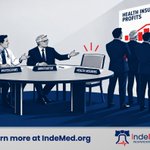



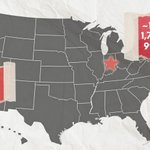

When Dr. Will Flannery (@DGlaucomflecken) had a cardiac arrest during COVID, he received a $20,000 surprise bill form out-of-network physicians at the in-network hospital where he was taken. On the latest Knock Knock Hi podcast, he explains why the No Surprises Act matters and why insurers are now lobbying to change it.
His key points line up with the data:
1. Patients are protected. The law took them out of the middle and arbitration only decides what the insurer owes to the physician
2. Physicians win most disputes because independent arbitrators, choosing between two offers, keep finding that the insurer’s number is too low
3. Insurer benchmarks track Medicare, which has cut physician pay for decades based on budgetary guidelines and is not a neutral yardstick.
4. Winning isn’t only on paper. Federal rules require payment within 30 days of an award, yet insurers routinely drag it out for months and don’t pay on roughly 40% of all claims.
His final message: If Congress is going to revisit the NSA, then do it by enforcing prompt payment.
Listen in here:
youtube.com/watch?v=SoeX15xU…

In 2020 insurers backed the No Surprises Act and agreed to let a neutral arbitrator settle payment disputes. Now they’re leaving that seat empty.
Federal arbitration data shows insurers offered $1 or less 278,807 times. They offered $0 for CPR, emergency intubation and critical care for newborns. Each of those claims had already been ruled eligible.
That isn’t negotiation. It’s a refusal to show up for a process insurers helped create.
More from IndeMed:
indemed.org/whats-your-care-…

IndeMed retweeted

Federal law says an insurer has 30 days to pay a No Surprises Act arbitration award. Anthem is asking self-funded employers to let it violate the law by withholding instead, and told them that no answer to the request by September 14 would count as a yes.
Three things employers should know:
Every one of these awards was reviewed for eligibility by a federally certified IDR entity before it was issued.
If Anthem thinks the IDR entity got it wrong, there is a process to reopen the dispute. The same federal guidance says payment is still due within 30 days "regardless of whether a request to reopen a closed dispute has been filed."
Anthem's own letter says the employer carries ultimate responsibility under ERISA. Anthem is not asking employers to share a risk. It is asking them to take one on.
What the law actually requires after an IDR decision: indemed.org/what-does-federa…

Federal law says pay in 30 days. Anthem is asking employers to let it withhold.
Health insurers are steadily closing off one of the few remaining ways patients can still choose their own physicians and see independent, private practice physicians. Ahead of a September 14, 2026, deadline, Anthem Blue Cross and Blue Shield sent a notice to the self-funded employers whose plans it administers, asking them to approve Anthem’s practice of withholding payment on No Surprises Act arbitration determinations it has lost. Employers that did not respond by that date were told that their silence would count as authorization to keep withholding.
There is no “withhold while we contest” option in the statute.
More from IndeMed:
indemed.org/what-does-federa…

IndeMed retweeted

The No Surprises Act legislation is opposed by a number of conservative think tanks on the grounds that it is an unacceptable intervention by the government into the market that raises prices for consumers.
But this is in the context of massive govt. intervention in the healthcare market that works to suppress prices.
Some examples :
Medicare prices are non negotiable and when accounting for inflation reimbursement to physicians is down ~30%.
There is also no negotiation with commercial insurers if you are a solo hand surgeon or a small group of pediatricians. If you choose to go in-network .. you accept their prices that are massively discounted relative to what they pay larger systems and organizations who can and do negotiate.
Independent Physicians can’t organize together to negotiate with insurers unless they clinically or financially integrate because the government has decided that would violate the Sherman act that bars price fixing. And yet Unions are allowed to collectively bargain on behalf of their members and this does raise prices to consumers. )The long term effect of not allowing physicians to bargain collectively is they either join health systems or integrate into a larger group. )
So.. no I don’t find it at all odd that physicians for once got together (thank you Texas) to create a little leverage for negotiating with insurance companies. If you don’t support the NSA then propose a different mechanism for negotiating that isn’t insurances being allowed to price set. The massive latitude given to insurance companies by the way hasn’t worked to curb healthcare inflation anyway.
It’s amusing the latest talking point clearly sourced from insurance companies is on arbitrator profits. Here’s a list of large insurers and their profits in the last quarter.
If we are going to play the game of what’s an appropriate amount for doctors to be paid and what profit is appropriate for intermediaries given the cost is ultimately borne by the public , why don’t we play the what insurers should make game as well? Since healthcare costs are so important — should we have a hard cap on insurer profits? Should we ask why CVS is passing on costs to consumers at the rate they do given they had $3billion in profit last quarter ?


The government also doesn’t allow me to coordinate with other Philadelphia cardiologists to negotiate with insurance companies unless I’m significantly clinically / financially integrated ( I forget exact working but it essentially requires me/Others to give up operational control )
Labor unions get a pass from collective bargaining precisely because society deemed it ok because of the asymmetry in power between corps and individual employees. That power imbalance is pretty similar between big insurance and independent physician.
Want to curb NSA abuses.. go ahead.. but to call out this particular govt. intervention in the market while every other intervention is left in place for all the other players in the health care space is pretty off putting to physicians.
That’s partly why there is such a degree of vitriol from physicians on the matter.
Would you support a bill to do away with the NSA .. but give independent physicians an exemption from the Sherman act to negotiate together ala unions ?
Federal law says pay in 30 days. Anthem is asking employers to let it withhold.
Health insurers are steadily closing off one of the few remaining ways patients can still choose their own physicians and see independent, private practice physicians. Ahead of a September 14, 2026, deadline, Anthem Blue Cross and Blue Shield sent a notice to the self-funded employers whose plans it administers, asking them to approve Anthem’s practice of withholding payment on No Surprises Act arbitration determinations it has lost. Employers that did not respond by that date were told that their silence would count as authorization to keep withholding.
There is no “withhold while we contest” option in the statute.
More from IndeMed:
indemed.org/what-does-federa…
IndeMed retweeted

UnitedHealth Group’s profits just jumped 75% to *$4.1 BILLION* in a single quarter.
Earlier this week, I dug into its latest earnings report and what executives said on their call with Wall Street analysts.
Here's what stood out:
healthcareuncovered.substack…

IndeMed retweeted

Health insurance companies should work for patients, not stand in the way of their care. As a physician, I’ve seen how insurance denials can delay treatment and put patients in difficult positions. Our health insurance system needs serious reform that puts patients first and ensures Americans can access the care their doctors recommend.
IndeMed retweeted

The insurance companies pushed through the no surprises act on the false premise that it was for patients. It was all about improving negotiating leverage for insurance companies. Now that it’s not going how they want it they are putting on massive pressure to change the way in which pricing disputes are handled. Abhorrent

I love IDR.
Apparently, an insurance company having to defend what it pays a physician is a national affordability crisis.
Meanwhile, a hospital can buy that physician’s practice and collect more for the same care.
Washington built a financial reward for changing the name on the door.
Start there.
Start with the tax-exempt hospital corporations buying their competitors while taxpayers subsidize the enterprise.
Start with Section 6001, which restricts physician-owned hospital entry and expansion.
Congress actually wrote a law protecting incumbent hospitals from physicians who want to compete with them.
Then everybody sits around wondering why healthcare costs so much.
I build healthcare businesses.
When you subsidize the incumbent, restrict its competition, and pay it more for owning the building, you have engineered an expensive market.
@HHS and @CMSGov: enforce price transparency.
Stop paying a premium for hospital ownership. Congress: repeal Section 6001.
Let physicians build. Let employers buy directly from them.
And keep a process that lets physicians challenge an insurer’s payment without handing the patient a surprise bill.
I’m tired of a healthcare affordability debate that keeps arriving at the independent physician’s paycheck while the subsidized hospital buys another ZIP code.
IndeMed retweeted

In a new op-ed for @CrainsNewYork today, our President Christopher Sheeron explains how health insurance plans are driving healthcare costs.
He also argues that Albany’s removal of Medicaid Managed Care disputes from the state's IDR process deserves scrutiny. Undoing this budget failure will keep patients—rather than health insurers’ financial incentives—at the center of Albany’s healthcare policy.
crainsnewyork.com/opinion/co…

IndeMed retweeted
Insurers caused 9 of every 10 defaults in federal arbitration in 2025. They offered $1 or less 278,807 times. Half the time, they offered their own artificially low number or less.
Now Representative Pallone's bill would let them skip the arbitrator altogether.
Keep the referee.
Read more here: indemed.org/keep-the-referee
@IndeMedAction

IndeMed retweeted

I sat down with the @TPPF to talk about what is really driving up the price of health care in Texas: uncompensated care, federal mandates and the gaps taxpayers end up paying for.
This is one of my top priorities going into the 90th #txlege. #HD130
Listen to the full conversation: bit.ly/4i9FDi4

‼️Congressman Pallone’s new bill doesn’t fix the No Surprises Act. It guts it.
The bill abolishes arbitration, pays every out-of-network physician the insurer’s own 2019 rate and bars the courts from providing any oversight. It hands insurers the pen and fires the referee.
The fallout won’t stop at payment. When insurers set the price with no one to check them, independent practices can’t survive. Physicians will be pushed into insurer- and hospital-owned systems, accelerating the consolidation that already drives up costs and narrows patient choice.
✅ IndeMed’s full analysis: indemed.org/keep-the-referee…

IndeMed retweeted
Just seems like no matter what doctors do under this law it’s seen as gaming the system.
The point of the NSA was to
(1) prevent patients from receiving surprise bills
(2) drive doctors and insurers/employers into contracts
Now we get reporting that an employer and physician group negotiated a contract out of the results of the NSA and it is seen as a problem.
So…
(1) take claims to arbitration and win - gaming the system
(2) negotiate contracts with employers based on fair market value, not what the insurer unilaterally says is fair - gaming the system
It’s pretty clear what many wanted out of the NSA… for the government to once again put their thumb on the scale in favor of large conglomerates who have driven costs up exponentially. When the government instead chose to let an independent third party to decide, predictably doctors won on the small (5%) of claims that went into arbitration. The system is fine. It’s just not what the insurers wanted.

High arbitration awards under the No Surprises Act should give providers leverage to demand higher contract prices.
This looks like TeamHealth beginning to use that leverage in direct deals with employers.
Good reporting from @Marketplace:
marketplace.org/story/2026/1…

IndeMed retweeted

You can change the name, but the same shady insurance company tactics persist.
A New York neurosurgery practice has filed a complaint in federal court challenging Elevance Health's policy of penalizing hospitals for working with out-of-network physicians.... even those complying with the No Surprises Act.
For those unfamiliar, @ElevanceHealth was formerly Anthem, which faced years of lawsuits, regulatory scrutiny, and controversy before rebranding in 2022.
It ranks #18 on the Fortune 500 list.
If insurers offer rates that don't cover the cost of delivering care, and hospitals are penalized for working with out-of-network physicians, how does that protect patient access or choice? Who has the leverage here? Who is getting squeezed? Who is contributing to consolidation? 👏Follow 👏the 👏money.
Read the full story from Elizabeth Casolo at: beckerspayer.com/legal/eleva…
@CNS_Update @AANSNeuro @councilsns @spinesection @MSSNY_YPS @MedSocietyNYS @IndeMedAction @GNYHA

CMS met with the certified IDR entities.
Want to know who they are and how the process works? IndeMed's IDR 101 breaks down all 17 certified entities, who owns them and why physicians prevail: insurer QPAs ran below market in 60.6% of disputes. indemed.org/IDR-101/


CMS brought together leaders from across federal agencies and all certified Independent Dispute Resolution (IDR) entities to address rising costs tied to out-of-network payment disputes and identify ways to strengthen the federal IDR process.
We’re working together to improve the fairness and efficiency of the program while continuing to protect patients from surprise medical bills.
Learn more: go.cms.gov/47DRUoV

ALT A large group of people in formal attire stand together in a conference room. Behind them are several flags and a screen displaying text about a convening of certified independent dispute resolution entities. The setting is professional, with tables and chairs arranged for a meeting.
IndeMed retweeted
If you utilize the IDR in your practice for any percentage of your claims, you should tune in to the latest webinar regarding the new IDR Gateway (portal)
In late 2026, the Federal Independent Dispute Resolution (IDR) process will transition from single-use web forms to the new IDR Gateway, which will provide a secure, centralized platform that parties can use to manage disputes.
This Thursday, CMS's webinar will provide IDR Gateway users an opportunity to get assistance with questions about account set up, organization creation and administration, and dispute mapping.
Learn more about the October 8, 2026, webinar from 3:00 p.m. to 4:00 p.m. ET, for an office hours session on the IDR Gateway:
myemail.constantcontact.com/…
IndeMed retweeted
This is a terrible idea as it will without a doubt accelerate consolidation in medical practices as well as guarantee that physicians will be employed by hospitals or health plans.

IndeMed retweeted
They’ve played their hand so many times. “Look… we’re reducing prior authorization.”
Those in the know understand this is just a sleight of hand. Their bottom line depends too much on patients and physicians not fighting back.
Great read by @wendellpotter

UnitedHealthcare says it's cutting prior authorization by 30% for 1,700 codes. But a closer look finds heavy duplication across plan lists, many rarely-used codes, and new prior auth requirements being added the same day.
See the breakdown here: healthcareuncovered.substack…
