

dedicated to understanding & advancing sovereignty for Indigenous peoples
Joined July 2017
- Tweets1.2K
- Following1K
- Followers787
- Likes983
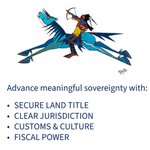






Prior to the Columbian Exchange, the Indigenous peoples of what's now called North America enjoyed prosperity and relied on robust transcontinental trade networks. Today, many folks living on American Indian reservations are mired in poverty, a direct result of federal policy.
Tribes occupy a unique position in America's federal system. They are domestic nations -- the third sovereign in the United States' constitutional order. Thanks to an emerging economic civil rights movement in Indian Country, many Native nations are enjoying a renaissance.
Join MSU Library & the Dept of Native American Studies for Becoming Nations Again, a conversation with Adam Crepelle (United Houma Nation), visiting from Loyola University-Chicago
Tuesday, October 13
4:30 pm
American Indian Hall
Montana State University
montana.edu/calendar/events/…
Fostering Entrepreneurship in Indian Country with visiting scholar Adam Crepelle
Tuesday, October 13
4:30 - 5:30 pm
American Indian Hall
@montanastate
montana.edu/calendar/events/…
IndigenousEcon retweeted

Mike McBride reminds us that fairness is a best practice because it fosters trust, helps us build relationships, and ensures greater stability.

IndigenousEcon retweeted
Tribes need good governance laws. Your procurement laws need to be clear, enforceable, and transparent.
- Chief Geoffrey Standing Bear, who just stepped down as principal chief to let the next generation lead the Osage Nation

IndigenousEcon retweeted
Our first session this morning is Adam Crepelle’s “Lies, Damn Lies, and Federal Indian Law,” in which he walks us through the long history of legal ethics and the longer history of international trade networks in what we now call the Americas.


IndigenousEcon retweeted

Join us at our pow wow in Houma this weekend! It's free and open to the public. Read all about it here: louisianalife.com/united-hou…

IndigenousEcon retweeted

This is some amazing modern artwork by a very talented Indigenous artist named John Isaiah Pepion of the Piikuni Blackfeet Nation in Montana. His style is known as ledger art and was originally popular amongst Native American artists from Plains tribes in the 1800s. Beautiful!


IndigenousEcon retweeted
“For every problem, there’s a solution. You’ve just got to find it,” says Chief Standing Bear. After serving as Principle Chief of the Osage Nation for 12 years, Standing Bear is passing the torch to the next generation. “Our people are strong... Our younger people are more than capable.”
kosu.org/geoffrey-standing-b…
The rise of Indigenous restaurants has strengthened Native agriculture and food production. People are building the supply chains and working with local tribes to source traditional foods and Native-produced ingredients.
tribalbusinessnews.com/secti…

IndigenousEcon retweeted
New, long-sought agreement recognizes hat the Southern Ute Tribe has “the expertise & the governance systems to manage our resources responsibly while advancing the well-being of our Tribal Members and safeguarding our land, water & culture.”
lasvegassun.com/news/2026/ma…
"Equity is the purest form of consent."
Great interview with our friend Mark Podlasly of the First Nations Major Projects Coalition on the important work they are doing to ensure infrastructure development is "environmentally & economically inclusive.”
theglobeandmail.com/business…

IndigenousEcon retweeted
This is a great move and hopefully the fact catches on that Native Americans in the US are defined by sovereignty, not race!

We have created a separate entry for "Native Americans, Indigenous people/peoples."
Previously, the entry was included as part of the book’s race-related coverage entry.
Why did we move it?
Racial issues are vital to consider when writing about these identities. But identity as Native American or Indigenous peoples goes beyond race, reaching into topics of sovereignty and self-determination of tribal nations and citizens. This move reflects that broader classification.
We announced this change at ACES: The Society for Editing on Friday. This guidance is live on AP Stylebook Online now.
Maybe just *let* Indian Country be healthy again by recognizing sovereignty, honoring treaties, deeding back Native land…

Now RFK Jr. is saying, “We’re going to make Indian Country healthy again.” 🙄 Plz, the U.S. gov will never make Native Americans “healthy again.” Native health disparities r a direct result of colonialism–which disrupted our ways of life & food systems. kjzz.org/indigenous-affairs/…

Plains Indian Sign Language connected different communities. Then the US gov decimated bison herds & disrupted Indigenous trade networks & the language faded. When people were confined to reserves & children taken away, oral Indigenous languages fell silent, as did sign language.

Hand talk: Reclaiming Plains Indian Sign Language | Canadian Geographic canadiangeographic.ca/articl…

WSU prof Gladstone helps Indigenous students reconcile a cognitive dissonance — they don’t have to surrender their identity as to practice business. Their identity is a tactical resource to approach & solve business problems using an Indigenous lens.
news.wsu.edu/news/2026/04/09…

IndigenousEcon retweeted
Good morning from the Cowlitz Nation where we are kicking off Reservation Capitalism, a two-day workshop exploring ways to restore sovereignty and prosperity to Native nations.


IndigenousEcon retweeted
“Today was an amazing history lesson. I’ve loved every minute… Understanding where we came from… as we figure out how to structure our tax system… I’m soaking it up here & I’m going back to my community to say ‘here’s what I learned.’”
- ACES School Participant
Our next event begins Thursday at ilani on the Cowlitz Indian Tribe Reservation.
It's not too late to register: RezCap.eventbrite.com

IndigenousEcon retweeted
Next week we’ll explore how legal institutions shape economic opportunity in Indian Country. Join us to discuss strengthening tribal economies through private sector development, institutional capacity & legal infrastructure.
Event details & registration: rezcap.eventbrite.com
