

VC at Samaipata. Fortitudine vincimus.
Madrid, Spain
Joined September 2010
- Tweets580
- Following817
- Followers1.1K
- Likes4.4K







Hoy anunciamos nueva inversión en Wilco AI (getwilco.ai/) y por extensión en @Parga_Fran !
Wilco está trabajando en la última milla de AI deployment en el entorno healthcare x comercial y capturando mucho valor por el camino.
Están contratando en muchos frentes. Buena oportunidad para entrar temprano en un proyecto de mucho potencial.

Iñigo Laucirica retweeted

this stuff is so tiresome. jp morgan lead new york city yacht club to two successive cup victories, rockefeller raced trotters through central park, ellison made sailboats fly
you all are falling victim to the pastiche of martyrdom without any of the glory. get over yourselves


Aleluya


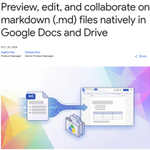
Me parece INCREÍBLE que Google Drive aún no tenga un markdown renderer nativo.
Parece una broma de feature con no demasiadas ramificaciones que inviten a lanzar con prudencia. Y su ausencia empuja al usuario a buscar alternativas (hola Obsidian).
También es verdad que hay pocos incentivos que surjan oportunistas cuando estás a un feature launch de la irrelevancia total.
5
374
Iñigo Laucirica retweeted

If you need training,
Do not join an early stage start-up
If you need help setting up your computer,
Do not join an early stage start-up
If you want to spend your first month ‘getting up to speed’,
Do not join an early stage start-up
If you want max out your time off,
Do not join an early stage start-up
If you can’t ship in week one,
Do not join an early stage start-up
If you can’t sell without a brand behind you,
Do not join an early stage start-up
If you need kudos for just doing the basics,
Do not join an early stage start-up
Iñigo Laucirica retweeted

En el hilo turras de hoy, lamento dejar mi tono predilecto técnico y de alguna manera científico/estratégico, porque entra con fuerza por un lateral del escenario, la necesidad de un call to arms.


🚨 HIRING
Nuestra última inversión en mundo AI+healthcare (stay tuned) está contratando FDEs y Deployment Strategists en Lisboa 🇵🇹 (maravillosa ciudad y fiscalidad para españoles).
Buena oportunidad para subirse pronto a un proyecto muy ambicioso.
DM si quieres saber más.


¿Por qué Anthropic no ha enseñado la patita con su cash antes?
Nos habríamos ahorrado tremendos bad takes.
1
235
Iñigo Laucirica retweeted

My quick takeaways on the Anthropic S-1:
1. This is a historical moment
2. $6.6M in revenue per employee!! Hard to even comprehend how good that is but Anthropic is AI native as it gets so makes sense.
3. I always thought OpenAI would drop their S-1 first
4. Customers spend about 9x more after a year. Net Revenue Retention is approximately 900% as of Sep 30, 2026. Good SaaS companies brag about 120%.
5. Cowork is growing faster than Claude Code did. Goes to show you the demand for consumer products. Duo will probably rip.
6. 3 years ago this company did $41M in revenue. In the first six months of 2026, it did $16.3 billion. I don't think anyone has a mental model for that curve yet, I sure don’t.
7. Nearly half of revenue comes through cloud marketplaces. About 48% comes from customers buying through them. Big companies buy where their budget already lives, and the lesson for founders selling to enterprises is to get listed where your buyers already spend.
8. Their run rate formula is published: the last 28 days of usage times 13, plus subscriptions times 12, which i guess is the new ARR math for founders?
9. It looks like They're merging Cowork into Claude dot au which tells you the chat box era is ending and the "go do the work for me" era is here.
10. Thousands of Anthropic employees are about to become liquid at once, so expect the biggest wave of new AI startups and angel checks San Francisco has ever seen. Reminds me when Facebook went public but this is way bigger.
Let’s go!
11. Buried in the filing, Anthropic says the gap between what Claude can do and how widely it's used is one of its biggest growth opportunities, so the company itself is telling you the models are ahead of the market and someone has to close that gap for dentists, landlords, and plumbers.
12. Whatever happens, exciting times to be building in AI.

Anthropic has filed an S-1 registration statement with the SEC related to its proposed IPO.
Read more: anthropic.com/news/s1-sec
Legal disclaimer: A registration statement relating to these securities has been filed with the SEC but has not yet become effective. These securities may not be sold, nor may offers to buy be accepted, prior to the time the registration statement becomes effective. This post does not constitute an offer to sell or the solicitation of an offer to buy these securities, nor shall there be any sale of these securities in any state or jurisdiction in which such offer, solicitation or sale would be unlawful prior to registration or qualification under the securities laws of any such state or jurisdiction.


"Meta’s free cash flow went into negative territory for the first time since it became a public company."
202

Lo de inversores o comentadores de tech llevándose las manos a la cabeza con ARRs de dudosa metodología siempre me ha parecido un poco teatrero.
Fraudes y mentiras aparte, en compañías jóvenes el inversor establece el incentivo cuando tiene todo el interés ver el indicador temprano del indicador temprano (n veces) del indicador. Y algunos se acercan demasiado al sol o demasiado poco a la due diligence.
Pero abordar ese trade off con el Plan General Contable en la mano da bastante cringe.
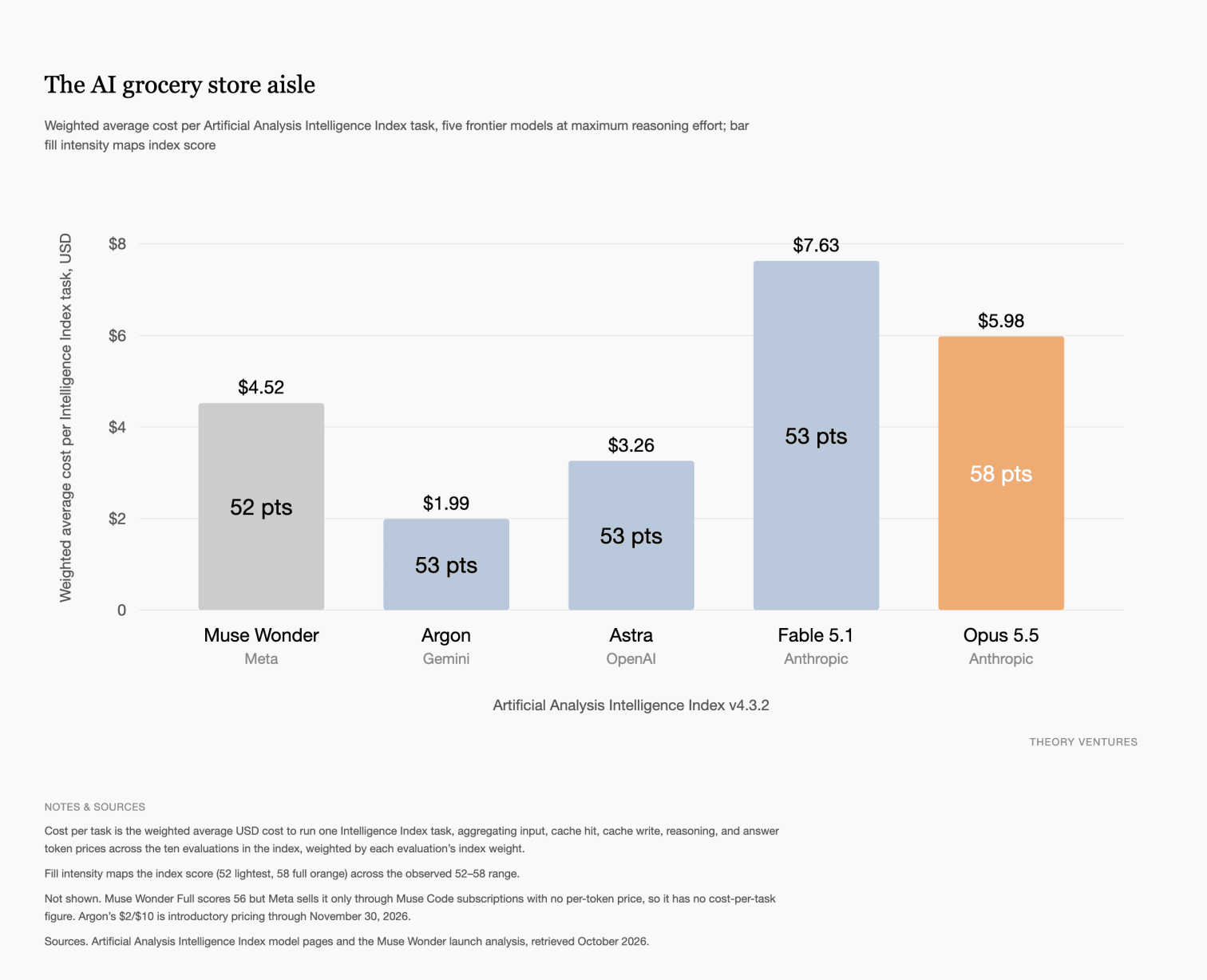

Para un analista de research en 2026 me imagino que prestidigitar sobre dos anónimas private companies es más divertido que seguir stocks 🔮

2
267
Iñigo Laucirica retweeted

Assorted things I've been mulling over regarding agents in the economy:
• Companies are in some sense the original superintelligence. It's often the case that they can use their amortized cognitive surplus to advance their interests against those of certain consumers: relative to the optimization capacity of companies, consumers can be inattentive, underinformed, irrational, etc. (Think, say, of some of the classic insurance upsells at the end of a booking process, which is typically priced substantially above what a regular policy would cost.) Herbert Simon introduced the idea of bounded rationality, and firms often end up benefiting from it. Thanks to personal agents, we will probably get somewhat more rational in how we engage with companies.
• How exactly will outcomes change? Well, certain kinds of price discrimination will work less well (how do coupons work if every agent hunts fastidiously for them?), and certain kinds of customer cross-subsidy will change (today, people who forget to cancel subscriptions subsidize those who don't). Taken across the economy as a whole, I'm not sure what the incidence of all of this will be.
• In corporate strategy, people have long debated the relative importance of distribution and product quality. Perhaps you've made something better, but does anyone know about it? Won't people just continue to buy the ACME Corp Mousetraps? Personal agents will, I think, act as a kind of structural subsidy for product quality. How would markets look different if individuals always spent at least 10 hours researching their purchases? On the margin, focusing on making a product better is, I think, going to become a more effective strategy for companies. This is good!
• It true, a corollary is that information about product quality will become more important and impactful. Today, most people have very limited ability to aggregate and integrate such data, but agents will have insatiable thirst for such signals. (It's often said that data is becoming more valuable because it helps in the training of models. That's obviously true, but I think there's a secondary way in which it's more valuable simply as a complement to cheaper intelligence.)
• A big question is whether agents will increase superstar effects (rational agents all settle on the same product) or increase dispersion (because everyone has slightly different tastes and preferences, which agents are good at eliciting, finally overcoming the artificial clustering we've been subjected to).
• Many internet companies have monetized demand routing, which is in turn often predicated on short attention spans. "I'll click on the first thing I see." This has led to some amount of inefficiency, as companies try to propitiate capricious ranking algorithms and incur various placement fees. It's not all deadweight loss (willingness to pay is itself a kind of signal, which is valuable to buyers), but it's not great. How will the nature and value of this routing change in a world of personal agents? I don't know the answer, but I think that the effects might be pretty big.
• Much of what I'm writing hinges on the assumption that personal agents will be on the consumer's side. I suspect that that will be the winning strategy, but whether it's true, and what it means to be true, involves a lot of other questions.
Taken as a whole, the market is a massively parallelized, decentralized, and highly imperfect value attribution machine, and, taking stock of all of the effects, it seems to me that the quality point may well be the biggest: that agents will change the nature of the backpropagation such that the rewards for better products increase. Maybe this is too optimistic, but I suspect (and hope) that companies that make things that they're proud of will feel that the universe is a little more partisan in their favor.
No tengo pruebas ni tampoco dudas de que el algoritmo pronatalista de Elon sabe cuántos hijos tengo

I'm not envious of many people in this world, but I am of people who made it to four (or five!). We stopped at three, but if we had met earlier, there coulda-woulda-shoulda have been more. Be fruitful and multiply!
3
297