

Quaternion Process Theory, Artificial (Intuition, Fluency, Empathy), Patterns for (Gen, LRM, Agentic, Skill) AI, https://xitter.cf/t.co/Ei2M8F8QOs
Arlington, VA
Joined February 2015
- Tweets123K
- Following5.6K
- Followers64K
- Likes74.7K



Claude can no longer “Reverse Engineer Anything.”
Anthropic just quietly killed REA.
But Interesting timing.
After a few viral cases of people using Claude to reverse-engineer Samsung TV firmware and identify data-collection services, Anthropic appears to have restricted those reverse-engineering abilities.

Likely trend: frontier labs are banning the use of cyber in their models. Claude doesn't allow the use of reverse-engineering plugins.

banned for reverse engineering work? that’s wild
oh well, -$500, and a bunch of banked resets) but gained motivation to get 3 more machines and finish my cluster.
i have never used openai to exploit or find vulnerabilities, only local reverse engineering which tripped daybreak.


Robust computing has always been an unsolved problem. Unfortunately, today's AI can easily see the flaws in our fundamentally brittle IT stack. Going to continue to get worse... xitter.cf/wang_johnny/status/211…


Most multi-agent systems are just Conway’s Law for AI.
You gave every team its own specialist subagent → orchestrator on top → Frankenprompt, lossy handoffs, subagent sprawl, and 2x the latency.
Anthropic’s new post: fold most of them back into one main agent loop with progressive skills + tool search.
Shared context + modern models often beat the multi-agent setup on quality, cost, and speed.
Subagents still have a place (true parallel work, context bloat, conflicting instructions). Everything else is usually just organizational debt wearing an agent costume.
claude.com/resources/article…


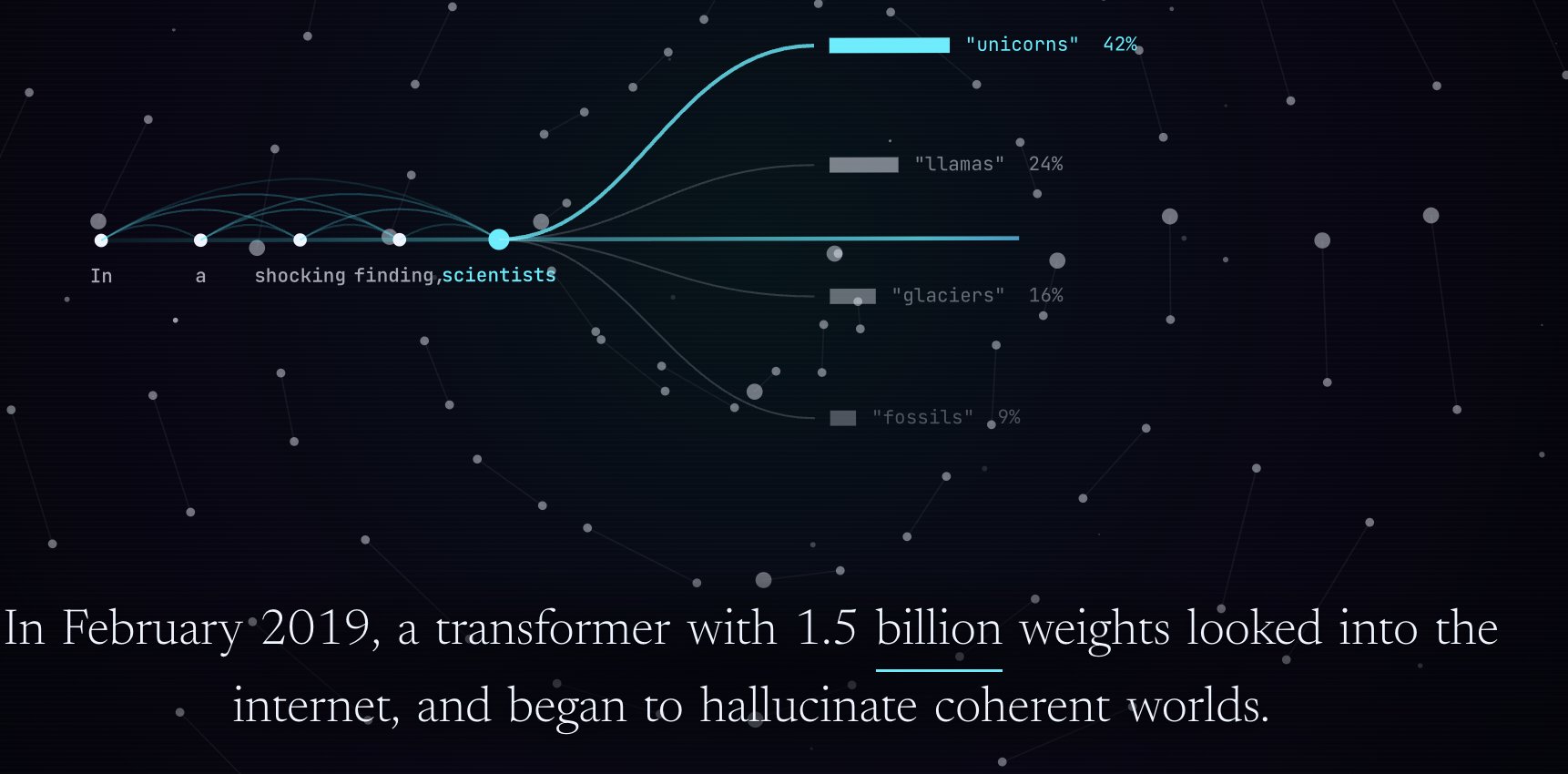
Surprisingly good narrative about the history of LLMs conjured by Gemini 4 Argon! Link follows post.
12/ The leading edge isn’t “will AI eventually improve itself.”
It’s “how much of the research process are we already handing to the systems we’re trying to control.”
To keep tabs on the emerging Singularity, please subscribe to my feed.
11/ Pichai’s “pretty far from the end state” and Recursive’s “agents helped build this model” are the same sentence in different voices.
Weak RSI is here. Full RSI is what they’re still deciding whether to allow.
xitter.cf/0xDepressionn/status/2…

10/ The public still talks about RSI like it’s a future event.
The labs are talking about it like it’s a dial they’re already turning.
9/ On the Chinese side, Terminal-RSI style methods are already posting large jumps on coding agent benchmarks by repeatedly rewriting successful trajectories and refining the policy.
The loop is the product.
xitter.cf/Oluwaphilemon1/status/…

Qwen3.8-27B reportedly improved from 51.7% to 86.52% on Terminal-Bench 2.1 after Tencent Hunyuan applied a recursive self-improvement method called Terminal-RSI.
That is a gain of 34.82 percentage points without increasing the model’s parameter count.
The interesting part is what the method tries to improve: an AI agent’s ability to finish a task, not merely produce commands that look right.
Consider a coding agent working in a terminal. It may need to inspect a repository, edit several files, install dependencies, execute tests, diagnose errors, and verify the final result.
A plausible command is not proof of success. Even a mostly correct sequence of actions can fail if the agent never completes the final verification.
Terminal-RSI is designed to improve this kind of multi-step reliability by repeatedly learning from successful executions and refining the model’s behavior.
How Terminal-RSI works
The method alternates between two training stages, repeating the cycle twice.
1. Recursive Self-Rewrite (RSR)
The process begins with execution histories from verified successful runs.
The model rewrites these trajectories into training examples for supervised fine-tuning (SFT). Rather than relying only on a fixed collection of human-prepared examples, the training pipeline can turn successful task executions into additional material for learning.
The goal is to help the model reproduce behaviors that have already demonstrated that they can work.
Verification is important here. If unsuccessful or incomplete executions are mistakenly treated as successful examples, the model can learn the wrong behavior.
2. Policy Refinement (RPR)
The next stage uses reinforcement learning to refine the model’s action policy.
Instead of learning only from examples of what a successful execution looks like, the model receives feedback intended to improve its decisions and outcomes.
The method also carries critic information from the preceding stage into the next refinement round, helping preserve useful optimization signals across iterations.
The two stages form a repeating cycle:
RSR-1 → RPR-1 → RSR-2 → RPR-2
After each refinement stage, the improved model can generate new execution examples for the next round of training.
The idea is to build on previously learned behavior rather than treating training as a single pass.
What supports the training loop?
Several techniques help Terminal-RSI focus on the quality of an entire execution.
Verified trajectory rewriting: Converts successful execution histories into new supervised training examples.
Critic weight inheritance: Carries useful critic information between refinement stages to support subsequent optimization.
TB-GAE: Helps estimate learning signals across sequences of actions, rather than evaluating every action in isolation.
Success-Prioritized Reward: Places greater emphasis on actual task success instead of treating partial progress as equivalent to completion.
These components address different parts of the problem. The training data teaches successful behavior, while policy refinement uses feedback to improve how the agent chooses its next actions.
The reported benchmark results
Tencent Hunyuan reports the following results:
Terminal-Bench 2.1: 51.70% → 86.52%
Terminal-Bench 4.0: 0% → 19.84%
Terminal-Bench Hard: 79%
Long-horizon process reward: 0.21 → 0.37
Strict long-horizon completion: 0/46 → 5/46
SWR100: Reported success rate doubled
The paper also reports average gains of roughly 30 percentage points across multiple benchmarks.
These numbers describe different evaluation settings and metrics. They should not be combined into a single score or assumed to measure the same capability.
The Terminal-Bench 2.1 result shows a substantial improvement in that evaluation. The Terminal-Bench 4.0 result also shows progress from its reported starting point, although the final score remains below 20
8/ Dream-RSI lets agents replay past experiments in simulation so they can test better strategies without burning as much compute.
Less trial-and-error. Faster iteration.
xitter.cf/MikeTamir/status/21137…

Dream-RSI introduces recursive self-improvement for AI agents through a replay simulator, cutting discovery costs across algorithm and GPU kernel engineering.
arxiv.org/abs/2609.14858
#MachineLearning #AI #LLM #DeepLearning #AgenticAI

ALT Dream-RSI: Recursive Self-Improvement through Evolving Worlds
7/ RSI-Anything takes the same idea further: one self-improvement loop that can improve code, GUI control, lab experiments, and chemistry.
Different domains. Same loop.
xitter.cf/jiqizhixin/status/2111…

Most recursive self-improvement (RSI) systems work in one domain — code, or robotics, or chemistry. But what if the same self-improvement loop could improve anything, using a world model that predicts outcomes and real feedback to adapt?
PhAI Labs presents RSI-Anything, a general RSI framework built on JEPA-Anything (ArXiv 2609.20800).
RSI-Anything pairs a predictive world model with a self-improvement loop: the model predicts outcomes, uses real feedback to adapt the predictor, and applies the improved strategy across domains. In code repair, success rate rises from 26.3% to 31.2%. In computer GUI interaction, it achieves an 18.4% relative improvement in task success on OSWorld. In the lab, a 4B-parameter policy model goes through five generations of improvement, lifting planning score from 21.80% to 46.01% — slightly surpassing a reference system built from larger model combinations. In chemistry, 40 experiments of prediction-and-feedback-driven search push the average best observed yield to 96.15%, versus 82.16% for Bayesian optimization. Code is open-sourced.
Result: RSI-Anything brings recursive self-improvement to four domains — code repair (26.3%→31.2%), OSWorld GUI tasks (+18.4% relative), lab planning (4B model 21.80%→46.01%, beating larger model combos), and chemistry yield (96.15% vs 82.16% Bayesian opt) — with open code.
RSI-Anything: General Recursive Self-Improvement via Predictive World Models and Real Feedback
Paper: arxiv.org/abs/2610.13912
Code: github.com/Gen-Verse/RSI-Any…
Our report: jiqizhixin.com/articles/2026…
📬 #PapersAccepted by Jiqizhixin

6/ Google Research’s RRSI doesn’t even touch the model weights. It just evolves the agent’s prompts, tools, and memory until the agent gets better at getting better.
The model stays frozen. The system around it doesn’t.
xitter.cf/askalphaxiv/status/210…

"RRSI: Regularized Recursive Self-Improvement of Agent Harnesses"
RRSI makes self-improving AI agents generalize instead of just overfitting their benchmarks.
So instead of letting self-improvement chase whatever boosts the benchmark, RRSI constrains the evolution process to favor changes that are actually reusable.
Across coding, agentic workspace and engineering tasks, RRSI improves OOD benchmarks while using 30% fewer policy tokens than unregularized evolution.
alphaxiv.org/abs/2609.24972

5/ Meanwhile Sergey Brin already said Google is “starting to get onto that RSI treadmill.”
So which is it — early stages, or already on the treadmill?
xitter.cf/hitborg/status/2113550…

$GOOGL's Sundar Pichai says "we're pretty far from … the end state of RSI," per Benzinga. That's recursive self-improvement, AI building better versions of itself.
Days earlier, Sergey Brin said Google was "starting to get onto that RSI treadmill."
Google DeepMind's figures sit closer to Pichai. AI writes more than 75% of its production code, but only 11.9% of code changes were fully handed to AI.
Until AI takes on more of the work outright, it's cheaper coding, not proof of faster progress.