

Docendo discimus || ''El Éxito consiste en ir de fracaso en fracaso, sin perder el entusiasmo''. - W.C
Toronto, Ontario
Joined June 2010
- Tweets19.4K
- Following509
- Followers2.2K
- Likes579








Israel Castillo de Jesús retweeted
“… las cosas andan mal; Rusia está apoderándose del planeta y America, trabada por la superstición de la democracia, no se resuelve a ser un imperio”.
- Jorge Luís Borges, 1975.
El Libro de Arena.


Israel Castillo de Jesús retweeted

En Atapuerca han encontrado el resto humano más antiguo de Europa Occidental.
Su nombre es Pink y corresponde a una nueva especie humana.
▶️rtve.es/play/videos/directo/…
Israel Castillo de Jesús retweeted

¿Sabías que el tigre NO es un felino? 👉 Aunque comúnmente se considera al tigre el felino más grande del mundo, lo cierto es que ni siquiera es un felino. Y el león tampoco.
muyinteresante.com/naturalez…
Israel Castillo de Jesús retweeted
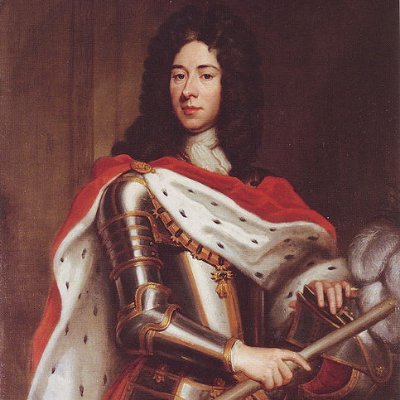
It was not uncommon that medieval knights were disappointed when peace was made too soon and war finished before they could prove their courage in battle and perform sufficient deeds of prowess.
Such was the case of a young French knight named Tristan de Roye who went to Spain to fight in the Third Fernandine War of 1381-82 for the King of Castile against the Kingdom of Portugal and their English allies.
This particular war didn't last long and was decided on sea with the Battle of the Saltes Island in the first year of the war in 1381 where the Castilian fleet established naval domination. This put the King of Portugal Ferdinand I in difficult situation and he signed the Treaty of Elvas a year later 1382, concluding this short war despite being reinforced by an English contingent that arrived to Lisbon, led by the Earl of Cambridge.
The English who came to fight for the Portuguese were very unhappy with this peace treaty as the King of Portugal broke his alliance with England behind their back and switched to the Franco-Castilian alliance in the Hundred Years' War.
But there were also some people who were unhappy with this peace on the victorious side, namely the warlike French knights like Tristan de Roye who saw this war primarily as a means to display their prowess and were desirous of displaying their courage.
Because of this reason the said Tristan de Roye decided he would not leave Spain before performing something that could be talked about. He approached the English and requested to joust one of their knights.
He would eventually face against an English squire in front of a crowd of more than hundred knights who came to witness the spectacle. Their combat earned a lot of praise from the spectators.
This joust is described in more detail by chronicler Jean Froissart.
"Peace is made between the kings of Portugal and Castile, against the will of the earl of Cambridge and the English army allied with Portugal. Before the armies break up, some individual warriors look to advance themselves through deeds of arms.
In the army of the king of Castile was a young knight from France, called sir Tristan de Roye, who was desirous of displaying his courage. When he saw, that as peace was concluded, there would not be any engagement, he determined not to quit Spain, without doing something to be talked of. He sent a heard to the English army, requesting, that since peace had put an end to the combat, some one would have the kindness to tilt with him three courses with the lance before the city of Badajos.
When this request was brought to the army, they consulted together, and said it ought not to be refused. A young English squire then stepped forth, called Miles Windsor, who wished honourably to be created a knight, and said to the herald, 'Friend, return to thy masters, and tell sir Tristan de Roye, that tomorrow he shall be delivered from his vow, by Miles Windsor, before the city of Badajos, according to his request.'
The herald returned, and related the answer to his masters, and sir Tristan de Roye, who was highly pleased. On the morrow morning, Miles Windsor left the army of the earl of Cambridge, and went towards Badajos, which was hard by, as there was only the mountain to cross, well accompanied by friends; such as sir Matthew Gournay, sir William de la Barde, and several more; there were upwards of one hundred knights on the spot, where the tournament was to be performed. Sir Tristan de Roye was already there, accompanied by French and Bretons.
Miles was created a knight by the souldich de la Traue, as being the most accomplished knight there, and the person who had been in the greatest number of brilliant actions. When the combatants were completely armed, with lances in their rests, and mounted, they spurred their horses, and, lowering their spears, met each other with such force that their lances were twice broken against their breast-plates, but no other hurt ensued. They then took their third lance, and the shock was so great that the heads of Bordeaux steel pierced their shields, and through all their other armour even to the skin, but did not wound them: the spears were shattered, and the broken pieces flew over their helmets.
This combat was much praised by all the knights of each side who were present. They then took leave of each other with much respect, and returned to their different quarters, for no other deeds of arms were performed.
Peace being restored, both Spaniards and Portuguese returned to their own homes. In such manner was this great assembly of Spaniards, English and Portuguese broken up."

Israel Castillo de Jesús retweeted

Tal día como hoy, 30 de junio de 1641, en aguas de Tarragona, la escuadra española de García Álvarez de Toledo, de 41 galeras y 5 bergantines, se enfrentaba a la francesa de La Mothe de 32 galeones y 14 galeras. El combate se saldó en una victoria muy costosa para los españoles.

Israel Castillo de Jesús retweeted

China logró la pasada madrugada otro hito en su programa espacial: aterrizó con éxito en la cara oculta de la Luna con el objetivo de recoger muestras y traerlas a la Tierra. Por @Lucasdelacal elmundo.es/ciencia-y-salud/c…
Israel Castillo de Jesús retweeted
Américo Lugo sobre los Estados pequeños:
"Su papel será siempre secundario en política, aunque no sea imposible que se convierta en gran factor de civilización, como lo fue Grecia, gracias a su incomparable unidad intelectual".

Israel Castillo de Jesús retweeted
A pesar de que “El Señor Presidente” de Miguel Ángel Asturias, fue la inspiración del Gabo para escribir “El Otoño del Patriarca”, la segunda es, a mi parecer,muy superior.
De hecho, si bien no es tan famosa como Cien Años de Soledad, me atrevo a decir que es igualmente buena.
Israel Castillo de Jesús retweeted

Previsão de crescimento do FMI para a América Central em 2024.
🇨🇷Costa Rica: 4,0%
🇸🇻El Salvador: 3,0%
🇬🇹Guatemala: 3,5%
🇭🇳Honduras: 3,6%
🇳🇮Nicarágua: 2,5%
🇵🇦Panamá: 3,5%
🇩🇴República Dominicana: 5,4%
imf.org/pt/Publications/REO/…

Israel Castillo de Jesús retweeted

Airbnb CEO: winning an argument is never more important than preserving the relationship.
Israel Castillo de Jesús retweeted
El 4 de septiembre de 1882 la calle Pearl Street se convierte en la primera calle iluminada artificialmente del mundo. muyinteresante.com/historia/…

Israel Castillo de Jesús retweeted

Apple has reportedly discussed ideas including a smart ring and glasses — and putting tiny cameras on AirPods trib.al/J8ayyq6
Israel Castillo de Jesús retweeted

Canada Goose jackets cost anywhere from $500 to $1,500, and they're everywhere
Israel Castillo de Jesús retweeted

The Dominican Republic 🇩🇴 is experiencing a remarkable convergence in per capita income with the US, outpacing all other Latin American countries. With the right policies, it has the potential to become an advanced economy within the next four decades. ➡️ bit.ly/3QtmSZO

Israel Castillo de Jesús retweeted

MIT engineers have developed an ultralight fabric solar cell that can transform virtually any surface into a power source. Here’s how they work.
Israel Castillo de Jesús retweeted

Comparación entre una viga de madera antigua y una de madera nueva de crecimiento rápido.
Observa que la madera antigua tiene 60 anillos de crecimiento, mientras que la nueva solo tiene 16.
La madera antigua es más densa, más resistente, arde más lentamente y es más resistente a los insectos.
La madera nueva se cultivó con el único propósito de ser utilizada como madera, mientras que la madera antigua proviene de bosques naturales, de los cuales quedan muy pocos.

Israel Castillo de Jesús retweeted

Why achieving speeds of 300 miles per hour is nearly unattainable for cars.