

Serial Explorationist with an unhealthy ambition for major discoveries! - views expressed are my own
Joined December 2016
- Tweets1.2K
- Following901
- Followers4.3K
- Likes1.3K


Pinned Tweet
Scale is one thing when exploring for bigger #copper systems however grade is always king! Especially from surface.
10 years since we acquired this project, a large amount invested with the communities and time to bring this project online.
Results like today always remind me why we continue to persevere ! - it’s still the beginning however a lot will pick up for us over the next 12 months.

⚒️News Release: Coppernico Channel Samples 52 m of 1.06% Copper at Sombrero in Peru
Read the full press release here: coppernicometals.com/coppern…
#copper #results #miningnews @ivanbebek71


Ivan retweeted

This morning the Yangshan premium reached $205 per tonne (+30% in less than a week) to a new ALL TIME HIGH.
The lack of copper supply is real.


Following up on yesterday's post, here is what the 12-month chart looks like for the Yangshan premium, which yesterday hit a RECORD $178 per tonne of copper. That record broke again this morning. This tells us that despite all the macro noise, nothing has changed in the PHYSICAL world.
The Yangshan copper premium is the extra cost paid over the benchmark London Metal Exchange (LME) price to import refined copper into China.
The RECORD premium signals a lack of available short-term supply, strong domestic demand and low local warehouse inventories.
China is the world's largest consumer of refined copper, accounting for ~60% of global consumption. This problem is not unique to China, as other major economies around the world also face the same reality when they try to get their hands on copper metal... they have to pay up.
The copper market only wants to react upwards when the physical market globally is tight and shows no signs of easing.

The world is now demanding more copper than ever.
Data centres, power grids and electric cars all run on it, and demand is forecast to grow even faster next year.
A single large AI campus can need up to 50,000 tonnes on its own, ~50% of what a big copper mine produces in a year.
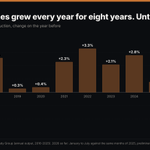
But for the first time since 2017, the world's copper mines are set to produce less than the year before.
And the reasons why aren't getting nearly enough attention.
The first is accidents. Grasberg in Indonesia, one of the biggest copper mines on earth, has been held back since a fatal underground accident last September.
Kamoa-Kakula in Congo is still constrained after its own problems underground in 2025. Between them, about 600,000 tonnes the world was counting on this year won't arrive. That's roughly 2.5% of global supply gone.
The second is weather, and it keeps hitting the biggest mines. BHP's copper output fell 19% last quarter after bad weather and a fatal accident halted work at Escondida in Chile, the world's largest copper mine.
The third is the slowest and hardest to fix: the ore is getting poorer. The big mines dig lower-grade rock every year, so they have to move more of it to get the same copper out.
There's plenty of copper in the ground. Copper at good grades is what's scarce, and on average a discovery takes about 17 years to become a working mine.
The world needs several new ones every year to keep up, and they aren't being found.
Those 17 years have to start somewhere.
At Coppernico (TSX: COPR, OTCQB: CPPMF) we're starting at Sombrero in Peru, where our best surface samples have run double the world’s average copper grade and drilling is expected to begin late this year.
Follow me @IvanJBebek to stay updated with the journey.

Ivan retweeted
Following up on yesterday's post, here is what the 12-month chart looks like for the Yangshan premium, which yesterday hit a RECORD $178 per tonne of copper. That record broke again this morning. This tells us that despite all the macro noise, nothing has changed in the PHYSICAL world.
The Yangshan copper premium is the extra cost paid over the benchmark London Metal Exchange (LME) price to import refined copper into China.
The RECORD premium signals a lack of available short-term supply, strong domestic demand and low local warehouse inventories.
China is the world's largest consumer of refined copper, accounting for ~60% of global consumption. This problem is not unique to China, as other major economies around the world also face the same reality when they try to get their hands on copper metal... they have to pay up.
The copper market only wants to react upwards when the physical market globally is tight and shows no signs of easing.
Each year during LME week the world’s leading metals traders come through London. Over the course of the week, a consensus is typically formed on what is the short- to long-term outlook for each metal.
Often the consensus is right, but sometimes it is wrong (e.g last year’s consensus was to be short zinc… and over the past 12 months it has been one of the best performing commodities). This year was probably the first year in a while where a consensus view on copper was not unanimously agreed upon.
The bears talked down data-centre/AI trade demand, saying it won’t meet expectations… while the bulls talk to the shortage of copper supply… no matter the demand outlook. Eitherway, the week ended with ‘risk-off’ selling of equities and commodities.
Copper finished the week at $6.50 per pound… only ~5% below its all-time high. Also by the end of the week, copper cathode premiums into China reached a RECORD high of $158 per tonne (up again this morning to $178 per tonne)… premiums set by @codelco for delivery into Europe were a RECORD $350 per tonne…. And Europe’s biggest copper smelter, @Aurubis_AG, increased its 2027 premium by +10% to a RECORD $347 per tonne.
Also… spot copper treatment and refining charges (TC/RCs) reached a RECORD NEGATIVE $300 per dry tonne of concentrate smelted and 30 cents per payable pound of copper refined (“-300/-30”) last week… and we expect to hear news soon of a RECORD low for next year’s annual TC/RC benchmark. We are hearing the 2027 benchmark may settle around NEGATIVE 150/15 (the previous record is this year’s 0/0)… We will know for sure by the end of CESCO Shanghai Week in mid-November.
The trend of RECORD HIGH copper premiums and RECORD LOW TC/RCs is a CLEAR indicator of imminent shortages in copper supply.
So… to echo the comments made by Max Layton of @Citi on copper, “we view any associated risk off-episodes as good long-term buying opportunities.”
Ivan retweeted

Can copper supply keep pace with AI, data centers and electrification?
Our Chair & CEO @IvanjBebek joins @BNNBloomberg to discuss copper demand, supply challenges and the importance of new discoveries.
🎥 youtu.be/X9zSaF77QVk
$COPR $CPPMF
#Copper #Mining

Ivan retweeted
China’s copper cathode premium soared to an all time record high of $158 per tonne today.
At a time when the market is questioning copper demand linked to AI capex deployment, the world’s largest copper consuming economy, BY A MILE, is signaling that it is starving for material. With the majority of global exchange stocks sitting in the US, China is sending an extremely strong signal of tight physical availability, showing it is willing to pay up to ensure metal is brought into the country.

Ivan retweeted
Copper will be in deficit by 2028. $332 BILLION in new mines is required to close the gap. But, a new copper mine takes, on average, 17 YEARS to develop. Supply can't catch up.
STAY LONG COPPER.
🤖 Made with AI

Ivan retweeted
Advancing copper-gold exploration in Peru.
Our Chair & CEO @IvanjBebek joins CEO.ca to discuss Sombrero’s expanded environmental permit, Phase 2 drilling plans at Fierrazo and strategic shareholders Teck and Newmont.
youtu.be/r92YuKLMSpg
$COPR $CPPMF
#Copper #Mining


Every mine on this map was found decades ago.
Owners are now fighting over tonnes that already exist.
But the supply AI needs has to come from mines nobody has found yet.
That's what we're doing at Coppernico, exploring in southern Peru on the same copper belt as Las Bambas.
Follow along @IvanjBebek, and follow @CoppernicoMetal (TSX: COPR, OTCQB: CPPMF) to see how we're exploring for copper in southern Peru.