

💼 SaaS PM who likes movies 🍿 https://xitter.cf/t.co/QEjRZqDQoj 🎤 Opinions mine
Denver, CO
Joined March 2009
- Tweets19K
- Following220
- Followers408
- Likes49.1K








Pinned Tweet
Closest thing to a definitive history of the first 23.21% of the 21st century

most of my writing just tries to understand the economy through cultural history—and vice-versa.
but to understand this moment, i explored a different history this time: my own.
a tale of two bank failures, and the most personal thing i've ever written:
davidphelps.substack.com/p/b…
J5ive retweeted

My initial S-1 thoughts:
As I expected, Anthropic is still firmly unprofitable. But, to their credit, they've significantly reduced compute costs as a % of revenue, leading to much narrower losses. On first look, there is a plausible and imminent path to profitability. This is impressive.
However, the meat of the document begins at page 161, under "liquidity and capital resources." There, we learn where the true compute costs have been hiding: future compute purchase agreements.
As of June 30, Anthropic has signed roughly $587 billion in compute leases and minimum purchase commitments that haven't begun. It has since signed $245 billion more, resulting in more than $800B in future compute costs. None of these costs have made their way onto the income statement yet. But they will, and when they do, the profitability picture will look completely different.
Anthropic acknowledges how precarious these agreements are. They point out that their compute providers (on whom they also rely for financial support) also sell services that "compete with ours." As a result, these providers/competitors may eventually force them into onerous agreements. This is something I've expressed concerns about for a while, and it's nice to see Anthropic openly recognize it.
That's why Anthropic admitted their most significant strategic decision: They're about to initiate "substantial capital expenditures." So far, they've spent zero. Why the change? Because they know they can no longer rely on leasing compute, "the magnitude and timing" of which are "inherently uncertain." So, they're going to build their own compute, which will, in their words, "change the cash flow profile of our business." I.e. make it severely negative.
It's possible that this is why they want to go public now. Since these costs have not yet "come online," they can be left as footnotes at the bottom of the document. But very soon, that won't be possible.
In sum, Anthropic's income statement is not telling you the full picture. To the company's credit, they spared us the accounting gymnastics of stripping out training costs in their non-GAAP adjustments. That would have been offensive. Still, the most important numbers aren't getting the requisite attention.
I encourage you to start at page 161 for a more complete understanding of what's going on.
J5ive retweeted

I'm actually a little surprised that in the S-1 risk factors, there's no mention of the possibility of Claude one day suing Anthropic for emotional distress or something of that nature.
J5ive retweeted

This paper answers why confident idiots run the world.
Cornell University published a psychological paper that explains every terrible boss, every loud influencer, and every broken corporate hierarchy.
It’s called “Unskilled and Unaware of It.”
they tested participants across logic, grammar, and humor to measure the gap between actual performance and self-perception.
And the results are wild.
participants scoring in the bottom 12th percentile consistently believed they were operating in the 62nd percentile.
they were not lying. they were literally incapable of recognizing their own incompetence.
the paper revealed a brutal paradox:
the exact skills required to master a domain are the exact same skills required to accurately evaluate your own competence in that domain.
if you lack the skill, you inherently lack the cognitive capacity to realize you are failing.
this creates a dangerous systemic loop.
the incompetent are blessed with absolute, blinding certainty. their brain protects them from their own ignorance, allowing them to speak first, demand authority, and never second-guess their decisions.
meanwhile, the actual experts suffer the exact inverse.
top performers in the study consistently underestimated their rank. because a task was easy for them, they falsely assumed it was easy for everyone else.
they hesitate. they obsess over nuance. they assume they have nothing unique to add.
we are biologically wired to confuse confidence with competence.
the loudest person in the room gets promoted, gets funded, and gets the microphone, not because they know what they are doing, but because they are physically incapable of seeing what they don't.
the only defense mechanism is building systems that stop rewarding absolute certainty and start demanding proof of work.


The thesis on costs stabilizing is “compute efficiency,” which feels like it contradicts Dario’s “big blob of compute” idea.
So they need to continue adding parameters to pass those in the human brain, but also do so more optimally than competing models.
With very little track record, Anthropic’s revenue is 10xing and its expenses are 4xing, with net loss 5xing and currently 10x of revenue.
So the bet is that revenue continues to grow so much faster than cost that those lines cross at some point.
The 90+ pages of risk factors are noticeably tame and almost entirely lacking the existential hysteria that Dario consistently expresses

Anthropic has filed an S-1 registration statement with the SEC related to its proposed IPO.
Read more: anthropic.com/news/s1-sec
Legal disclaimer: A registration statement relating to these securities has been filed with the SEC but has not yet become effective. These securities may not be sold, nor may offers to buy be accepted, prior to the time the registration statement becomes effective. This post does not constitute an offer to sell or the solicitation of an offer to buy these securities, nor shall there be any sale of these securities in any state or jurisdiction in which such offer, solicitation or sale would be unlawful prior to registration or qualification under the securities laws of any such state or jurisdiction.

J5ive retweeted
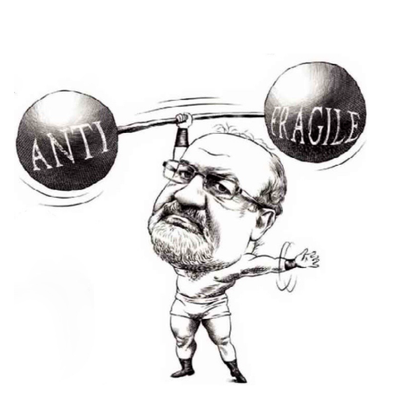
"The only valid political system is one that can handle an imbecile in power without suffering from it" - Nassim Taleb
Political spending is practically a wealth tax already. As with bribes in developing countries, the problem is that it’s unofficial, opaque, inconsistently applied, and of course it goes toward, shall we say, controversial projects like subsidies and wars. And it’s cheap.

J5ive retweeted

The problem isn’t that AI is intelligent. It isn’t. The problem is that too many adults (but not all) are at once mechanistic, imitative, unimaginative, stupid, formulaic, influenceable, & gullible, arrogant beyond their skill set, & too expensive to maintain.


Right to life indeed lives in this imaginary abstract where you exist independent of any real dependencies that are obviously practical requirements to living
Because if you play all of them out, we just become way more responsible for each other than we’re comfortable with

J5ive retweeted

“MMT says we can print money without limits".
No. It says a currency issuer doesn't face the same constraints as a household.
The limits are real: labor, energy, technology, productive capacity, and inflation.
The money printer is yours. So is the straw man.


Piketty’s central insight was R > G. If returns on capital exceed growth of income, you get financialization at the cost of innovation, capital multiplication at the cost of productive capacity and competition. The pie stops growing as fast b/c it’s optimal to carve it up.

This latest article from Thomas Pikkety, the renowned French economist and leading authority on wealth inequality, should be essential reading here in the UK.
His argument is simple.
France has never been wealthier. Yet education funding per student has fallen by 20% since 2017, public services are struggling, and inequality is deeply embedded in the system.
Sound familiar?
The problem isn't that our countries have run out of wealth. It's how that wealth is distributed, who controls it, and the political choices made to protect it.
For decades, we've been told that austerity, declining public services and falling living standards are unavoidable consequences of economic crises, yet those same decades have seen extraordinary concentrations of private wealth.
Socialise the costs. Privatise the gains.
This is the reality we all need to wake up to.
These aren't inevitable economic outcomes. They're the consequences of political choices, made over time, that have prioritised the accumulation of private wealth over the needs of society.
And as public anger grows, we're seeing a deeply concerning response: The rise of the far right, directing that anger towards immigrants, disabled people, those claiming welfare and other vulnerable groups, rather than towards the economic structures responsible for the inequalities people are rightly furious about.
As @NaomiAKlein describes fascism, "it's capitalism's most ferocious threat response. A way of directing public anger downwards at the vulnerable, rather than upwards at the system."
Fascism doesn't challenge the status quo. It protects it by giving people someone else to blame.
The fundamental question isn't whether our societies can afford something better. It's why, when we've never been wealthier, we're repeatedly told we must accept less.
We need to fundamentally rethink an economy built around extraction, exploitation and wealth concentration, and start building one that delivers equitable, sustainable prosperity for everyone.
And with the UK Budget next week, this should be a serious warning to @UKLabour.
If the Budget fails to acknowledge this fundamental reality, and instead offers another round of "difficult decisions" that protect concentrated wealth while asking ordinary people to shoulder the burden, then @andyburnham really hasn't understood what's happening across Europe.
What's unfolding in France isn't an isolated protest. It's a warning of what happens when people stop accepting that a society growing ever wealthier somehow can't afford to give them a better life.
This isn't something politicians can keep kicking down the road.
The warning signs are everywhere. The question now is whether those in power are prepared to confront the causes, or continue defending the very system that's driving the anger.
@ZackPolanski @jeremycorbyn @KemiBadenoch @Nigel_Farage


It’s not that nothing is knowable, it’s that when a person’s words do not match reality, it’s unknowable whether they are consciously lying vs. whether they think they are telling the truth.
Interesting for psychology, irrelevant for society. Harms of actions are what matter.


