

Journal of Eastern African Studies. From the British Institute in Eastern Africa @The_BIEA. RT ≠ endorsement.
- Tweets1.3K
- Following87
- Followers4K
- Likes158


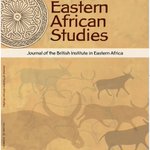






ALT The cover of JEAS 20(1)

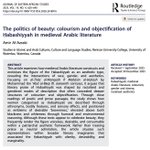
ALT The table of contents of issue 20(1) - the list of contents can also be found at the link.


ALT Event flyer, including abstract: This quantitative study analyzes access to basic services among refugees and host communities in Kenya’s Kakuma camp and Kalobeyei settlement—establishing the levels of access between refugees and hosts, identifying disparities between Kakuma and Kalobeyei, and modelling how much more needs to be done in terms of investments in service delivery infrastructure (important with respect to the Shirika Plan framework for integrated service delivery). The study draws on Kenya National Bureau of Statistics (KNBS) and World Bank–Kenya datasets. The first level of analysis examines whether access to services is related to displacement status (for refugees and hosts) or location (for refugees) based on chi-square tests of independence. The second level analyzes the extent of disparities in access, if any, using descriptive statistics. The third level focuses on the gaps and models what more can be done, using regressions. Preliminary results show that refugees w

ALT Screen shot of article details, including Abstract: Infrastructure-led development is driving geopolitical agendas in the Global South, and Djibouti is a case in point. Strategically situated in the Horn of Africa, Djibouti’s seaports and related infrastructure have been modernised through foreign investments to serve international trade and growing African hinterlands. Scholarship often posits foreign logistics investors as hegemons driven by geopolitical interests, and host states as passive recipients. This paper questions such claims. It examines the relationship between “hegemon” and “host state” from the perspective of the latter, in this case the Djibouti government’s interactions with Emirati and Chinese infrastructure companies. Methodologically, the analysis is based on interviews, secondary data and document analysis. It applies a conflict-sensitive controversies approach from critical logistics studies to trace contestation over authority in Djibouti’s logistics sector. It

ALT Flyer for the seminar, including the abstract: For a century, the Ethiopian city Jigjiga was known as a dusty hub of cross-border smuggling and a hotbed of rebellion on Ethiopia's eastern frontier. After 2010, it transformed into a post-conflict boomtown, becoming one of Africa's fastest-growing cities and attracting Somali return-migrants from across the globe. This study examines Jigjiga's astonishing transformation through the eyes of its cross-border traders, urban businesspeople, and officials. Daniel K. Thompson follows traders and return-migrants across borders to where their lives collide in the city. Analysing their strategies of mobility and exchange, this study reveals how Ethiopia's federal politics, Euro-American concerns about terrorism, and local business aspirations have intertwined to reshape links between border-making and city-making in the Horn of Africa. To understand this distinctive brand of urbanism, Thompson follows globalized connections and reveals how urbani

ALT The uncertainties of rural life in Eastern Africa's underdeveloped arid and semi-arid districts have always presented challenges for the local communities of this long-neglected region. Over the past decade the supposed 'resilience' of these communities has been tested by the perceived impacts of climate change, and often disrupted by major political changes - for example devolution in Kenya, and severe instability in Ethiopia. At the same time, national plans for economic development have for the first time promised significant investment in these areas, with new roads and improved transport infrastructure, energy projects around oil, electricity supply and geothermal resources, and greater local participation in development all building up hopes of a better future. This interdisciplinary workshop examines the challenges and the opportunities that this complex and sometimes contradictory future now presents in the arid and semi-arid regions of Kenya and Ethiopia.

ALT Debates on data assemblages have extensively accounted for their technical nature. A growing amount of literature has employed a political economy analysis to deconstruct the “black boxes” of data assemblages with the view to unpacking the choices and rationalities that inform prevailing data systems. They have treated assemblages as processes through which orders of knowledge and orders of value are fundamentally inscribed in ways that are sometimes both materially and epistemically violent. In this study, we employ data assemblage as an analytical framework to understand the specific arrangements of power and authority influencing the data imaginaries and property logics currently being enacted across two informal settlements in Nairobi and Mombasa, Kenya. We draw on in-depth interviews with actors situated at different locations in the development of the Social Tenure Domain Model (STDM), a ‘pro-poor land rights recording system’ to understand its underlying political economy and ho

ALT This study offers a political economy explanation of why authoritarian parties and legislatures vary in strength, and why this variation matters. Without claiming to explain all institutional variation, the book outlines how diverse trajectories of state-led capitalist development engender differing patterns of wealth accumulation and elite contestation, which in turn, reshape institutional landscapes across regimes. Where accumulation is more closely controlled by state and party leaders, rival factions remain subdued, ruling parties can consolidate relatively strong institutional structures, and parliament remains marginal. Conversely, where a class of private wealth accumulators expands, factions can more easily form, both eroding party institutions and encouraging greater legislative strength. The book uses this analysis to reassess the significance of a stronger legislature. It considers parliament’s influence on distributive politics, both regressive and progressive. It also cons


ALT Infrastructure has long been understood as central to enabling “progress”, a visible sign of modernity and development. Urban scholars have pushed back against modernist notions of the networked city as the teleological end of infrastructure, yet there remains uncertainty and debate over how to make sense of infrastructure’s temporality. We emphasize that – analytically – infrastructure is always “in formation”. To understand infrastructure’s politics, we consider how progress and completion are narrated, imagined, adjusted to and politicized by providing three contrasting infrastructure vignettes in Nairobi. In our analysis of a bus rapid transit system, we see incremental changes and proclamation of an envisioned final state. In our consideration of the laying of pipes, wires and sidewalks, we see acceptance of what are seemingly indefinite disruptions and politicians wanting to be associated – for as long as possible – with the building of infrastructure. Finally, we examine sanitat