Jordan Neil (@JNeilPhD) header
Jordan Neil (@JNeilPhD) profile picture

Assistant Professor @stephensoncc | Former @harvardmed & @UF | Cancer prevention and control researcher | Northern Irish. Up the Reds. Views my own.

Oklahoma City
Joined November 2012
Photo by Jordan Neil (@JNeilPhD)Photo by Jordan Neil (@JNeilPhD)Photo by Jordan Neil (@JNeilPhD)Photo by Jordan Neil (@JNeilPhD)Photo by Jordan Neil (@JNeilPhD)Photo by Jordan Neil (@JNeilPhD)Photo by Jordan Neil (@JNeilPhD)Photo by Jordan Neil (@JNeilPhD)Photo by Jordan Neil (@JNeilPhD)Photo by Jordan Neil (@JNeilPhD)
Jordan Neil retweeted
“Leaving it to each patient and doctor meant a lot of men were simply never offered the test. A clear recommendation fixes that,” @neerajaiims, MD, FASCO, medical oncologist and co-director of the Prostate Cancer Program at the Dana-Farber Cancer Institute/Harvard Cancer Center, said to @CNN. Read more about the updated screening guidelines. bit.ly/3USIvr1
1
8
1
15
2,243
What should clinicians know about the updated @AmericanCancer prostate cancer screening guideline? 🎙️ Drs. Robert Smith and Andrew Wolf break down the major updates with our EIC Dr. Don Dizon in a new #CancerSpeak. Listen: cancerspeak.podbean.com/e/pr… @OncoAlert @ACSNews #PCSM
6
5
450
The @AmericanCancer Society new PSA guidelines are making major news outlets! Here with our own Pr. @neerajaiims from @DanaFarber_GU @DanaFarber on @CNN with @JacqEHoward @billdahutmd @cnnbrk @PCFnews @PCF_Science @OncoAlert @OpenMedInsights @ASCO @myESMO
JUST IN: @AmericanCancer (ACS) updates their guidance about routine PSA screening for #prostatecancer, moving off "shared decision-making". This is a major shift since the last ACS recommendations in 2010: 1) High risk (Black men; first-degree relative dx <65 or multiple at any age): annual PSA, ages 45-69 2) Average risk: PSA every 2 years, ages 50–69. American Cancer Society 3) Non-Black men with 1 first-degree relative diagnosed ≥65: PSA every 2 years, ages 45–69. 4) Age 70–74: individualized decision; if screening continues, every 2 years. 5) Age ≥75: generally no screening; very healthy men 75–79 may discuss continued screening. 6) No screening ≥80 and no screening at any age with life expectancy <10 years. @CACancerJournal @DanaFarber_GU @harvardmed @OpenMedInsights Link: acsjournals.onlinelibrary.wi…
2
19
1
35
2,739
Much commentary on American Cancer Society switching from shared decision-making to general recommendation for PSA. But there was never evidence PSA screening is preference-sensitive (was asserted, not demonstrated). Best evidence: not preference sensitive journals.sagepub.com/doi/10.…
3
1
2
2,187
Results of this #OpenAccess study that informed the new @AmericanCancer #ProstateCancer screening guideline can help inform patients and providers about when to stop PSA screening. 🔗: acsjournals.onlinelibrary.wi… @OncoAlert @DrRanaMcKay #PCSM
5
4
428
JUST IN: @AmericanCancer (ACS) updates their guidance about routine PSA screening for #prostatecancer, moving off "shared decision-making". This is a major shift since the last ACS recommendations in 2010: 1) High risk (Black men; first-degree relative dx <65 or multiple at any age): annual PSA, ages 45-69 2) Average risk: PSA every 2 years, ages 50–69. American Cancer Society 3) Non-Black men with 1 first-degree relative diagnosed ≥65: PSA every 2 years, ages 45–69. 4) Age 70–74: individualized decision; if screening continues, every 2 years. 5) Age ≥75: generally no screening; very healthy men 75–79 may discuss continued screening. 6) No screening ≥80 and no screening at any age with life expectancy <10 years. @CACancerJournal @DanaFarber_GU @harvardmed @OpenMedInsights Link: acsjournals.onlinelibrary.wi…
4
76
5
226
26,737
After 16 years, @AmericanCancer now directly recommends PSA screening. Stronger evidence of benefit plus better tools to limit overdiagnosis and overtreatment. A welcome, balanced shift. My take in @PhillyInquirer: share.inquirer.com/yPRmKb Thoughtful nuanced and individualized care pathway matters most. @fcuroonc @foxchasecancer
1
16
70
2,567
New @AmericanCancer guideline for early detection of prostate cancer proactively recommends screening for average-risk men ages 50-69 and high-risk men ages 45-69, while redefining what happens after an elevated PSA. 🔗: acsjournals.onlinelibrary.wi… @OncoAlert @ACSNews
12
14
929
🚨 Lower immune surveillance years before dx tied to higher #prostatecancer risk 🚨 @NatureComms 👥 2,581 cases / 21,768 controls (EPIC + UK Biobank), 368 immune + inflammation proteins 📊 Prospective nested case-control + Mendelian randomisation (PRACTICAL) ⏱️ Blood drawn median 6.6 to 12.2 yrs before dx ✅ Higher NK/T-cell proteins = lower risk ✅ Strongest >7 yrs pre-dx: Higher levels of these immune related proteins a/w lower risk - IL15 RR 0.86 (0.81-0.93), FLT3LG 0.87 (0.81-0.93), PGF 0.84 (0.78-0.91), CKAP4 0.86 (0.80-0.93) ⚠️ No single protein survived correction in EPIC alone; signals only on meta-analysis and mostly in long-lag samples 🎯 Weaker immunosurveillance may precede prostate cancer by years -> immune pathways might be targets for prevention 🔗 doi.org/10.1038/s41467-026-7… @UroOnc @urotoday @UrologyTimes @PCF_Science
3
4
803
New #OpenAccess systematic review from @AmericanCancer researchers identifies and synthesizes the evidence on the benefits and harms of PSA-based screening for #ProstateCancer to inform the ACS’s 2026 updated guideline. acsjournals.onlinelibrary.wi… @OncoAlert CC: @DrRanaMcKay
7
13
1,110
Biomarkers improve risk stratification after an elevated PSA, and may enhance decision-making when used alongside MRI. However, heterogeneity in study populations and evaluated pathways limits interpretation. 🔗: acsjournals.onlinelibrary.wi… @OncoAlert CC: @DrRanaMcKay #PCSM
4
4
621
Jordan Neil retweeted
Decipher® reclassification of NCCN risk groups in early #ProstateCancer. @danielkeizman joins @zklaassen_md to discuss a Decipher® transcriptomic analysis in a non-American prostate cancer cohort. The study found that Decipher® significantly reclassified a proportion of patients away from their NCCN risk category in this population, where nearly all prior validation data came from American cohorts. #WatchNow on UroToday > bit.ly/3TCcjqA @Decipher_VCYT
4
9
1,017
A minority of women who undergo rapid genetic testing at #BreastCancer diagnosis experience decision regret, particularly those with positive BRCA1/2 results and those from racialized groups. Follow-up counseling may be warranted. 🔗: acsjournals.onlinelibrary.wi… @OncoAlert #BCSM
6
12
935
Jordan Neil retweeted
Physician vs. AI-Generated Messages in #Urology: Evaluation of Accuracy, Completeness, and Preference by Patients and Physicians. AI-drafted replies to urology patient messages were rated as accurate as urologists' (4.5 vs 4.6) and more complete, and lay reviewers preferred them. #AuthorCommentary on UroToday > bit.ly/47h1rSS @aboutKP @wjurol
1
4
6
1,114
Jordan Neil retweeted
Active Surveillance Follow-Up for #ProstateCancer: From Guidelines to Real-World Clinical Practice. Only 11% of 546 men on active surveillance for prostate cancer were followed per guideline-recommended PSA and biopsy schedules in a real-world cohort. #AuthorCommentary with @ChiarelliGiuse on UroToday > bit.ly/4ynyMXc @DrFAbdollah
7
11
1,130
Jordan Neil retweeted
Among US #clinicians, use of an #AI-enabled clinical information platform increased substantially over 2.5 years, with sustained use across #physician and nonphysician groups. Queries most often focused on #treatment and #management rather than #diagnosis, indicating that these tools are being used primarily to support #clinical decision-making at the point of care. ja.ma/4Ba9ej2
8
53
7
170
22,871
🎉 Congratulations to Oklahoma legend Coach Marvin Mack on his induction into the Oklahoma African American Educators Hall of Fame! 🏆 A well-deserved honor celebrating your impact on our community! #Oklahoma #HEROES
1
2
36
Jordan Neil retweeted
💡 JAMA Insights: #PhysicalActivity is an effective component of care for people with #chronic #medical conditions, and #clinician #communication can help support behavior change. This JAMA Insights article indicates that supportive conversations should acknowledge common barriers, frame activity as achievable daily movement rather than only structured exercise, and emphasize that any increase in activity can benefit health. ja.ma/47RzVeO
2
27
4
96
7,706
Jordan Neil retweeted
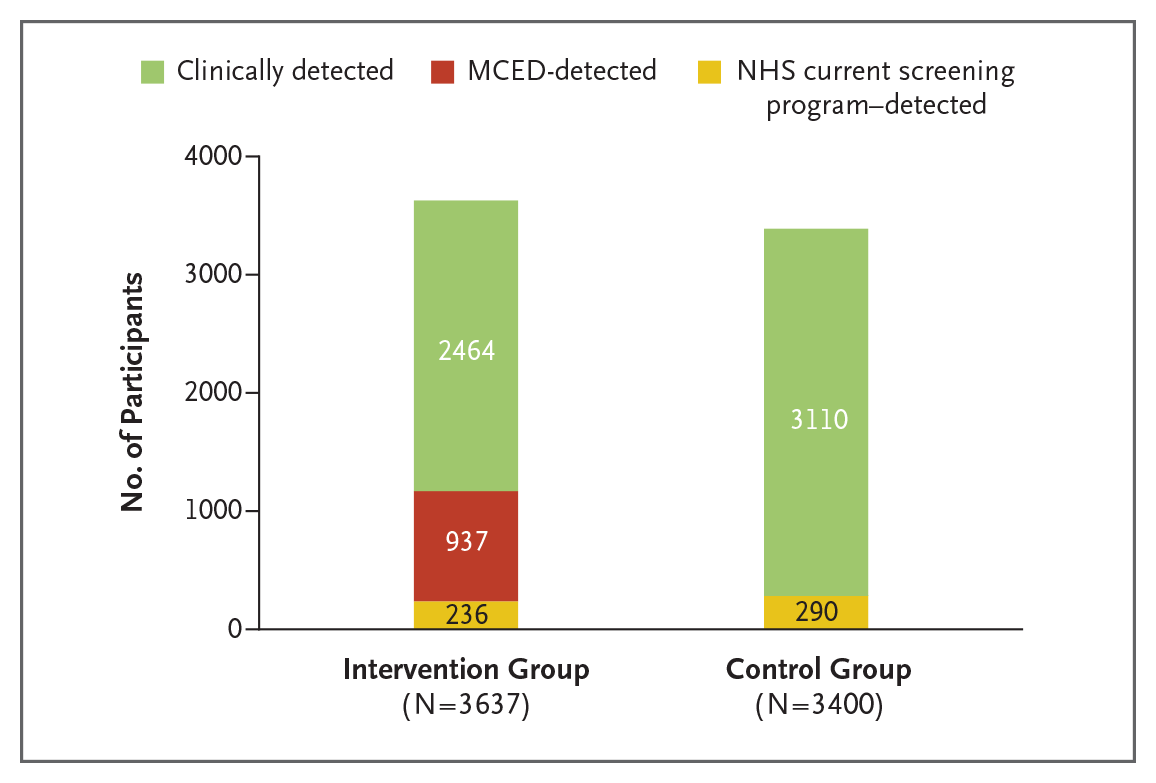
Original Article: Effect of Screening with Multicancer Early-Detection Test on Late-Stage Cancer Diagnosis (NHS-Galleri trial) nej.md/4xRZN5L Editorial: A Step in the Search for the Elusive Holy Grail of Early Detection of Cancer nej.md/4cK3UIy #Oncology #Genetics
3
23
1
73
21,482
Jordan Neil retweeted
Important study by @ldiaz1971 @MSKCancerCenter advocating for universal germline testing after a cancer diagnosis. Among ~40,000 patients, 18.4% of early-onset, 15.6% of average-onset, & 12.3% of late-onset cancers harbor pathogenic germline alterations. aacrjournals.org/cancerdisco…
4
32
2
90
11,899